Crispy Gimmari Twigim (Deep-Fried Seaweed Noodle Rolls)
A spicy street-food snack made by rolling seasoned sweet potato glass noodles and vegetables in dried seaweed and perilla leaves, then deep-frying until crispy.
Translated from Korean by AI and not yet checked by a native speaker. Amounts and numbers are taken directly from the original recipe. Read the Korean original →
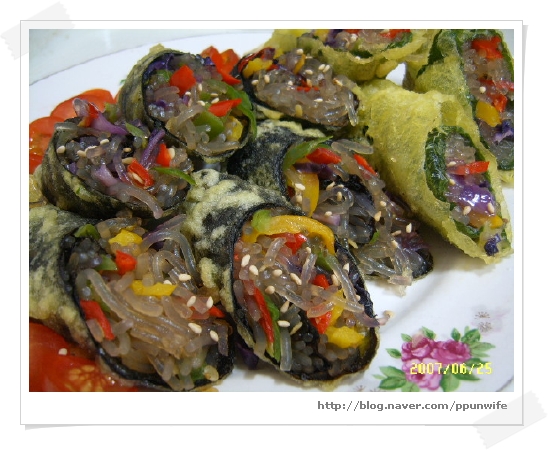
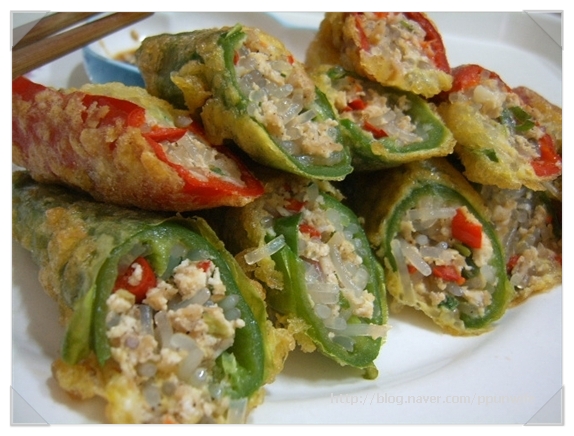
This deep-fried snack features sweet potato glass noodles stir-fried in a soy sauce seasoning, mixed with Cheongyang chili peppers and vegetables for a spicy kick. The filling is wrapped in dried seaweed sheets and fragrant perilla leaves, coated in a thin batter, and fried until crisp. It is a nostalgic Korean street-food treat with a delightfully spicy bite.
- Difficulty
- Medium
- Spiciness
- Very spicy
Ingredients
Ingredients
- Sweet potato glass noodles (dangmyeon)
- Red cabbage
- Bell pepper
- Cheongyang chili pepper (hot green chili)
- Red chili pepper
- Unseasoned dried seaweed sheets (gim)
- Perilla leaves
Seasoning
- Soy sauce
- Sugar
- Ground black pepper
- Toasted sesame oil
- Toasted sesame seeds
Sauce
- Chogochujang (sweet and tangy chili sauce) (or vinegar soy sauce)
- Traditionally, gimmari only needs sweet potato glass noodles, but you can also use whatever vegetables you have on hand.
- The heat is quite strong, so feel free to use onion or spinach instead of chili peppers.
Steps
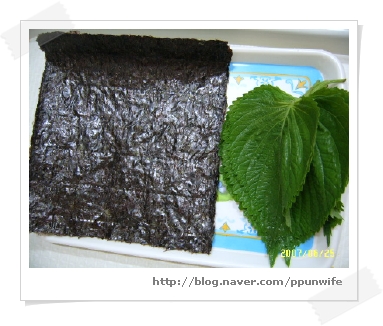
Wash the dried seaweed sheets for gimbap and the perilla leaves, then drain off the excess water.
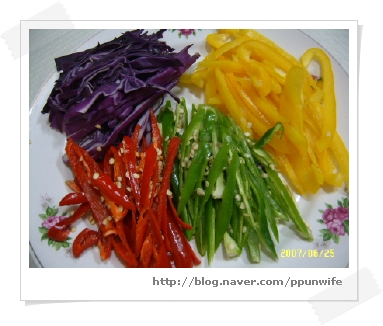
Julienne the vegetables to prepare them.
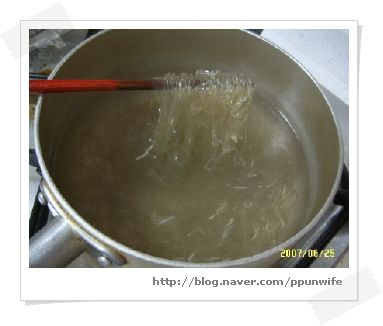
Boil the sweet potato glass noodles in boiling water, then rinse them in cold water.
Cut them into manageable lengths and drain thoroughly.
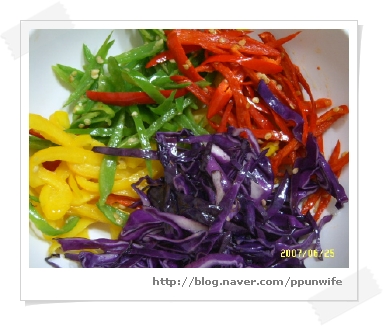
Stir-fry each vegetable separately in an oiled pan. Season with a little salt as you cook them.
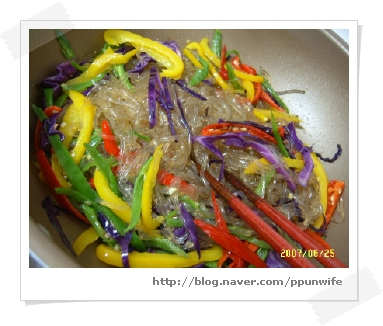
Heat oil in a frying pan and stir-fry the boiled glass noodles thoroughly, then season with soy sauce, sugar, toasted sesame oil, and toasted sesame seeds.
Add the vegetables, toss everything together, and let it cool.
It is a simple seasoning, so I did not measure the amounts.
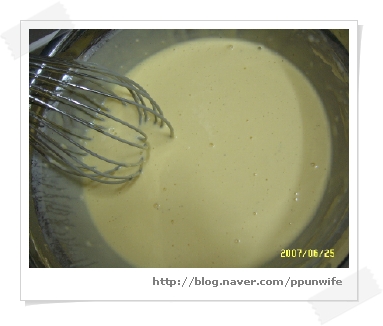
Mix flour with water to make the batter; if you make it too thick, the batter coating on the seaweed and perilla leaves will be heavy and will not taste good.
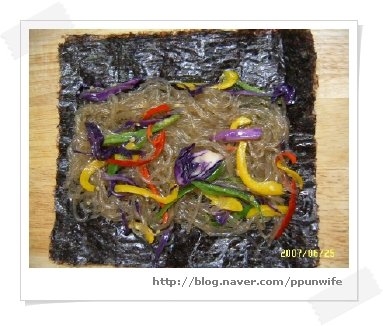
Lay down a sheet of seaweed, place the seasoned noodles on top, and roll it up tightly, pressing firmly as you go.
Be sure to seal the edge neatly with egg white or water at the end so it does not unravel.
I added too many noodles, so mine turned out quite thick. Filling about half the seaweed sheet gives you a nice, slim roll.
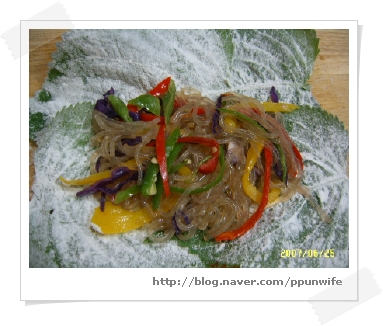
Dust the perilla leaves with flour, add the noodles, and roll them up carefully.
I found rolling perilla leaves a bit tricky, but I managed to get it done somehow.
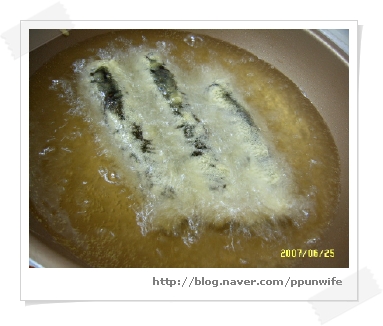
Deep-fry the rolled seaweed and perilla leaves in hot oil. The filling is already fully cooked, so you only need to cook the flour coating until crisp.
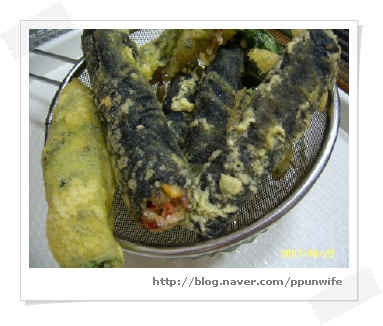
Drain the excess oil on a strainer.
Then slice them neatly to serve.
 Ppunwife's tips
- If you make the batter too thick, the coating on the seaweed and perilla leaves will become too heavy and will not taste good.
- Be sure to seal the edge neatly with egg white or water at the end so it does not unravel.
- The filling is already fully cooked, so you only need to cook the flour coating.
FAQ
How do I keep the rolls from unraveling at the edge?
Lightly dab egg white or water along the edge of the seaweed sheet when finishing the roll, and it will hold firmly in place without coming apart.
What consistency should the batter be?
If you mix the flour batter too thick, the crust will turn out heavy and less enjoyable, so it is best to keep it thin for a light coating.
What can I substitute for the chili peppers if I want less heat?
If you prefer a milder flavor, you can use onions or spinach in the filling instead of Cheongyang chili peppers.