Comforting Baechu Doenjang Guk (Cabbage Soybean Paste Soup)
A light 2-serving baechu doenjang guk made with blanched inner napa cabbage leaves seasoned in doenjang and simmered in anchovy broth.
Translated from Korean by AI and not yet checked by a native speaker. Amounts and numbers are taken directly from the original recipe. Read the Korean original →
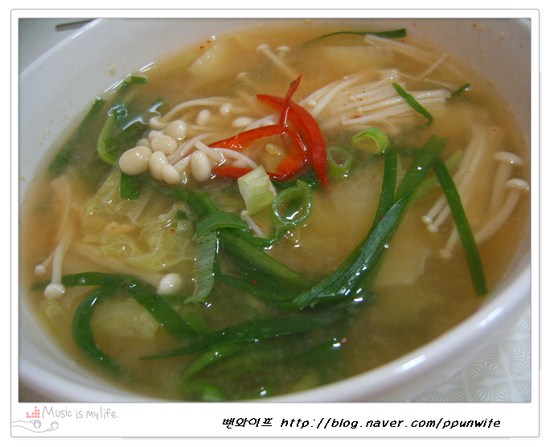
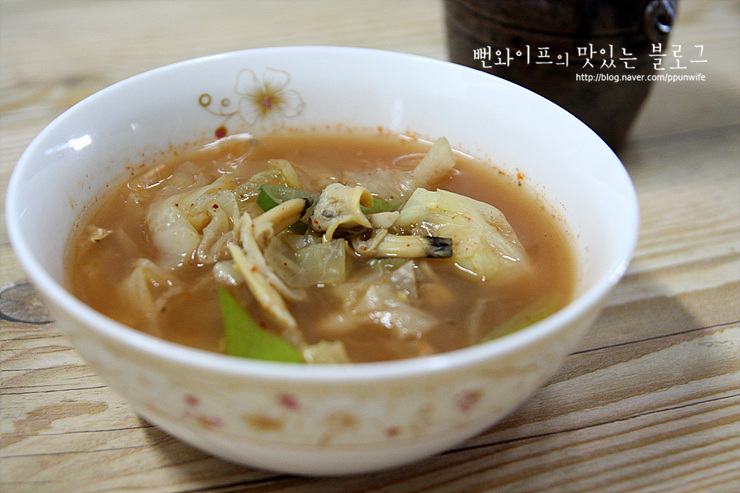
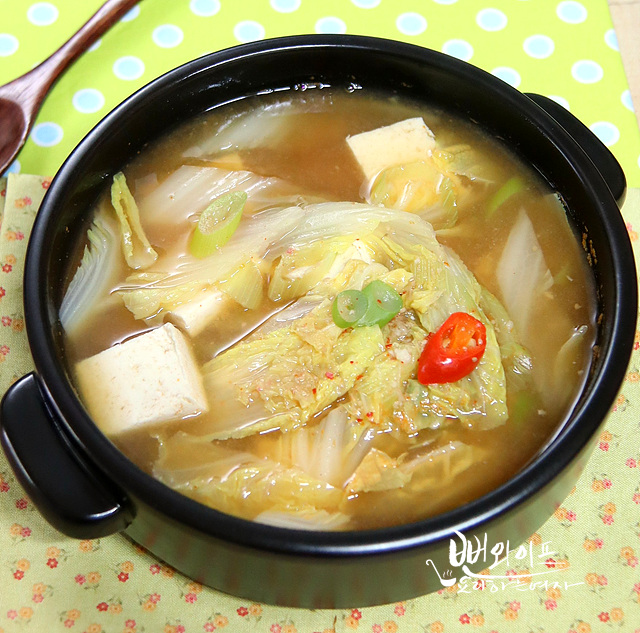
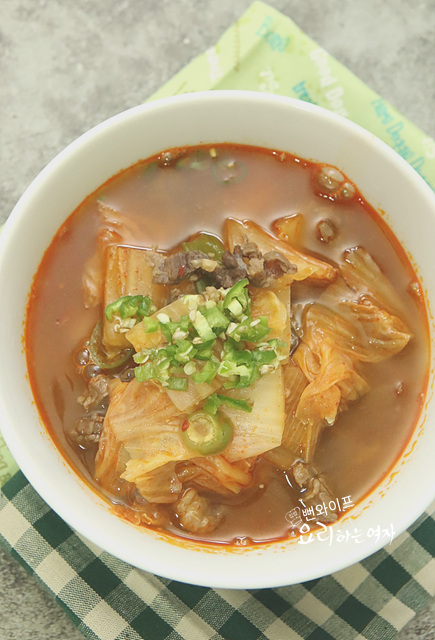
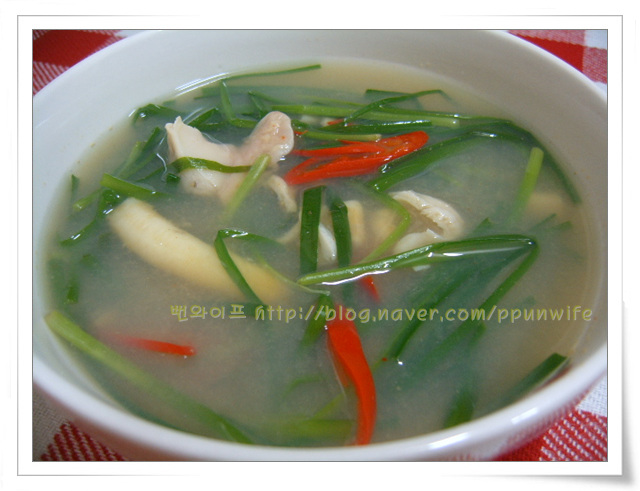
Tender inner napa cabbage leaves are lightly blanched, seasoned with doenjang, and simmered in clean anchovy broth. It is light, refreshing, and deeply savory, making it easy to enjoy even on mornings when you have little appetite. Adding a small amount of gochugaru keeps the soup clean and balanced without feeling heavy.
- Servings
- 2 servings
- Difficulty
- Medium
- Spiciness
- Mildly spicy
Ingredients
Ingredients
- Inner napa cabbage leaves3 leaves
- Garlic chives (buchu) (or thin scallions, large green onion (daepa))1 handful
- Enoki mushrooms1 handful
Doenjang guk
- Anchovy broth3 cups
- Doenjang (Korean soybean paste)1 tbsp
Seasoning
- Gochugaru (Korean chili flakes)1 tsp
- Minced garlic1 tsp
- Salta little
- You can also thoroughly boil dried napa cabbage greens (baechu-siraegi) or dried radish greens to make this doenjang soup.
- Instead of garlic chives, you can slice and add scallions or large green onion.
- Soak the dried kelp in cold water for about 1 hour.
Steps
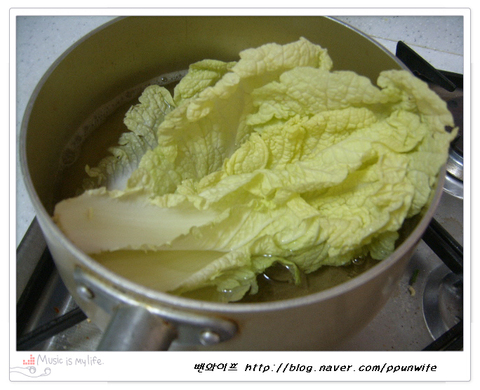
Blanch the inner napa cabbage leaves briefly in boiling water, rinse them in cold water,
squeeze out the excess moisture, and cut them into bite-sized lengths.
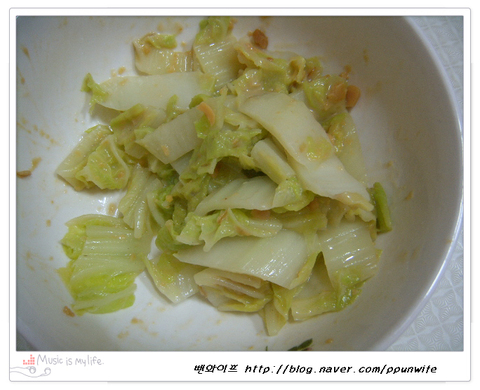
Add 1 tsp of doenjang to the blanched cabbage leaves and toss gently with your hands.
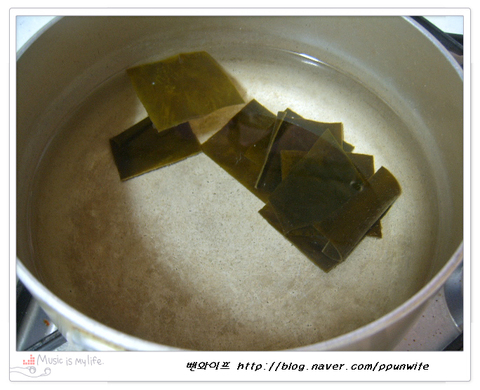
Soak the dried kelp in cold water for about 1 hour.
Mine were small, so I used several pieces. I added 3 cups and a half of water using a paper cup.
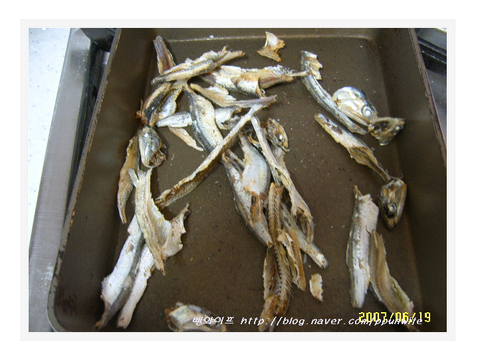
Toast the dried anchovies in a dry pan without oil.
They are damp, so toasting them like this eliminates the fishy smell and yields a savory broth.
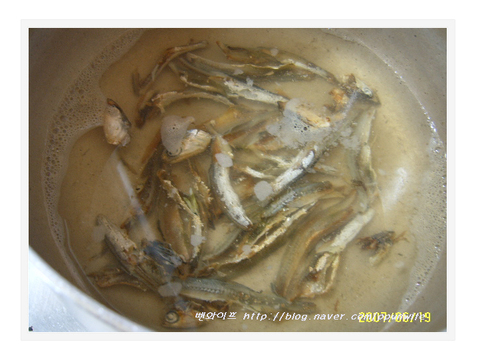
Add the anchovies to the kelp-infused water and boil for about 10 minutes.
Once you have about 3 cups of anchovy broth, it makes a generous 2 servings.
If you are eating with children, it serves about 3.
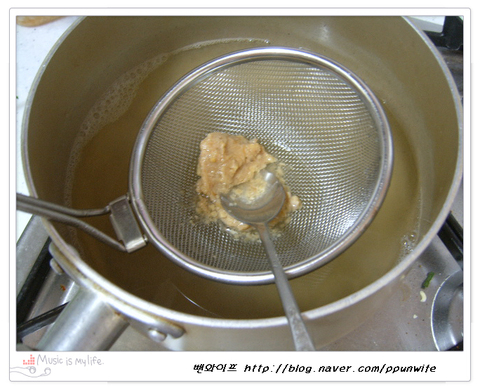
Add doenjang to the anchovy broth, dissolving it through a fine strainer.
Then bring the broth to a boil.
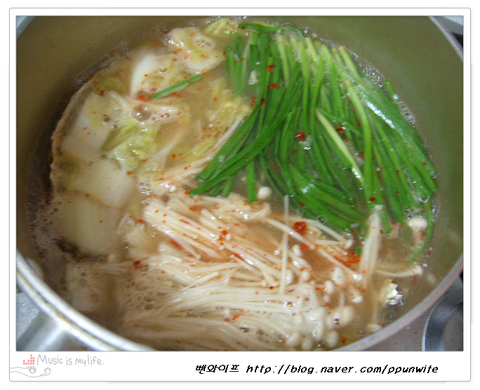
Once the soup boils, add the seasoned cabbage, garlic chives, and enoki mushrooms, followed by the minced garlic and gochugaru.
Adjust any missing saltiness with salt, bring it to a boil once more, and it is done.
 Ppunwife's tips
- Toasting the dried anchovies in a dry pan without oil removes the fishy smell and yields a savory broth.
FAQ
What can I substitute if I do not have garlic chives?
You can slice and add scallions or large green onion instead of garlic chives.
Can I use other ingredients instead of inner napa cabbage leaves?
Thoroughly boiling dried napa cabbage greens or dried radish greens you have at home works very well as a soup ingredient.
How can I reduce the fishy smell of anchovies and make a savory broth?
If you toast the dried anchovies first in a dry pan without oil, the dampness and fishy aroma disappear, bringing out a rich, toasted flavor.