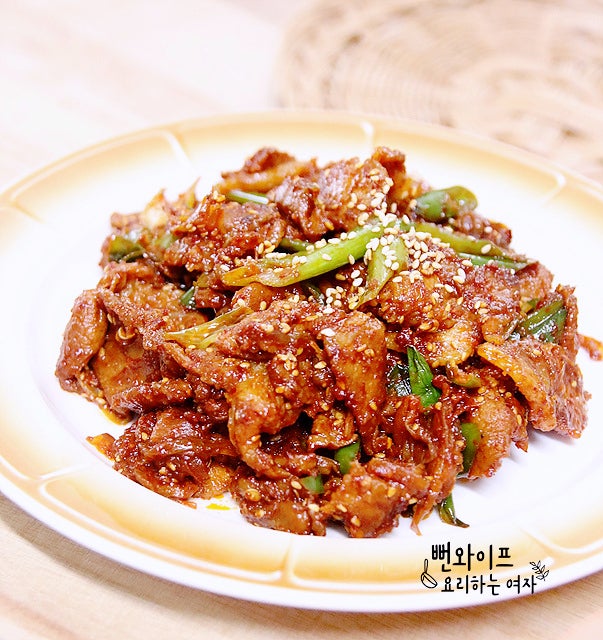
Spicy and Sweet Moist Jeyuk Bokkeum (Stir-Fried Pork)
A spicy and sweet stir-fried pork cooked to be juicy and moist by adjusting the sauce consistency with fruit juice.
Translated from Korean by AI and not yet checked by a native speaker. Amounts and numbers are taken directly from the original recipe. Read the Korean original →
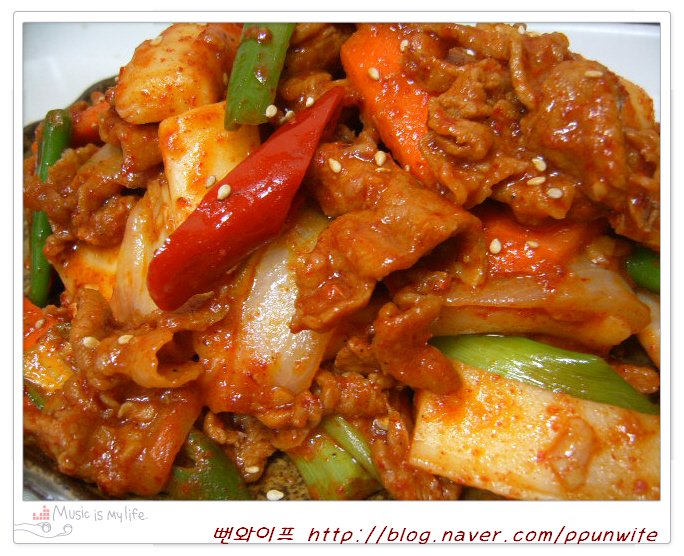
Thinly sliced pork is marinated in a sweet and spicy sauce blended with fruit juice, then stir-fried until tender. Using fruit juice prevents the sauce from becoming too thick, keeping the dish moist and juicy, while chewy rice cakes make every bite fun. It makes a great side dish for rice and, with a slight adjustment to the seasoning, doubles as a wonderful snack with drinks.
- Servings
- about 2–3 servings
- Difficulty
- Medium
- Spiciness
- Spicy
Ingredients
Ingredients
- Pork400 g
- Onion1/2
- Cabbage2 leaves
- Rice cakes1 handful
- Green chili pepper and red chili pepper1 each
- Large green onion (daepa)1 stalk
- Carrota little
Seasoning
- Gochujang (Korean red chili paste)3 tbsp
- Gochugaru (Korean chili flakes)2 tbsp
- Garlic1 tbsp
- Soy sauce1 tbsp
- Orange juice2 tbsp
- Mirin (cooking rice wine)1 tbsp
- Toasted sesame oil0.5 tsp
- Sugar1 tbsp
- Ginger powder1 tsp
- Ground black pepper1 tsp
- I used a cut with less fat, but any cut like pork front leg (picnic shoulder), hind leg (ham), or pork shoulder works fine.
- Prepare thin slices of pork cut for bulgogi, blot away the excess blood, and slice into bite-sized pieces.
- Feel free to use whatever vegetables you have at home.
- If you marinate the pork for at least 1 hour, it becomes more tender and flavorful as the sauce soaks in.
Steps
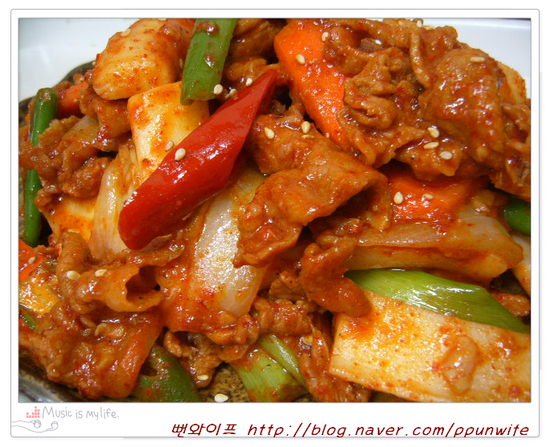
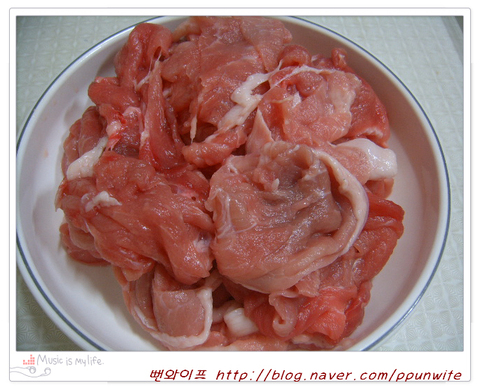
I prepared thin pork sliced for bulgogi.
I chose a cut with less fat, but front leg, hind leg, or shoulder all work fine.
Blot away any excess blood and cut into bite-sized pieces.
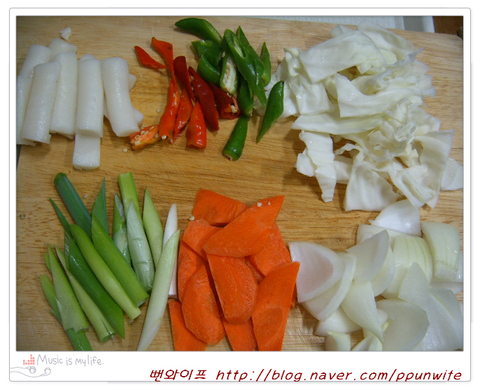
Any vegetables you have at home are fine to use.
Cabbage, onion, chili peppers, carrot, large green onion, rice cakes.
I always add rice cakes or sweet potato glass noodles to spicy stir-fries or soups.
Honestly, picking out and eating the rice cakes is the best part.
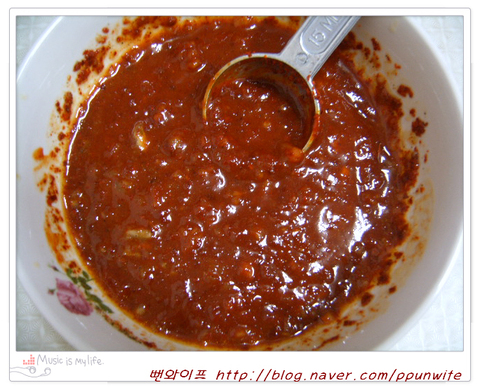
Mix the sauce ingredients in the amounts listed above.
I usually add Korean pear juice to beef stir-fries, and apple or orange juice to pork.
If the sauce is too thick, the stir-fry won't turn out moist, so feel free to adjust the consistency with juice. Since the juice has plenty of sweetness, you can leave out the sugar to your taste.
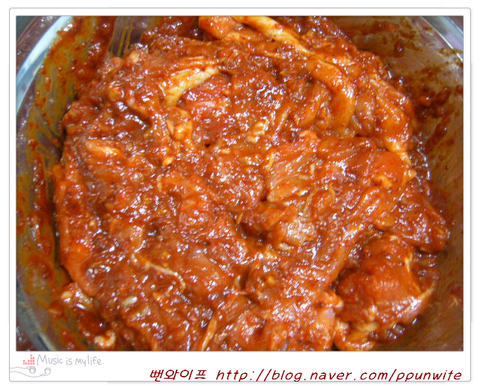
Add the sauce to the pork and toss well to coat.
Letting it marinate for at least 1 hour makes the meat much more tender and flavorful as the seasoning absorbs.
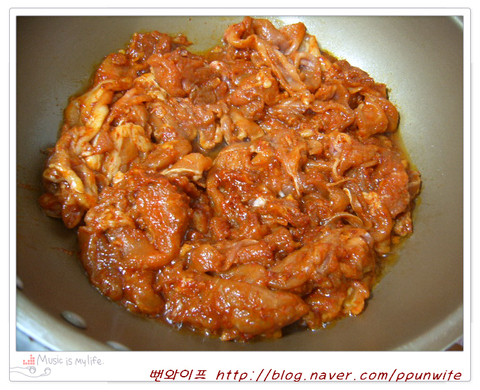
Lightly grease a frying pan with oil and add the marinated meat to stir-fry.
Once the pan heats up, stir-fry over medium heat.
When the meat looks almost fully cooked...
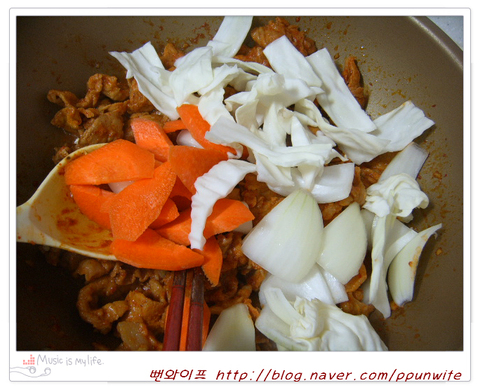
Add the firmer ingredients—carrot, onion, and cabbage—and toss a few times.
Once the carrot begins to soften...
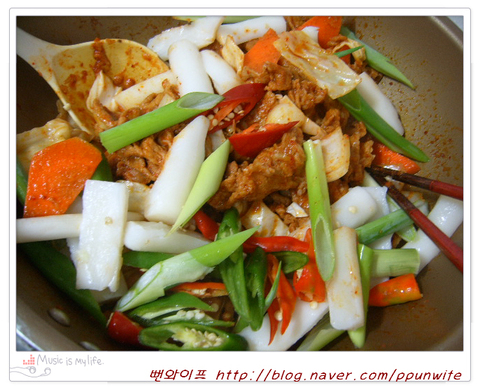
Add the remaining ingredients: large green onion, chili peppers, and rice cakes, then stir-fry.
Once the sauce coats all the ingredients evenly and everything is cooked through, it is done.
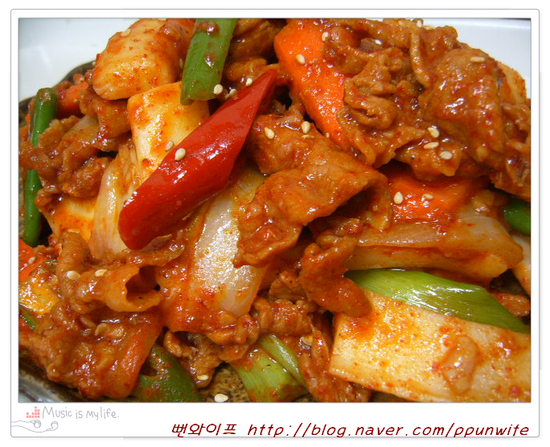
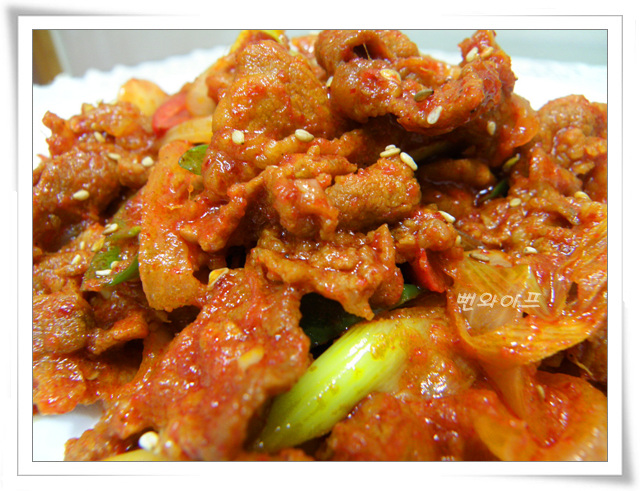
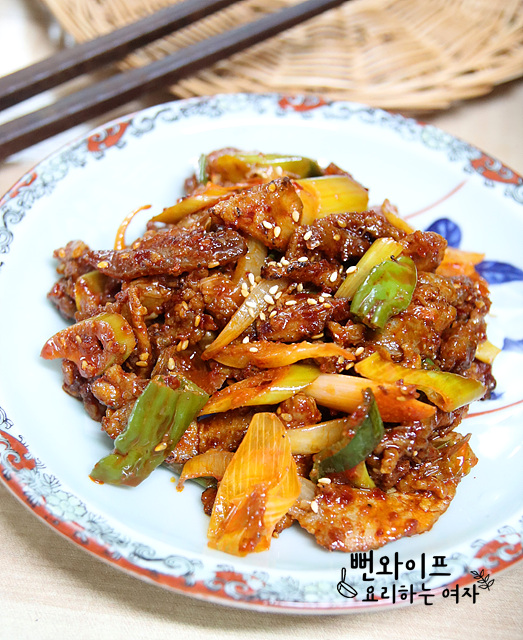
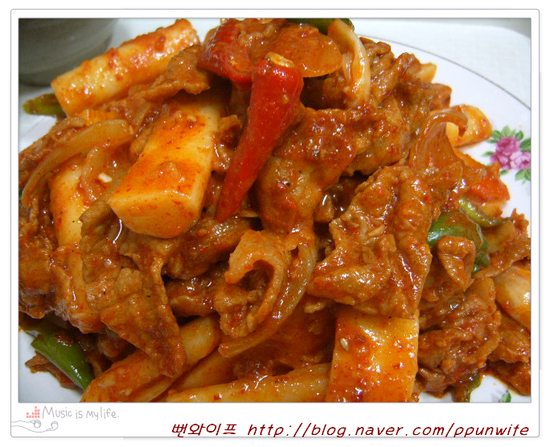
Here is the finished pork duruchigi.
It is great as a side dish for rice, and if seasoned a bit lightly, it makes an excellent accompaniment for drinks.
 Ppunwife's tips
- If the sauce is too thick, the stir-fry won't turn out moist, so feel free to adjust the consistency with juice.
- Since the juice has plenty of sweetness, you can leave out the sugar to your taste.
- Once the pan heats up, stir-fry over medium heat.
FAQ
What cut of pork should I use?
Any lean, thinly sliced cut suitable for bulgogi works well, including front leg (picnic shoulder), hind leg (ham), or pork shoulder.
Can I use something other than orange juice in the sauce?
Apple juice also works great for pork seasoning. Depending on how sweet the juice is, feel free to omit or adjust the amount of sugar to your liking.
How long should I marinate the pork?
Tossing the pork in the marinade and letting it sit for at least 1 hour tenderizes the meat and allows the flavors to soak in deeply.
When should I add the vegetables and rice cakes?
When the meat is almost fully cooked, add the carrot, onion, and cabbage first. Once the carrots begin to soften, toss in the large green onion, chili peppers, and rice cakes, cooking until everything comes together evenly.