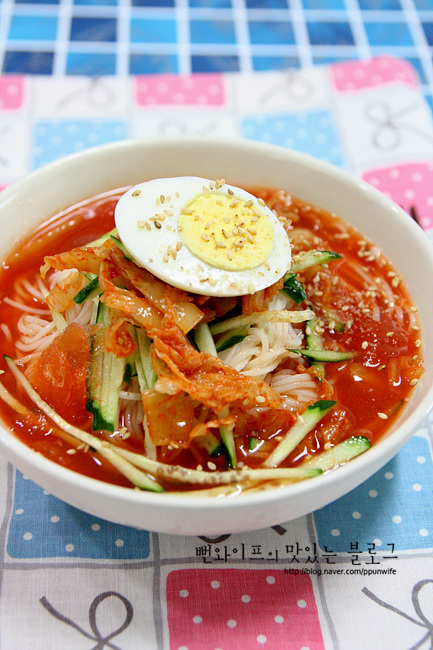
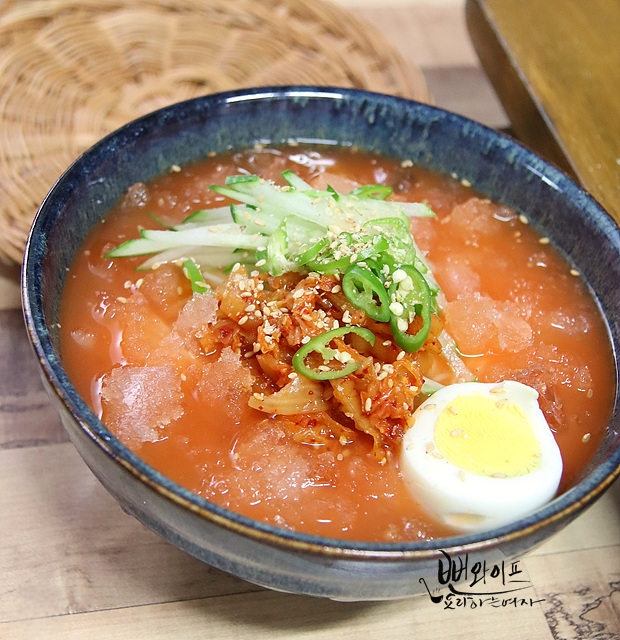
Dongchimi Guksu (Noodles in Radish Water Kimchi)
A special noodle dish enjoyed by serving boiled thin wheat noodles and garnishes in icy cold dongchimi broth.
Translated from Korean by AI and not yet checked by a native speaker. Amounts and numbers are taken directly from the original recipe. Read the Korean original →
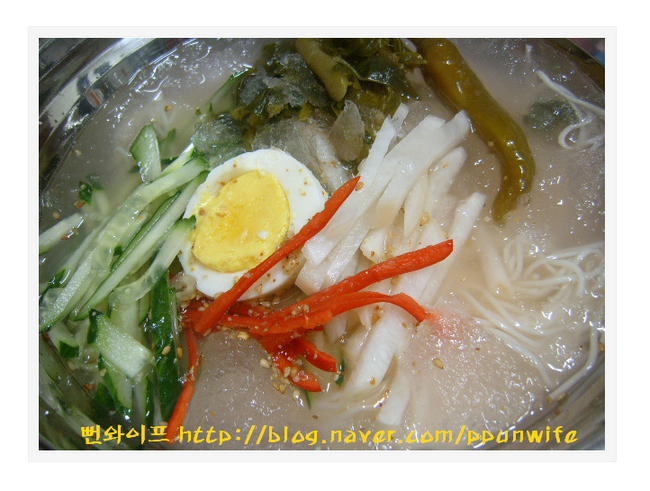
This clean-tasting noodle dish makes use of refreshing fermented dongchimi broth and shredded radish. It comes together simply by placing cucumber and egg garnishes over boiled thin wheat noodles and pouring in the cold broth. It is wonderful for cleansing a greasy palate after eating meat.
- Difficulty
- Easy
- Spiciness
- Not spicy
Ingredients
Ingredients
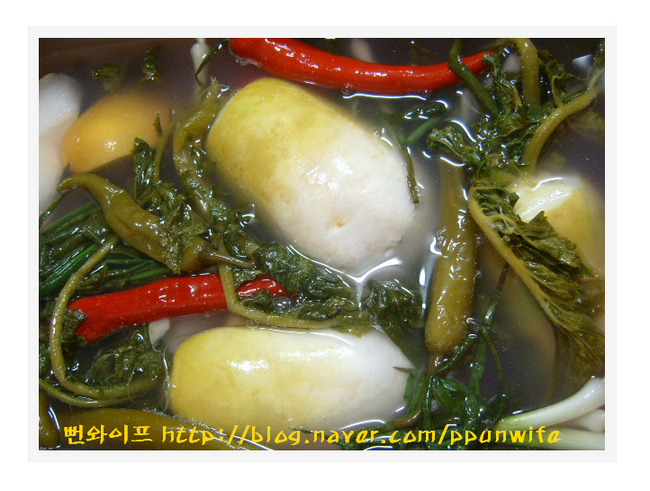
- Radish from dongchimi (radish water kimchi)
- Julienned cucumber
- Boiled egg
- Red chili peppera little
Broth
- Dongchimi (radish water kimchi) broth
- Sugara little (to taste)
Steps
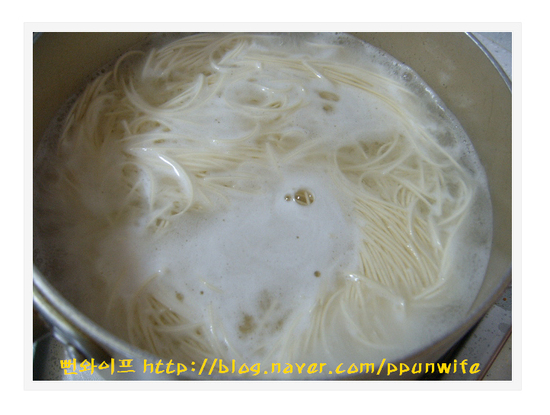
Boil the thin wheat noodles in boiling water, rinse them in ice water or cold water, and drain well.
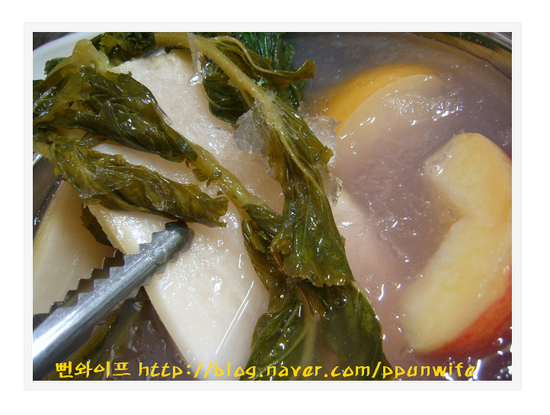
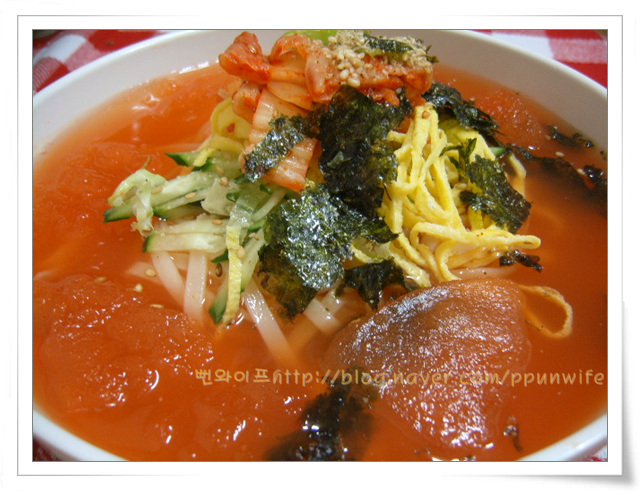
This is the dongchimi radish and broth frozen for two hours.
Julienning this radish and eating it together with the thin wheat noodles is truly delicious.
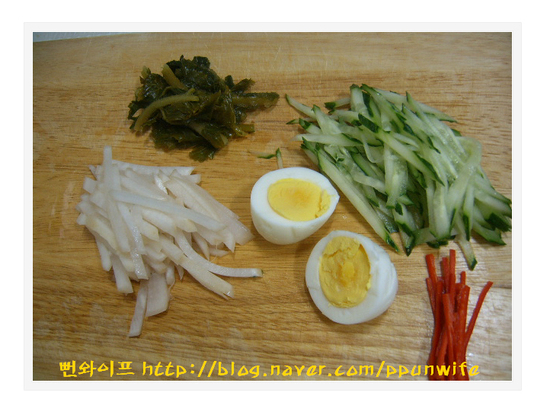
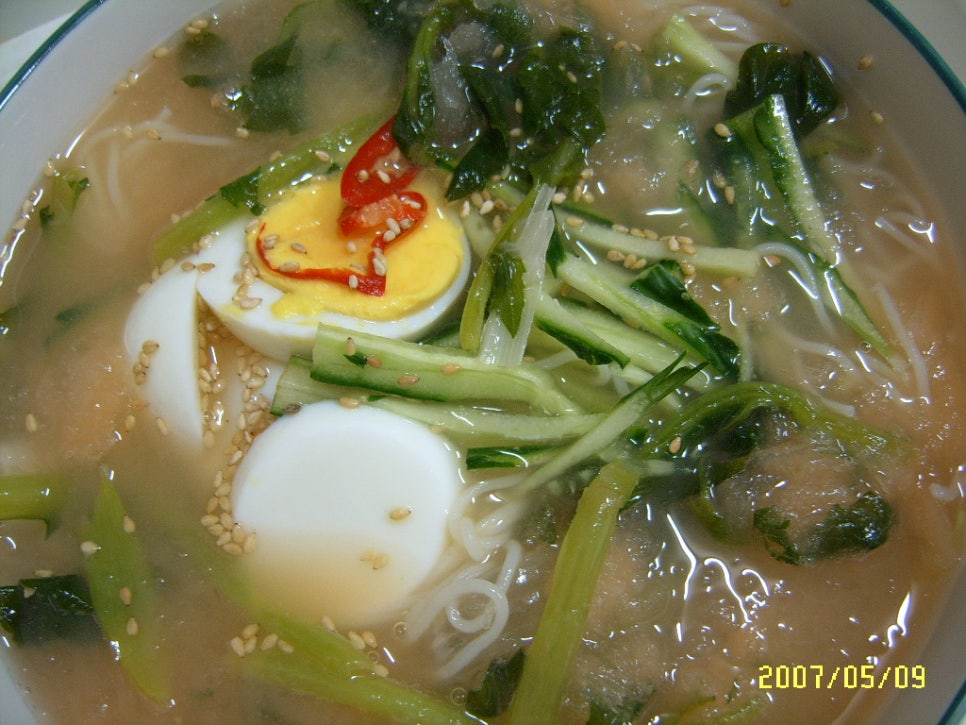
Julienne a little bit of the radish from dongchimi, cucumber, and red chili pepper. Prepare the egg either hard-boiled or as an egg garnish.
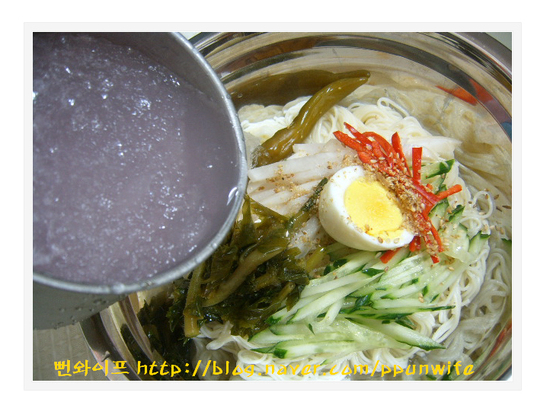
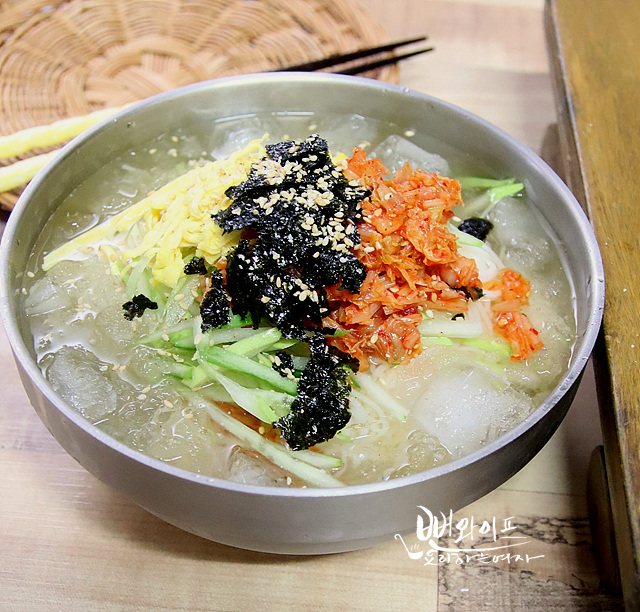
Top the thin wheat noodles with the vegetable and egg garnishes, then pour in the dongchimi broth to finish.
 Ppunwife's tips
- When eating dongchimi guksu in the winter, make sure to eat it in a warm place. After finishing, your whole body will tremble like an aspen leaf. Why? Because you will feel frozen to your core.
- It is also great to strain kimchi broth through a fine sieve, season it to taste with sugar or vinegar, freeze it slightly in the freezer, and then serve it over thin wheat noodles.
FAQ
What can I use as a substitute if I don't have dongchimi?
You can strain well-fermented baechu kimchi broth through a fine sieve, season it to your taste with sugar or vinegar, chill it until lightly slushy, and serve it over thin wheat noodles.
Is sugar strictly necessary in the dongchimi broth?
Sugar is not mandatory; taste the broth first and mix in just a little to suit your preference.
Does the egg garnish have to be a boiled egg?
You can top it with a boiled egg, or you can fry an egg garnish (jidan) and place it on top.