Janchi Guksu (Banquet Noodles in Broth)
A warming bowl of thin wheat noodles in rich anchovy broth, topped with colorful garnishes and seasoned sauce.
Translated from Korean by AI and not yet checked by a native speaker. Amounts and numbers are taken directly from the original recipe. Read the Korean original →
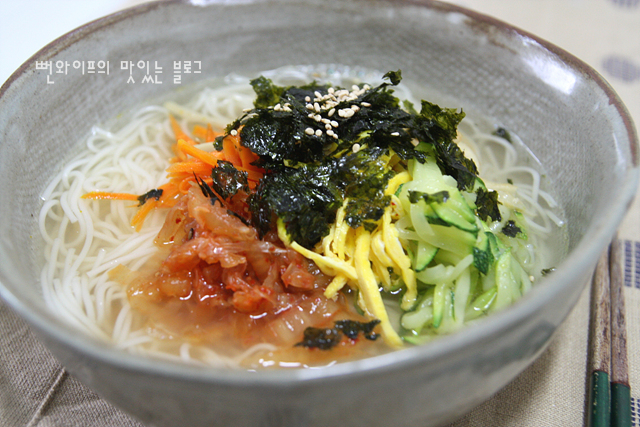
Simmered with plenty of dried anchovies, kelp, and aromatic vegetables, the broth has a deep, savory flavor. Generously topped with stir-fried vegetables, fish cake, and sliced egg garnish, it makes for a hearty and satisfying bowl.
- Servings
- 2 servings
- Difficulty
- Hard
- Spiciness
- Mildly spicy
Ingredients
Ingredients
- Kimchi2 leaves
- Square fish cake (eomuk)1 sheet
- Squash1/3
- Egg1 (egg garnish)
- Carrot1/4
- Seaweed flakes
- Anchovy broth5 cups
- Thin wheat noodles (somyeon)200 g
Anchovy broth
- Dried soup anchovies20
- Dried kelp (dasima)2 sheets (10 cm square)
- Korean radish (mu)1/5, 200 g
- Onion1/2 (medium)
- Large green onion (daepa)1/2 stalk
- Water10 cups
Seasoning sauce
- Regular soy sauce (jin-ganjang)2 tbsp
- Soup soy sauce (guk-ganjang) (or soup soy sauce (guk-ganjang), soup soy sauce (guk-ganjang))1 tbsp
- Gochugaru (Korean chili flakes)1 tbsp
- Minced garlic1 tsp
- Minced green onion1 tbsp
- Red chili pepper1/2 (minced)
- Sugar1/2 tsp
- Toasted sesame oil1 tsp
- Ground toasted sesame seeds1 tsp
- To your taste, dried shrimp or dipori (large-eyed herring) also make great broth ingredients alongside anchovies.
Steps
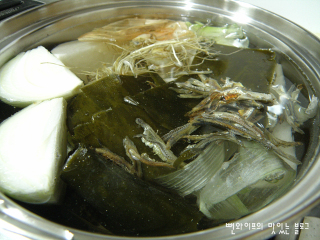
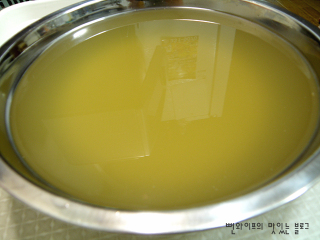
1. Anchovy broth for noodles tastes best when made richer than broth for soups or stews, so it is better to add more anchovies and kelp than usual, along with aromatic vegetables for savoriness and Korean radish to keep the broth refreshing.
To your taste, dried shrimp or dipori (large-eyed herring) also make great broth ingredients alongside anchovies.
For detailed instructions on making deep, savory anchovy broth, see here ⇒ http://blog.naver.com/ppunwife/140090439314
2. Season the broth prepared this way with 1 tbsp soup soy sauce and 1 tbsp cheongju (or mirin).
This makes your seasoned noodle broth.
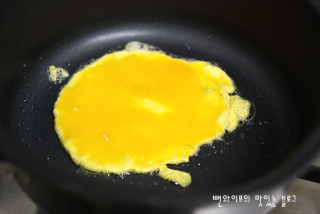
3. Noodles taste better with plenty of toppings.
First, fry an egg garnish sheet and slice it into thin strips.
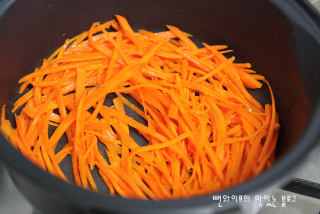
4. Thinly julienne the carrot, heat oil in a pan, and stir-fry until softened.
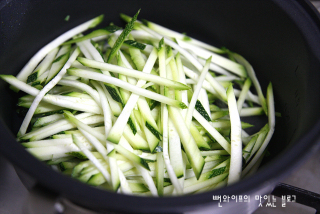
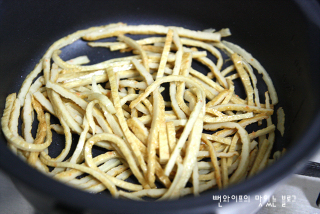
5. Julienne the squash as well and stir-fry until translucent.
6. Briefly blanch the fish cake in boiling water, rinse in cold water, drain, cut into thin strips, and stir-fry.
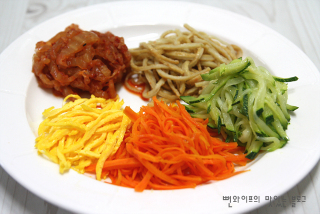
7. Finely chop the kimchi and season it with a little sugar and toasted sesame oil. Now the noodle garnishes are ready.
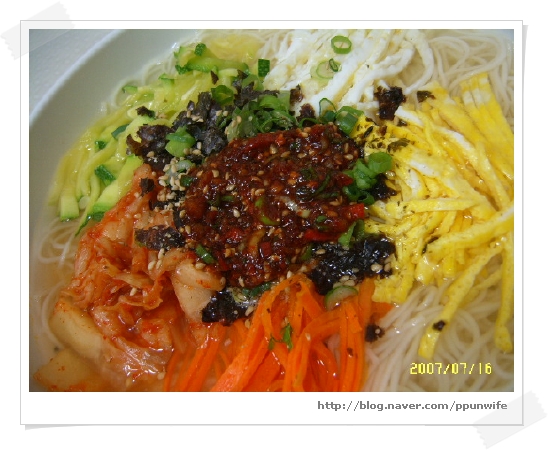
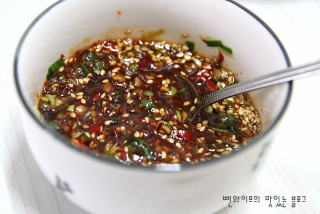
8. Combine all the sauce ingredients and mix well.
10
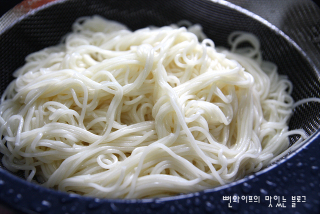
9. Thin wheat noodles will usually have cooking instructions on the package, typically around 2-3 minutes.
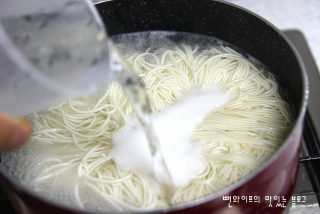
Bring plenty of water to a boil, add the noodles, and when it starts boiling, pour in a cup of cold water. Once it boils again and 2 minutes pass, the noodles will be almost fully cooked.
10. Quickly rinse them in ice water or cold water and drain well to get springy, chewy noodles.
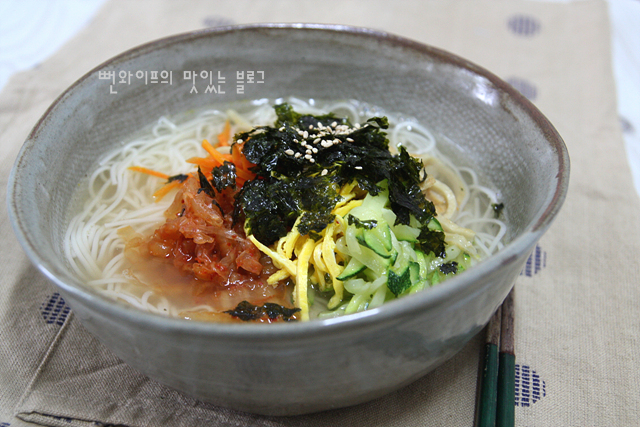
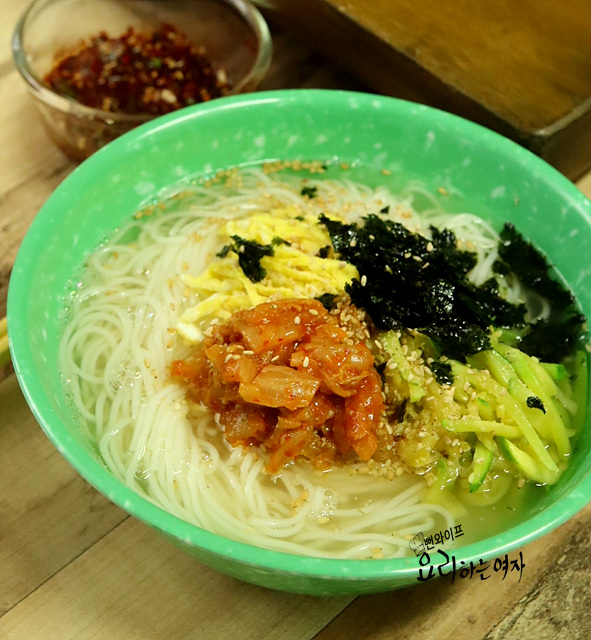
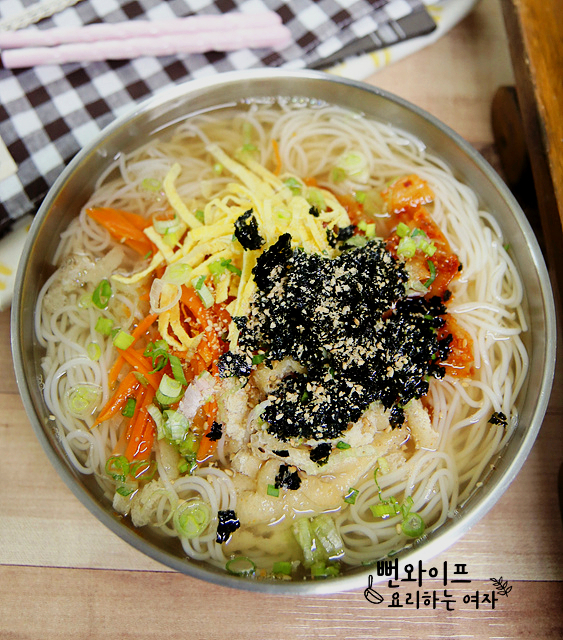
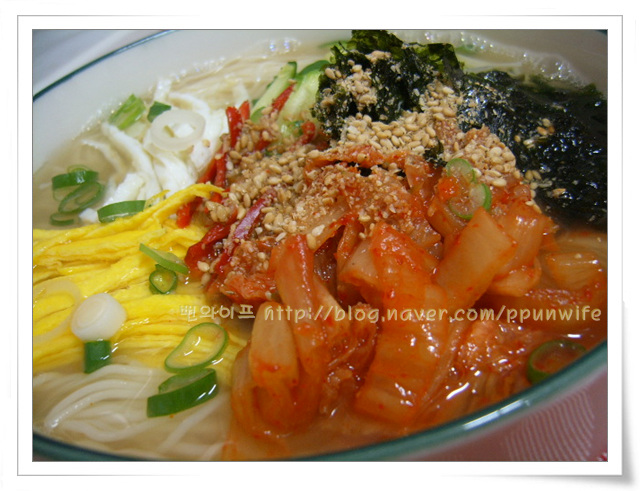
Top with the garnishes and finish with toasted seaweed flakes, and your janchi guksu is complete.
The weather is as cool as autumn today, so noodles in hot broth taste especially delicious.
 Ppunwife's tips
- Anchovy broth for noodles tastes best when made richer than broth for soups or stews, so it is better to add more anchovies and kelp than usual, along with savory aromatic vegetables and Korean radish for a refreshing broth.
- If you want piping-hot noodle soup, briefly rinse the chilled, boiled noodles in hot water or warm anchovy broth right before serving, then ladle the broth over them. The soup will stay warm until you finish eating.
FAQ
How can I keep the noodle soup hot until the end?
Before placing the cold-rinsed noodles into bowls, rinse or bathe them once with hot water or warm anchovy broth. This keeps the soup warm all the way through your meal.
What is the secret to a delicious anchovy broth for noodles?
Use more dried anchovies and dried kelp than you would for everyday soups or stews, and simmer them together with aromatic vegetables like Korean radish, large green onion, and onion for a rich, refreshing, and savory broth.
How do you cook thin wheat noodles so they turn out springy and chewy?
Add the thin wheat noodles to boiling water, pour in a cup of cold water when it boils up, cook them through, and quickly rinse the cooked noodles in ice water or cold water before draining well to make them chewy.