Refreshing Cold Buckwheat Noodles with Slushy Broth
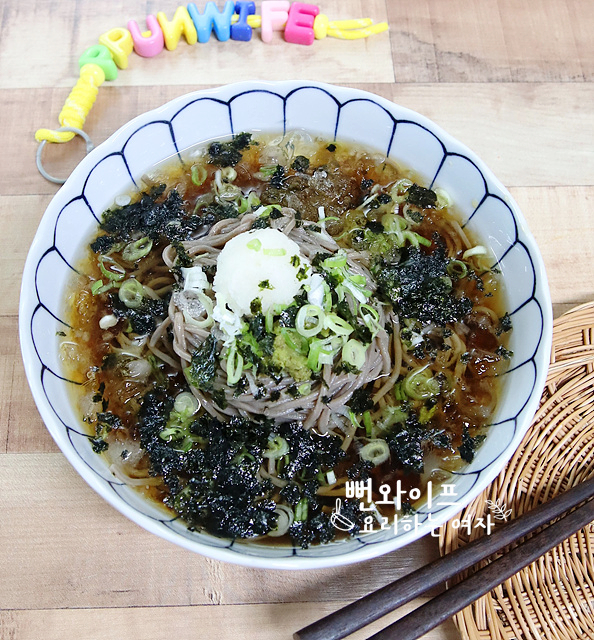
Refreshing summer cold buckwheat noodles served in a semi-frozen, slushy broth brewed from bonito flakes and anchovies.
Translated from Korean by AI and not yet checked by a native speaker. Amounts and numbers are taken directly from the original recipe. Read the Korean original →
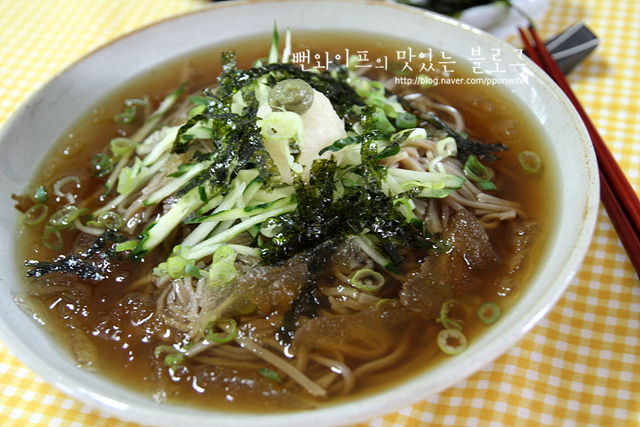
A refreshing noodle dish for 4, made with a savory broth infused with bonito flakes over a base of anchovies and vegetables. Steeping the bonito flakes off the heat keeps the broth clean and free of bitterness. Served with slushy broth, grated radish, and wasabi, it makes a wonderful summer delicacy.
- Servings
- 4 servings
- Difficulty
- Medium
- Spiciness
- Not spicy
Ingredients
Ingredients
- Buckwheat noodles
Bonito Broth
- Bonito flakes (katsuobushi)10 g (2 cups)
- Dried anchovies20
- Dried kelp (dasima)2 sheets (10 cm)
- Korean radish (mu)200 g
- Onion1/2
- Shiitake mushrooms2
- Large green onion (daepa)2 stalks (white parts only)
- Water10 cups
Seasoning
- Regular soy sauce (jin-ganjang)8 tbsp
- Mirin (cooking rice wine)4 tbsp
- Sugar2 tbsp
Other Garnishes
- Grated Korean radish (mu)
- Julienned cucumber
- Wasabi
- Thinly sliced scallions
- Shredded dried seaweed sheets (gim)
- Combine all broth ingredients except the bonito flakes and let sit for about 30 minutes.
- Grate the radish on a box grater, strain through a sieve to squeeze out the juice, and shape the remaining pulp into small balls. The radish juice can be mixed straight into the bonito broth.
Steps
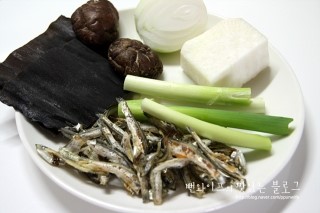
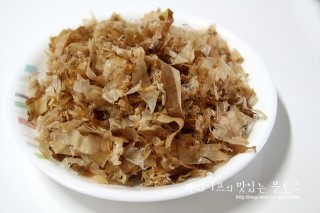
1. Prepare the broth ingredients as shown in the picture.
2. Bonito flakes (katsuobushi) are processed dried skipjack tuna shaved into thin flakes. When steeped together with anchovy broth, they add rich savory umami and are widely used in Japanese cooking.
Prepare 2 cups (10 g).
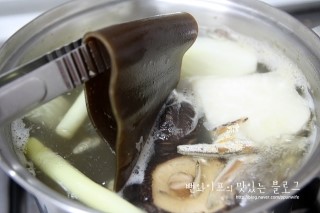
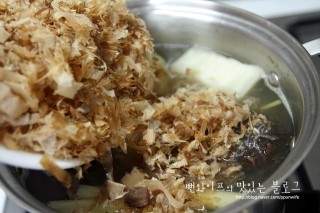
3. Pour the water into a pot, add all broth ingredients except the bonito flakes, and let sit for about 30 minutes.
Turn on the heat, and once the broth boils vigorously, remove the kelp and simmer over low heat for at least 10 minutes. Alternatively, bring everything to a boil together, remove only the kelp after 10 minutes, and boil for about 5 more minutes.
4. Once the anchovy broth is done simmering, turn off the heat, add the bonito flakes, and let steep for about 10 minutes.
Boiling bonito flakes makes the broth cloudy and fishy, so be sure to add them with the heat off.
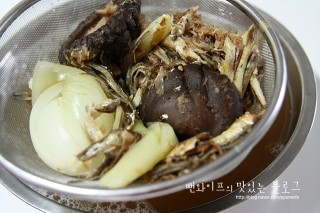
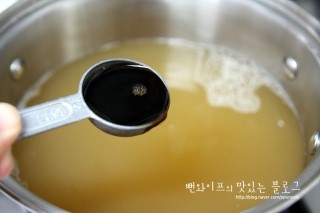
5. Strain through a cheesecloth or fine mesh sieve to catch only the clear broth...
6. Pour the broth into a pot, add the soy sauce, mirin, and sugar, and simmer briefly for about 2 minutes.
If it tastes too mild, add more soy sauce, and adjust the sugar to your taste.
The bonito broth made this way yields enough for 4 servings.
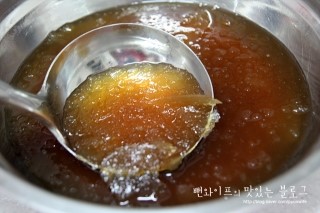
7. Cool the broth completely, then place it in the freezer until slushy ice forms.
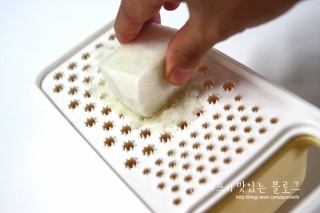
8. Grate the radish on a box grater, strain through a sieve to squeeze out the juice, and shape the remaining pulp into small balls.
The radish juice can be mixed straight into the bonito broth.
10
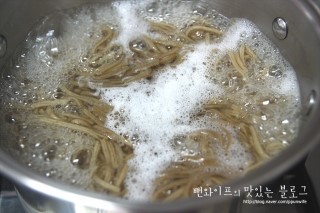
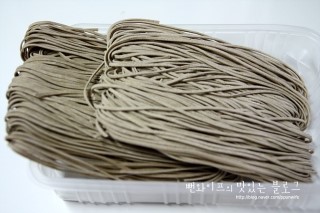
9. Here are the buckwheat noodles.
10. Check the package for the recommended cooking time for the buckwheat noodles. I boiled mine for 6 minutes.
Rinse them in cold water, give them a final rinse in ice water, and drain well.
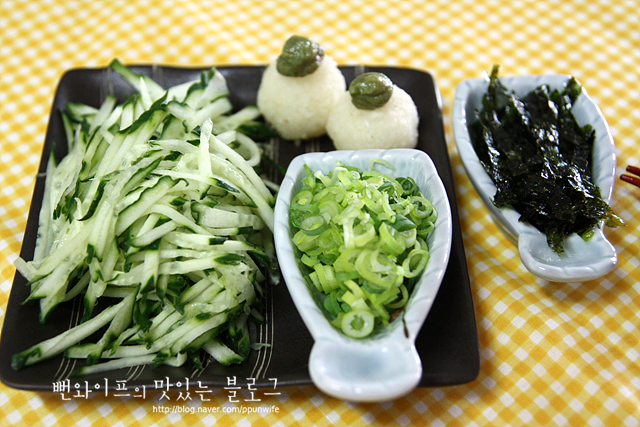
These are the garnishes to serve alongside the buckwheat noodles.
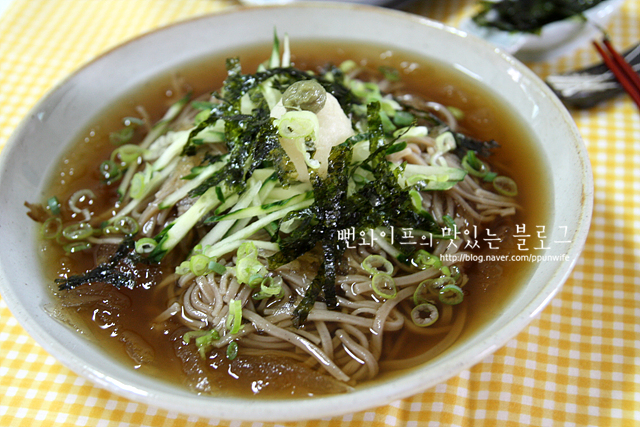
Add the noodles, slushy broth, and all garnishes, then mix in the wasabi and grated radish balls well before eating.
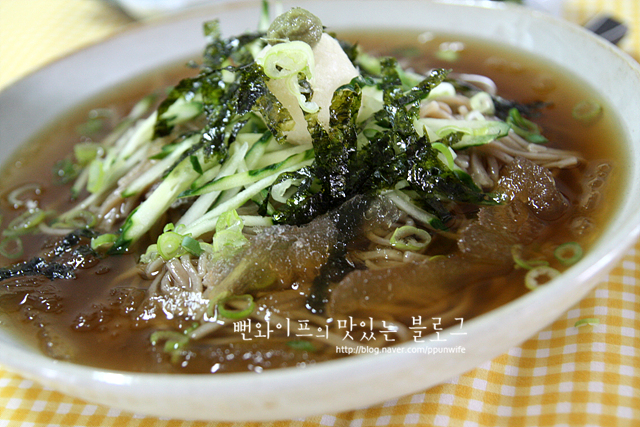
It has been hot without monsoon rain for three days here in Gimhae, and a cold bowl of buckwheat noodles makes me forget the heat for a while.
If you love buckwheat noodles, you can make a large batch of broth at once and keep it in the freezer to enjoy easily whenever you crave it.
Click click above
Click the picture above and subscribe to see detailed recipes for delicious noodle dishes.
Subscribing is completely free. Please subscribe a lot.
Leaving a comment and a kitchen-up when clipping a post is always appreciated.
Click the link below and press kitchen-up at the top:
http://kitchen.naver.com/recipe/viewRecipe.nhn?recipePid=607632
 Ppunwife's tips
- Boiling bonito flakes makes the broth cloudy and fishy, so be sure to add them with the heat turned off.
- If you love buckwheat noodles, you can make a large batch of broth at once and keep it in the freezer to enjoy easily whenever you crave it.
FAQ
Can I boil the bonito flakes along with the other broth ingredients?
Boiling bonito flakes can make the broth cloudy and taste fishy, so turn off the heat first and let them steep for about 10 minutes.
Do I use the radish juice as well when adding grated radish to the broth?
Grate the radish and strain it through a sieve; stir the squeezed juice into the broth, and shape the remaining pulp into round balls to serve on top and mix in before eating.
Can I make the broth ahead of time in a larger batch?
Yes, simmering a large batch of broth at once and storing it in the freezer makes it easy to pull out and enjoy whenever you want.
Is there a trick to keeping the cooked buckwheat noodles chewy?
After boiling and draining the noodles, rinse them in cold running water and finish with a rinse in ice water to make them extra springy and chilled.