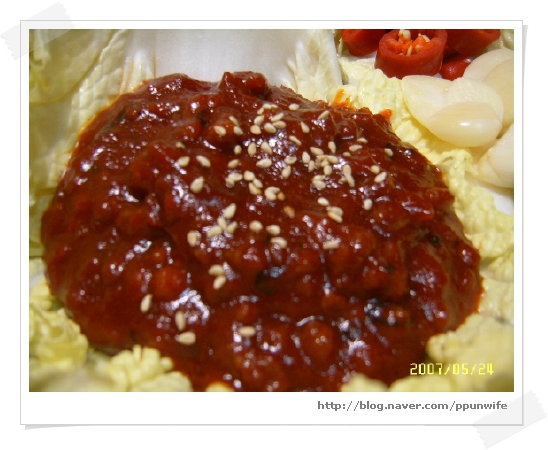
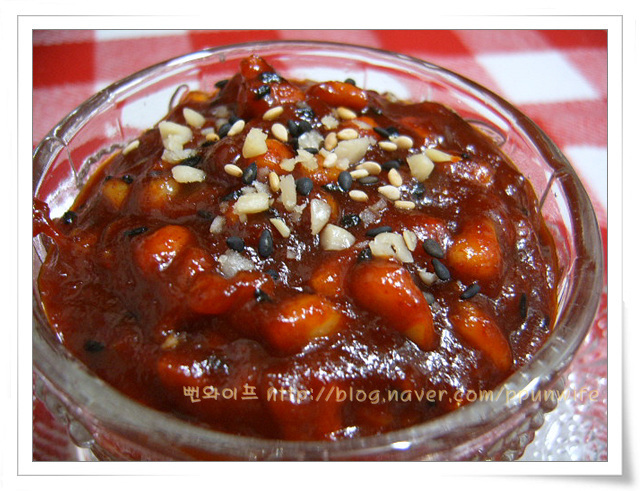
Yak Gochujang (Seasoned Beef Red Chili Paste) with Leftover Tteokgalbi
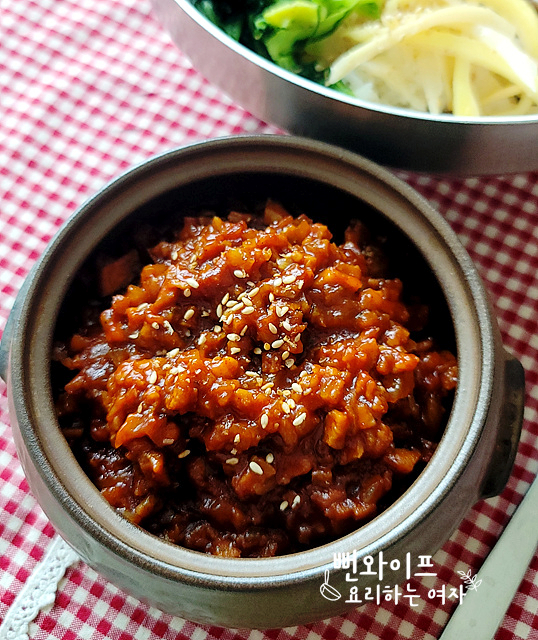
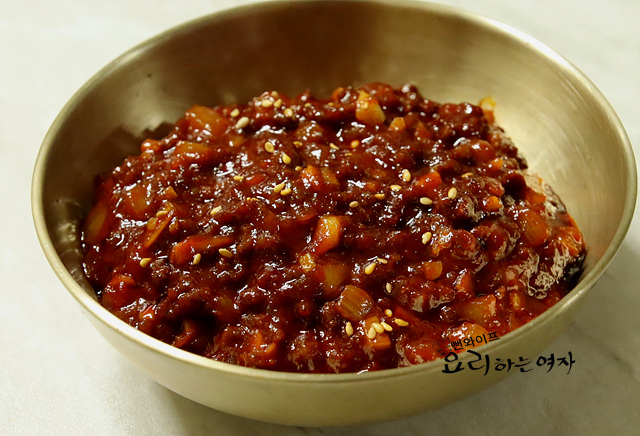
A stir-fried chili paste made by simmering seasoned tteokgalbi and onions with gochujang.
Translated from Korean by AI and not yet checked by a native speaker. Amounts and numbers are taken directly from the original recipe. Read the Korean original →
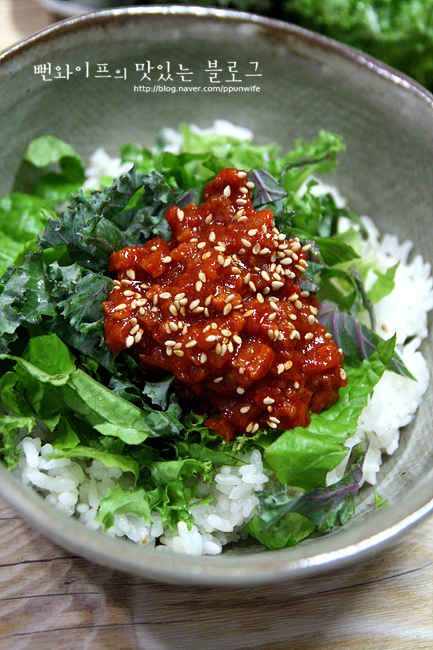
This is a quick yak gochujang made by finely chopping leftover holiday tteokgalbi, saving you the step of seasoning raw meat. Plenty of onions are added so it is not overly salty, making it delicious to mix into rice or seasoned vegetables. Pear or fruit juice provides a mellow sweetness that everyone can enjoy.
- Servings
- 3–4 servings
- Difficulty
- Easy
- Spiciness
- Spicy
Ingredients
Ingredients
- Tteokgalbi (grilled short rib patties)120 g (1/2 cup, minced)
- Onion1/2 (medium)
Seasoning
- Minced garlic1/2 tbsp
- Gochujang (Korean red chili paste)3 tbsp
- Pear juice (or apple, fruit juice)4 tbsp
- Honey (or corn syrup (mulyeot))1/2–1 tbsp
- Mirin (cooking rice wine)1 tbsp
- Ground black peppera little
- If you are using raw beef, it is best to season it first. For 100 g raw beef, marinate beforehand with 1/2 tbsp regular soy sauce (jin-ganjang), 1 tbsp minced green onion, 1/2 tbsp minced garlic, 1 tbsp mirin (cooking rice wine), 1 tsp toasted sesame oil, and a little ground black pepper, then start cooking by browning the meat first.
- If you do not have pear juice or other fruit juice, use water instead and add extra sweetener (honey, corn syrup, sugar, etc.) at the end.
Steps
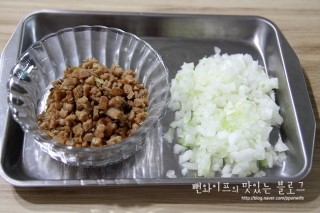
1. I prepared 120 g of tteokgalbi, which made about 1/2 cup once finely chopped.
I did not mince it too finely so that it still has a nice bite, and I also finely chopped 1/2 onion to help remove any gaminess.
If you are using raw beef, it is best to season it first.
For 100 g raw beef, marinate beforehand with 1/2 tbsp regular soy sauce (jin-ganjang), 1 tbsp minced green onion, 1/2 tbsp minced garlic, 1 tbsp mirin (cooking rice wine), 1 tsp toasted sesame oil, and a little ground black pepper,
then cook the meat first.
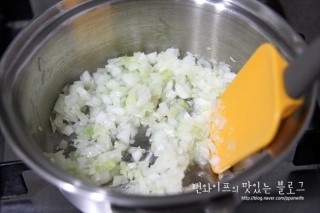
2. Heat oil in a hot pan and stir-fry the onion and minced garlic.
Do not cook them too long; stir-fry until the onion is just tender-crisp.
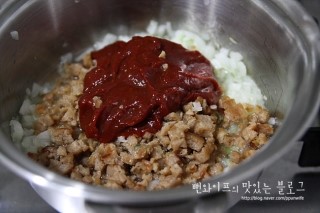
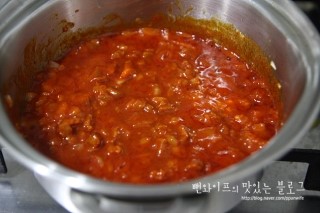
3. Add the finely chopped tteokgalbi, 3 tbsp gochujang, 4 tbsp pear juice (or apple or fruit juice), and 1 tbsp mirin...
If you do not have pear juice or fruit juice, use water and add extra sweetener (honey, corn syrup, sugar, etc.) at the end.
4. Stir so the ingredients are evenly blended, and simmer over low heat until it reaches the right consistency.
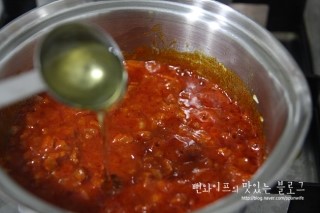

5. Finish by adjusting the sweetness with honey or corn syrup, and add ground black pepper.
I used store-bought gochujang and added 1/2 tbsp of honey; if you are using saltier homemade gochujang, add a little more or adjust the amount to your taste.
6. I set out some leftover vegetables from making ssambap the other day.
Use whatever you have in the fridge, such as soybean sprouts or microgreens.
 Ppunwife's tips
- Adding toasted sesame oil while making the gochujang shortens its shelf life, so it is much more fragrant and tasty to drizzle it in when you mix it into your rice.
- It is also wonderful to add some nuts for extra crunch and a rich, nutty flavor.
- As you know with any seasoning, making small batches that you can finish quickly is better for both flavor and health.
FAQ
What can I substitute if I don't have pear juice or fruit juice?
Cook with water instead, then adjust the flavor at the end by adding sweeteners such as honey, corn syrup, or sugar.
Why shouldn't I add toasted sesame oil while stir-frying the gochujang?
Adding toasted sesame oil during the cooking process shortens its shelf life, so drizzling it directly when mixing your rice is better for both taste and storage.
How should I prepare this if using raw beef?
For 100 g of raw beef, first season it with regular soy sauce (jin-ganjang), minced green onion, minced garlic, mirin (cooking rice wine), toasted sesame oil, and ground black pepper, then cook the meat first before proceeding.
Can I add nuts to the recipe?
Yes, you can add nuts according to your preference to give it extra texture and a rich, savory flavor.