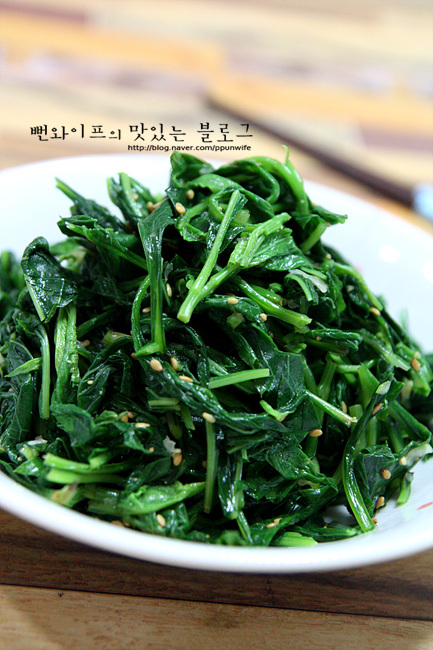
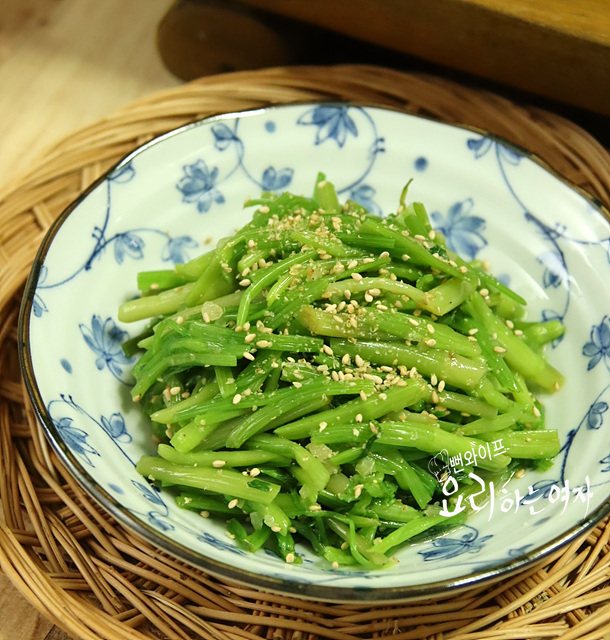
Tender, Fragrant Chamnamul Muchim (Seasoned Chamnamul)
A fragrant spring side dish made by briefly blanching chamnamul in boiling water and tossing it with simple seasonings.
Translated from Korean by AI and not yet checked by a native speaker. Amounts and numbers are taken directly from the original recipe. Read the Korean original →
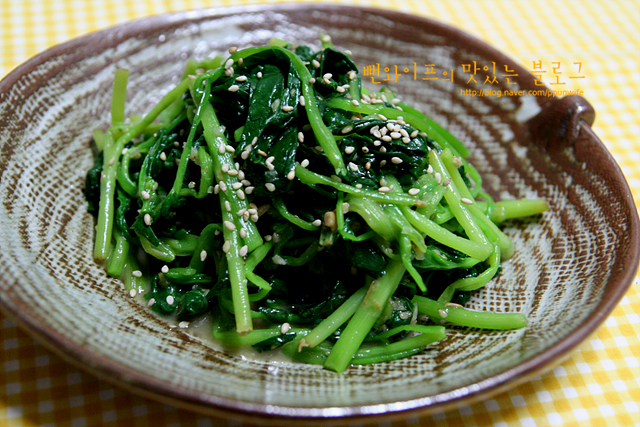
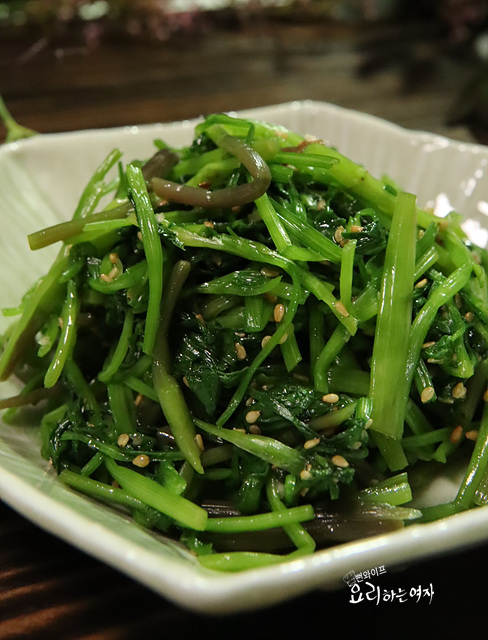
This side dish lightly blanches aromatic chamnamul in boiling water and tosses it cleanly with minimal basic seasonings. Adding the stems first and blanching for just a short moment to barely wilt them helps keep the texture crisp and tender. It pairs wonderfully with meat dishes or serves as a light, clean-tasting side dish.
- Servings
- 2–3 servings
- Difficulty
- Medium
- Spiciness
- Not spicy
Ingredients
Ingredients
- Chamnamul (Korean pimpinella)2 handfuls, 200 g
- Coarse sea salt1/2 tbsp
- Water5 cups (for blanching)
- Chamnamul (Korean pimpinella)1 handful, 100 g
Seasoning
- Soup soy sauce (guk-ganjang) (or soup soy sauce (guk-ganjang), soup soy sauce (guk-ganjang))1 tsp
- Salt1/2 tsp
- Minced green onion1 tbsp
- Minced garlic1 tsp
- Toasted sesame oil
- Ground toasted sesame seeds
- Regular soy sauce (jin-ganjang)1 tbsp
- Vinegar1 tbsp
- Gochugaru (Korean chili flakes)1 tbsp
- Minced green onion1 tbsp
- Minced garlic1 tsp
- Sugar1 tsp
- Toasted sesame oil
- Toasted sesame seeds
- The amount of ingredients (chamnamul) is the weight before blanching.
Steps
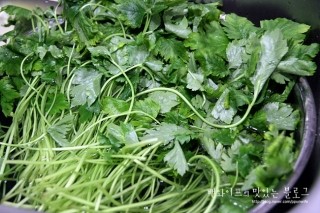
1. These days, wild greens are sold packaged so cleanly that they barely need any prep.
Remove any yellow leaves or debris, wash several times in water, and drain.
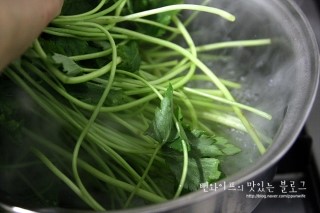
2. Add about 1/2 tbsp of coarse sea salt to vigorously boiling water, then add the chamnamul stems first.
Once the stems soften, add the rest and blanch quickly within 30 seconds.
You are not boiling them soft, but just giving them a brief dip in rolling boiling water to wilt them.
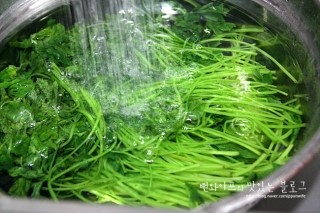
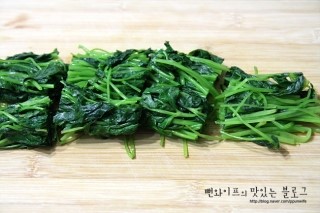
3. Rinse the blanched chamnamul in pre-prepared cold water.
4. Cut into bite-sized lengths.
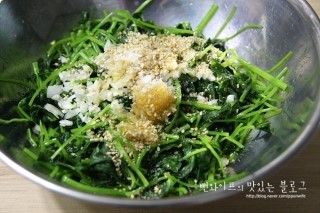
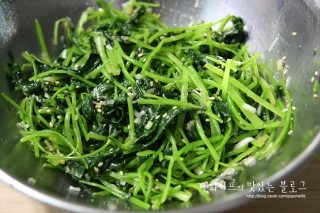
5. Add all the seasoning ingredients and the chamnamul...
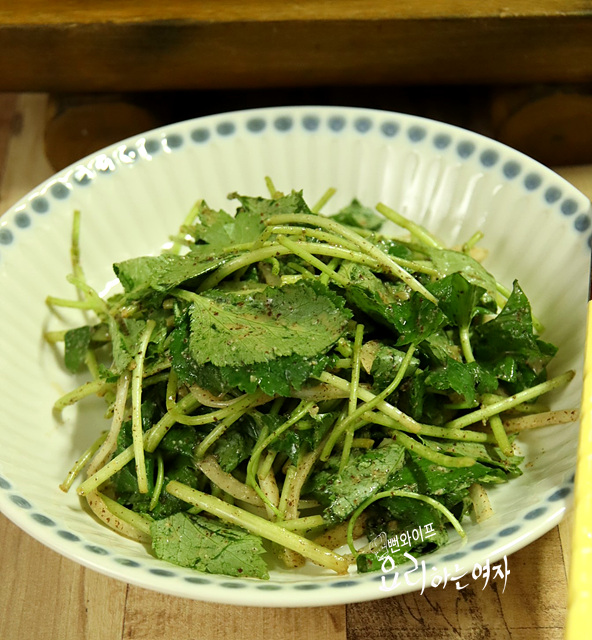
6. Toss gently by hand so the seasoning coats evenly, and it is done.
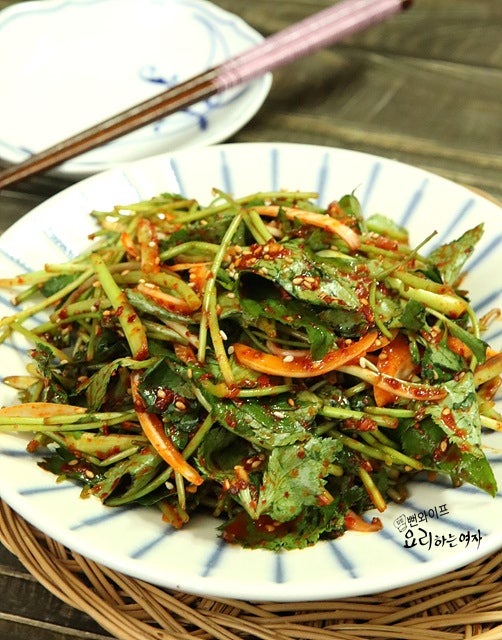
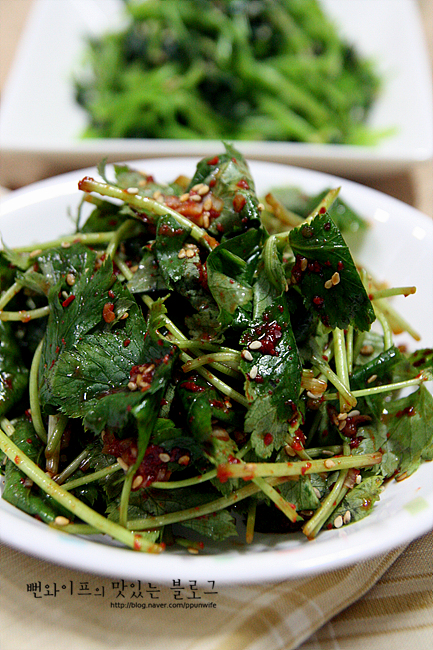
Chamnamul chomuchim (serves 2)
Ingredients: 100 g chamnamul (a handful)
Seasoning: 1 tbsp regular soy sauce (jin-ganjang), 1 tbsp vinegar, 1 tbsp gochugaru (Korean chili flakes), 1 tbsp minced green onion,
1 tsp minced garlic, 1 tsp sugar, toasted sesame oil, toasted sesame seeds
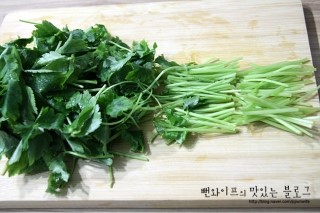
1. For this version, we will toss it fresh in a sweet and sour dressing.
Cut into bite-sized lengths.
Since we are not blanching it, I prepared half the amount of the dish above.
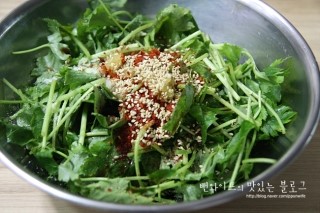
2. In a bowl, add the chamnamul and all the seasoning ingredients...
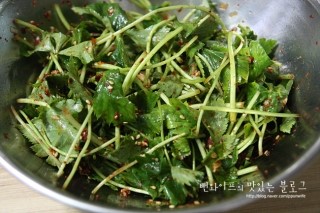
Toss evenly and you are all done.
 Ppunwife's tips
- Add about 1/2 tbsp of coarse sea salt to vigorously boiling water, then put the chamnamul stems in first. Once the stems soften, add the rest and blanch quickly within 30 seconds. You are not boiling them soft, but just giving them a brief dip in rolling boiling water to wilt them.
- Toss it quickly and eat while it is fresh so it stays tender and delicious without turning tough.
FAQ
What is the timing and method for blanching chamnamul?
After adding coarse sea salt to boiling water, put the firm stems in first. Once they soften, add the leaves and blanch quickly within 30 seconds just to wilt them.
Do I need to rinse it in cold water after blanching?
Rinse the blanched chamnamul immediately in pre-prepared cold water, then cut into bite-sized pieces to prepare.
Can it be eaten raw without blanching?
You can keep the chamnamul unblanched, cut it into bite-sized pieces, and toss it with regular soy sauce (jin-ganjang), vinegar, gochugaru (Korean chili flakes), sugar, and other seasonings for a sweet and tangy chomuchim.