Sun-Dried Goguma Mallaengi (Chewy Dried Sweet Potatoes)
A chewy, natural snack made by pressure-steaming sweet potatoes, slicing them, and drying them in the autumn sun.
Translated from Korean by AI and not yet checked by a native speaker. Amounts and numbers are taken directly from the original recipe. Read the Korean original →
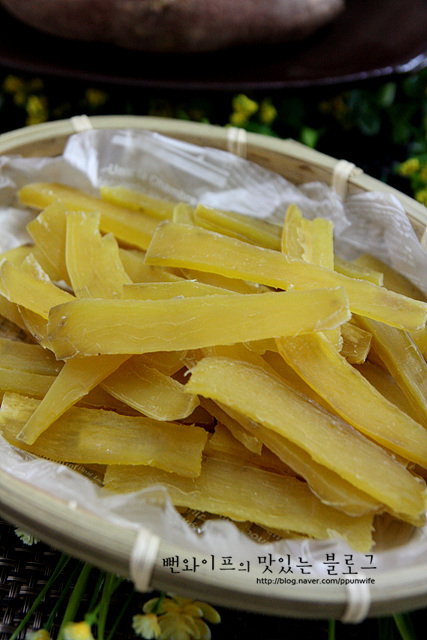
This nutritious snack is made by steaming seasonal sweet potatoes in a pressure cooker and laying them out on a woven tray to dry in the autumn sun. Sliced to about 0.7 cm thick and turned once a day, they dry to a chewy texture pliable enough to bend smoothly in your hand. Made with no additives, they bring out the natural sweetness of sweet potatoes and keep well for long-term snacking.
- Servings
- about 3–4 servings
- Cook time
- 15 minprep not included
- Difficulty
- Easy
- Spiciness
- Not spicy
Ingredients
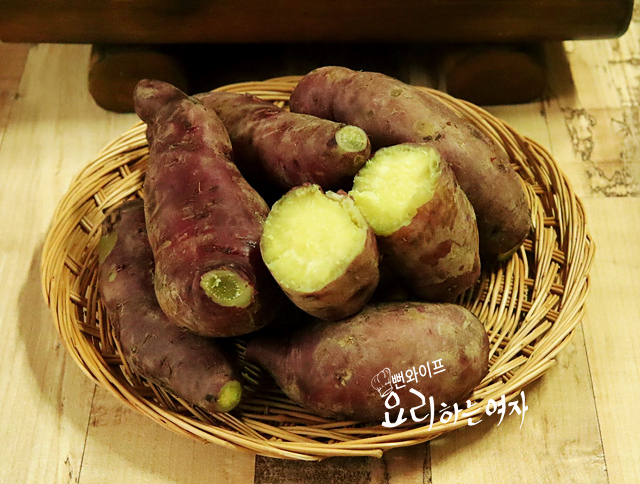
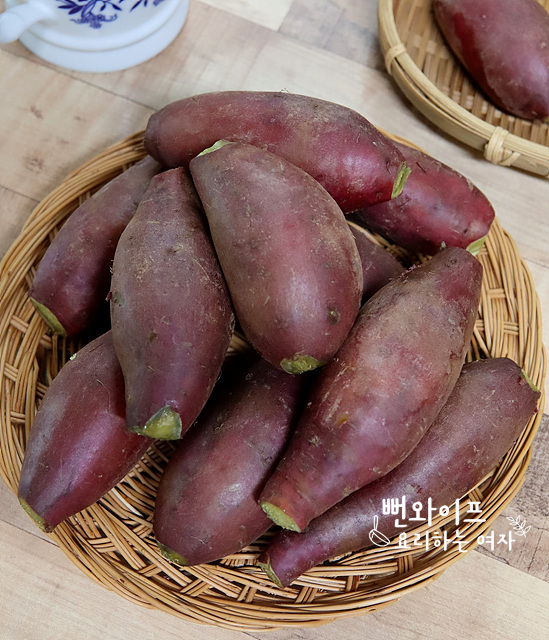
- Sweet potato6 (medium)
- Very watery sweet potatoes are not suitable for making mallaengi. Medium-sized ones do not take too long to cook, and their plump middle makes them easy to slice once cooked.
- When making a large batch to keep for a long time, seal it well and store in the refrigerator or freezer.
Steps

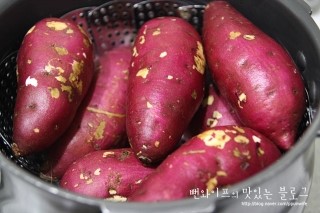
1. Prepare 6 to 7 medium sweet potatoes.
They do not take long to cook, and because they are plump in the middle, they are easy to slice once cooked.
Also, very watery sweet potatoes are not suitable for making dried sweet potato snacks.
2. Pour water into a pressure cooker, set a steamer rack inside, and bring to a rolling boil. When steam rises, add the sweet potatoes, close the lid, and once it begins to boil and the weight starts jiggling, lower the heat to medium-low and steam for 15 minutes. Turn off the heat and let it rest until the pressure drops completely.
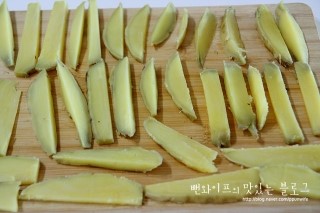
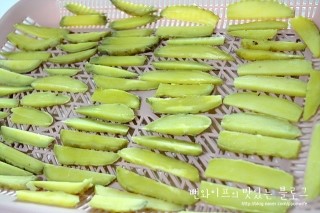
3. Let the steamed sweet potatoes cool slightly, peel them, and slice into pieces about 0.7 cm thick.
If they are sliced too thin, they will turn limp and break apart.
And if sliced too thick, they take a long time to dry, which carries the risk of spoiling or molding.
4. Spread the sweet potato slices apart on a breathable woven tray.
Turn them over about once a day while drying.
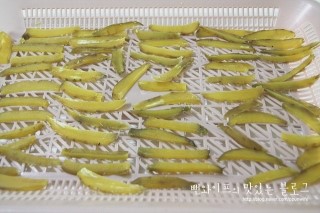
With such great wind and sunshine lately, they dried nicely in just 3 days.
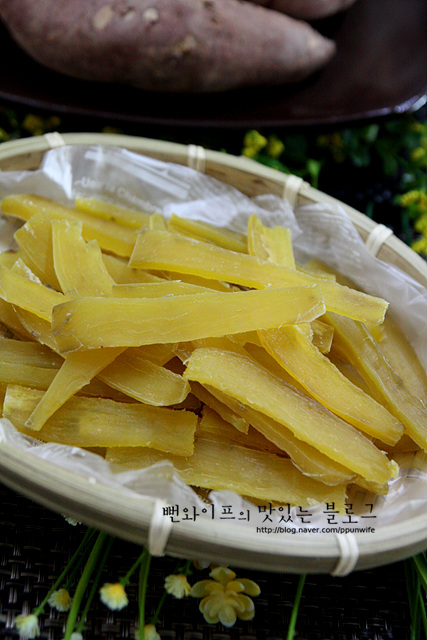
As the sweet potatoes dry, the tips and outer peel areas turn dark in color.
Here is how they look neatly trimmed with scissors after drying to clean up any messy parts.
The darkened spots are not spoiled or rotten, so they are completely fine to eat.
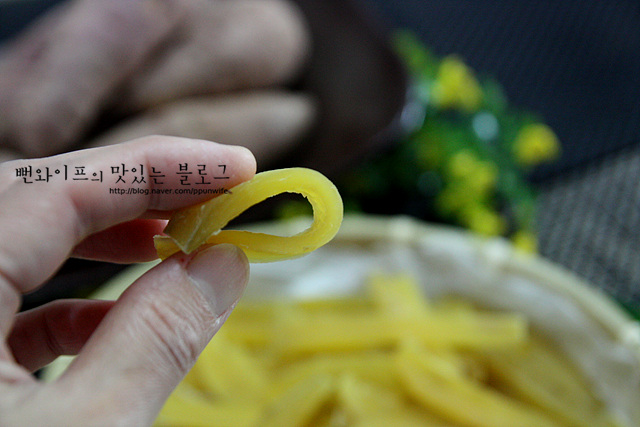
Once they are chewy enough to bend easily in your hand, your goguma mallaengi is ready to enjoy.
If you dry them for too long, they will become hard and uncomfortable to chew.
 Ppunwife's tips
- If you slice the sweet potatoes too thin, they become limp and break easily, and if you slice them too thick, they take too long to dry and risk growing mold, so a thickness of about 0.7 cm is best.
- Once they are chewy enough to bend smoothly in your hand, they are at the perfect texture to eat; drying them too long will make them hard and uncomfortable to chew.
FAQ
What kind of sweet potatoes should I choose for making mallaengi?
Avoid overly watery varieties, and choose moderately plump, medium-sized sweet potatoes so they do not take too long to steam and are easy to slice.
How thick should the sweet potatoes be sliced for drying?
A thickness of about 0.7 cm is ideal. If sliced too thin, they easily break apart while drying, and if cut too thick, drying takes longer and risks molding.
The tips of the dried sweet potatoes turned dark. Are they safe to eat?
The edges and skin areas naturally turn dark as they dry. They are not spoiled, so you can eat them with peace of mind.
How do I store the finished goguma mallaengi?
Store them in an airtight container or zipper-lock bag in the refrigerator or freezer to enjoy them for a long time.