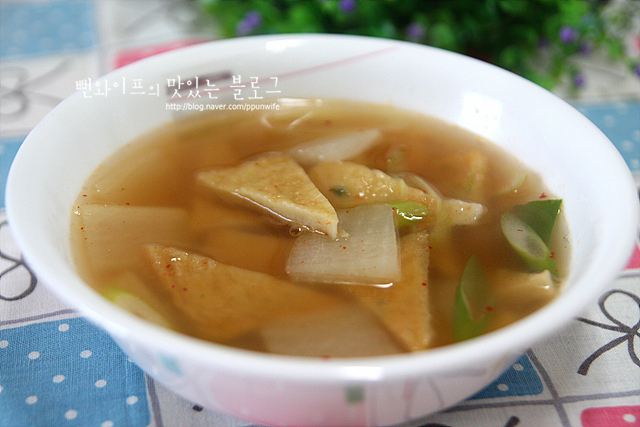
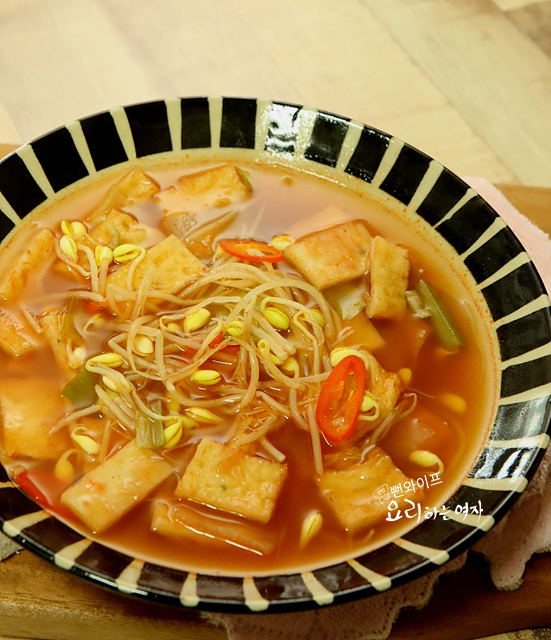
Spicy Eomuk Tang (Fish Cake Soup) with Plenty of Radish
Skewered fish cake soup simmered in a rich anchovy broth spiced with gochugaru and gochujang.
Translated from Korean by AI and not yet checked by a native speaker. Amounts and numbers are taken directly from the original recipe. Read the Korean original →
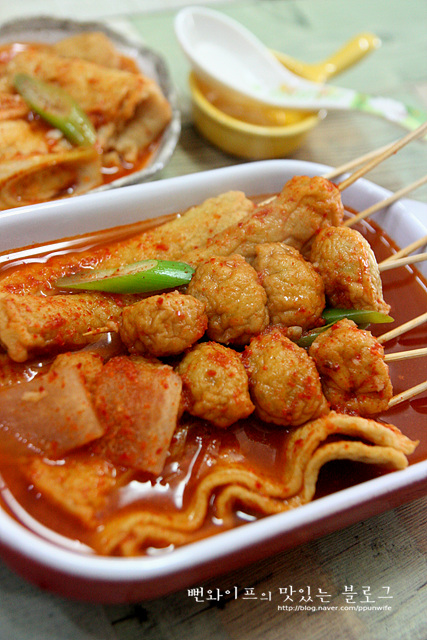
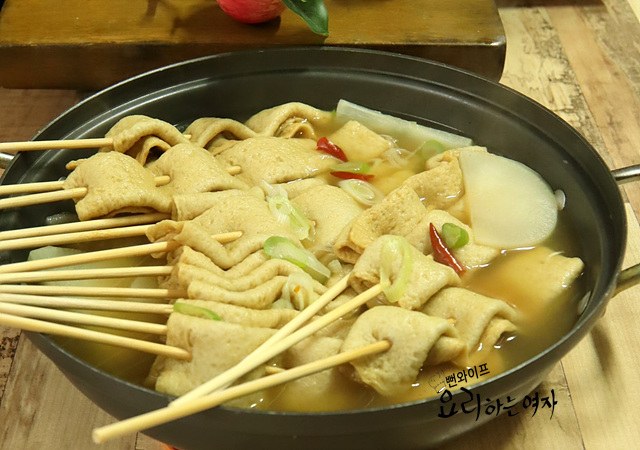
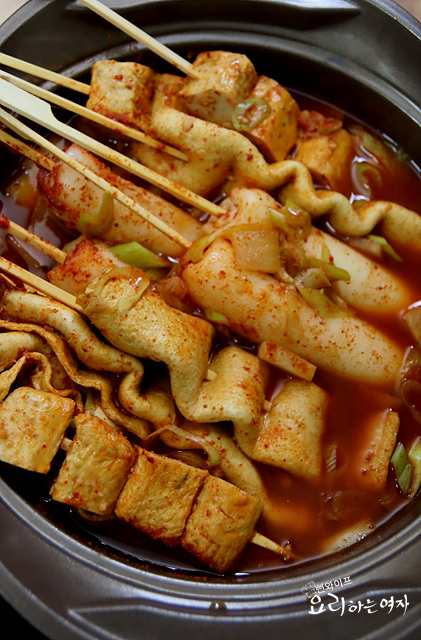
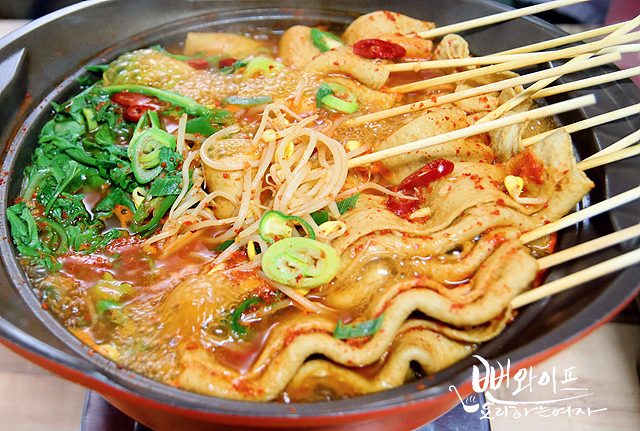
This spicy fish cake soup is made with a rich broth brewed from dried pollock head and anchovies, flavored with gochujang and gochugaru. Korean radish gives it a refreshing taste, and because it is not greasy, it makes a wonderful snack or bar snack on cold days.
- Servings
- 2–3 servings
- Cook time
- 20 minprep not included
- Difficulty
- Medium
- Spiciness
- Spicy
Ingredients
Ingredients
- Fish cake (eomuk)500 g (5 sheets, 5, 10 balls)
- Korean radish (mu)150 g
- Large green onion (daepa)1/2 stalks
- Broth5 cups
Broth ingredients
- Water10 cups
- Dried kelp (dasima)2 sheets (10 cm square)
- Dried anchovies for broth20
- Dried pollock head1
- Onion1/2
- White part of large green onion (daepa)2 stalks
Seasoning
- Gochugaru (Korean chili flakes)2 tbsp
- Gochujang (Korean red chili paste)1 tbsp
- Soup soy sauce (guk-ganjang)1/2 tbsp
- Regular soy sauce (jin-ganjang)1/2 tbsp
- Mirin (cooking rice wine)1 tbsp
- Minced garlic1/2 tbsp
- Ground black peppera little
- Instead of dried pollock head, you can use dried pollack (bugeo) head, or if you do not have any, add more dried anchovies or dipori (large-eyed round herring).
- If you have green onion roots, you can use them instead of the trimmed white stalk, as they add even deeper savoriness and flavor.
- Instead of putting the dried kelp in whole as specified, cutting it as finely as possible when brewing helps extract more flavor and nutrients much faster.
- If you are concerned about the oiliness of the fish cake, you can briefly dip it in boiling water and drain it before using.
- If you have garaetteok (cylinder rice cakes), they are great to prepare together.
Steps
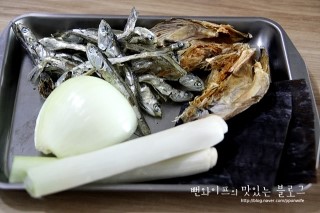
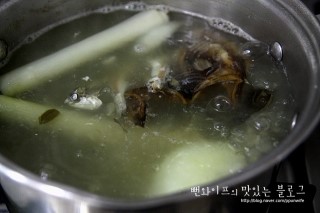
1. For the broth ingredients, I prepared dried kelp (dasima) 10 cm square × 2 sheets, 20 dried anchovies for broth, 1 dried pollock head, 1/2 onion, and 2 stalks white part of large green onion (daepa).
Instead of dried pollock head, you can use bugeo (dried pollack) head, or if you do not have it, simply add more anchovies (dipori).
If you have green onion roots, they give a deeper savory flavor and taste better than the trimmed white part, so you can substitute them.
When simmering the kelp, rather than adding it as the stated size, cut it into smaller pieces as much as possible so it extracts faster and yields more flavor.
2. Add all broth ingredients to 10 cups of water, and once it begins to boil, lower the heat and simmer for 20 minutes to make a rich broth.

3. Thread the fish cake onto skewers by type: square fish cakes, long fish cakes, round fish cakes...
If you are concerned about the oiliness of the fish cake, you can briefly dip it in boiling water and take it out before using.
If you have garaetteok (cylinder rice cakes), it is also great to prepare together.
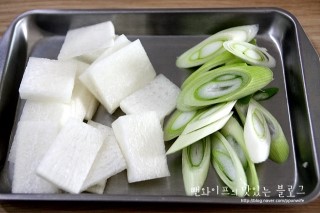
4. Cut the Korean radish (mu) into large, thin squares and thinly slice the large green onion (daepa) on a diagonal.
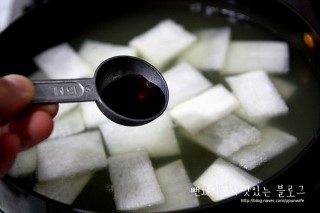
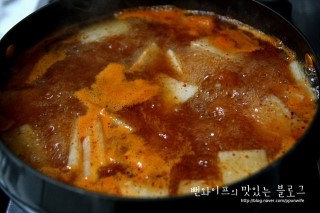
5. Add 5 cups of anchovy broth and radish...
6. Add 2 tbsp gochugaru (Korean chili flakes), 1 tbsp gochujang (Korean red chili paste), 1/2 tbsp soup soy sauce (guk-ganjang), 1/2 tbsp regular soy sauce (jin-ganjang), and 1 tbsp mirin (cooking rice wine), then bring to a rolling boil.
If it tastes bland, adjust the seasoning with salt or soup soy sauce.
Once the radish is fully cooked, add the minced garlic and boil briefly, then...
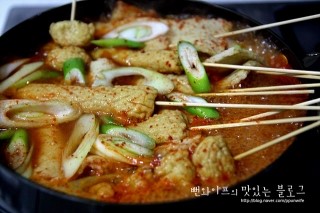
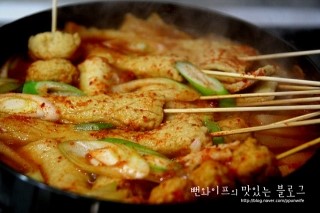
7. Add the fish cake, large green onion, and ground black pepper...
If you want it fiery and spicy, finely chop Cheongyang chili peppers and add them to boil.
8. Simmer just until the fish cake is tender without turning mushy.
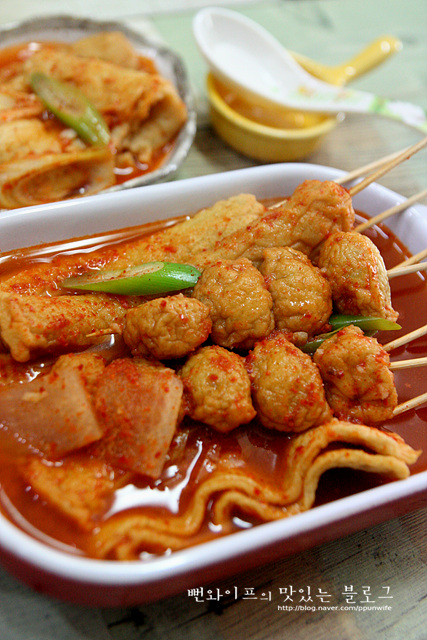
The flavor of the fish cake infuses well into the broth, making the soup rich and very refreshing.
It is spicy, so it stays appetizing and non-greasy until the very last bite.
 Ppunwife's tips
- If it tastes bland, adjust the seasoning with salt or soup soy sauce.
- If you want it fiery and spicy, finely chop Cheongyang chili peppers and add them to boil.
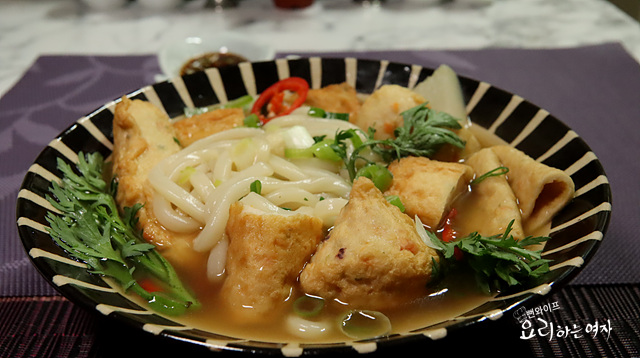
- It is also delicious to add udon noodles to the leftover broth in the hot pot, or use the remaining broth when making tteokbokki.
FAQ
How can I substitute if I don't have dried pollock head for the broth?
You can substitute with dried pollack (bugeo) head, or simply add more dried anchovies or dipori (large-eyed round herring) when boiling the broth.
What should I do if I want to reduce the oiliness of the fish cakes?
If you are concerned about oiliness, you can briefly dip the fish cakes in boiling water and drain them before cooking.
What can I add if I want it spicier?
If you want a stronger spicy kick, you can finely chop Cheongyang chili peppers and simmer them together.
Are there any other ingredients that go well with the fish cakes?
You can prepare garaetteok (cylinder rice cakes) alongside them, threading them onto skewers or placing them directly into the pot to enjoy.