Crispy Geon Saeu Bokkeum (Stir-Fried Dried Shrimp)
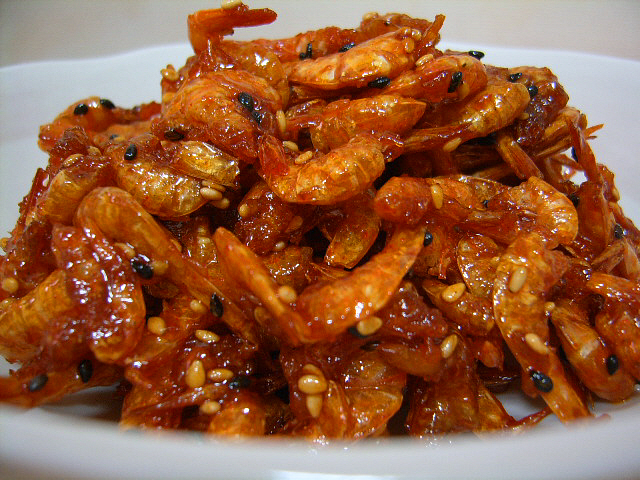
A side dish made by tossing dried shrimp toasted in a dry pan with a sweet and spicy chili oil sauce.
Translated from Korean by AI and not yet checked by a native speaker. Amounts and numbers are taken directly from the original recipe. Read the Korean original →
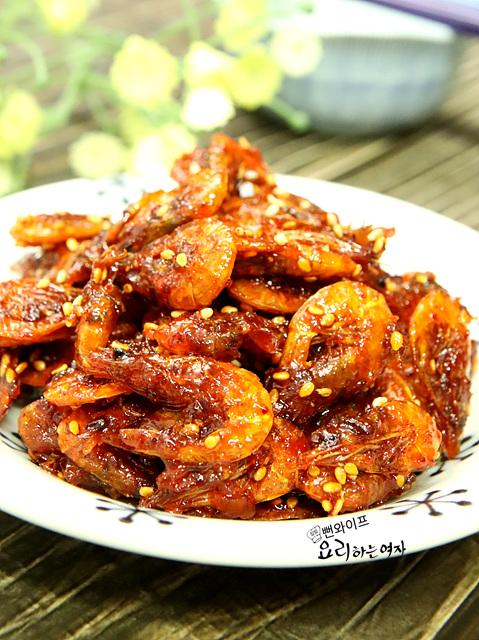
Dried shrimp are toasted gently in a dry pan first to remove any fishy odor and bring out a crisp texture. Minced garlic and Korean chili flakes are stir-fried to make an aromatic chili oil, which is then simmered into a sauce and tossed with the shrimp for a sweet and spicy finish. Salty and nutty, it makes a wonderful side dish for everyday meals as well as packed lunch boxes.
- Servings
- about 3–4 servingsOriginal: 2 small plates
- Difficulty
- Easy
- Spiciness
- Mildly spicy
Ingredients
Ingredients
- Dried shrimp2 cups (50 g)
Seasoning
- Gochujang (Korean red chili paste)1 tbsp
- Gochugaru (Korean chili flakes)1 tbsp
- Corn syrup (mulyeot)2 tbsp
- Sugar1/2 tbsp
- Mirin (cooking rice wine)1 tbsp
- Minced garlic1/2 tbsp
- Regular soy sauce (jin-ganjang) (or brewed soy sauce (yangjo-ganjang))1/2 tbsp
- Water1 tbsp
- Toasted sesame oil1/2 tbsp
- Toasted sesame seeds1 tbsp
- I used small dried shrimp. It is 2 cups, but if the dried shrimp are large in size, about 1 cup and a half comes out to 50 g.
- Larger ones often have sharp, thorn-like beaks that can prick your mouth while eating, so headless dried shrimp are frequently used. If they are small, you can use them as they are; if they are larger, simply snip off the mouth area with kitchen shears before using.
- If making this as a side dish for children, simply leave out the gochujang and gochugaru.
Steps
Prepare and trim the ingredients
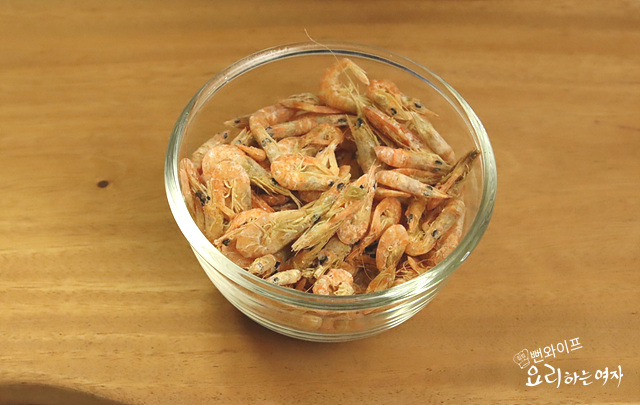
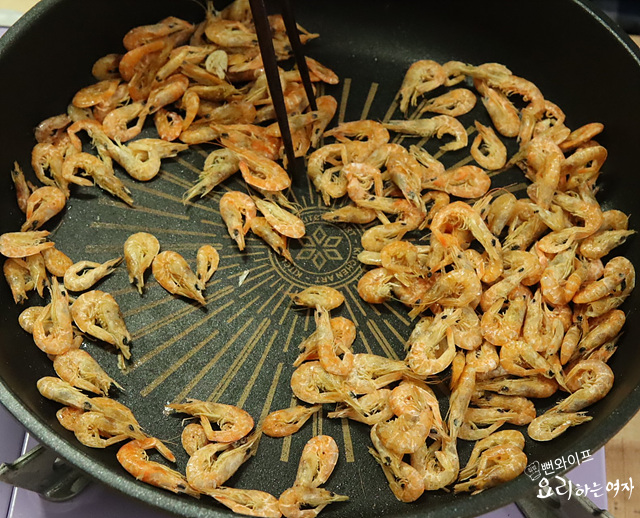
I used small dried shrimp. It is 2 cups, but if the dried shrimp are large in size, about 1 cup and a half comes out to 50 g.
Larger ones often have sharp, thorn-like beaks that can prick your mouth while eating, so headless dried shrimp are frequently used.
If they are small, you can use them as they are; if they are larger, simply snip off the mouth area with kitchen shears before using.
Set the heat to low and toast the dried shrimp in a dry pan until crispy. They can burn quickly, so stir constantly and toast them gently.
This removes any off-odors and lets you enjoy an even crispier, nuttier flavor.
Make the garlic chili oil
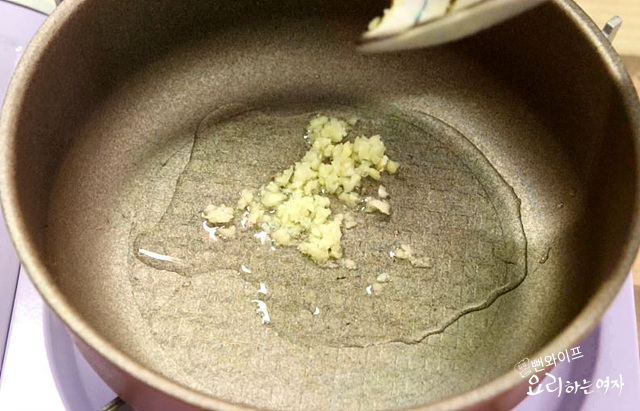
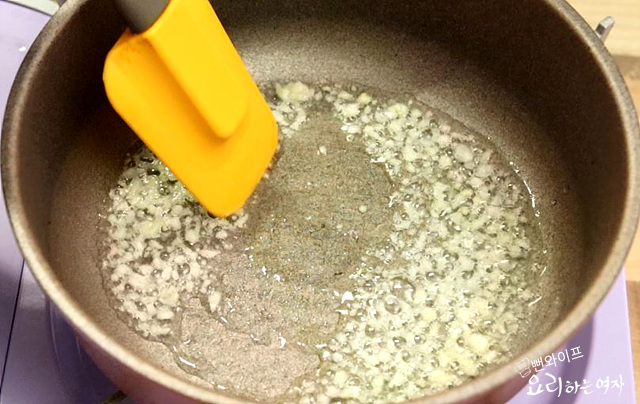
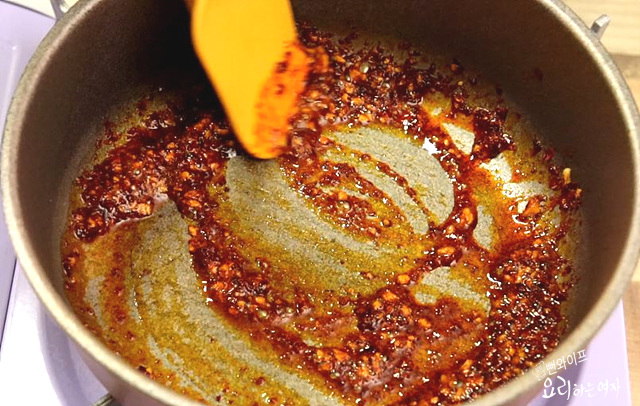
Add oil to the pan, add the minced garlic, and stir-fry over low heat to release its aroma.
Add the gochugaru and stir-fry without burning to make chili oil.
Stir-frying the garlic and chili first to release their aromas deepens the flavor of the sauce and boosts umami.
Doing this when making jinmichae (seasoned dried squid) makes it much more delicious, too.
Simmer the sauce
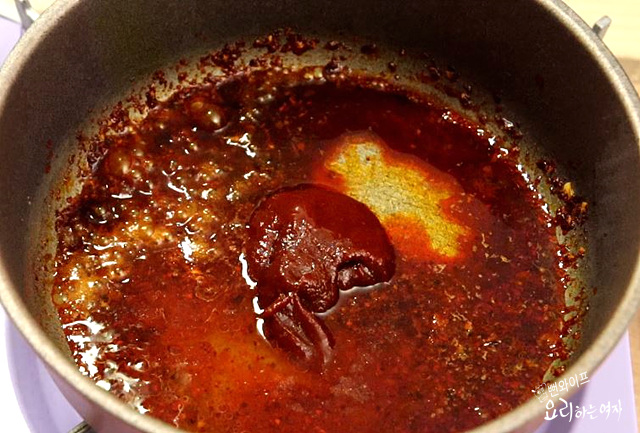
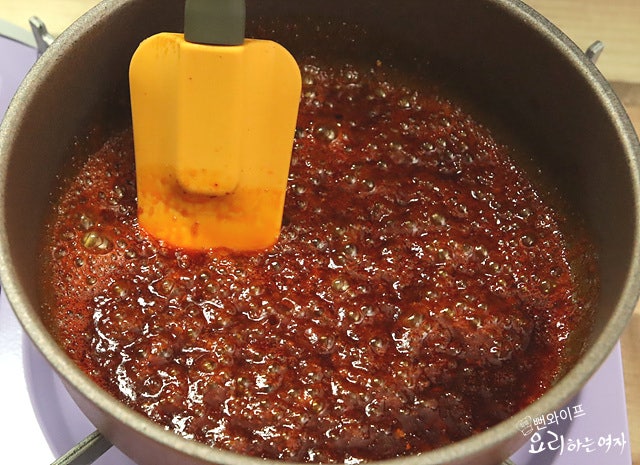
Add 1 tbsp gochujang, 2 tbsp corn syrup, 1/2 tbsp sugar, 1 tbsp mirin, 1/2 tbsp regular soy sauce, and 1 tbsp water, then simmer briefly until bubbling and well blended.
If the consistency feels too thick, simply add a little water and simmer.
Since dried shrimp are salty, adding a fairly generous amount of sweet ingredients like corn syrup or sugar balances the flavor so the seasoning turns out just right.
Finish the dish
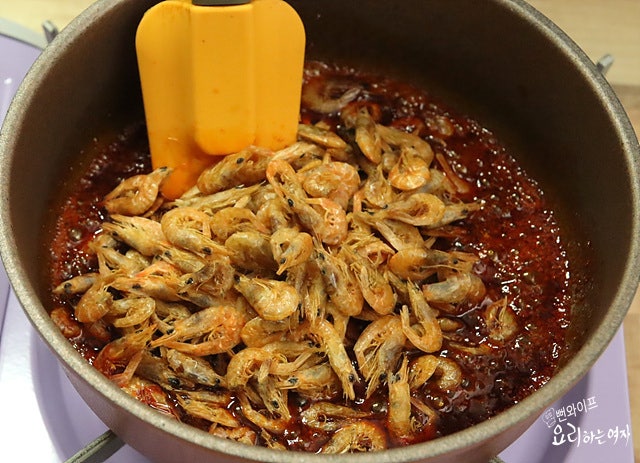
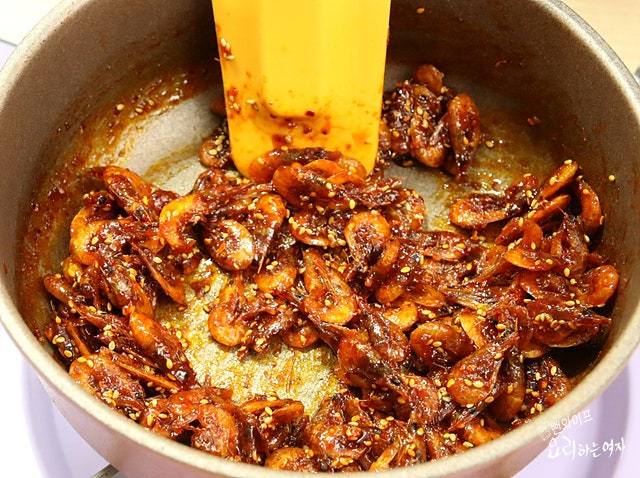
Add the dried shrimp, and once the sauce is evenly absorbed and stir-fried completely dry with no moisture left, turn off the heat, add toasted sesame oil and toasted sesame seeds, and mix well.
 Ppunwife's tips
- When toasting dried shrimp in a dry pan, they can burn quickly, so stir constantly and toast them gently; this removes any off-odors and yields an even crispier, nuttier flavor.
- Stir-frying the garlic and chili first to release their aromas deepens the flavor of the sauce and boosts umami.
- If the sauce feels too thick, simply add a little water and simmer.
- Since dried shrimp are salty, adding a fairly generous amount of sweet ingredients like corn syrup or sugar balances the flavor so the seasoning turns out just right.
FAQ
How should I prep larger dried shrimp?
The mouth area can be sharp like a thorn and prick your mouth while eating, so it is best to snip off the beaks with kitchen shears before cooking.
How can I adjust this for children?
Simply omit the spicy gochujang and gochugaru, and stir-fry with a seasoning based on soy sauce and sweetness.
What should I do if the sauce is too thick while simmering?
When the sauce is too thick, you can adjust it to the right consistency by adding a small splash of water and simmering.