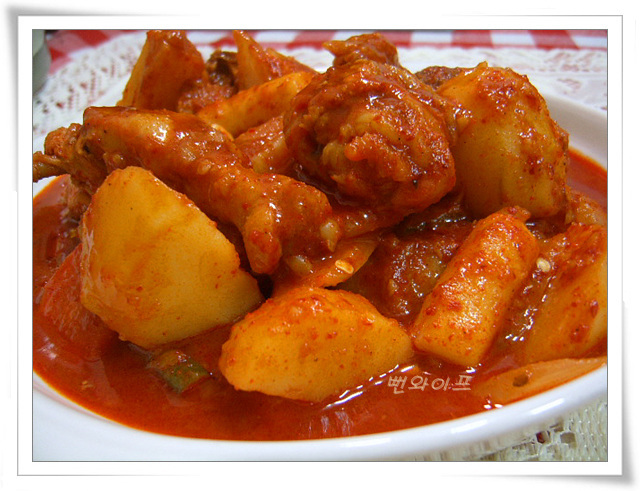
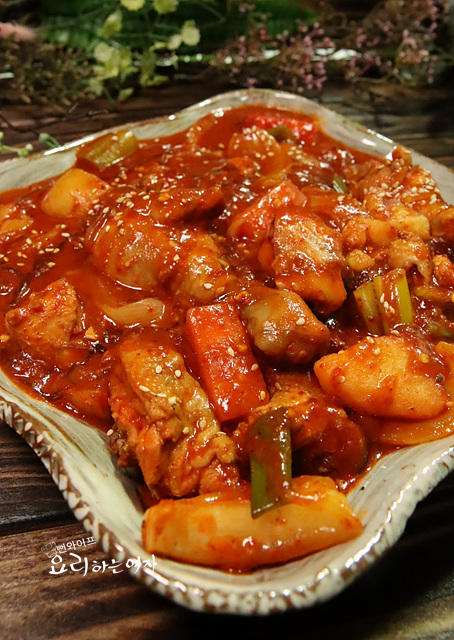
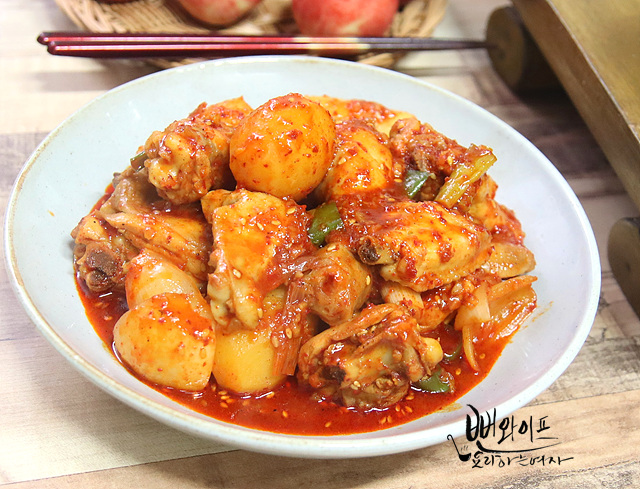
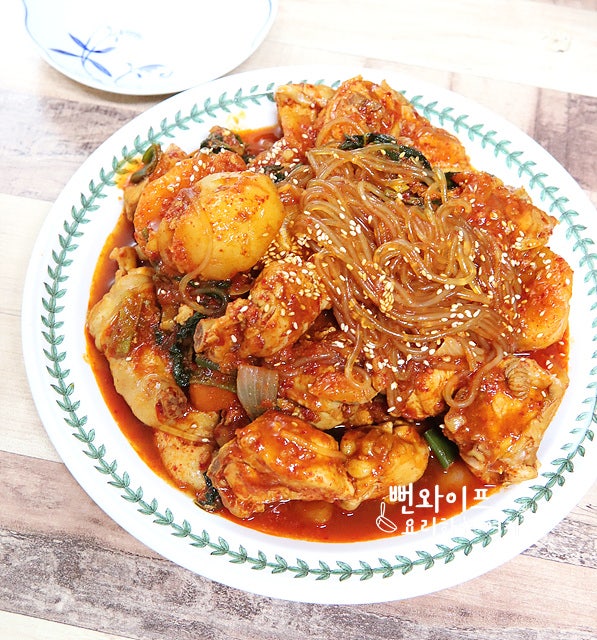
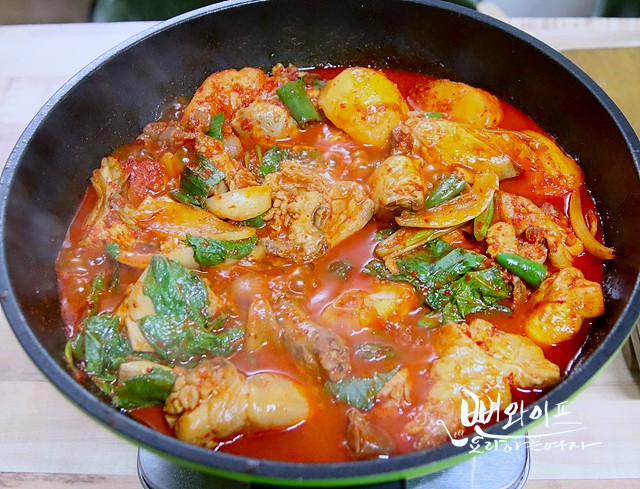
Flavorful Spicy Dak Bokkeum Tang (Spicy Braised Chicken)
A spicy braised chicken dish simmered in dried kelp broth with marinated chicken and hearty vegetables.
Translated from Korean by AI and not yet checked by a native speaker. Amounts and numbers are taken directly from the original recipe. Read the Korean original →
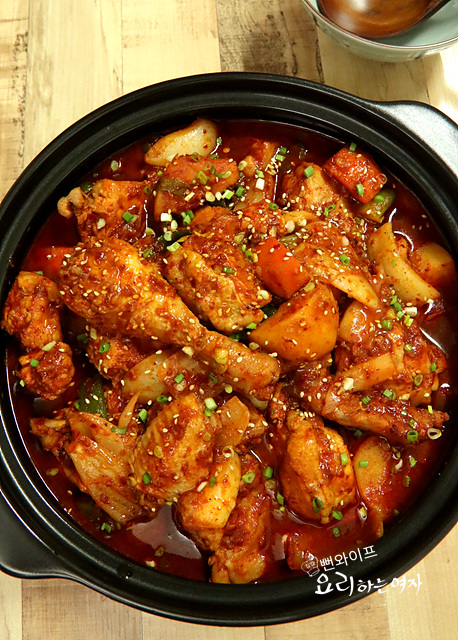
This spicy main dish features chicken marinated for 30 minutes so the seasoning penetrates deep into the meat. Simmered in dried kelp broth alongside potatoes and carrots, it develops rich umami flavor. The spicy, sweet, and savory sauce is perfect for spooning over rice.
- Servings
- 2–3 servings
- Difficulty
- Medium
- Spiciness
- Spicy
Ingredients
Ingredients
- Chicken1 kg
- Potato2 (medium)
- Onion1 (medium)
- Carrot1 (small)
- Large green onion (daepa)1/2 stalk
- Cheongyang chili pepper (hot green chili)3
- Dried kelp (dasima) broth3 cups
Seasoning
- Gochugaru (Korean chili flakes)5 tbsp
- Gin (or brewed soy sauce (yangjo-ganjang))4 tbsp
- Oyster sauce2 tbsp
- Gochujang (Korean red chili paste)2 tbsp
- Corn syrup (mulyeot)2 tbsp
- Sugar1 tbsp
- Mirin (cooking rice wine)2 tbsp
- Minced garlic2 tbsp
- Minced ginger1 tsp
- Salt1/3 tsp
- Ground black pepper1/3 tsp
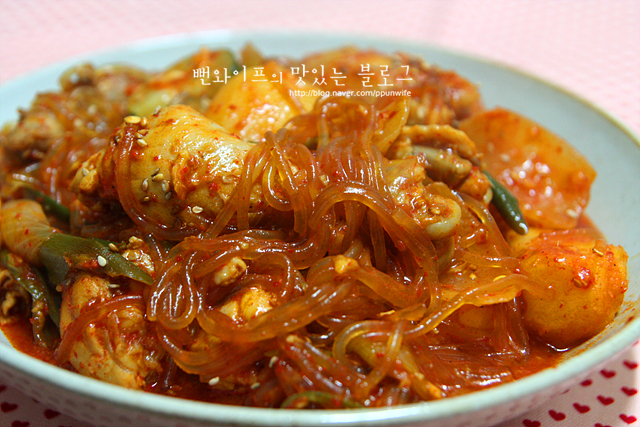
- Along with glass noodles or rice cakes, mushrooms, crown daisy, and perilla leaves also go very well.
- Make the dried kelp broth by steeping 2 sheets of 5 cm square dried kelp in 3 cups of water for 30 minutes.
- Add all the seasoning ingredients to the chicken, mix well, and marinate for 30 minutes so the flavors absorb.
- Thoroughly scrape away any clotted blood under the ribs under running water with your fingers, trim off yellow fat, and wash several times before draining. To remove gaminess, you can also soak the chicken in milk and rinse it, or blanch it in boiling water for 1 minute.
Steps
Prepare ingredients
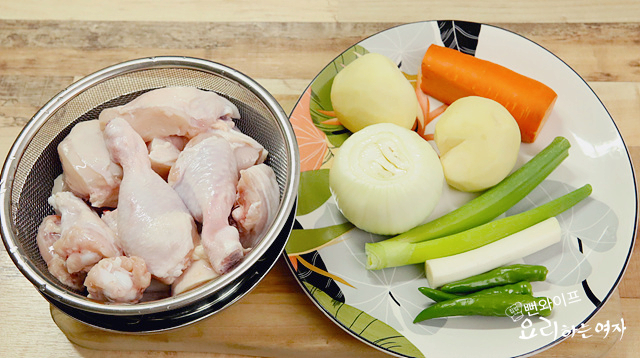
I prepared one whole chicken weighing 1 kg. You will need 2 potatoes, 1 onion, 1 carrot, large green onion, and Cheongyang chili peppers.
I used to always prepare glass noodles or rice cakes for dak bokkeum tang, but today I kept it simple like this since I plan to mix it with rice.
Aside from these, mushrooms, crown daisy, and perilla leaves also pair wonderfully.
Prep chicken and make kelp broth
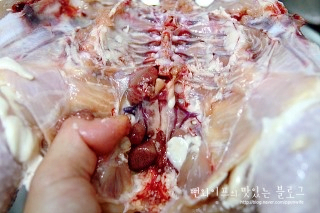
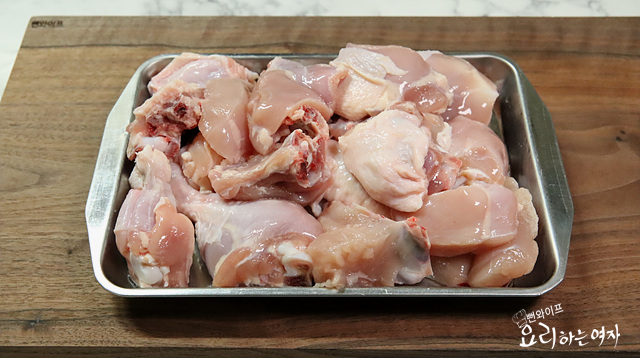
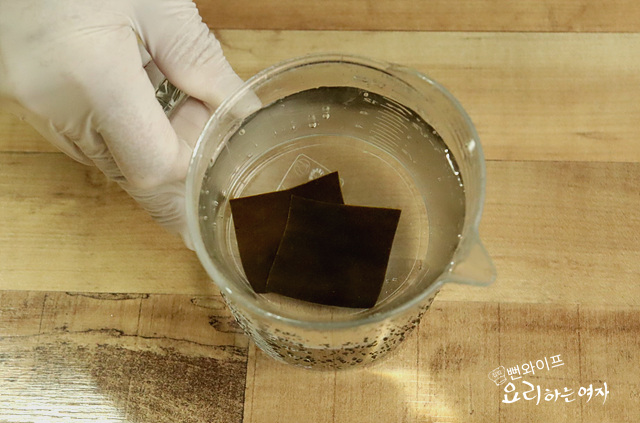
I usually buy a whole chicken and butcher it myself, but even pre-cut stewing chicken often has blood clots stuck under the ribs.
You need to scrape these away thoroughly with your fingers under running water to prevent any poultry odors.
With fresh chicken, just prepping it well like this is enough to enjoy dak bokkeum tang without any smell.
Trim away yellow fat with kitchen shears, wash multiple times until no blood or impurities come out, and drain.
Other good ways to eliminate poultry odors include soaking the chicken in milk before rinsing, or blanching it in rolling boiling water for 1 minute.
This is dried kelp broth made by steeping two 5 cm square sheets of dried kelp in 3 cups of water for 30 minutes.
Chop vegetables
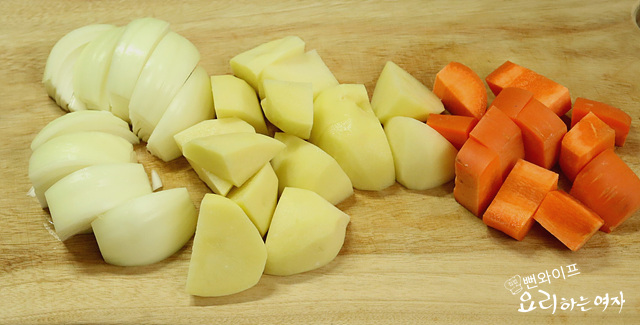
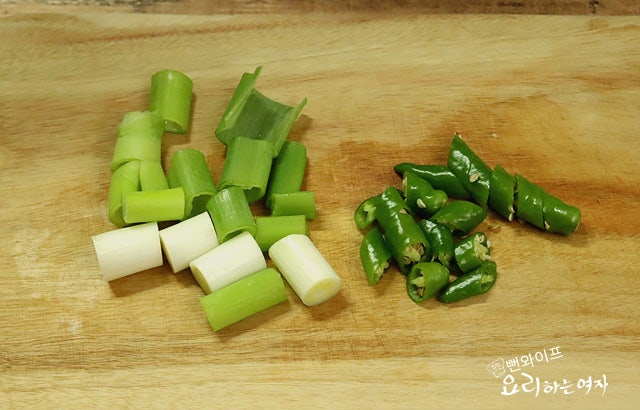
Chop the potatoes, carrots, and onion into large chunks.
Slice the large green onion and Cheongyang chili peppers not too small.
Season the chicken
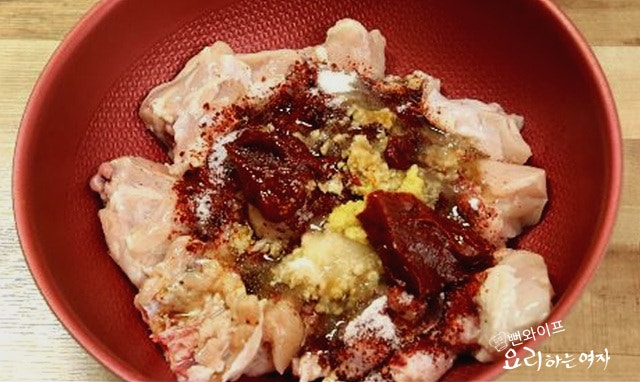
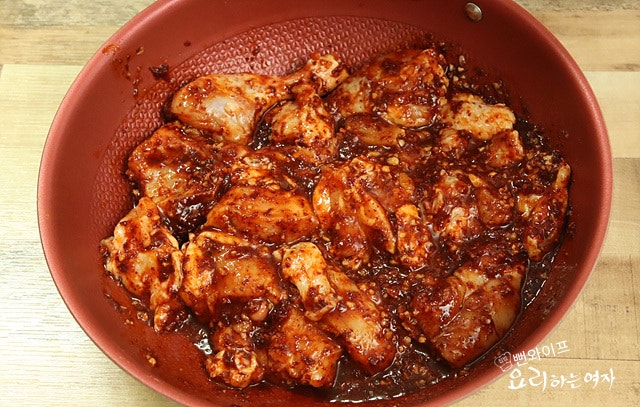
Place the chicken into the pan first, add all of the chicken seasoning ingredients, mix evenly, and marinate for 30 minutes so the flavor absorbs.
If too much gochujang goes into the seasoning, the broth doesn't taste clean.
A ratio of about 2:1 to 3:1 between soy sauce and gochujang is just right. Ginger works wonders at banishing poultry odor, so I highly recommend adding it.
Simmer
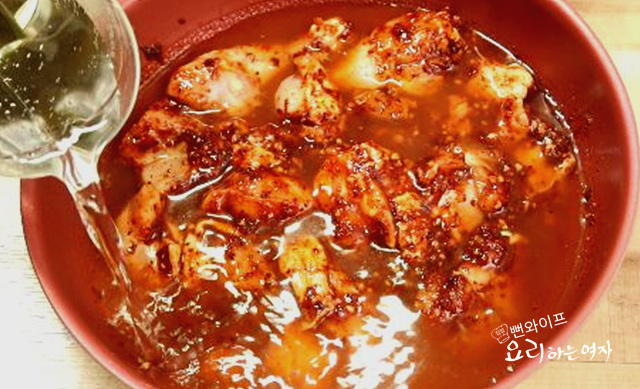
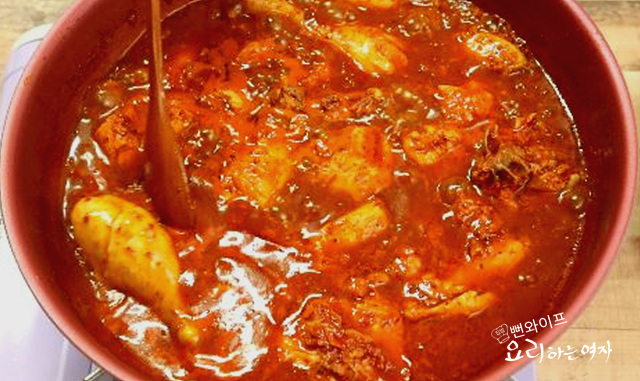
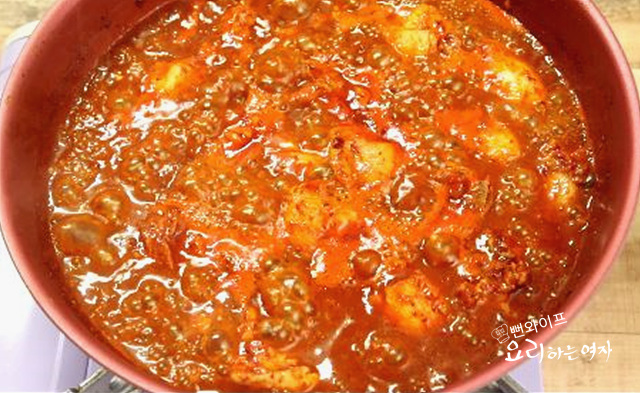
Pour in 3 cups of dried kelp broth, and once it comes to a full, rolling boil, reduce the heat to medium and stir occasionally so the surface of the chicken cooks evenly all around.
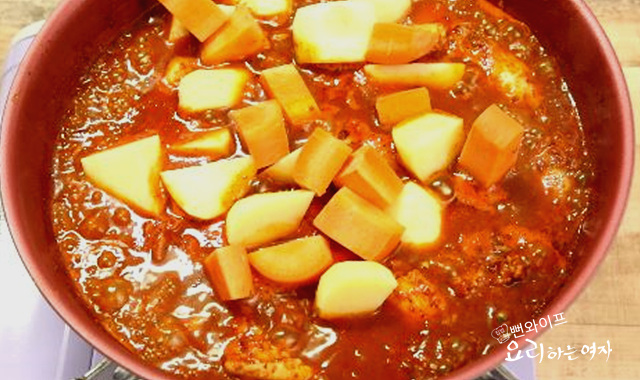
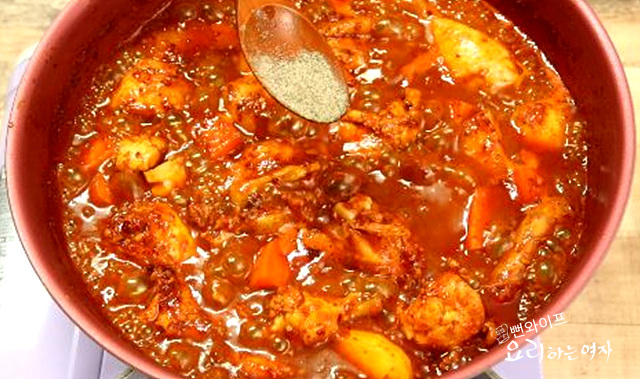
Add the potatoes and carrots, and once they are tender, stir in the ground black pepper.
I added the ground black pepper at this timing to tame any remaining chicken odor once and for all.
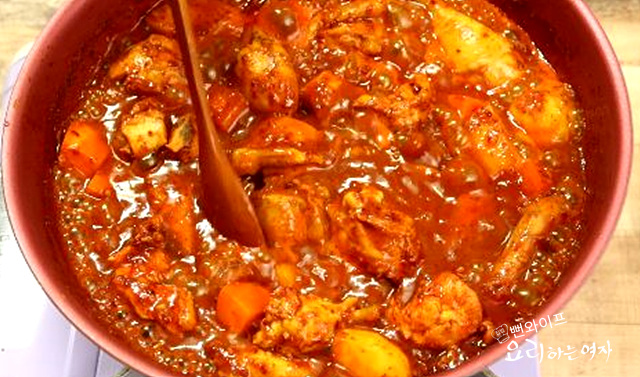
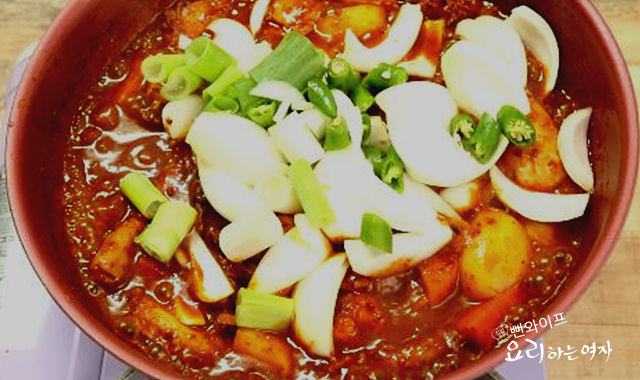
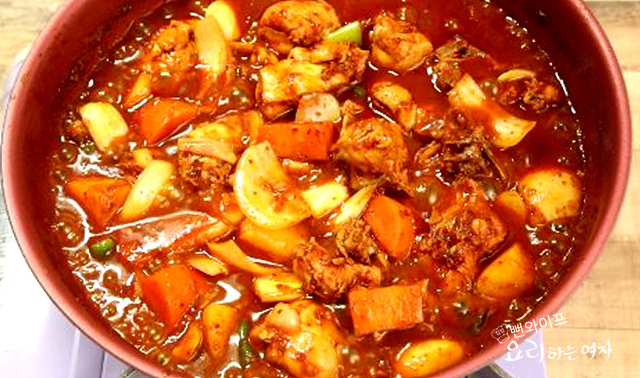
Once all ingredients are cooked through and the broth has reduced somewhat, taste the broth.
The chicken will be seasoned just right when the sauce tastes sweet, savory, and well-seasoned.
If it needs more sweetness, add a little sugar, or if it lacks saltiness, stir in a little salt. Then add the onion, large green onion, and Cheongyang chili peppers, and simmer briefly so the green onion and spicy aromas infuse into the broth to finish. If you feel there is not enough broth, you may add more water as you simmer.
 Ppunwife's tips
- Scraping away impurities thoroughly under running water with your fingers helps prevent any poultry odors.
- Too much gochujang can make the broth heavy; keeping the ratio of soy sauce to gochujang around 2:1 to 3:1 yields a clean finish.
- Adding the ground black pepper once the potatoes and carrots are tender gives a final touch that eliminates any lingering poultry smell.
FAQ
Are there tips for cleaning chicken to remove its distinctive odor?
Rinsing away the clotted blood tucked inside the ribs under running water and trimming the fat greatly reduces odor. Soaking the chicken in milk before rinsing or blanching it in boiling water for 1 minute are also great methods.
What is the ideal ratio for gochujang in the sauce?
Adding too much gochujang can make the sauce thick and muddy, so balancing soy sauce and gochujang at about 2:1 to 3:1 produces a clean flavor.
What additional ingredients go well besides the basic vegetables?
Glass noodles or rice cakes go wonderfully with the sauce to your liking, and adding mushrooms, perilla leaves, or crown daisy is also great.