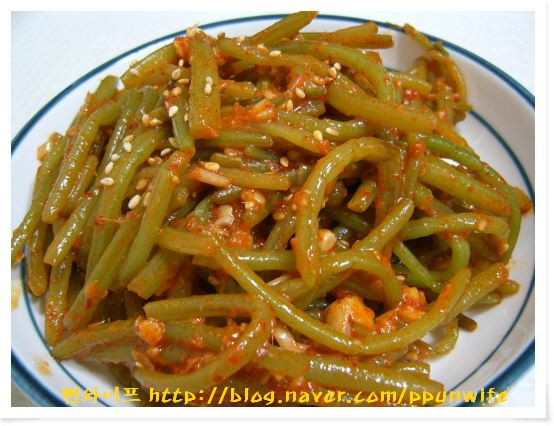
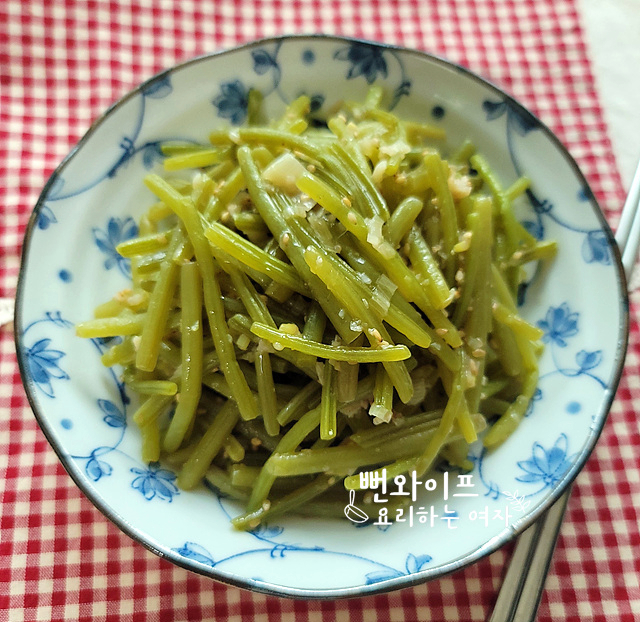
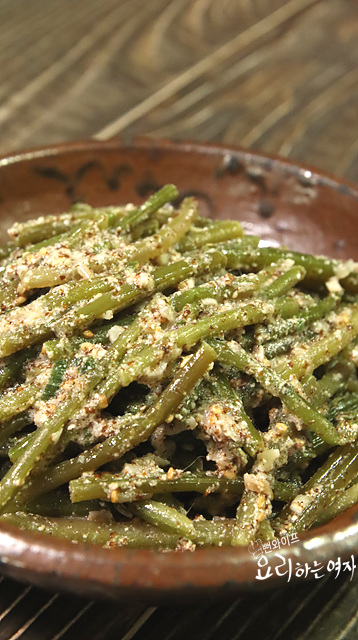
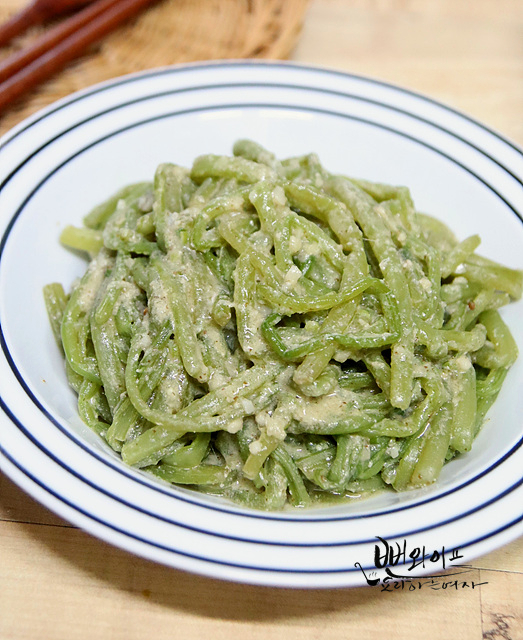
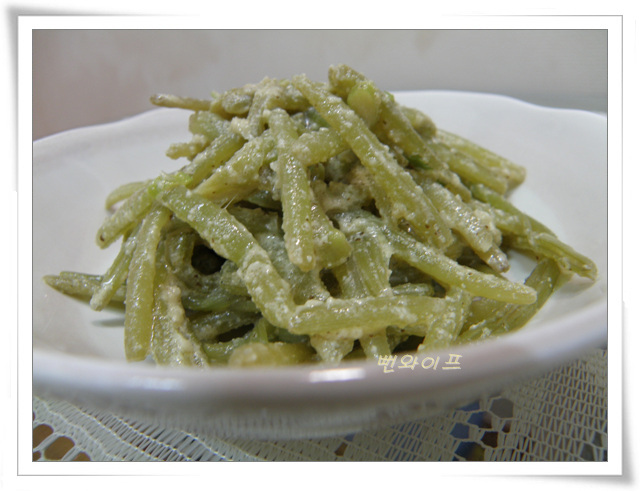
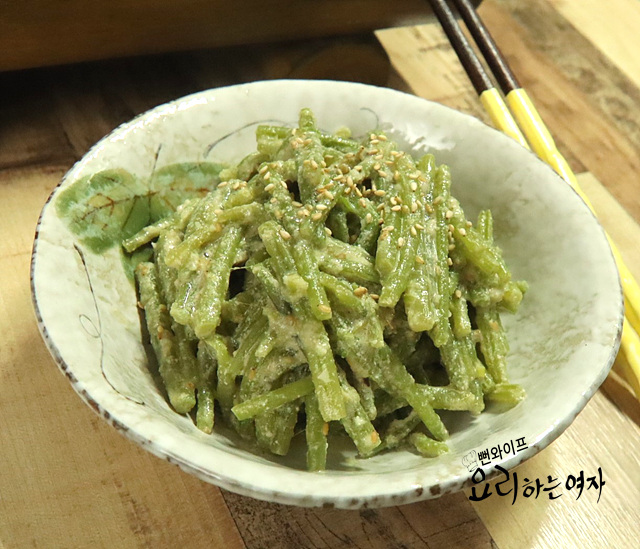
Savory, Spicy Goguma Julgi Bokkeum (Stir-Fried Sweet Potato Stems)
A special summer side dish stir-fried with doenjang and gochujang for a savory, spicy flavor.
Translated from Korean by AI and not yet checked by a native speaker. Amounts and numbers are taken directly from the original recipe. Read the Korean original →
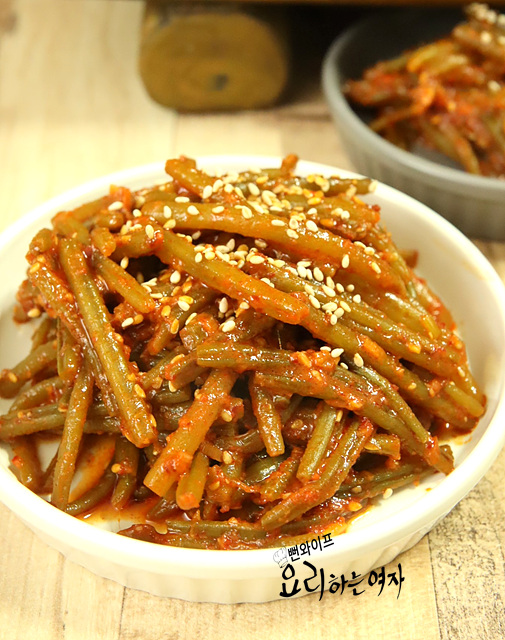
This stir-fried side dish features blanched sweet potato stems coated in a savory doenjang and gochujang seasoning. Braised gently with a splash of anchovy broth under a lid, they turn tender with a deep, rich flavor. Both savory and spicy, they make a wonderful rice side dish and a great addition to bibimbap.
- Servings
- about 3–4 servingsOriginal: 2 plates
- Difficulty
- Easy
- Spiciness
- Mildly spicy
Ingredients
Ingredients
- Sweet potato stems300 g (after peeling)
- Coarse sea salt1 tbsp
Seasoning
- Gochujang (Korean red chili paste)1 tbsp
- Doenjang (Korean soybean paste)1 tbsp
- Minced garlic1 tbsp
- Minced green onion3 tbsp
- Gochugaru (Korean chili flakes)1 tbsp
- Mirin (cooking rice wine)1 tbsp
- Corn syrup (mulyeot)1 tbsp
- Anchovy broth3 tbsp
- Toasted sesame oil (or perilla oil)1 tbsp
- Toasted sesame seeds1 tbsp
- Peel the sweet potato stems. The peeled stems weigh 300g.
- If you are using homemade doenjang, reduce the amount slightly.
Steps
Prepare the sweet potato stems
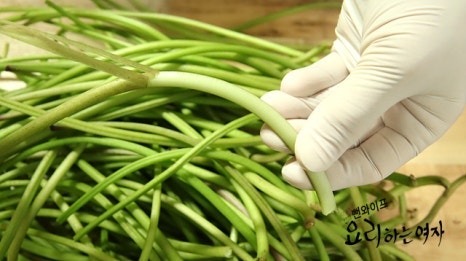
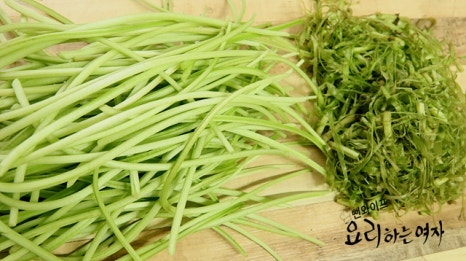
Peel the sweet potato stems.
The peeled stems weigh 300g.
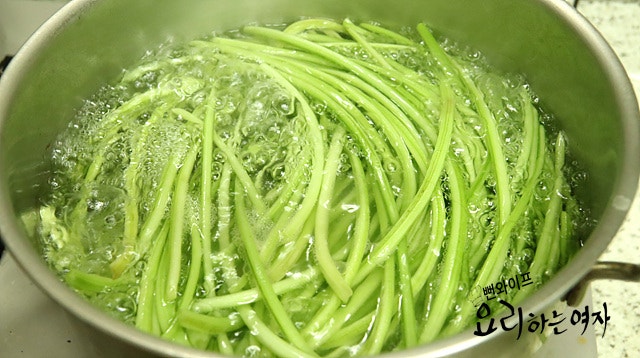
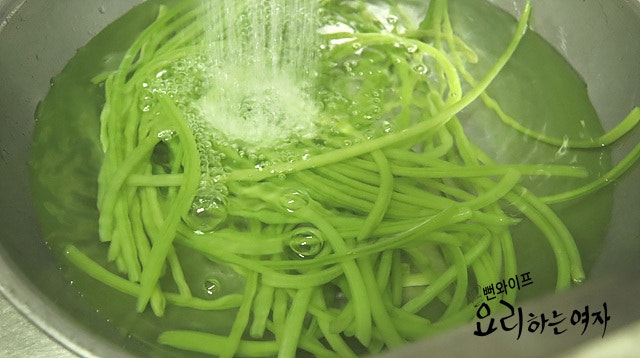
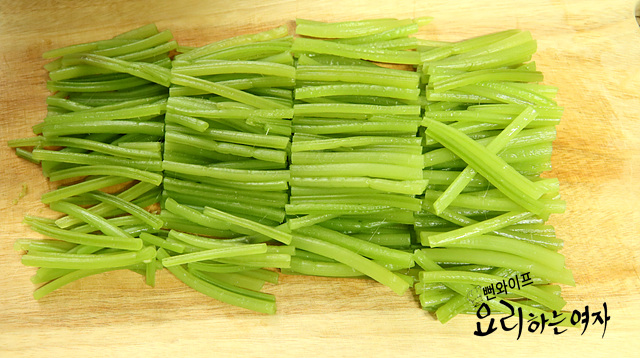
Pour in enough water to submerge the sweet potato stems, add 1 tbsp coarse sea salt, and blanch for 3 to 4 minutes.
Blanch them just until tender, rinse in cold water to cool them down, squeeze out excess water, and cut them into bite-sized lengths.
Season
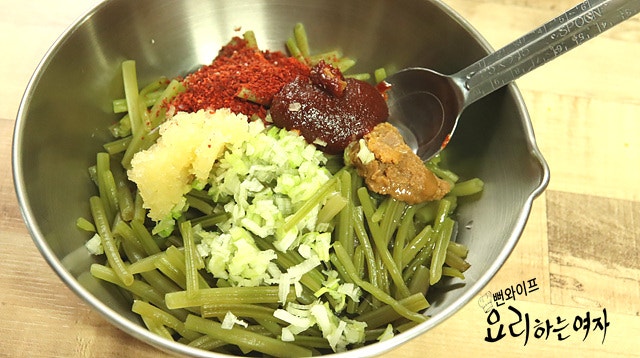
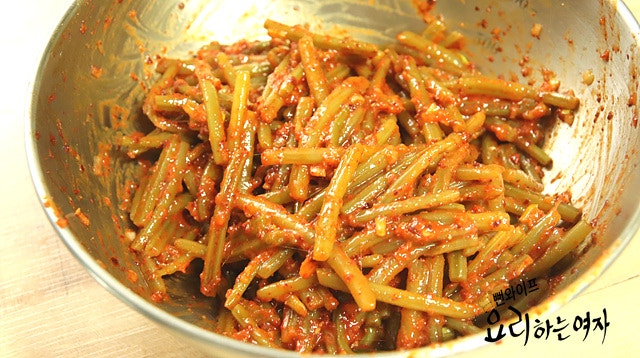
Place the sweet potato stems in a bowl to season them.
Add 1 tbsp gochujang, 1 tbsp store-bought doenjang, 1 tbsp minced garlic, 3 tbsp minced green onion, 1 tbsp gochugaru, 1 tbsp mirin, and 1 tbsp corn syrup, then mix thoroughly.
If you are using homemade doenjang, reduce the amount slightly.
Stir-fry
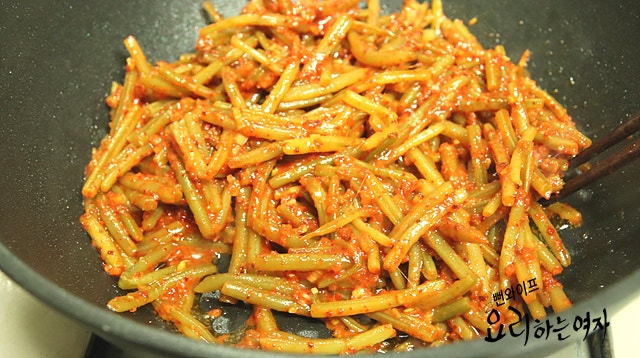
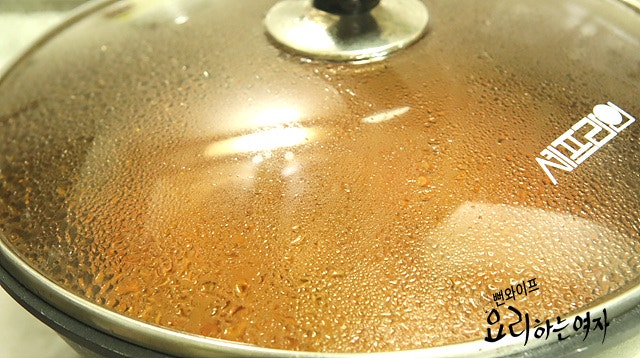
Heat oil in a hot pan and stir-fry briskly.
Add 3 tbsp anchovy broth, cover with a lid, and let it simmer so the flavors absorb and the stems become tender.
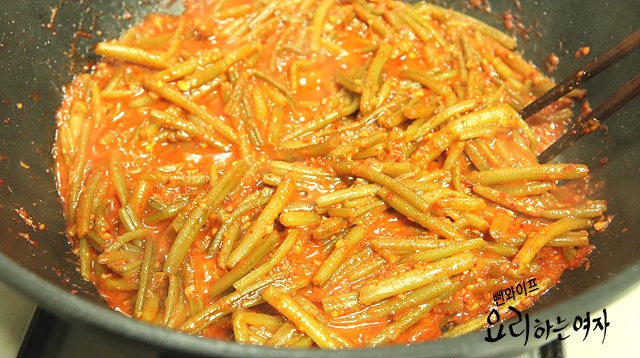
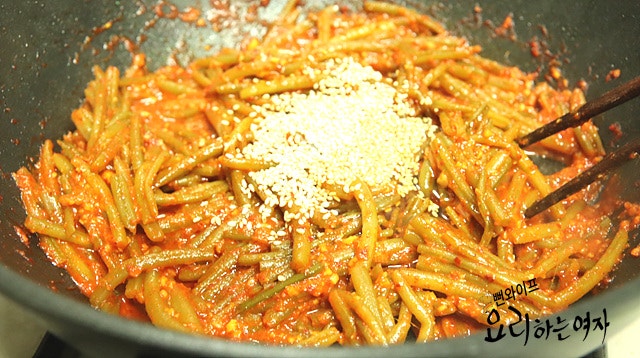
Simmer until the liquid has completely absorbed into the sweet potato stems, taste and adjust with salt if needed, then finish with 1 tbsp toasted sesame oil (or perilla oil) and 1 tbsp toasted sesame seeds.
Serve
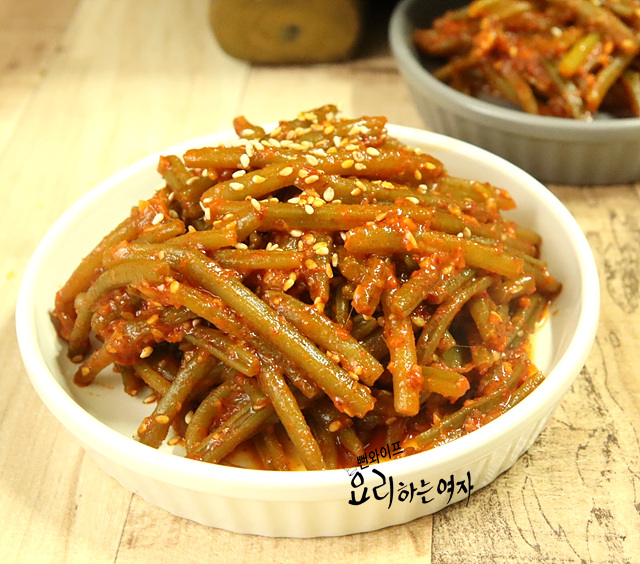
Thanks to the doenjang, it has a deep, savory taste along with a nice kick of spice.
You do not need any extra seasoning over rice; just add sesame oil and a fried egg, mix it all together, and you have a delicious bowl of bibimbap.
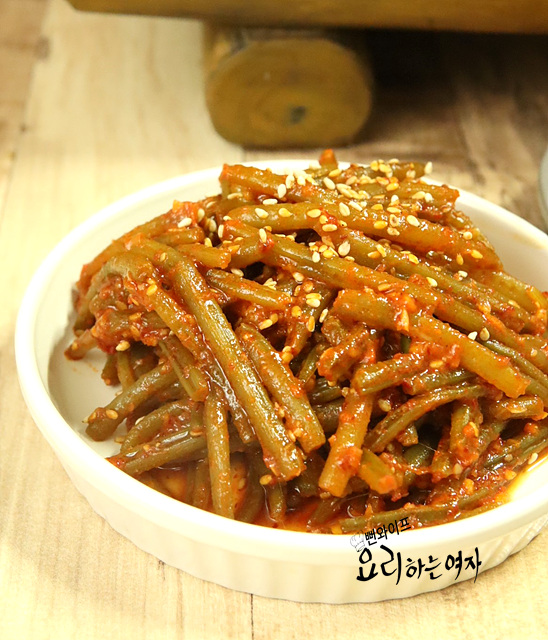
I stir-fried them in a slightly different way this time. This is truly a side dish that keeps your chopsticks reaching for more.
You will be seeing plenty of sweet potato stems for a while, so enjoy them in a variety of ways.
Next time I get sweet potato stems, I plan to make pickles with them.
The texture is wonderful, and when I shared them before, they were an absolute hit.
I hope you all beat the summer heat today.
 Ppunwife's tips
- If you are using homemade doenjang, reduce the amount slightly.
- Simmer until the liquid has completely absorbed into the sweet potato stems, taste and adjust with salt if needed, then finish with 1 tbsp toasted sesame oil (or perilla oil) and 1 tbsp toasted sesame seeds.
FAQ
Should I adjust the amount if using homemade doenjang?
Homemade doenjang can be saltier than store-bought doenjang, so it is best to reduce the amount slightly.
How long should I blanch the sweet potato stems?
Bring enough water to cover the stems to a boil with coarse sea salt, and blanch briefly for 3 to 4 minutes just until tender.
Can I use a different oil instead of toasted sesame oil at the end?
Yes, depending on your preference, you can substitute an equal amount of perilla oil for toasted sesame oil.
What is another way to enjoy the finished dish?
You can top a bowl of rice with the stir-fried sweet potato stems, a fried egg, and a drizzle of sesame oil for a delicious bibimbap.