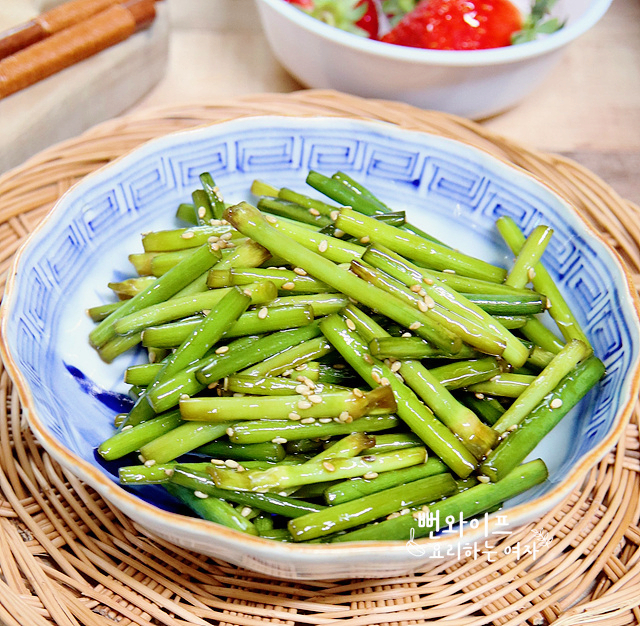
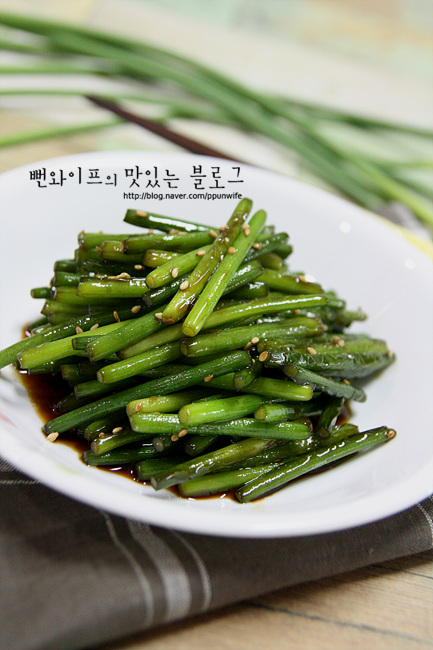
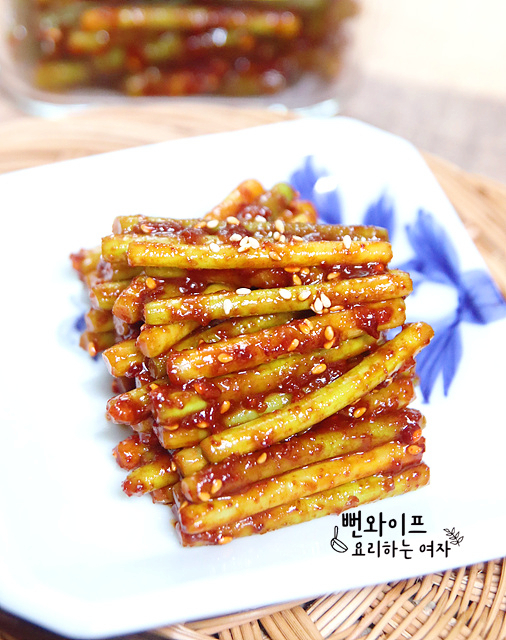
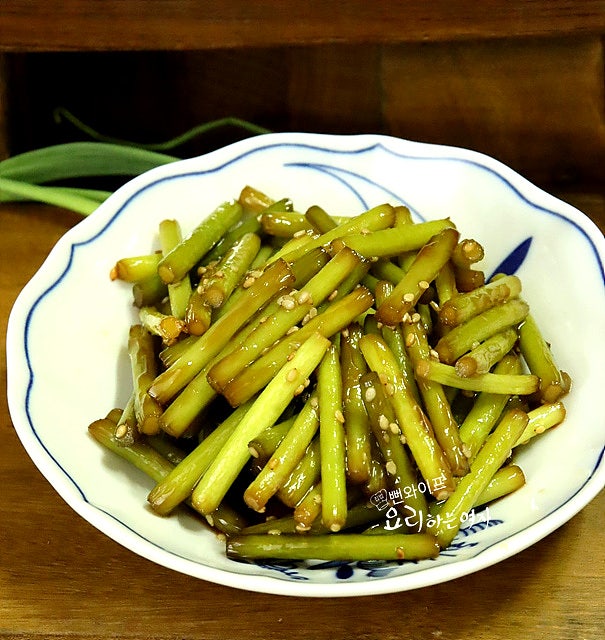
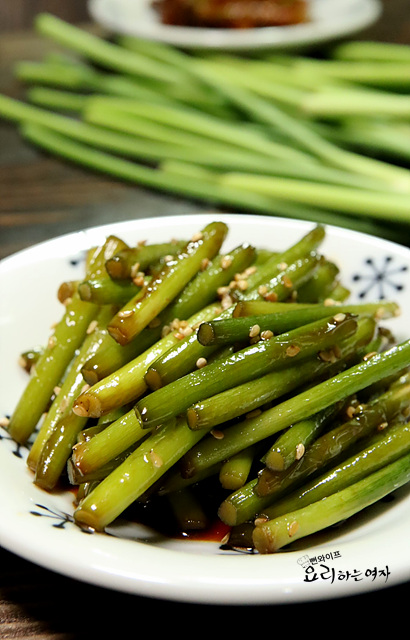
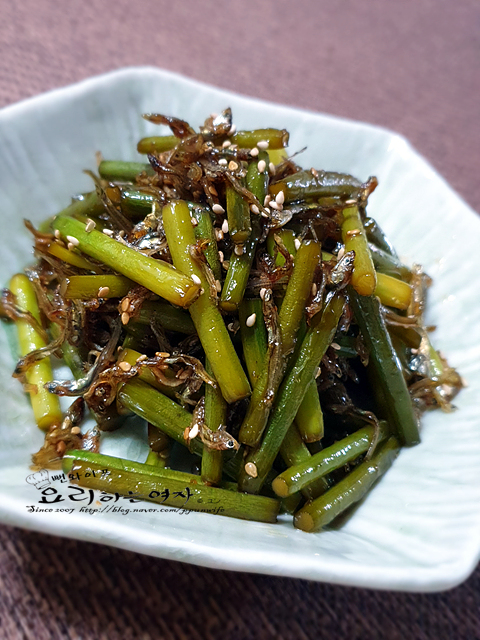
Crisp Maneuljjong Bokkeum (Stir-Fried Garlic Scapes)
A spring banchan of fresh garlic scapes seasoned with salt and stir-fried with soy sauce without blanching to preserve their vibrant color and crisp texture.
Translated from Korean by AI and not yet checked by a native speaker. Amounts and numbers are taken directly from the original recipe. Read the Korean original →
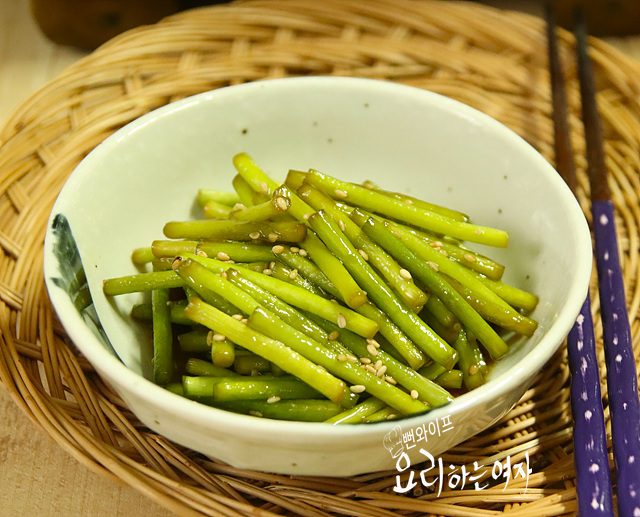
A spring side dish stir-fried directly in oil without blanching to keep a pleasantly tender-crisp texture rather than turning mushy. Pre-seasoning with salt lets you use minimal soy sauce, preserving the natural light green color. Stir-frying mellows out the sharp pungency, leaving a mild, gentle flavor.
- Servings
- about 3–4 servings
- Difficulty
- Easy
- Spiciness
- Not spicy
Ingredients
Ingredients
- Garlic scapes300 g (after cleaning)
Seasoning
- Salt1/2 tsp
- Regular soy sauce (jin-ganjang) (or brewed soy sauce (yangjo-ganjang))2 tbsp
- Corn syrup (mulyeot)1 tbsp
- Sugar1 tsp
- Mirin (cooking rice wine)2 tbsp
- Toasted sesame oil1 tbsp
- Toasted sesame seeds1 tbsp
- When they first come into season, garlic scapes are a light yellowish-green rather than deep green, which is when they are most tender and delicious.
- Trim off the rough ends, cut right where the flower bud begins, and slice into 3 to 4 cm lengths for easy prep and bite-sized pieces.
Steps
Prepare the ingredients
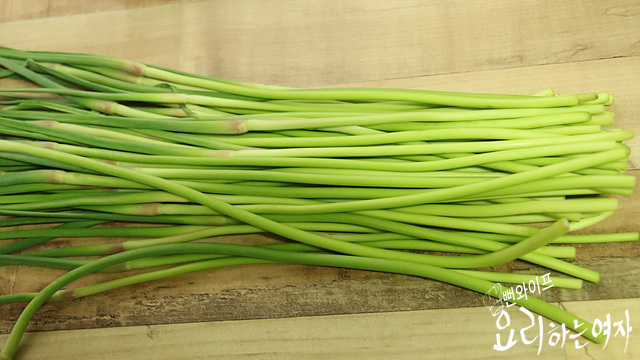
These are freshly harvested domestic garlic scapes.
Trim the garlic scapes
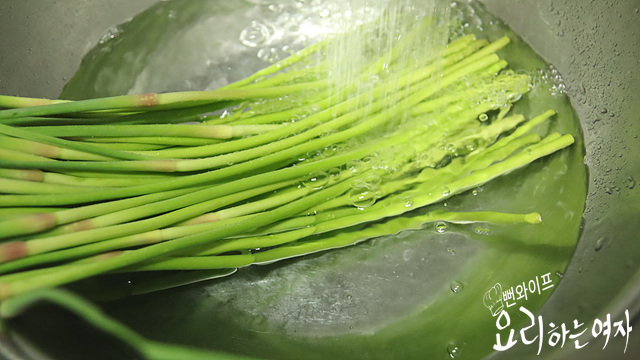
Rinse the garlic scapes in water and drain well.
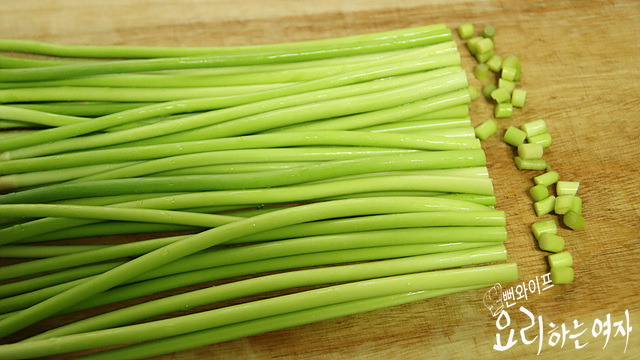
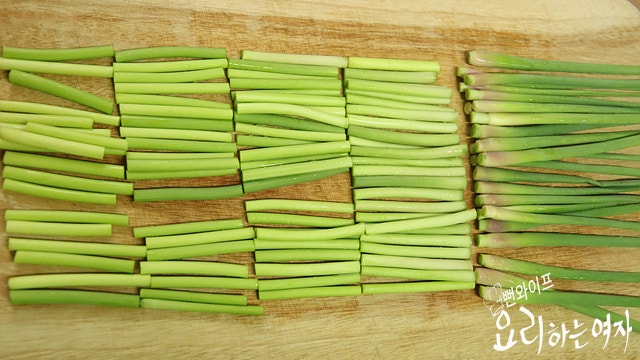
First, trim off the rough ends.
Cutting right around the flower bud makes trimming very easy.
A length of about 3 to 4 cm is just right to eat.
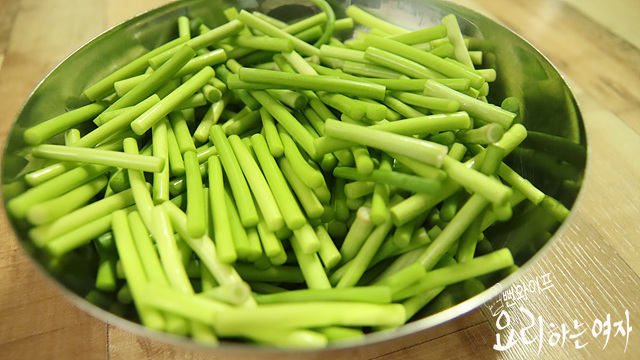
I will make the soy sauce stir-fry with these 300g of trimmed garlic scapes.
Stir-fry
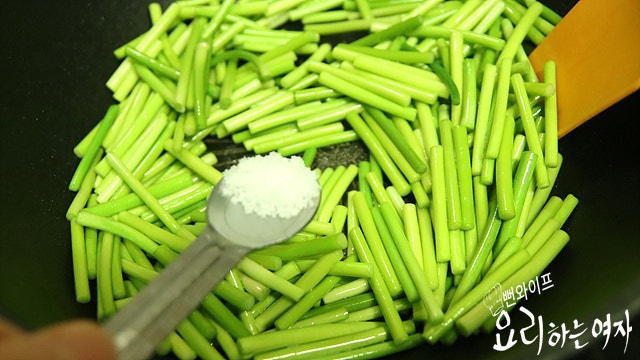
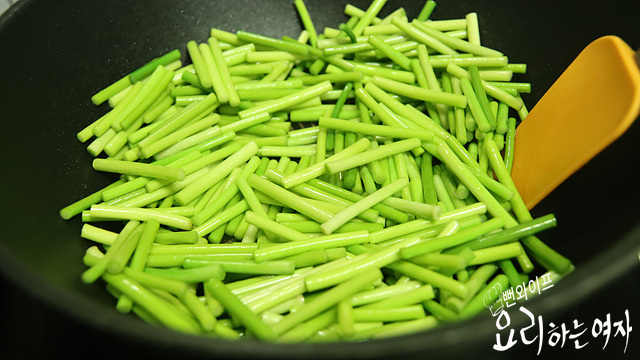
Add the garlic scapes to an oiled pan along with 1/2 tsp salt, and stir-fry until glossy and bright in color.
Unlike my previous recipe, I season them with salt first while stir-frying.
Using less soy sauce in the seasoning that follows keeps the finished dish looking much cleaner.
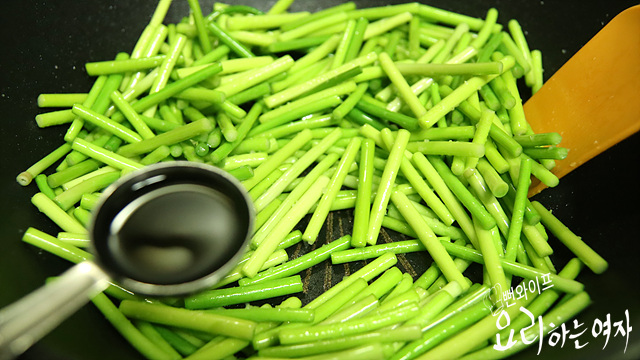
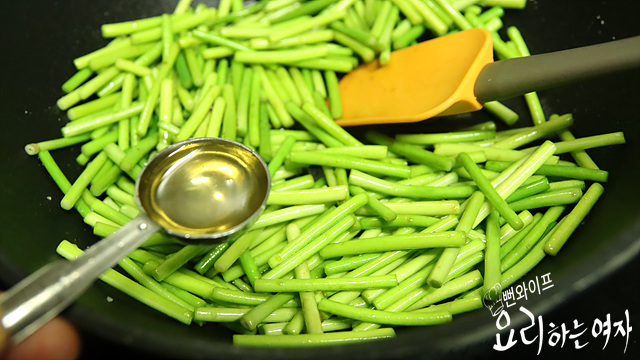
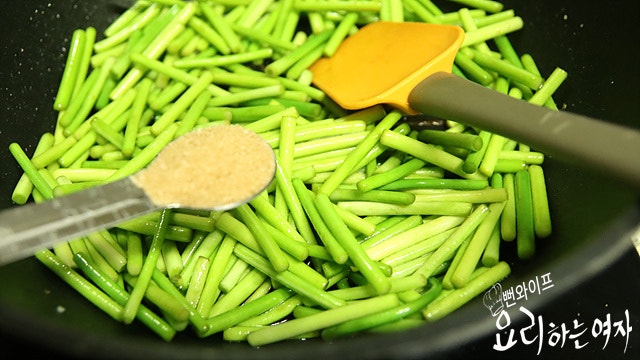
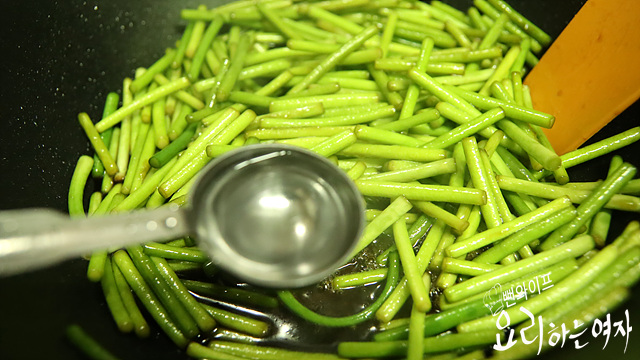
Now add the seasonings.
Add 2 tbsp regular soy sauce (jin-ganjang), 1 tbsp corn syrup (mulyeot), 1 tsp sugar, and 2 tbsp mirin (cooking rice wine), stirring frequently so the flavors soak in.
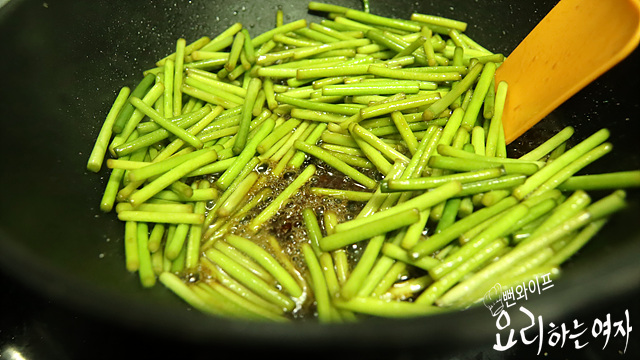
After adding the seasoning, keep the heat over medium and cook down so the flavors penetrate and the garlic scapes turn tender.
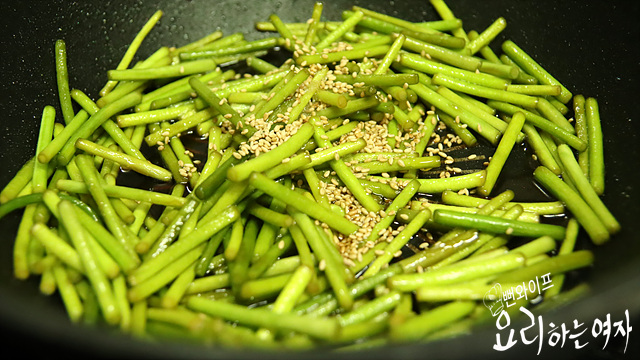
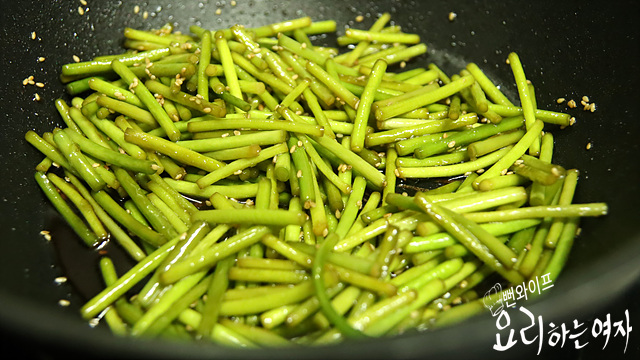
Once the liquid has cooked down considerably, taste it and adjust with salt if it tastes plain.
Turn off the heat and finish with toasted sesame oil and toasted sesame seeds.
Serve
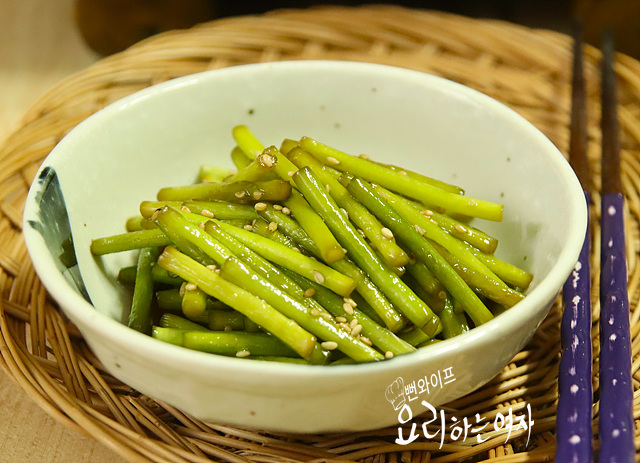
Balancing the seasoning with both salt and soy sauce prevents the color from looking dull and keeps the natural green hue of the garlic scapes.
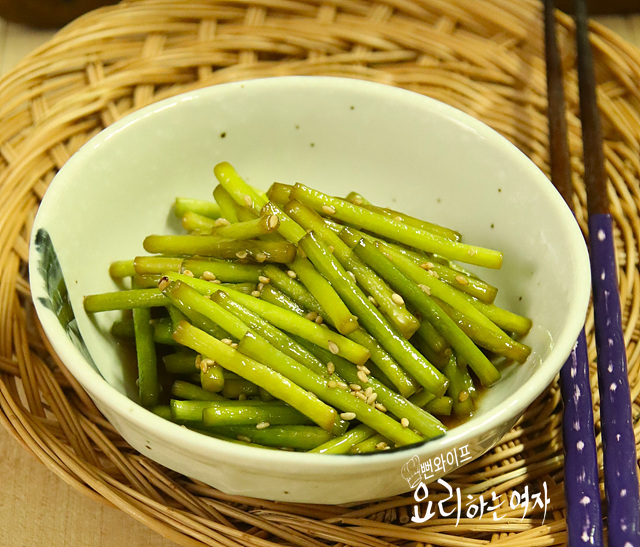
When raw, they are pungent and strongly spicy, but stir-fried like this, the sharp bite disappears and they turn wonderfully mild and tasty.
When I was young, stir-fried garlic scapes were also the No. 1 lunchbox banchan for school.
 Ppunwife's tips
- To achieve a tender-crisp texture that gives a satisfying bite, stir-fry them without blanching. Cooking them directly in the seasoning allows the flavors to soak in thoroughly while keeping them tender without turning mushy.
- Pre-seasoning with salt while stir-frying allows you to reduce the amount of soy sauce added later, keeping the finished dish looking much cleaner.
FAQ
Why stir-fry the garlic scapes directly without blanching?
Cooking them without blanching preserves their tender-crisp bite and prevents them from turning soggy or mushy.
Why pre-season with salt first when stir-frying?
Seasoning with salt first reduces the amount of soy sauce needed later, preventing the dish from turning dark and keeping the color clean and bright.
How can I reduce the pungent, spicy taste of garlic scapes?
Stir-frying the raw garlic scapes thoroughly in the pan with the seasonings cooks off their sharp bite, turning them sweet and mild.
Can I use brewed soy sauce instead of regular soy sauce?
Yes, both regular soy sauce (jin-ganjang) and brewed soy sauce (yangjo-ganjang) work well for this recipe.