5-Minute Perilla Leaf Pasta with Aromatic Herb
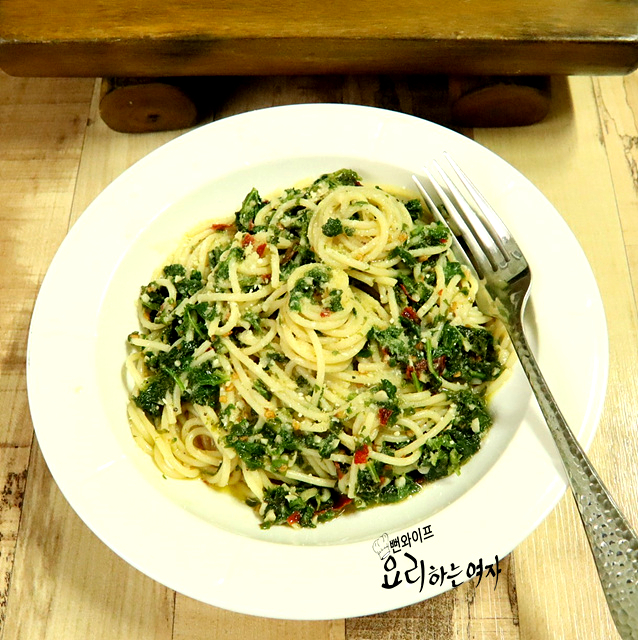
A 5-minute oil pasta tossed in olive oil with the fragrance of fresh perilla leaves and garlic.
Translated from Korean by AI and not yet checked by a native speaker. Amounts and numbers are taken directly from the original recipe. Read the Korean original →
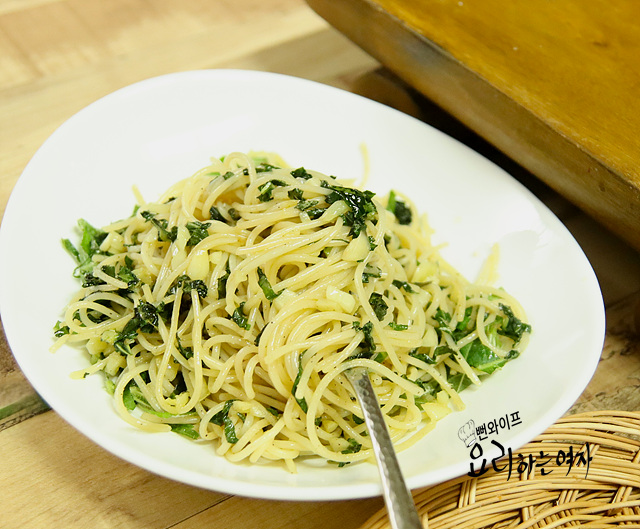
This is a clean, simple oil pasta made in just 5 minutes using pre-cooked noodles. Tuna extract sauce and oligosaccharide syrup add rich umami, while aromatic perilla leaves make it a great quick meal or wine pairing.
- Servings
- 1 serving
- Cook time
- 5 minprep not included
- Difficulty
- Easy
- Spiciness
- Not spicy
Ingredients
Ingredients
- Boiled pasta noodles250 g
- Perilla leaves10 leaves
- Peeled garlic5 cloves
- Olive oil
Seasoning
- Tuna extract sauce (chamchi-aek) (or regular soy sauce (jin-ganjang) or brewed soy sauce (yangjo-ganjang))1 tbsp
- Oligosaccharide syrup (oligodang) (or corn syrup (mulyeot))1 tbsp
- Ground black peppera little
- Toss the boiled noodles with olive oil, let them cool, and store them in the refrigerator for up to 1 week or in the freezer for up to 2 months.
- You can substitute other fragrant edible wild greens for the perilla leaves.
Steps
Boiling the pasta noodles
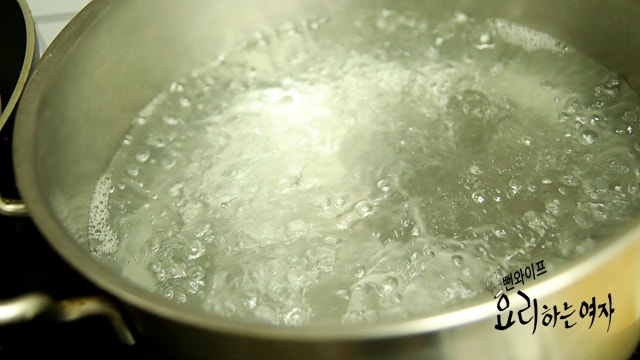
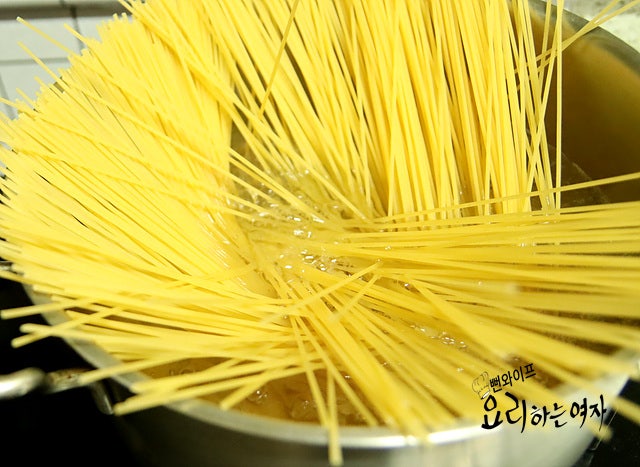
I am boiling 400g of pasta noodles to stock up. 400g of dry noodles makes about 4 adult servings.
Add the pasta noodles to rolling boiling water and boil them.
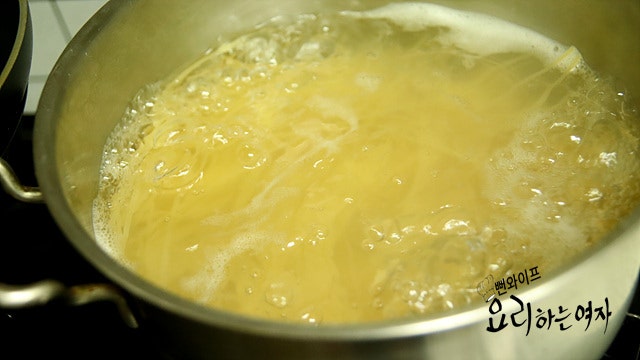
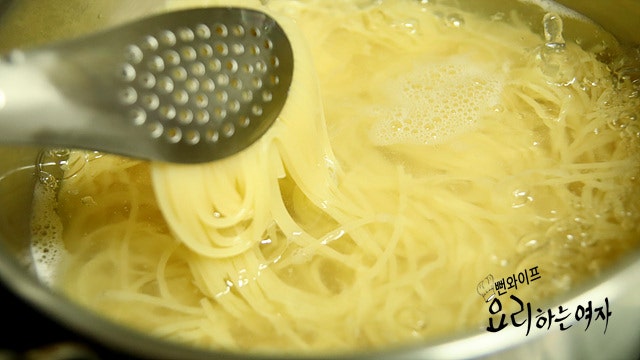
Boil for 5 minutes, then take the noodles out.
Normally you would boil them for about 8 minutes, but keeping them slightly undercooked lets them finish cooking when you sauté them, so you can enjoy springy noodles that never get soggy.
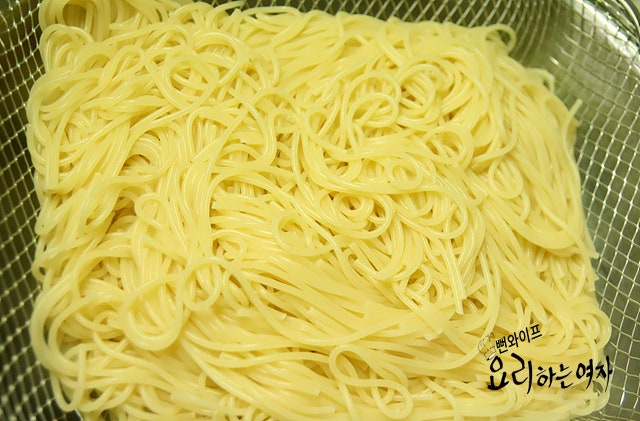
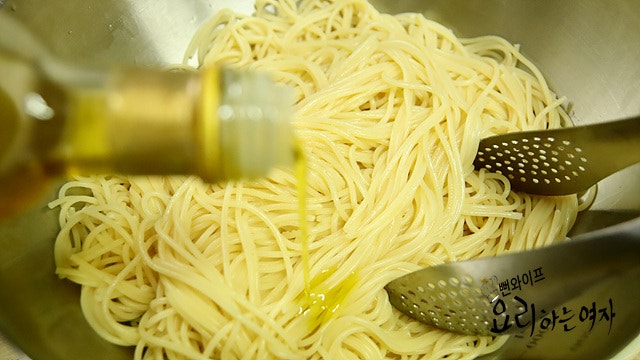
Drain the water, and right away pour in olive oil so they do not stick together...
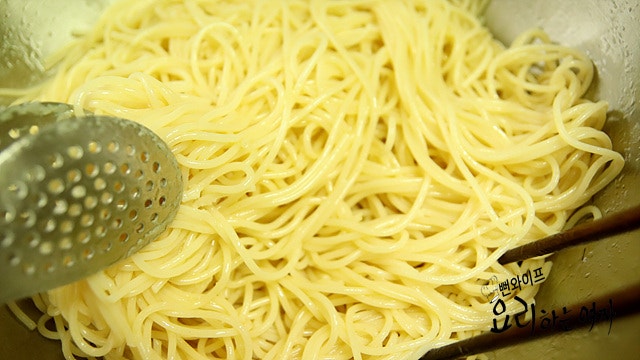
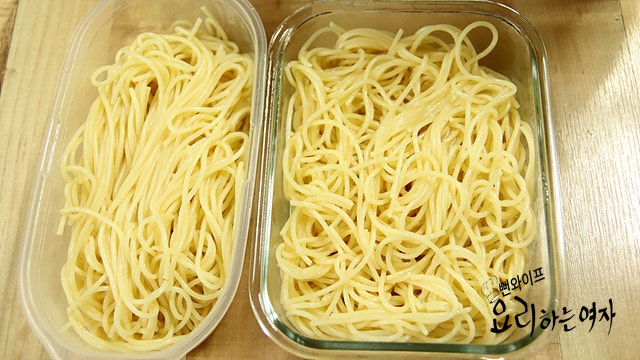
Mix thoroughly, let cool, and place in a container. They say it keeps in the refrigerator for 1 week and in the freezer for 2 months.
You can thaw frozen noodles in the microwave for 2 to 3 minutes, or move them to the refrigerator to thaw for 1 hour.
I am going to use 250g of these boiled pasta noodles for this dish. (100g of dry noodles yields about 250g once boiled.)
Preparing the ingredients
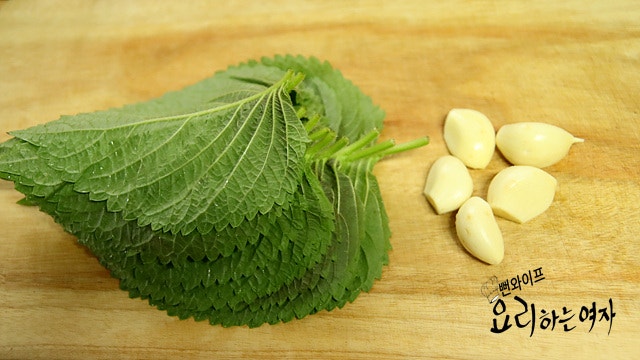
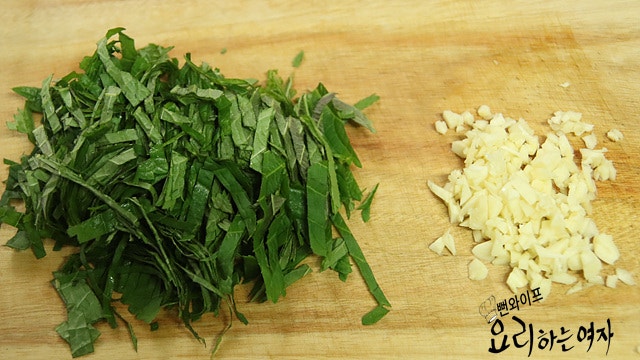
I prepared a generous 10 leaves of perilla leaves, and because I like more garlic than the original recipe calls for, 5 cloves of peeled garlic.
Finely shred the perilla leaves, and chop the garlic finely so its texture still comes through.
Stir-frying the noodles
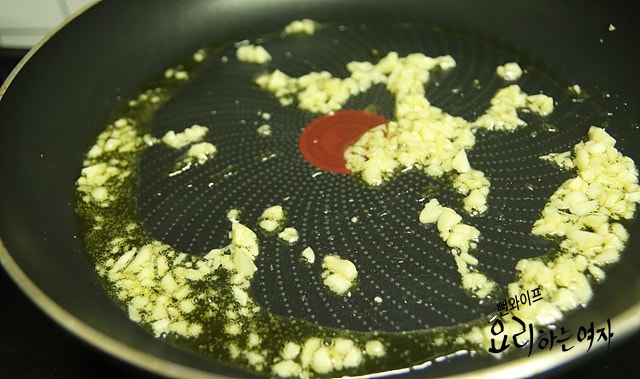
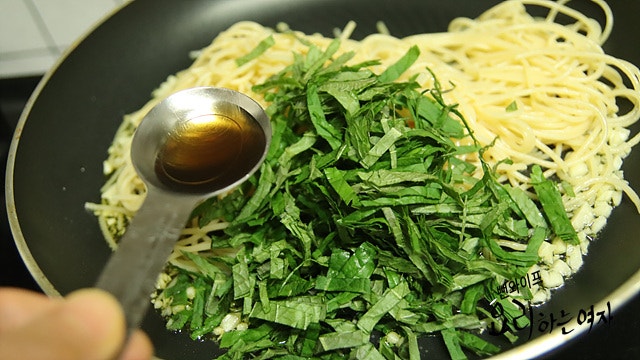
Heat a pan, generously swirl in 3 tbsp of olive oil, and add the garlic, sautéing briefly to bring out the aroma.
Add the noodles and perilla leaves, then season. You can use brewed soy sauce (yangjo-ganjang) or regular soy sauce (jin-ganjang), but I used 1 tbsp of tuna extract sauce (chamchi-aek) instead to add extra umami.
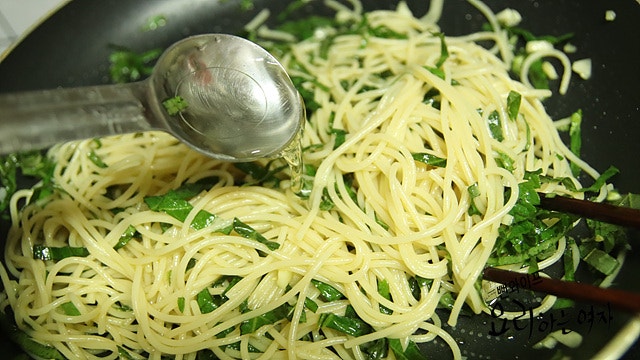
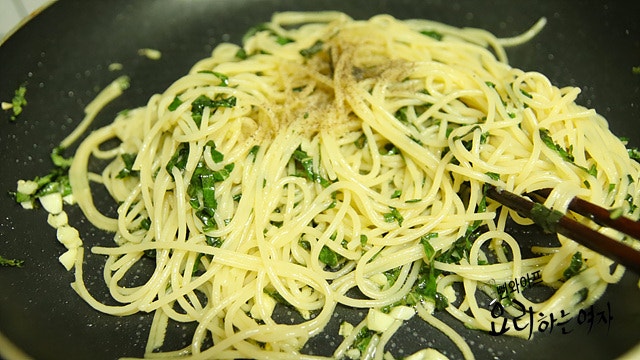
Add 1 tbsp of oligosaccharide syrup (oligodang) or corn syrup (mulyeot) for a mild, balanced taste, toss well so the flavors soak in, and finish with ground black pepper.
I cut the oligosaccharide syrup in half from the original recipe, and it tasted just right to me.
Taste it and adjust to your liking.
Finishing
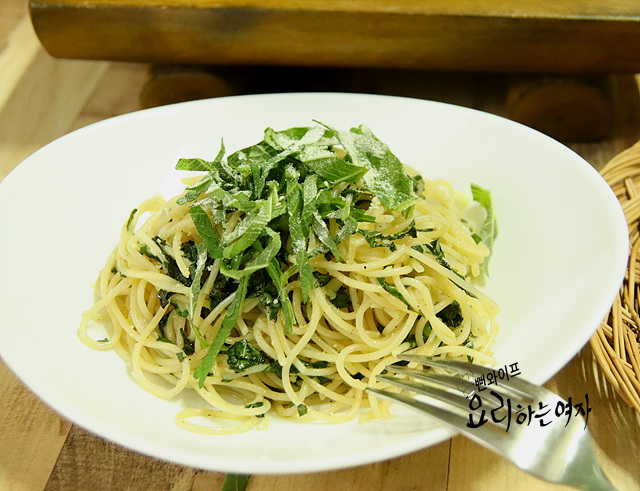
I finished it with a light sprinkle of Parmesan cheese.
I used to only enjoy pasta with tomato sauce, but these days I love how clean and light oil pasta is.
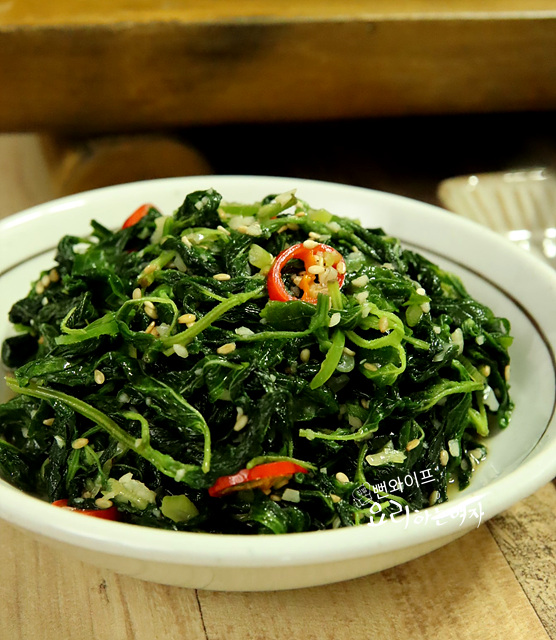
Add plenty of perilla leaves and enjoy their full aroma.
 Ppunwife's tips
- Keeping the noodles slightly undercooked allows them to finish cooking during the sauté step, keeping them delightfully springy without getting soggy.
- After boiling and draining the noodles, immediately toss them with olive oil so they do not stick together.
FAQ
Can I use another seasoning instead of tuna extract sauce?
You can use regular soy sauce (jin-ganjang) or brewed soy sauce (yangjo-ganjang) instead to season the dish.
How do I store the boiled pasta noodles?
Drain well, toss with olive oil, let cool, and store in an airtight container for up to 1 week in the refrigerator or 2 months in the freezer.
How do I thaw frozen pasta noodles?
Heat them in the microwave for 2 to 3 minutes, or transfer them to the refrigerator for about 1 hour to thaw.
Can I use other ingredients besides perilla leaves?
You can substitute other fragrant greens, such as seasonal chwinamul, to create different flavor profiles.