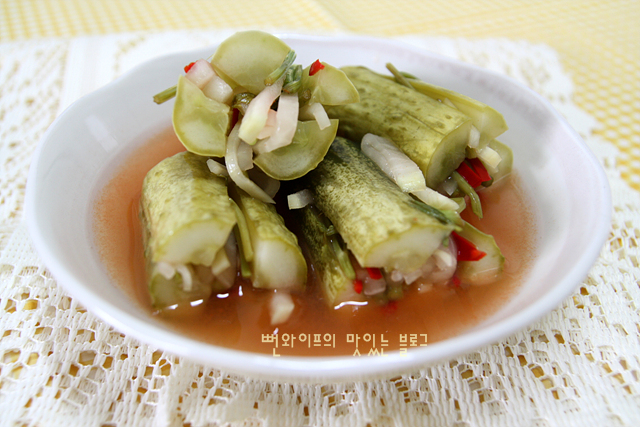
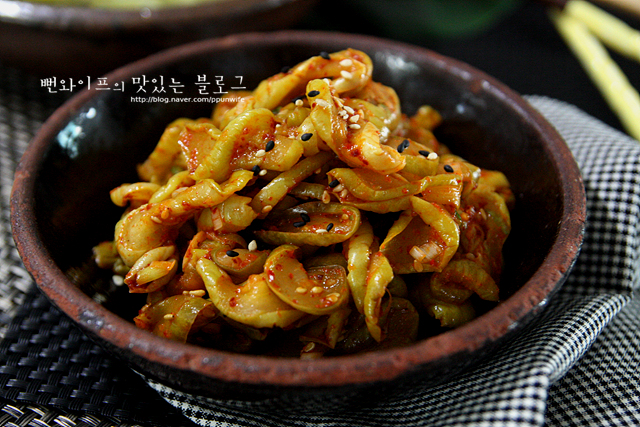
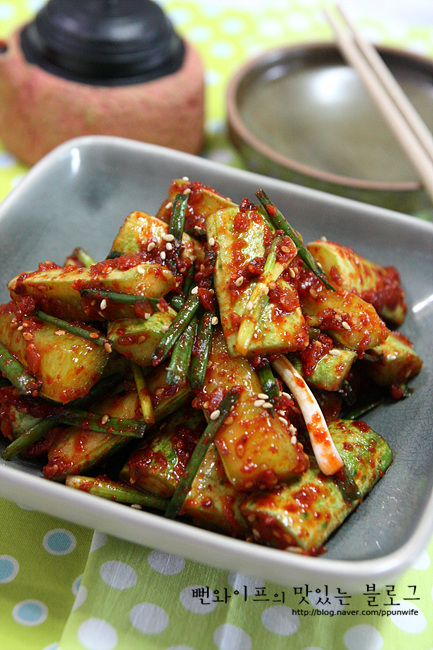
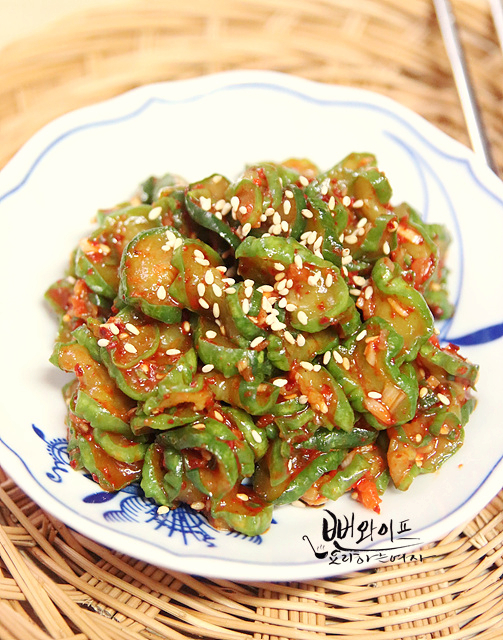
Crisp Oi Kkakdugi (Diced Cucumber Kimchi) Brined in Boiling Water
A simple summer diced cucumber kimchi brined with boiling salt water to keep it crisp, tossed together without any starch porridge.
Translated from Korean by AI and not yet checked by a native speaker. Amounts and numbers are taken directly from the original recipe. Read the Korean original →
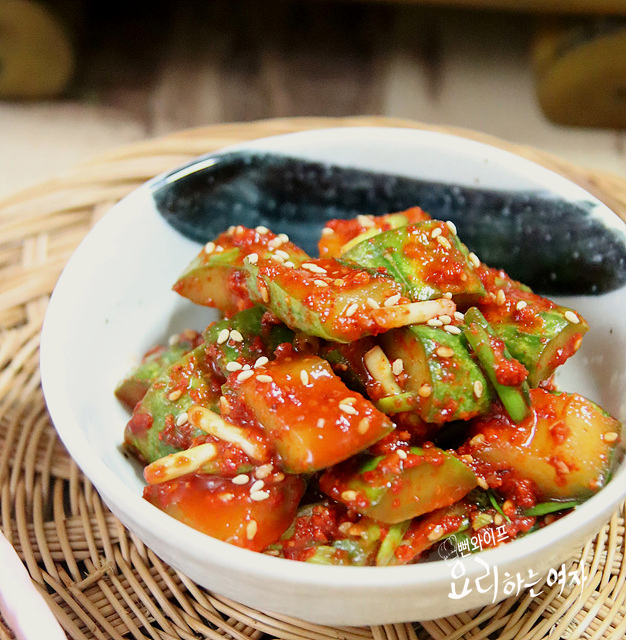
Pouring boiling salt water over seeded cucumbers keeps them from turning mushy and locks in their crisp texture. You can finish it easily by tossing it directly with basic seasonings, with no need to cook a glutinous rice porridge. Enjoy it right away for a fresh, crisp taste, or let it mature for about a day to enjoy a juicy, tender texture.
- Servings
- about 8–10 servings
- Difficulty
- Easy
- Spiciness
- Mildly spicy
Ingredients
Ingredients
- Cucumber10 (1.4 kg, after cleaning)
- Thin scallions (or scallions (jjokpa), garlic chives (buchu), large green onion (daepa), etc.)20 stalks (50 g)
- Coarse sea salt3 tbsp
- Water5 cups
Seasoning
- Gochugaru (Korean chili flakes)5 tbsp
- Minced garlic3 tbsp
- Minced ginger1/2 tbsp
- Sand lance fish sauce (or dried anchovies)2 tbsp
- Sugar (or green plum syrup (maesil-cheong))1–2 tbsp
- Salta little (to adjust final seasoning)
- Toasted sesame seedsas needed
- If using scallions, prepare 10 stalks. You can also substitute garlic chives or the white part of large green onions, or simply omit them.
- In hot weather, thicker cucumbers develop more pulp and seeds; scraping them out improves the texture. Base the seasoning amounts on the weight after cleaning.
- If you do not care for fish sauce, you can substitute salted fermented shrimp (saeujeot).
Steps
Prepare the ingredients
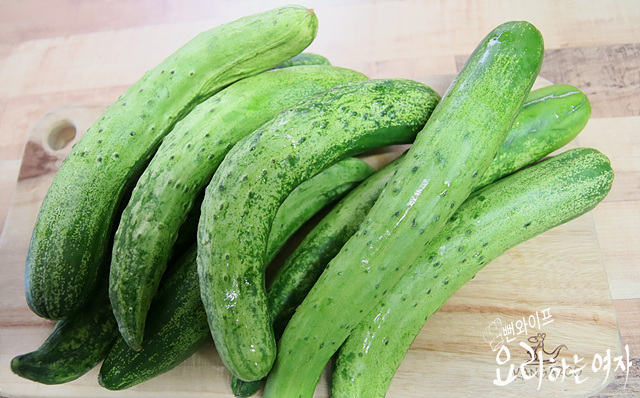
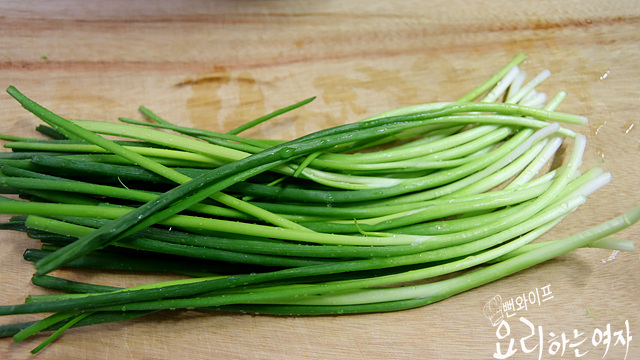
These cucumbers are fairly thick, and I have washed and prepped them.
These are thin scallions rather than regular scallions. It is about half a handful, around 20 stalks. (If using scallions, you can prepare 10 stalks.)
You can also substitute garlic chives or the white part of a large green onion, or leave them out entirely.
Cut the ingredients
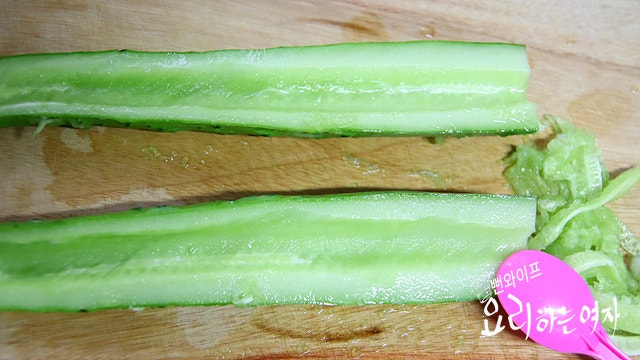
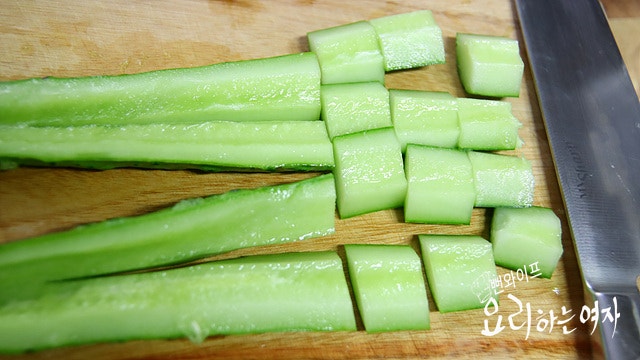
Split the cucumbers lengthwise and scrape out the seeds. Cut them into cubes like kkakdugi.
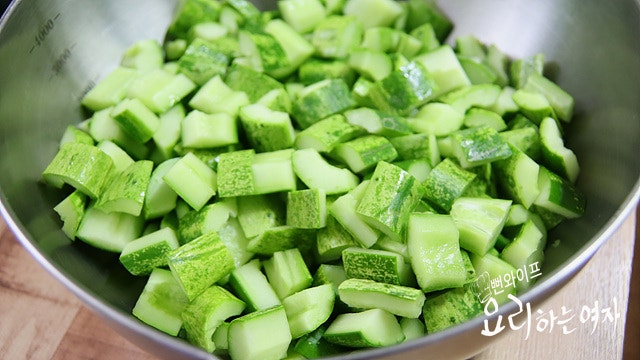
Since they will be brined in salt water, place them in a stainless steel bowl.
The prepped cucumbers weigh 1.4 kg.
Quite a bit gets discarded during prep, so you should season based on the weight after cleaning to get the seasoning just right.
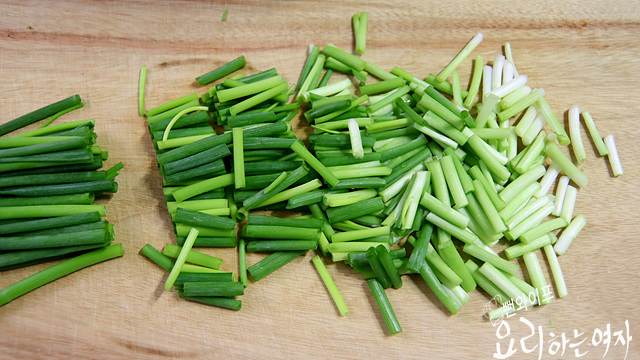
Cut the thin scallions into lengths similar to the cucumbers, and trim off the tips to use in soups or stews.
Brine the cucumbers
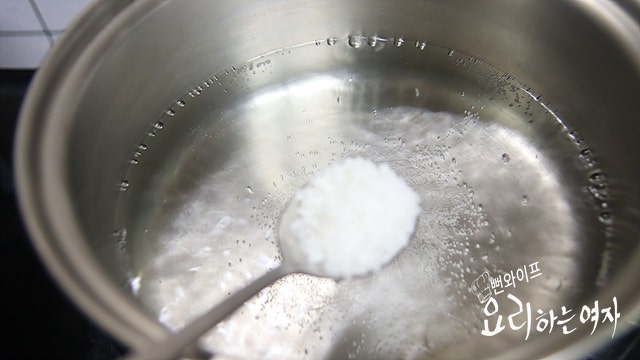
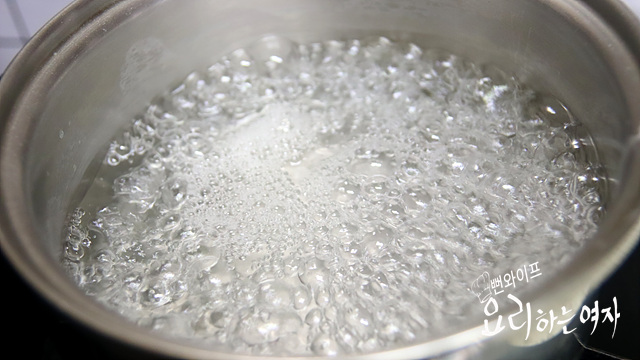
In a pot, bring 5 cups water and 3 tbsp coarse sea salt to a rolling boil.
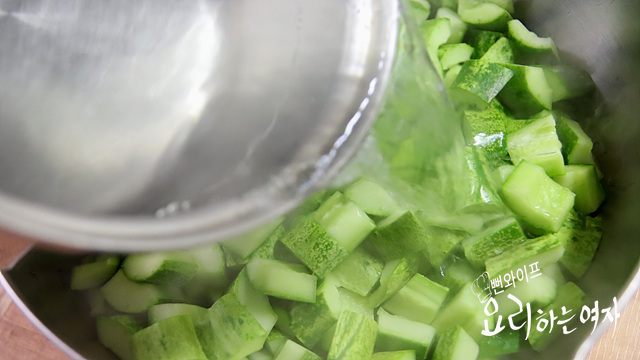
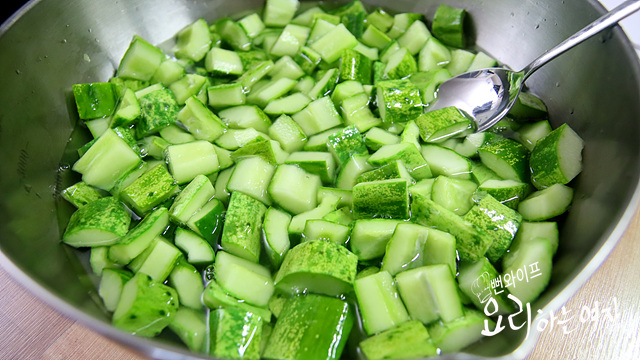
Turn off the heat and immediately pour it over the cucumbers.
Toss the cucumbers and let them brine for about 30 minutes, turning them top to bottom once or twice.
Pouring the boiled salt water straight in without cooling keeps the texture crisp, prevents them from turning soft, and cuts down the brining time.
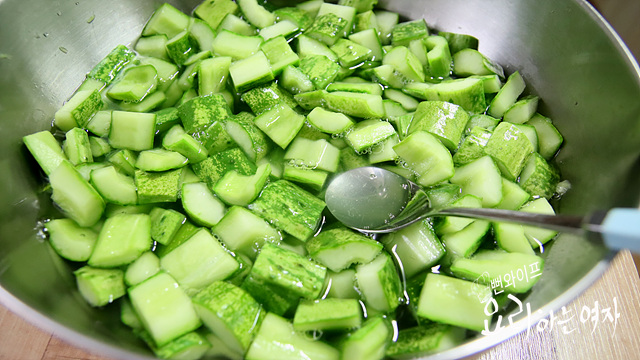
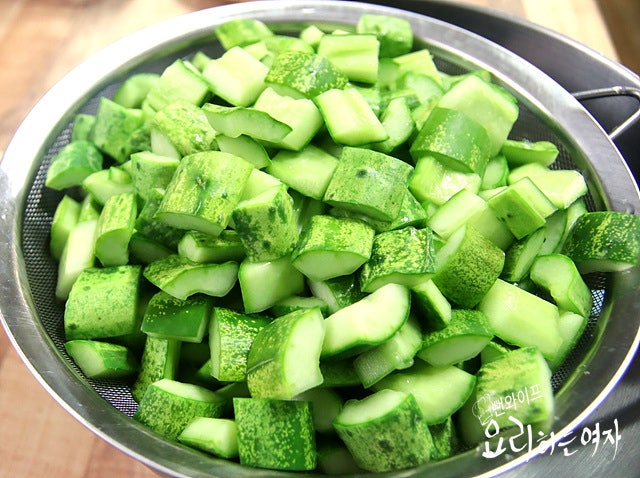
Between pouring in the salt water and the cucumbers brining, a lot of moisture will be drawn out.
Taste a piece without rinsing it. If it seems too bland, extend the brining time; if it tastes salty, rinse it in water.
I found mine mildly seasoned, so I drained them in a colander without rinsing.
Toss with seasonings
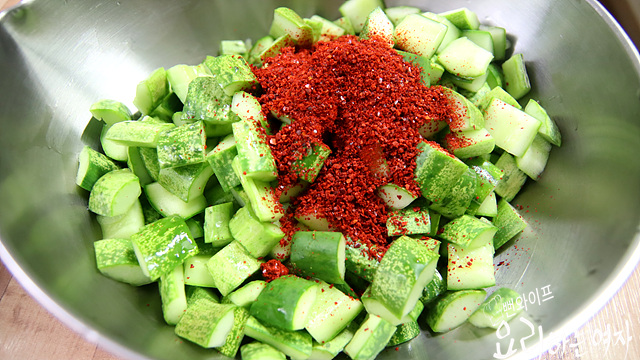
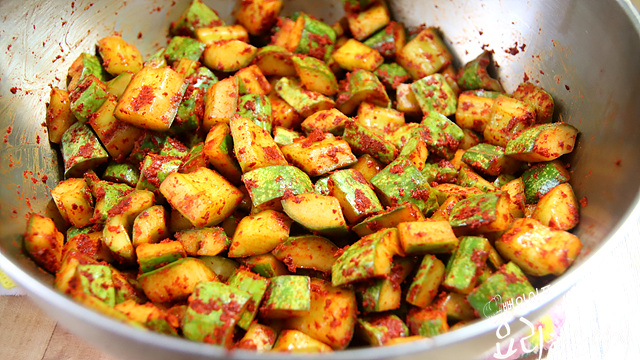
Add 5 tbsp gochugaru (Korean chili flakes) to the drained cucumbers first and toss to tint them red.
Let them sit for 20 minutes to 30 minutes...
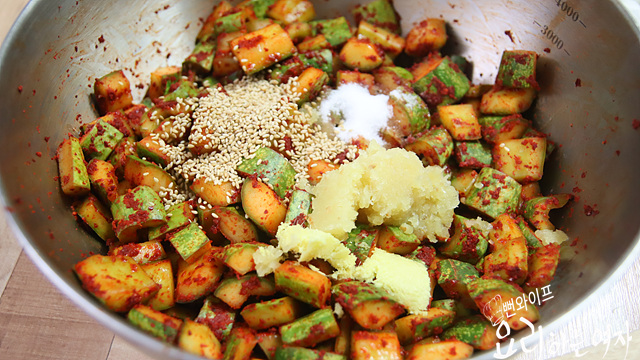
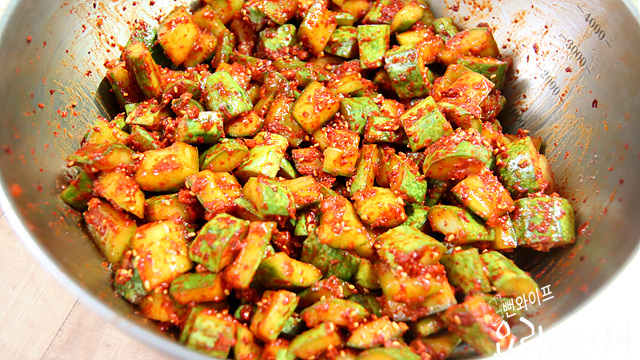
Add 3 tbsp minced garlic, 1/2 tbsp minced ginger, 2 tbsp fish sauce, 1 tbsp sugar, and toasted sesame seeds, then mix thoroughly.
If you do not like fish sauce, you can substitute salted fermented shrimp (saeujeot).
I tasted it and added a little salt. You can adjust the seasoning to your taste by adding sugar or green plum syrup (maesil-cheong).
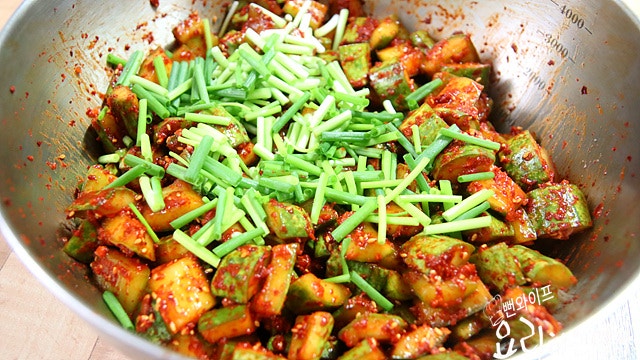
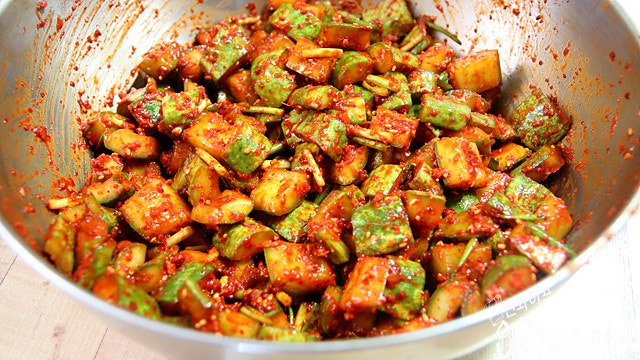
Add the scallions at the very end and toss gently to finish.
Serve
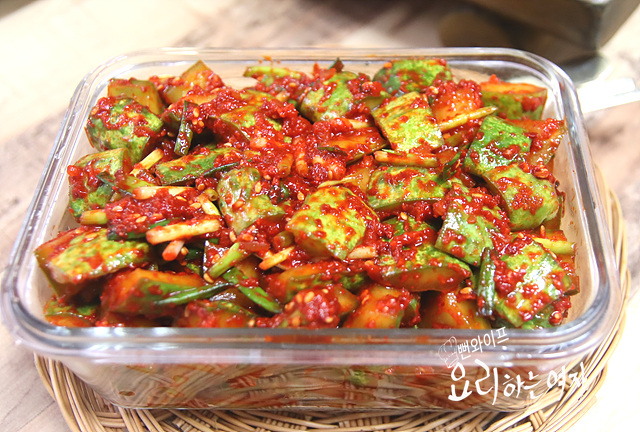
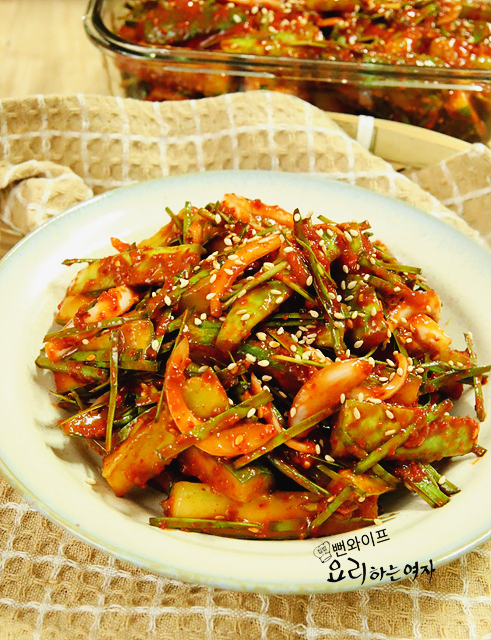
This is oi kkakdugi made right away. You can place it straight into the refrigerator and enjoy it.
It has a fresh, crisp tossed-cucumber flavor.
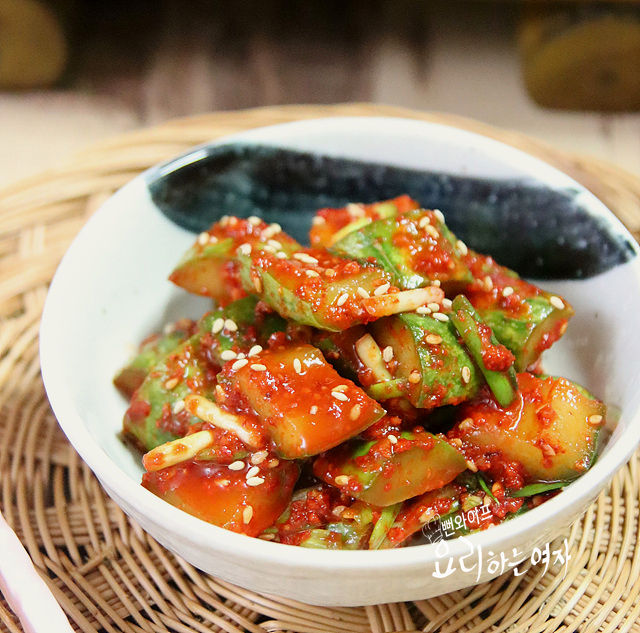
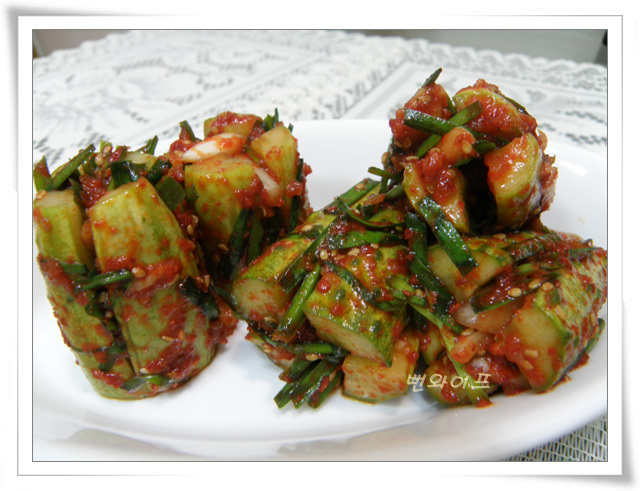
This is how it looks after one night; the seasoning is much mellower and the oi kkakdugi is juicy.
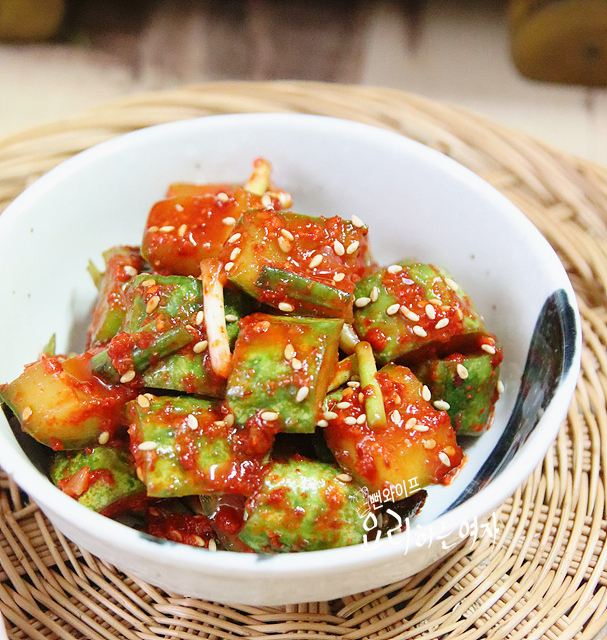
I usually make oi sobagi or cucumber kimchi in small batches to enjoy fresh, but this also seems like it would taste wonderful slightly fermented.
Stay cool, enjoy your meal, and have a wonderful rest of your day.
 Ppunwife's tips
- Quite a bit gets discarded during prep, so you should season based on the weight after cleaning to get the seasoning just right.
- Pouring the boiled salt water straight in without cooling keeps the texture crisp, prevents them from turning soft, and cuts down the brining time.
FAQ
Why pour boiling salt water straight over the cucumbers?
Pouring the rolling-boiling salt water over them without cooling cuts down the brining time, keeps the cucumbers from turning soft, and locks in a crisp texture.
Can other ingredients be substituted for thin scallions?
You can substitute scallions, garlic chives, or the white parts of large green onions, or omit them altogether if you prefer.
What can I do if I want to avoid the pungent flavor of fish sauce?
You can replace sand lance fish sauce or anchovy fish sauce with salted fermented shrimp (saeujeot) in the seasoning.
When is it best to eat the finished kkakdugi?
You can refrigerate it immediately after tossing and enjoy it fresh, or let it sit for about one night so the seasoning soaks in, giving it a juicier and mellower flavor.