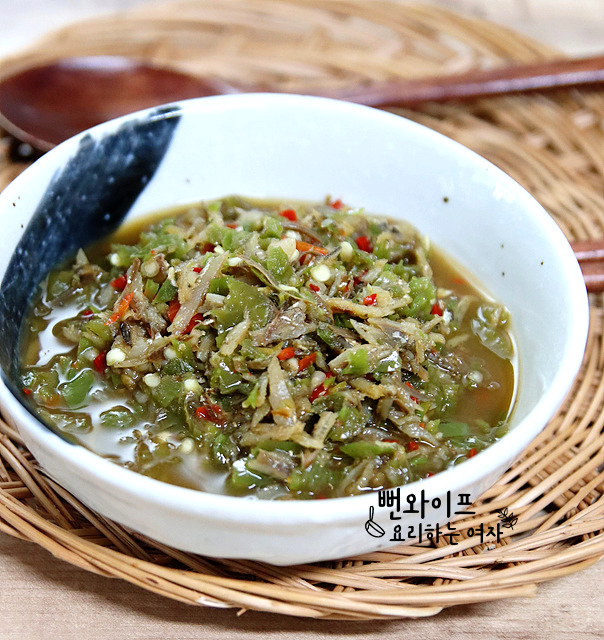
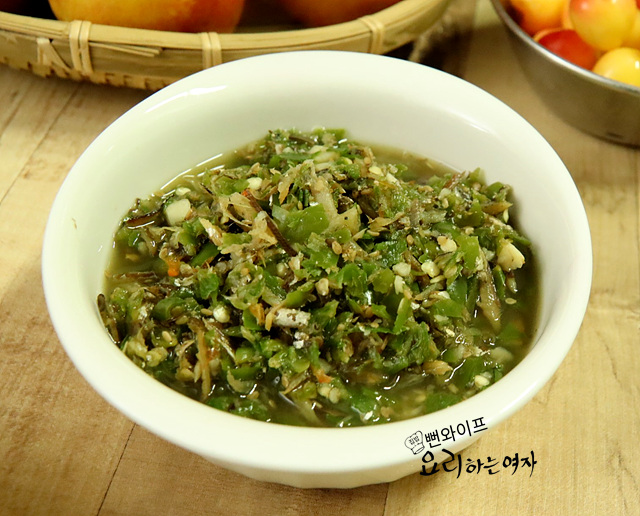
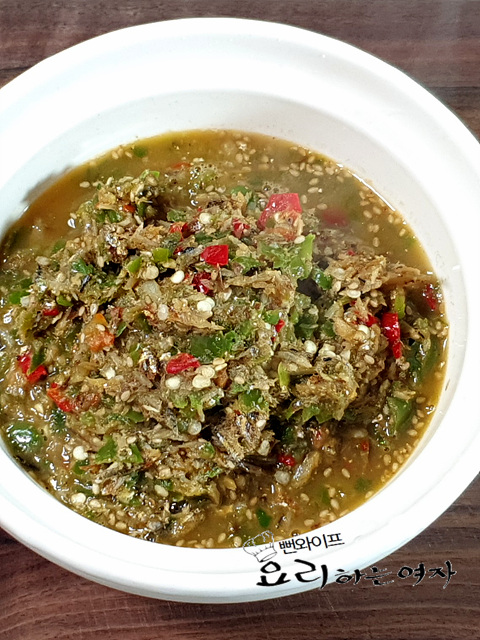
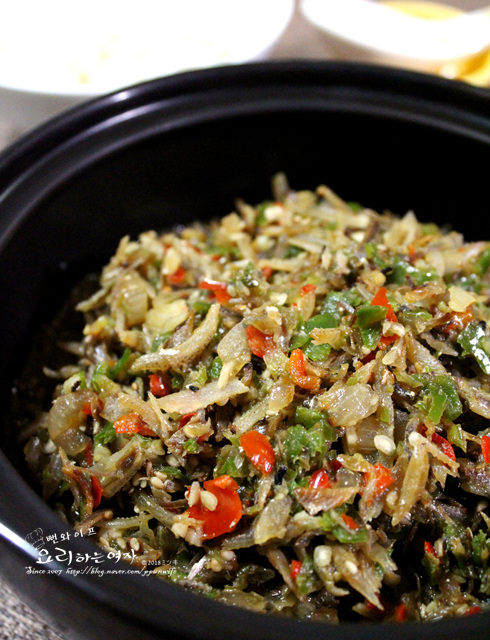
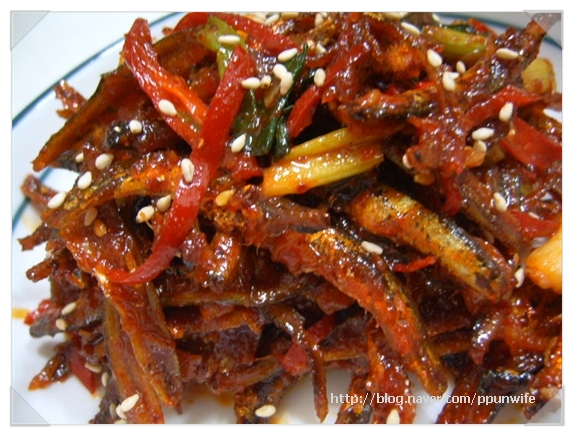
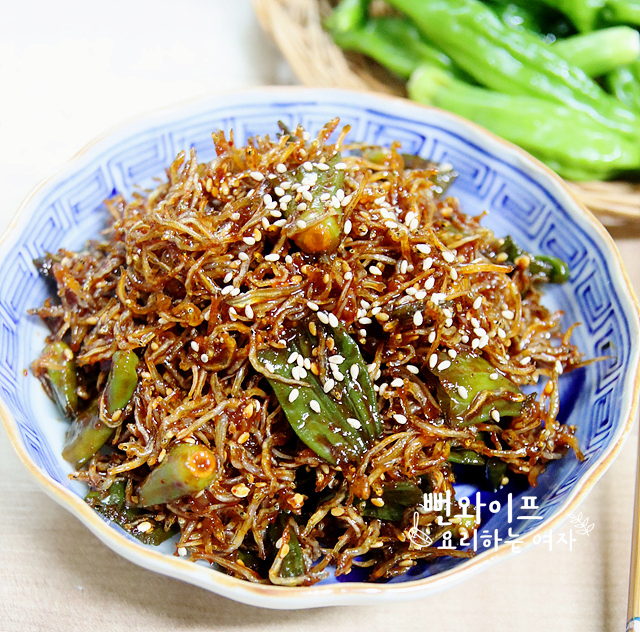
Spicy Anchovy Gochu Jangmul (Simmered Chili Pepper Relish)
A summer side dish of dried anchovies toasted in a dry pan and simmered with chopped Cheongyang chili peppers in a savory fish sauce broth.
Translated from Korean by AI and not yet checked by a native speaker. Amounts and numbers are taken directly from the original recipe. Read the Korean original →
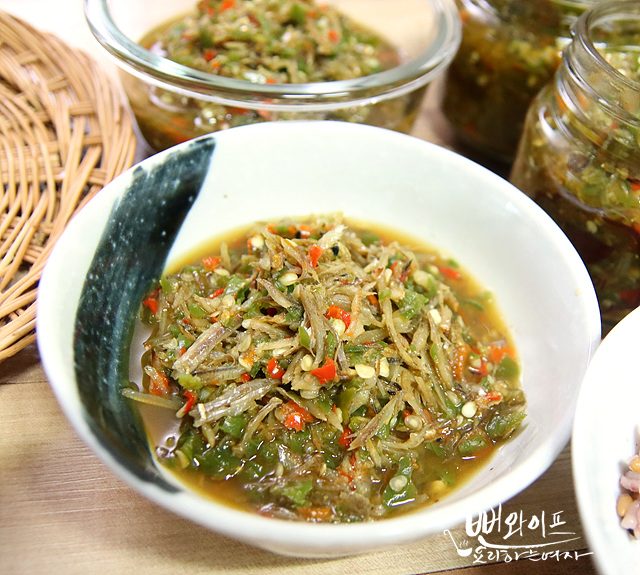
Dried anchovies are first toasted in a dry pan to remove any fishy smell and bring out their nutty aroma, then simmered with Cheongyang chili peppers. Spicy, savory, and rich, it is a wonderful summer delicacy perfect for mixing into rice or tossing with thin noodles.
- Servings
- about 8–10 servings
- Cook time
- 10 minprep not included
- Difficulty
- Easy
- Spiciness
- Very spicy
- Keeps
- 7 days
Ingredients
Ingredients
- Cheongyang chili pepper (hot green chili) (or or green chili pepper)400 g
- Dried soup anchovies100 g
- Water4 cups
Seasoning
- Soup soy sauce (guk-ganjang)4 tbsp
- Sand lance fish sauce (or dried anchovies)4 tbsp
- Mirin (cooking rice wine)4 tbsp
- Minced garlic2 tbsp
- Perilla oil (or toasted sesame oil)when serving
- If you do not like spicy food, you can use regular green chili peppers instead.
- The heads and innards have been removed from the dried soup anchovies.
- Once cooled, divide into portions; keep only what you will eat within a week in the refrigerator, and store the rest in the freezer to enjoy.
Steps
Prepare the ingredients
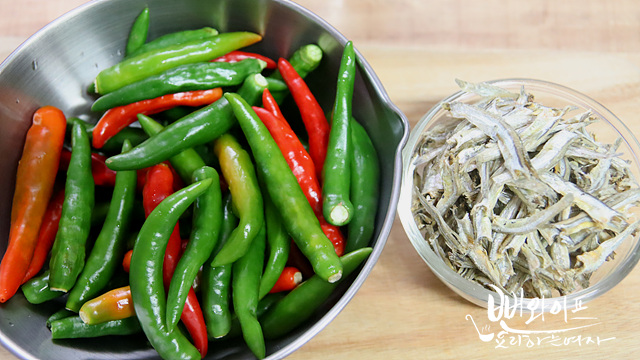
Some look red as they ripened, but they are all Cheongyang chili peppers. If you do not like spicy food, you can use regular green chili peppers instead.
The heads and innards have been removed from the dried soup anchovies.
Prep the ingredients
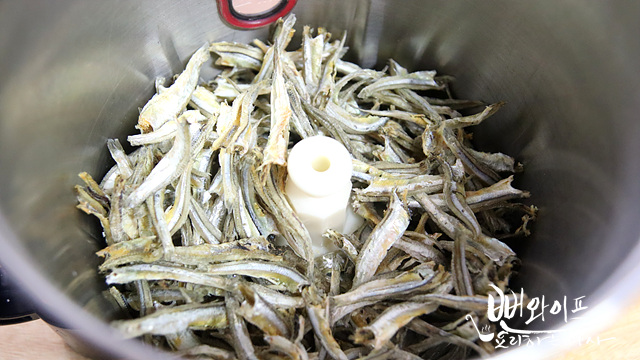
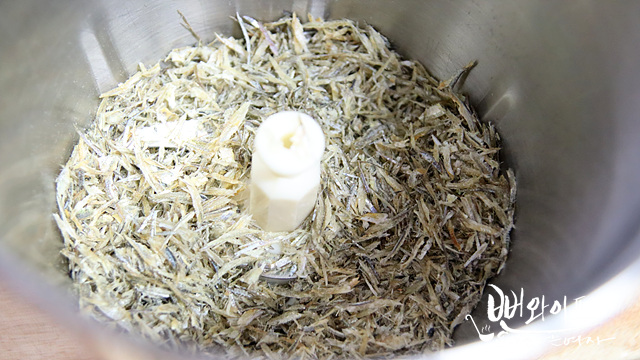
Place the dried anchovies in a food processor and pulse coarsely.
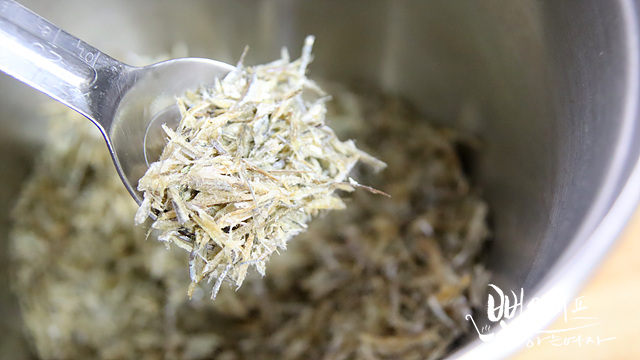
Having a nice chew to the anchovies is great, so this texture is just right; if you grind them too finely, they turn mushy and make the broth thick and pasty.
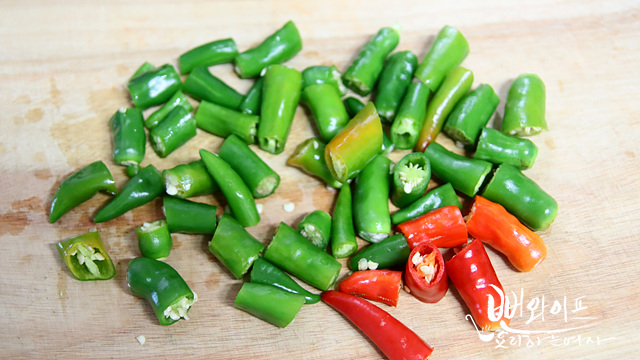
Roughly chop the Cheongyang chili peppers as well, since they will also go into the food processor.
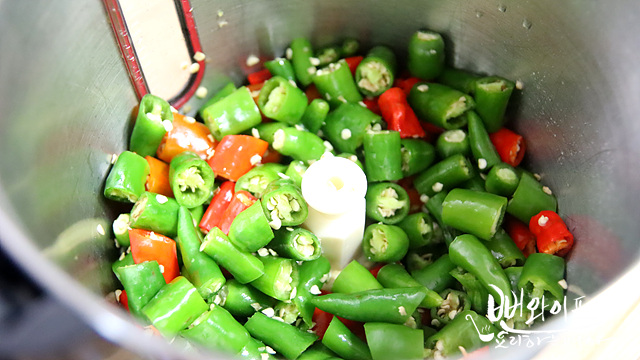
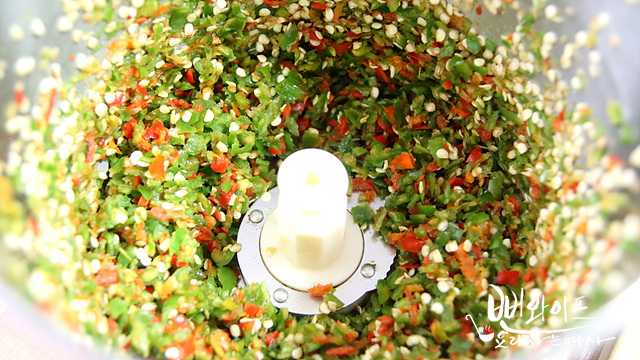
Place in the food processor and pulse to a comfortable bite size.
Toast the dried anchovies
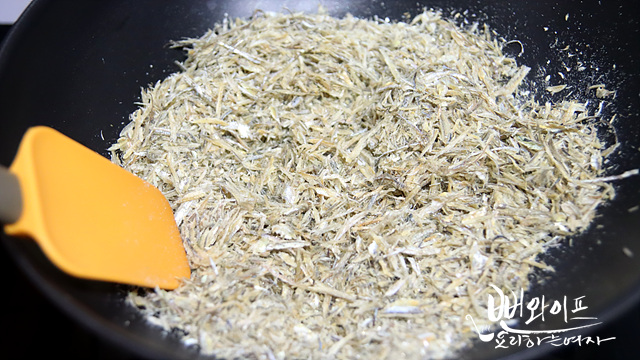
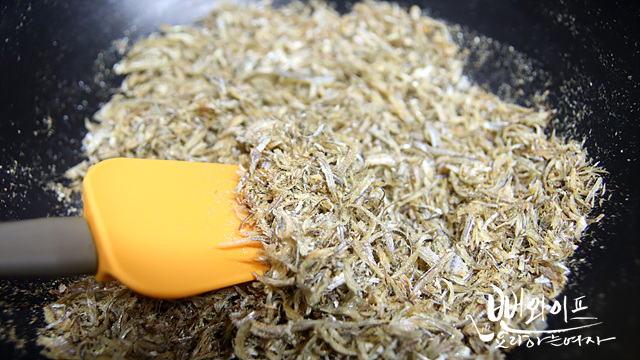
In a dry pan without any oil, stir-fry the dried anchovies thoroughly until golden and crisp.
Toasting them first like this eliminates the fishy smell and makes the broth taste much nuttier.
Simmer
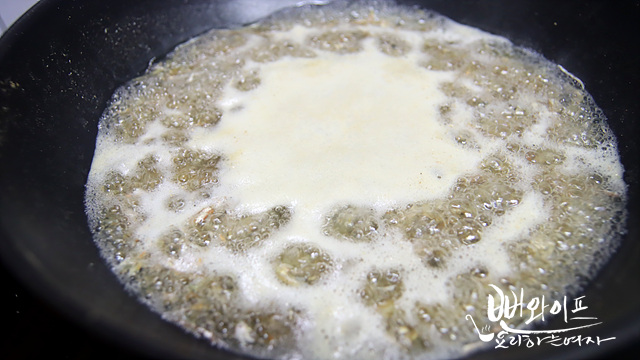
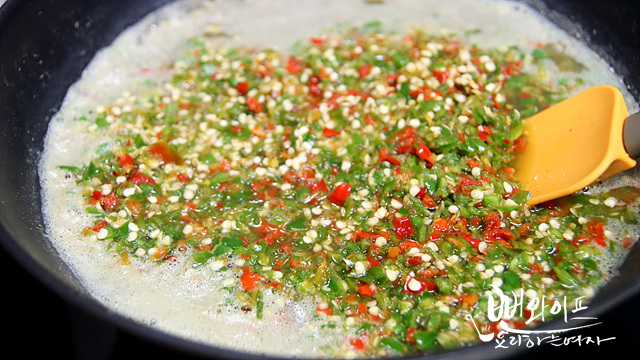
Pour in 4 cups of water, and once it comes to a rolling boil, simmer gently for about 5 minutes so the nutty flavor of the anchovies infuses into the broth.
This alone makes a rich anchovy broth and the anchovies taste delicious, which would also be fantastic for making gang-doenjang by dissolving doenjang into it.
Once the anchovy flavor is fully drawn out, add all the Cheongyang chili peppers.
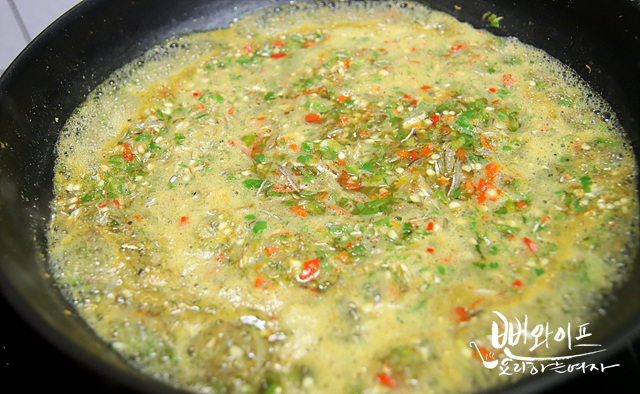
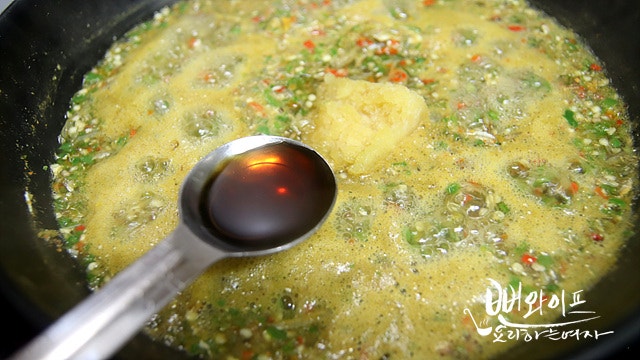
When it begins to boil again, add the seasonings.
Add 4 tbsp soup soy sauce (guk-ganjang), 4 tbsp sand lance fish sauce, 4 tbsp mirin (cooking rice wine), and 2 tbsp minced garlic.
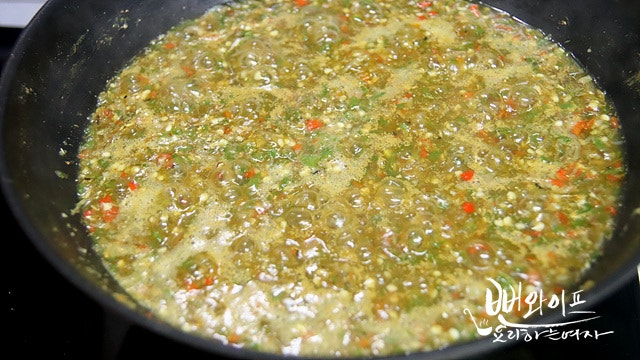
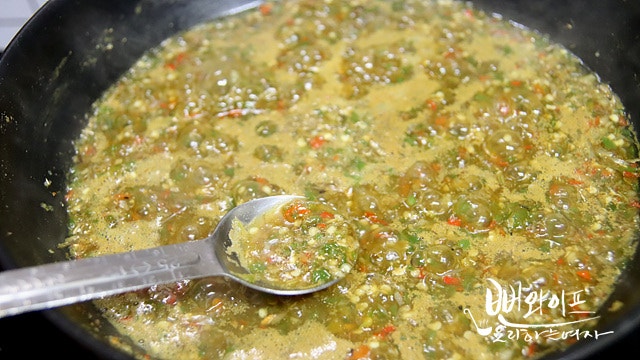
Simmer for at least 5 minutes, and the peppers will soften while the rich flavors of anchovy and chili infuse nicely into the broth.
When you taste it, it will be pleasantly salty and savory, perfect for mixing with rice.
Finish
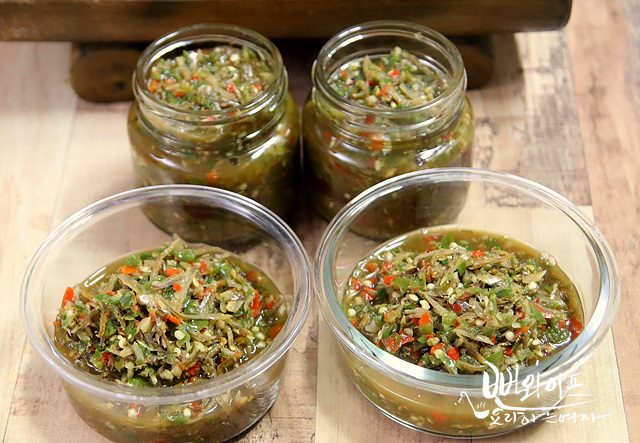
Once cooled, divide into portions; keep only what you will eat within a week in the refrigerator, and store the rest in the freezer to enjoy.
Rather than making just a little, making a generous batch of Gochu jangmul to stash away makes it a truly dependable side dish.
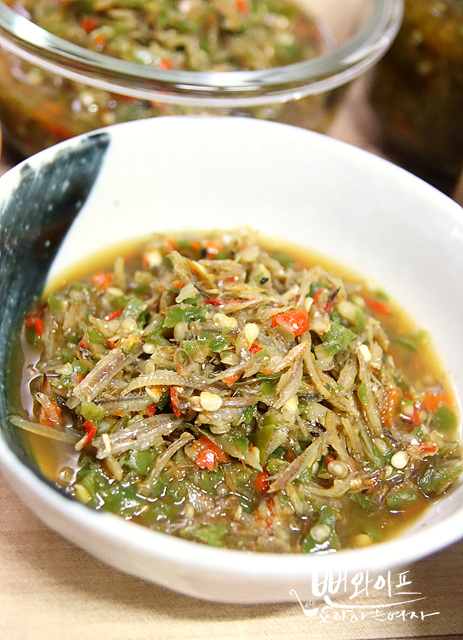
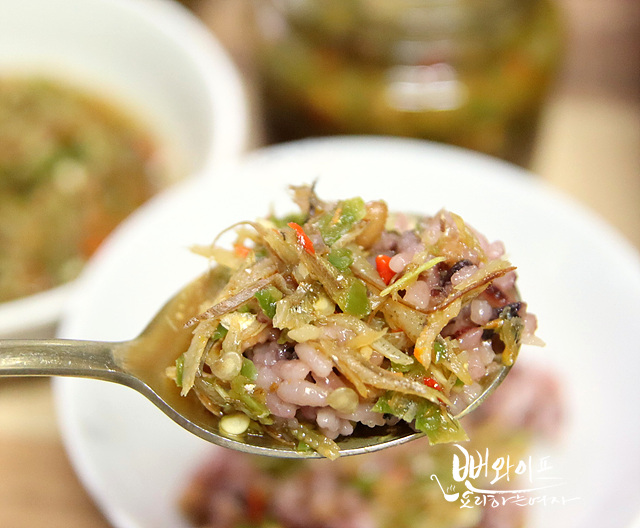
Spicy, savory, and bursting with umami, Gochu jangmul is best enjoyed mixed into rice with a drizzle of perilla oil and wrapped in unseasoned dried seaweed sheets (gim).
Second, it is also wonderful used like a mixing sauce for thin wheat noodles (somyeon). Or even in pasta...
With Gochu jangmul on hand, you do not even need to make separate anchovy broth for banquet noodles (janchi guksu).
 Ppunwife's tips
- Having a nice chew to the anchovies is great, so this texture is just right; if you grind them too finely, they turn mushy and make the broth thick and pasty.
- Toasting them first like this eliminates the fishy smell and makes the broth taste much nuttier.
- Rather than making just a little, making a generous batch of Gochu jangmul to stash away makes it a truly dependable side dish.
FAQ
What should I do if I cannot handle spicy food well?
If the heat is too much, you can substitute regular green chili peppers for the Cheongyang chili peppers.
How should I store the finished Gochu jangmul?
Let it cool slightly, divide into portions, and store what you will eat within a week in the refrigerator while keeping the rest in the freezer.
Is there anything to watch out for when grinding the dried anchovies in a blender or food processor?
If ground too finely, the anchovies turn mushy and make the broth unpleasantly thick, so it is best to pulse them lightly so a coarse, chewy texture remains.
Are there other ways to use it besides mixing it with rice?
You can mix it into rice with perilla oil and wrap it in dried seaweed sheets (gim), use it as a sauce for thin wheat noodles (somyeon), or toss it with pasta and banquet noodles (janchi guksu).