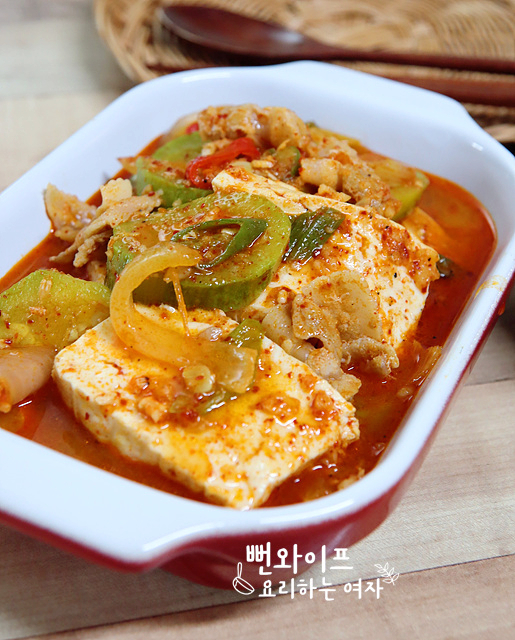
Spicy, Refreshing Aehobak Jjigae (Zucchini Stew) with Pork
A refreshing, spicy stew simmered with pork, tofu, and Korean zucchini, seasoned cleanly with salted fermented shrimp.
Translated from Korean by AI and not yet checked by a native speaker. Amounts and numbers are taken directly from the original recipe. Read the Korean original →
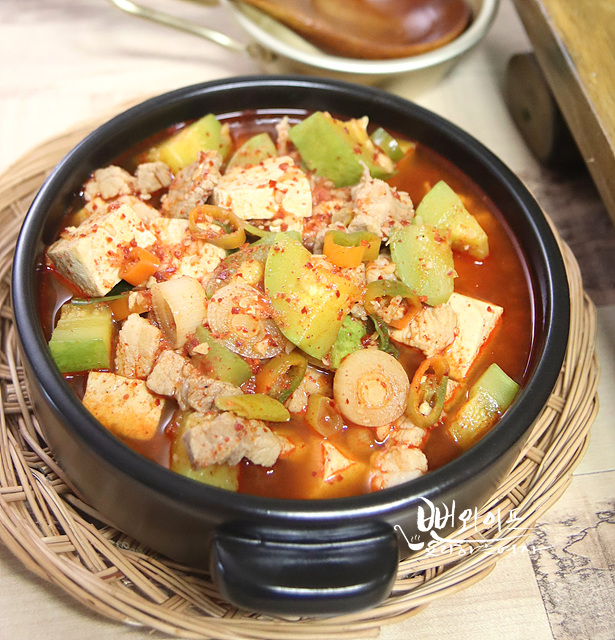
Seasoned with salted fermented shrimp and Korean chili flakes instead of gochujang, this stew features a clean, spicy broth without any heaviness. The secret to its flavor is stir-frying the pork first with garlic, ginger, and salted fermented shrimp to eliminate any gamey odor and build a seasoned base. It is a wonderful, spicy dish to enjoy using light summer ingredients.
- Servings
- 3–4 servings
- Difficulty
- Easy
- Spiciness
- Spicy
Ingredients
Ingredients
- Pork200 g
- Korean zucchini (aehobak)2/3
- Tofu200 g
- Large green onion (daepa)1/2 stalk
- Cheongyang chili pepper (hot green chili)2
- Anchovy broth3 cups (3 cups, 2 tablets)
Seasoning
- Minced garlic1 tbsp
- Minced ginger1 tsp
- Salted fermented shrimp (saeujeot)1 tsp
- Mirin (cooking rice wine)1 tbsp
- Soup soy sauce (guk-ganjang)1 tbsp
- Gochugaru (Korean chili flakes)2 tbsp
- Ground black peppera little
- If making this without meat, finishing with perilla oil makes it taste much better.
Steps
Slice the ingredients
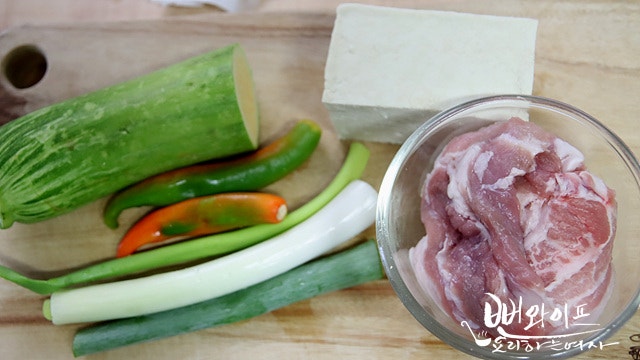
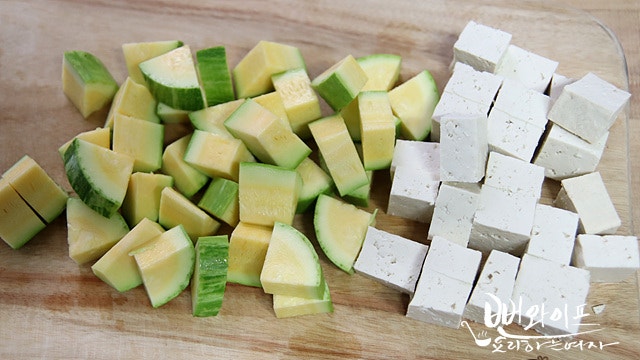
Here are the pork, Korean zucchini (aehobak), tofu, large green onion (daepa), and Cheongyang chili peppers.
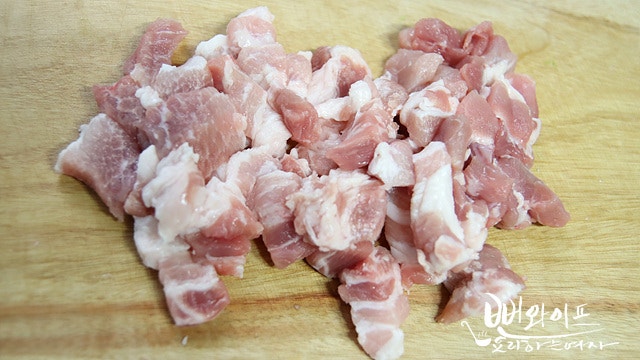
Cut the pork into bite-sized pieces.
Thickly slice the Korean zucchini and tofu into flat squares or dice them.
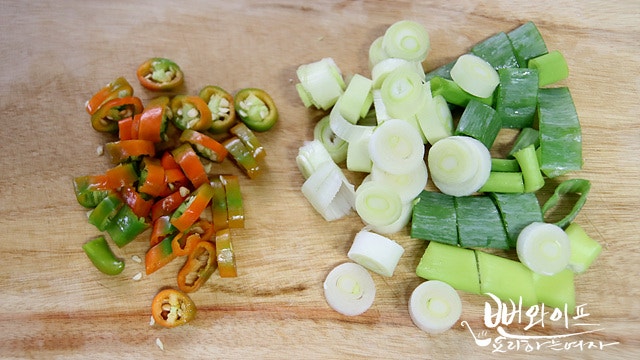
Thinly slice the large green onion and Cheongyang chili peppers.
Stir-fry the pork
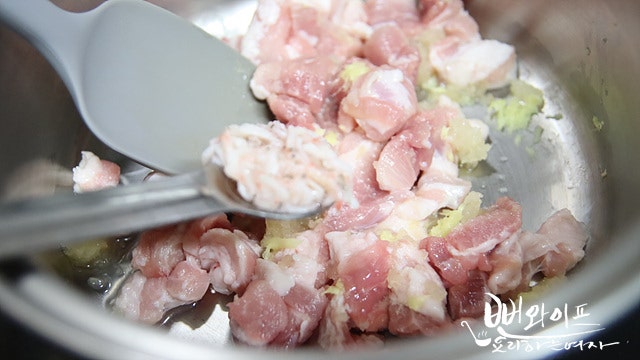
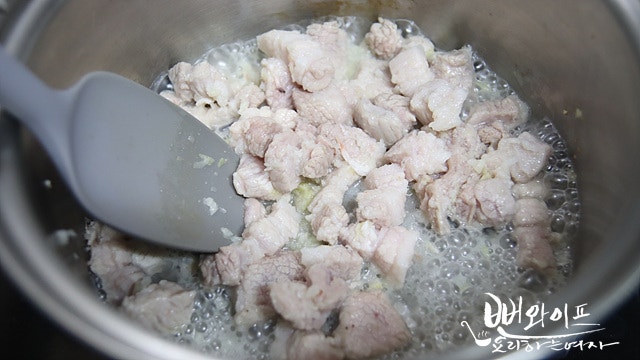
Add the pork along with 1 tbsp minced garlic, 1 tsp minced ginger, 1 tsp salted fermented shrimp (saeujeot), and 1 tbsp mirin (cooking rice wine), then stir-fry briskly.
It is best to season and stir-fry the meat first to remove unwanted meat odors and build base flavor.
Once the meat has turned mostly white and is cooked through...
Simmer
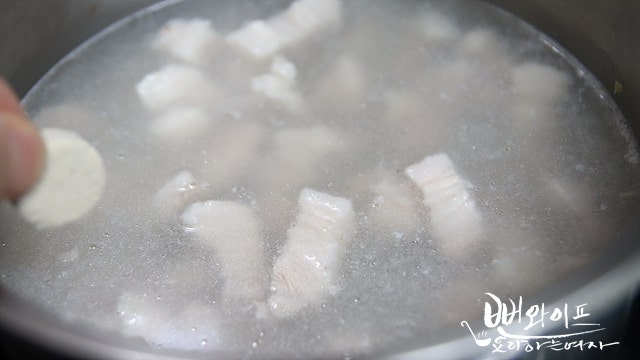
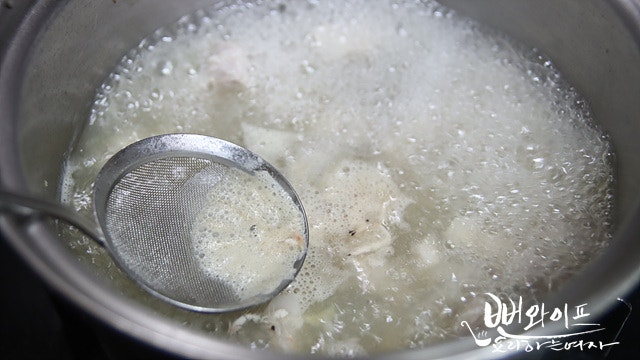
Pour in 3 cups anchovy broth, or 3 cups water plus 2 broth tablets, and bring to a rolling boil.
Skim off any foam that rises cleanly.
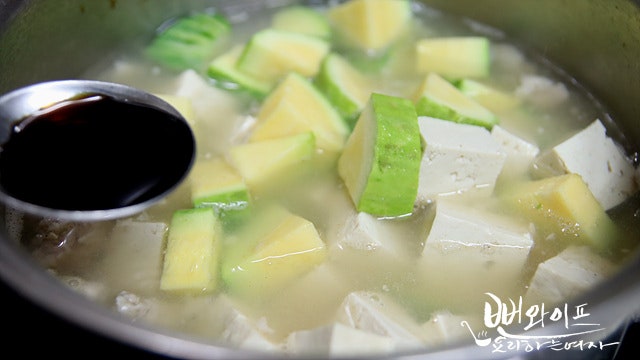
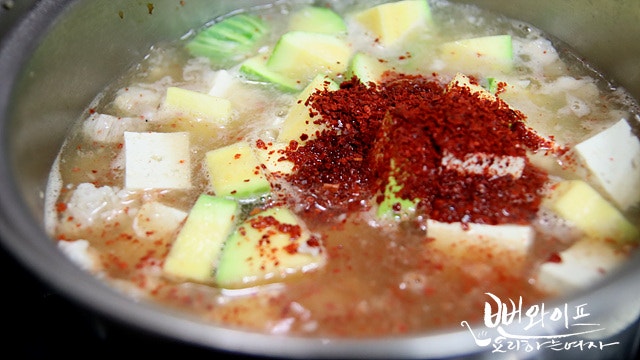
Add the Korean zucchini, tofu, 1 tbsp soup soy sauce (guk-ganjang), and 2 tbsp gochugaru (Korean chili flakes).
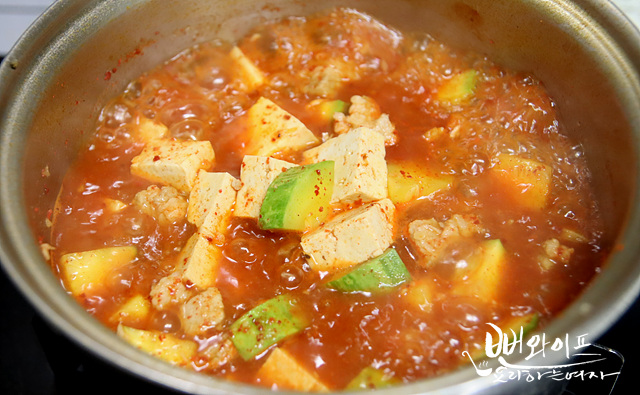
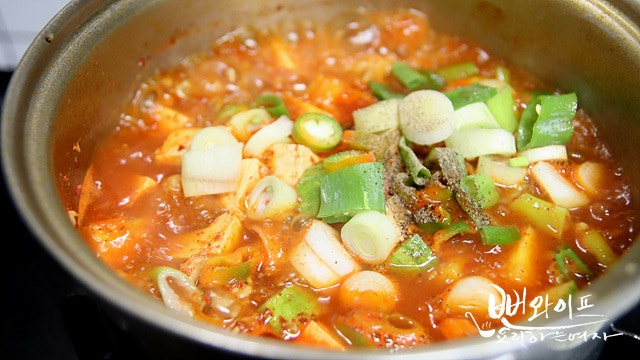
Simmer until all ingredients are thoroughly cooked and their flavors infuse into the broth, then taste.
If it tastes bland, adjust the seasoning with salted fermented shrimp or salt. Add the large green onion, Cheongyang chili peppers, and a little ground black pepper, then simmer briefly to let the aromas infuse before finishing.
Finish
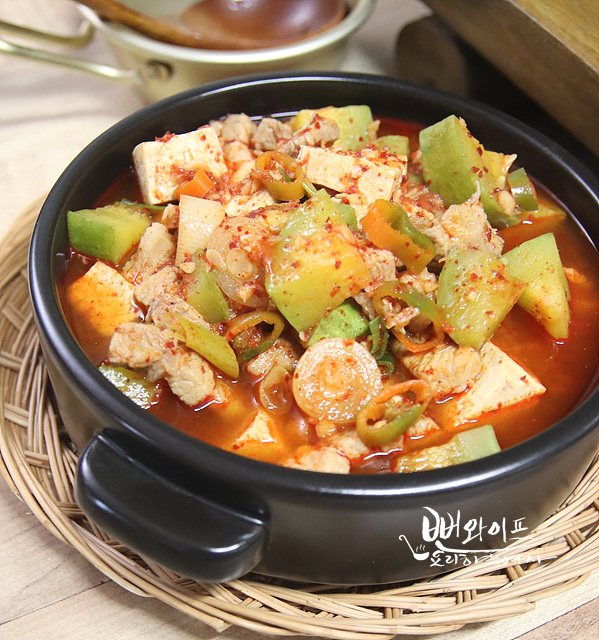
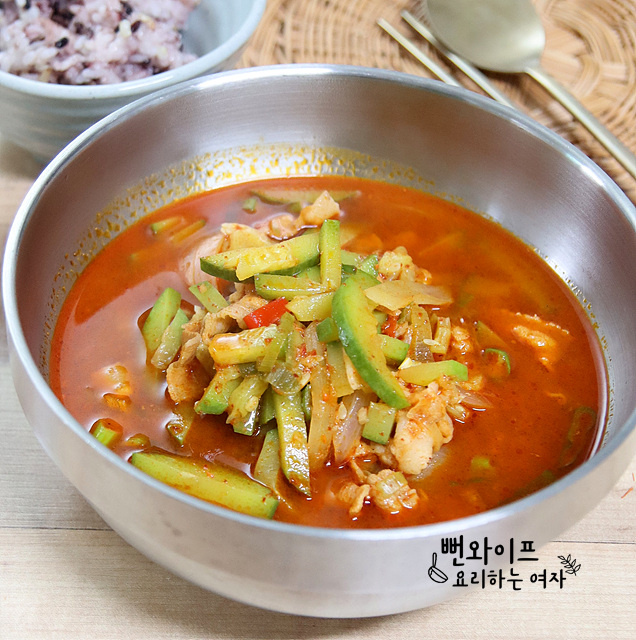
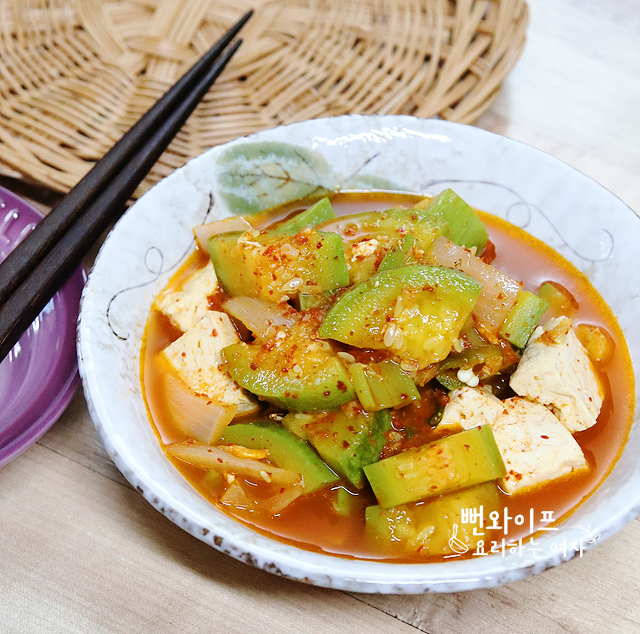
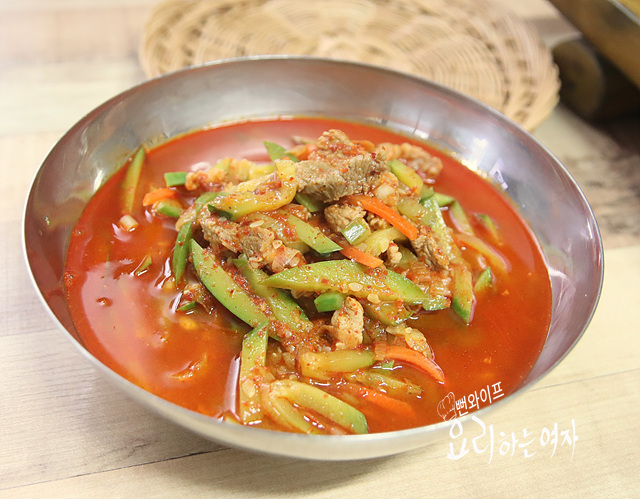
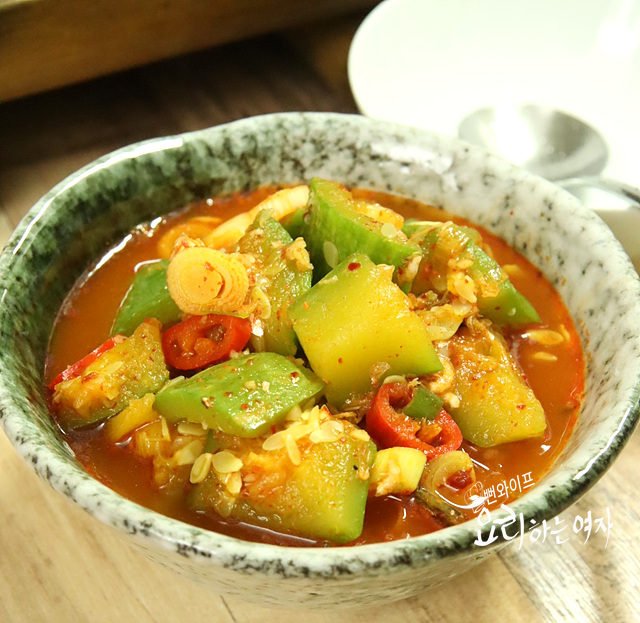
This tofu and Korean zucchini stew has a different charm from gochujang jjigae.
Since pork is added, perilla oil was omitted, but if you cook this without meat, finishing with perilla oil makes it taste much better.
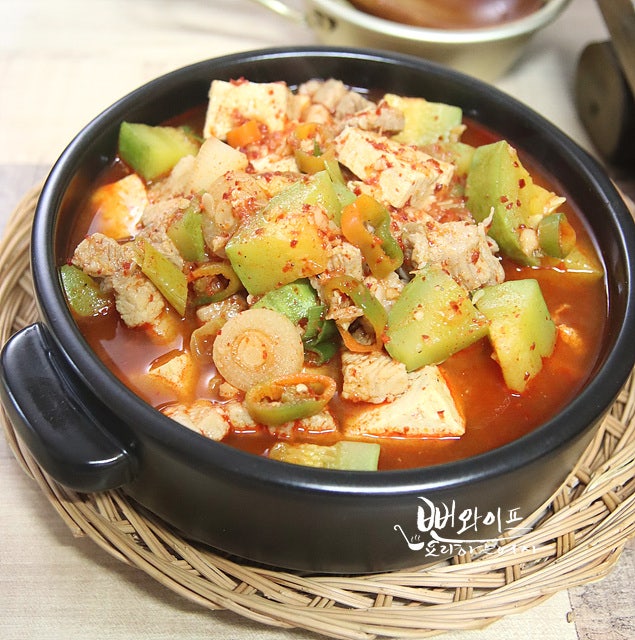
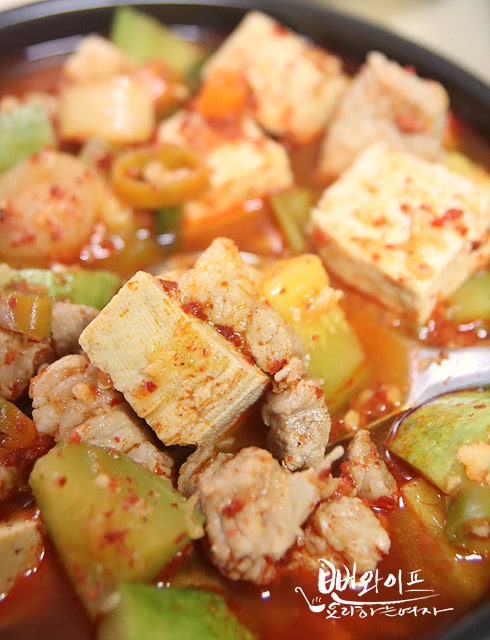
I broke a bit of a sweat in the kitchen preparing the meal, but tasting the stew at the table feels like a true reward.
Enjoy delicious zucchini dishes often during zucchini season.
 Ppunwife's tips
- It is best to season and stir-fry the meat first to remove unwanted odors and infuse base flavor.
- Skim off any foam that rises cleanly while boiling.
- Taste the broth, and if it is bland, adjust the seasoning with salted fermented shrimp or salt.
- If making this without meat, finishing with perilla oil makes it taste much better.
FAQ
How do I make this without pork?
If cooking without pork, drizzling perilla oil at the very end to finish will greatly enhance the flavor.
Why is the pork stir-fried first?
Stir-frying the pork first with seasonings like garlic, ginger, and salted fermented shrimp helps eliminate gamey odors and allows the base seasoning to soak in.
How should I season the stew if the broth tastes bland after boiling?
You can add more salted fermented shrimp or salt to taste to balance the seasoning.
Can I use plain water instead of anchovy broth? AI-generated
Plain water can lack umami, so it is recommended to use commercial broth tablets or dried kelp together with water.