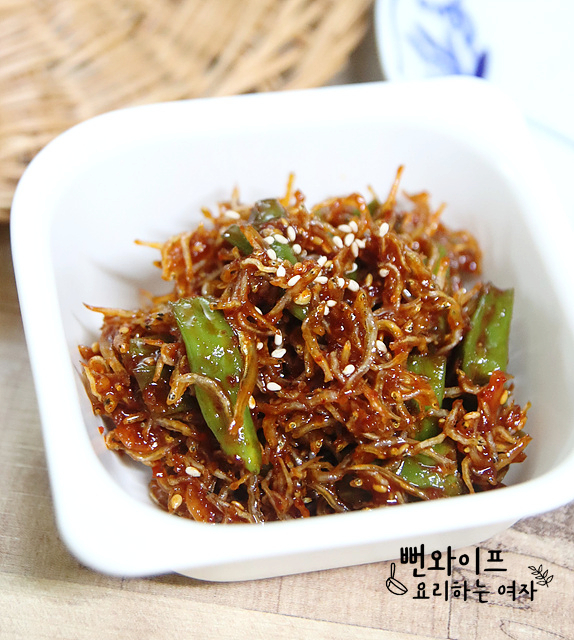
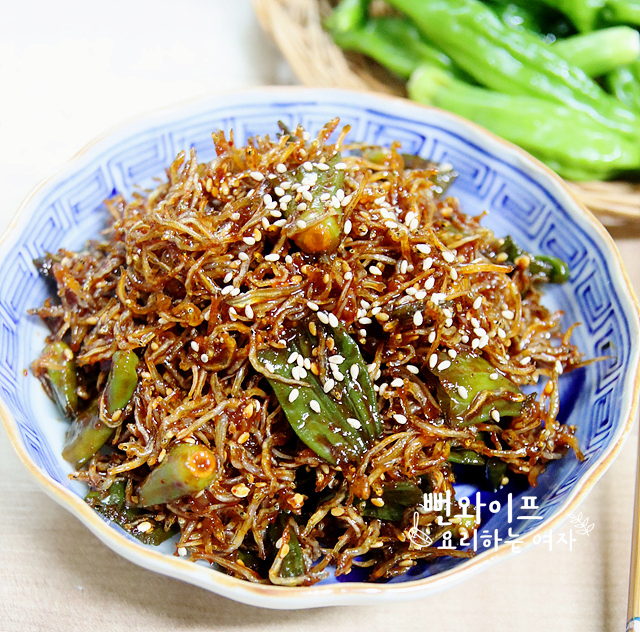
Kkwarigochu Myeolchi Bokkeum (Stir-Fried Anchovies and Shishito Peppers)
A side dish made by stir-frying cleaned dried soup anchovies and spicy shishito peppers in a rich, savory sauce until moist.
Translated from Korean by AI and not yet checked by a native speaker. Amounts and numbers are taken directly from the original recipe. Read the Korean original →
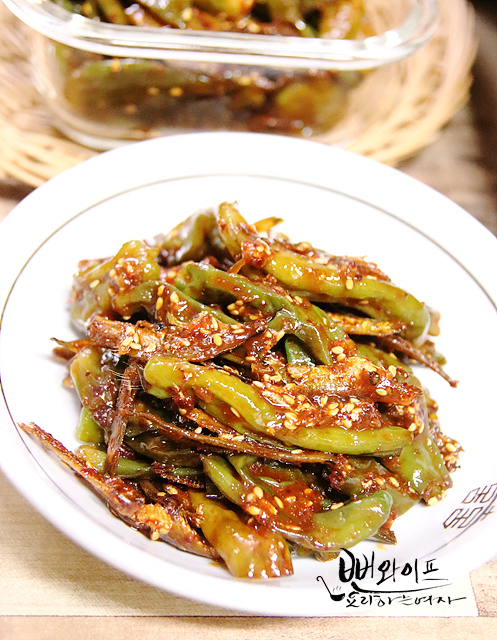
This stir-fried side dish features large dried soup anchovies cleaned and toasted in a dry pan to remove fishiness and bring out deep savory flavor. Coated in a garlic-chili oil and braised in soy sauce seasoning, the shishito peppers turn tender, moist, and delightfully spicy.
- Servings
- about 6–8 servingsOriginal: three 450 ml side-dish containers
- Difficulty
- Easy
- Spiciness
- Mildly spicy
Ingredients
Ingredients
- Dried soup anchovies3 cups (100 g, after cleaning)
- Shishito peppers (kkwari-gochu)65, 350 g
Seasoning
- Gochugaru (Korean chili flakes)2 tbsp
- Minced garlic1 tbsp
- Mirin (cooking rice wine)3 tbsp
- Regular soy sauce (jin-ganjang) (or brewed soy sauce (yangjo-ganjang))5 tbsp
- Corn syrup (mulyeot)4 tbsp
- Sugar1 tbsp
- Toasted sesame oil2 tbsp
- Toasted sesame seeds2 tbsp
- This makes a generous amount because of all the peppers. For a family of 3 to 4, cutting the recipe down by about 1/3 will give you enough for two or three delicious meals.
- Remove the heads and guts from the dried soup anchovies. Remove the stems from the shishito peppers, wash them, and drain thoroughly.
Steps
Prepare the ingredients
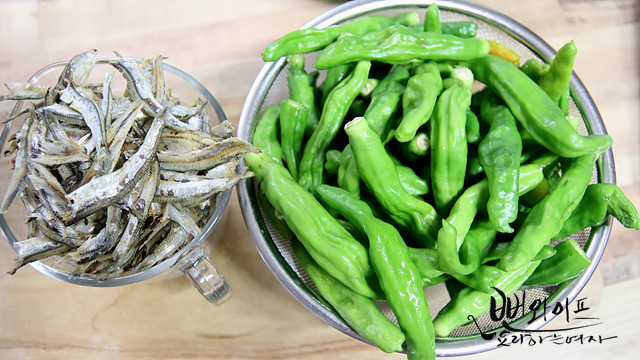
Prepare about 3 cups (100 g) of dried soup anchovies with their heads and guts removed.
Remove the stems from the shishito peppers, wash them, and drain the water.
Cut the peppers
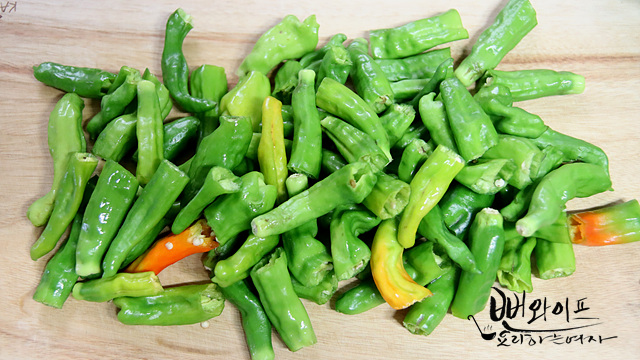
Cut the shishito peppers in half so they are easy to eat.
Toast the anchovies
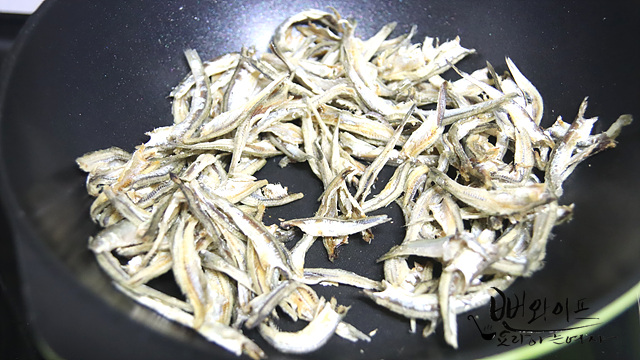
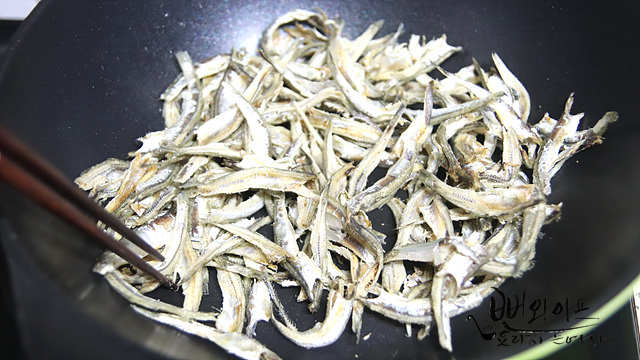
Toast the anchovies in a dry pan without oil until golden, being careful not to let them burn.
Toasting them beforehand removes any fishiness or off-odors and brings out a much nuttier, richer flavor.
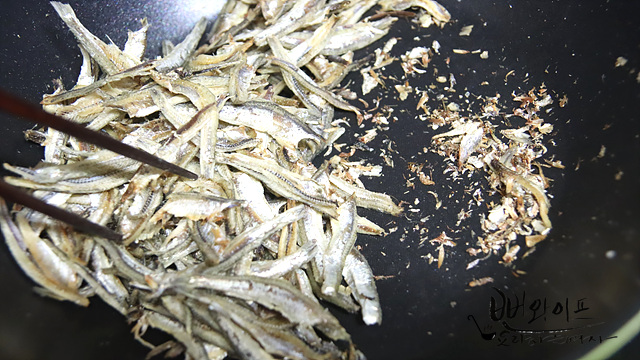
You can discard the small crumbs that fall off during toasting, or save them to add when making doenjang jjigae.
Stir-fry the shishito peppers
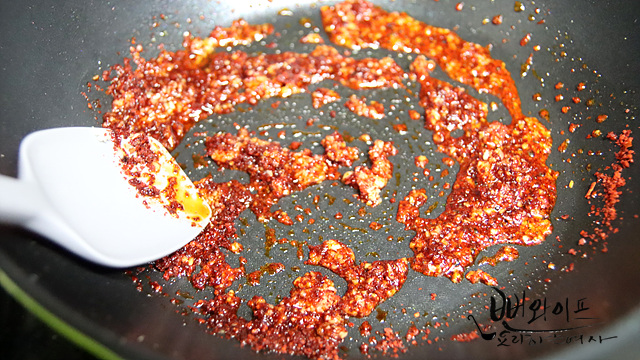
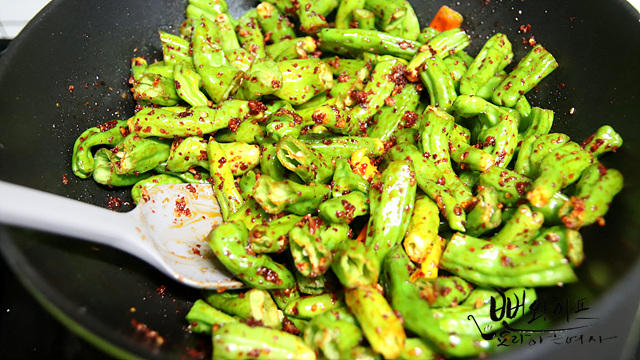
Heat cooking oil in a pan, add 1 tbsp minced garlic and 2 tbsp gochugaru (Korean chili flakes), and stir-fry briefly until fragrant.
Add the shishito peppers and toss so they are coated in the garlic chili oil.
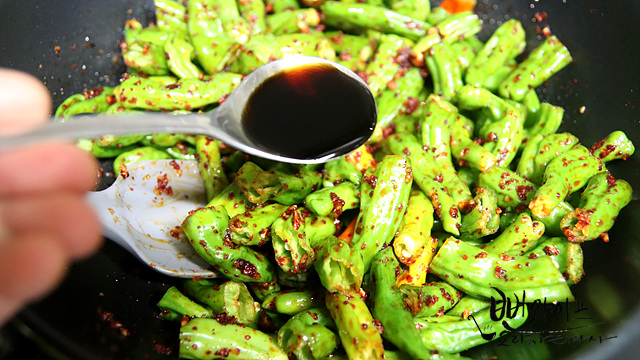
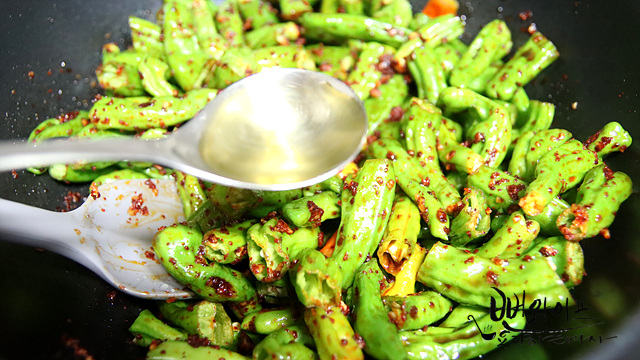
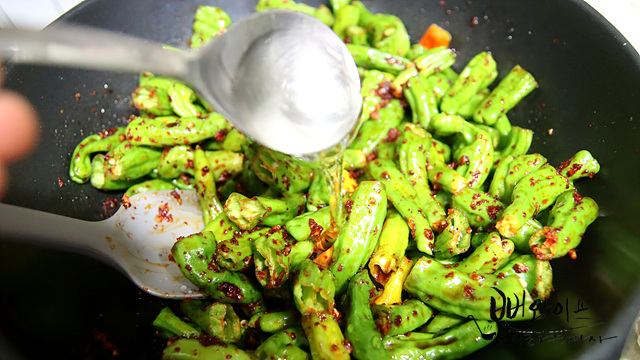
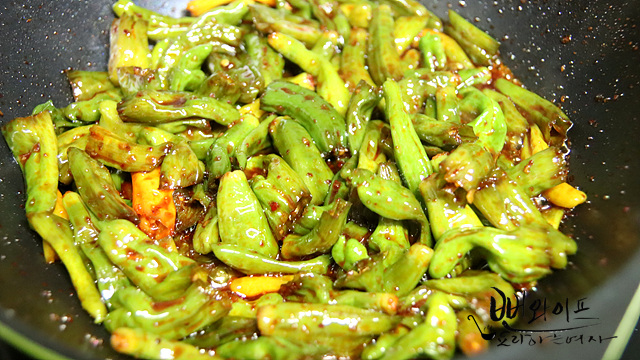
Add 5 tbsp regular soy sauce (jin-ganjang), 3 tbsp mirin (cooking rice wine), and 4 tbsp corn syrup (mulyeot) from the seasoning ingredients first.
Stir frequently and stir-fry until the seasoning soaks in, the peppers turn tender, and the liquid reduces down.
Add the anchovies and finish
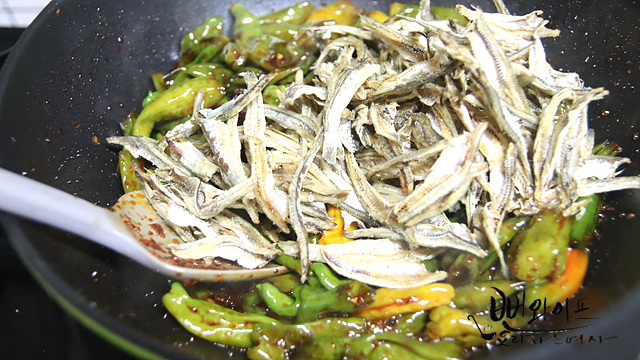
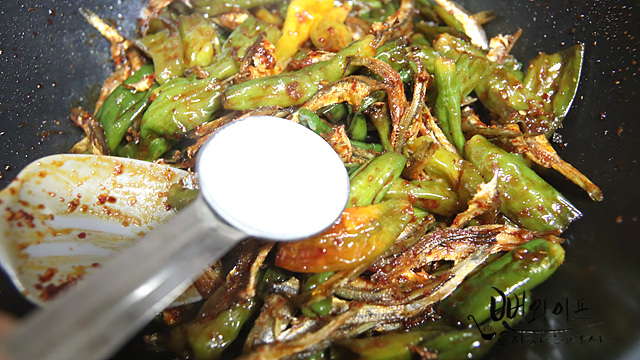
Add the anchovies and mix evenly.
Finally, stir in 1 tbsp sugar to balance out the saltiness of the anchovies and bring a pleasant overall sweetness.
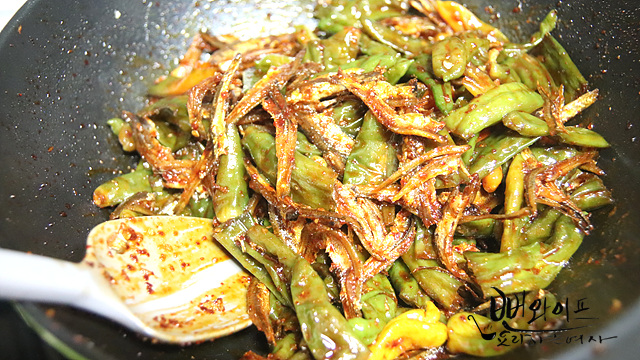
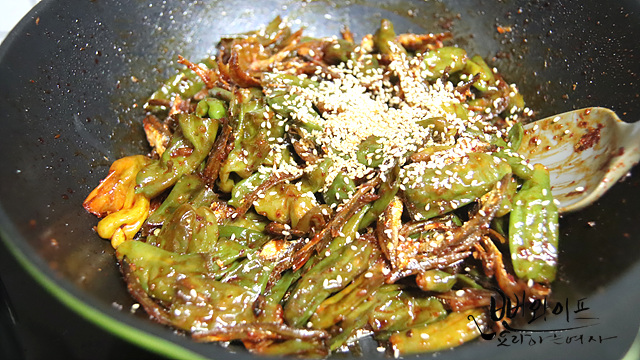
Turn off the heat, add 2 tbsp toasted sesame oil and 2 tbsp toasted sesame seeds, and toss to finish.
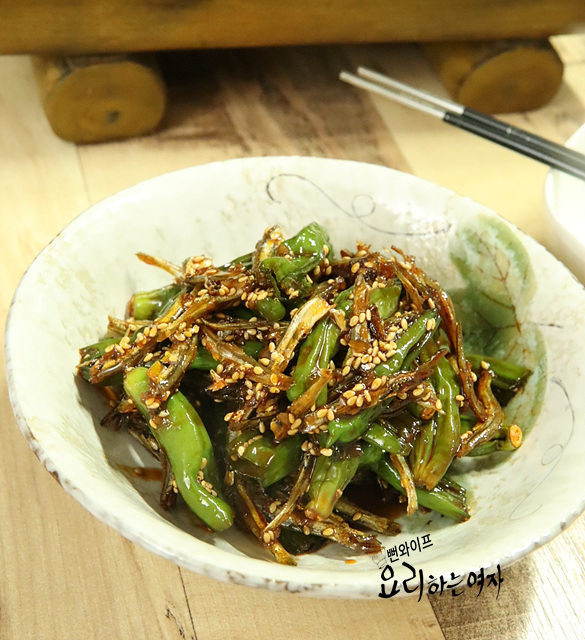
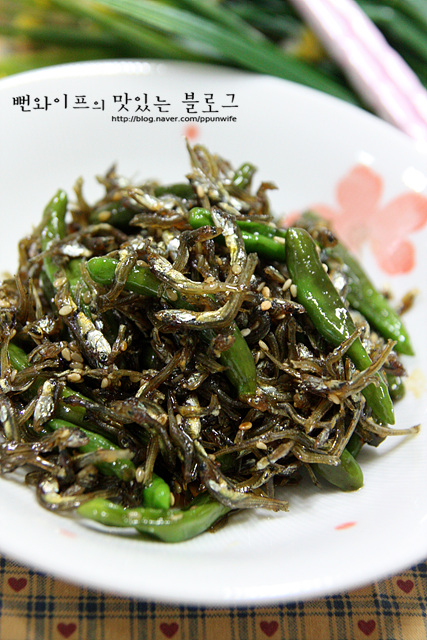
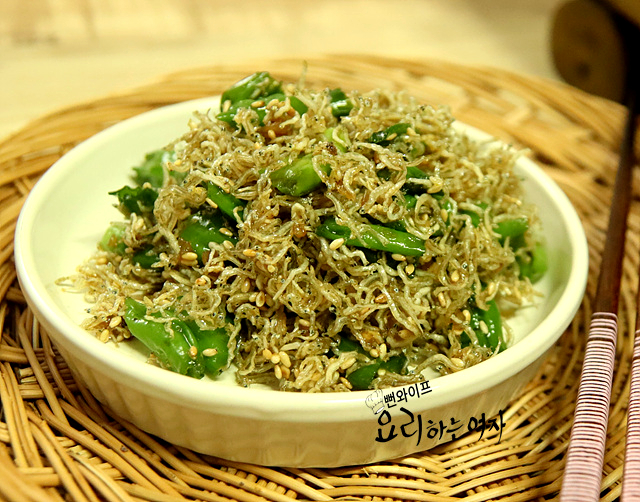
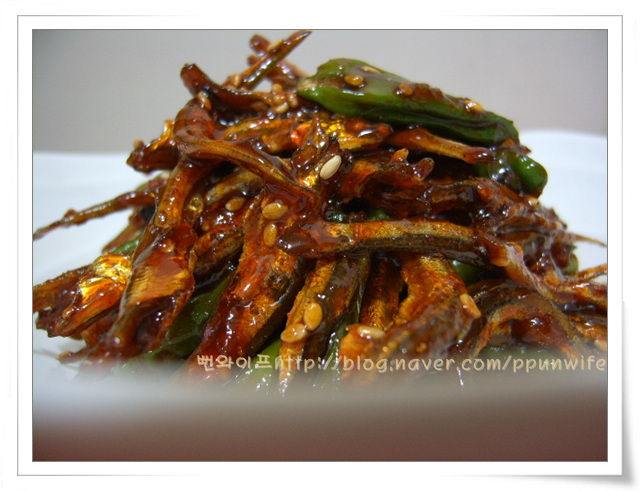
Finished dish
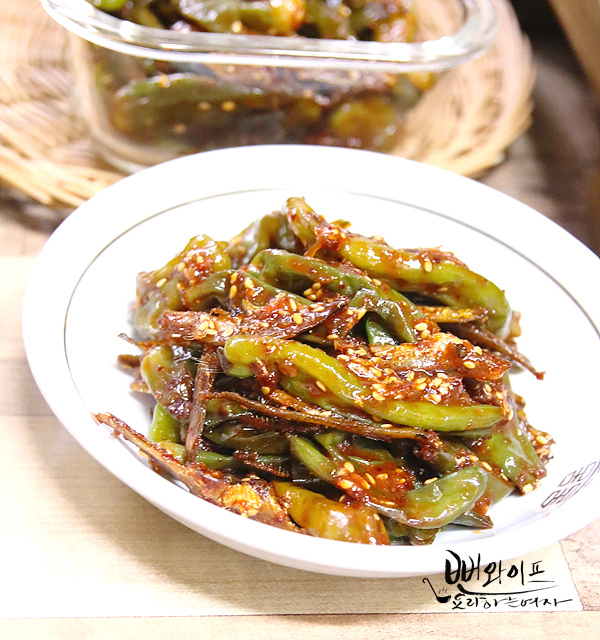
The anchovies are stir-fried until tender and lightly braised.
Shishito peppers that are mild in spring tend to pack more heat under the summer sun, making them pleasantly spicy.
Using large soup anchovies instead of tiny ones gives a much deeper savory flavor and a far better bite.
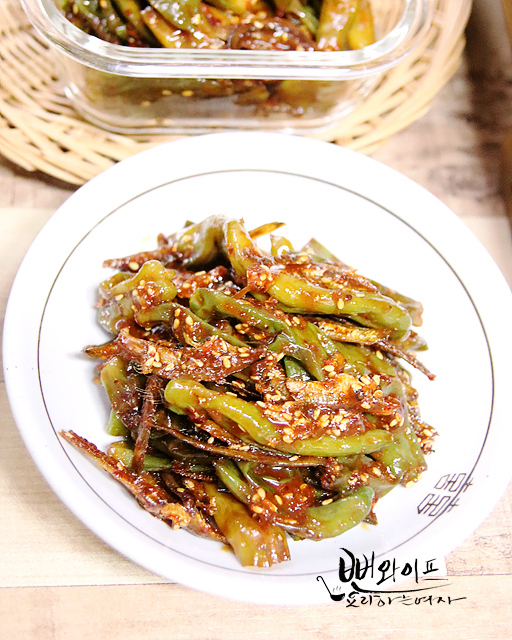
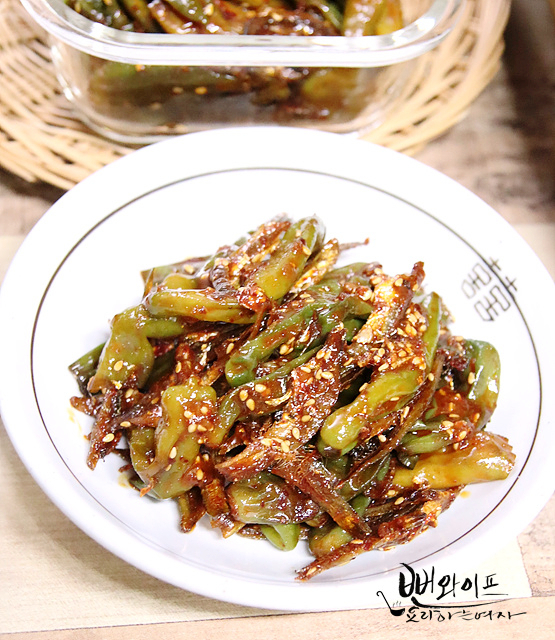
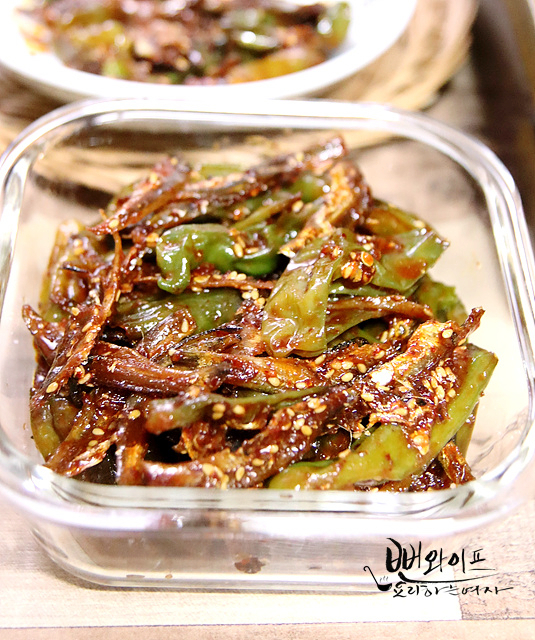
Spoon some over warm rice, and your spoon will not stop moving—it is such a delicious side dish.
Try making this tasty dish with anchovies and shishito peppers, two ingredients that complement each other wonderfully in both flavor and nutrition.
 Ppunwife's tips
- Toasting the anchovies beforehand removes any fishiness or off-odors and brings out a much nuttier, richer flavor.
- You can discard the crumbs that fall off during toasting, or save them to add when making doenjang jjigae.
- Add 1 tbsp sugar at the end to balance out the saltiness of the anchovies and round out the sweetness of the dish.
FAQ
Why toast the anchovies in a dry pan before cooking?
Toasting them dry until lightly golden removes fishiness and unwanted odors while enhancing their nutty, savory flavor.
What should I do with the crumbs left after toasting the anchovies?
You can discard them, or save them to add as a flavorful broth base when boiling doenjang jjigae.
Why is sugar added toward the end of cooking?
It is added at the final stage to tone down the saltiness of the anchovies and balance the overall sweetness of the dish.