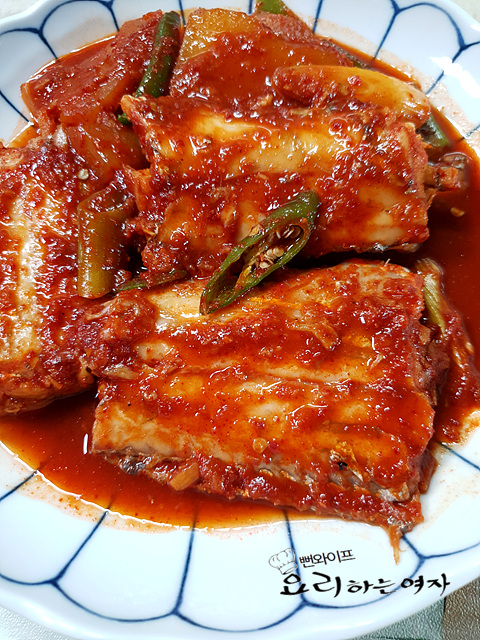
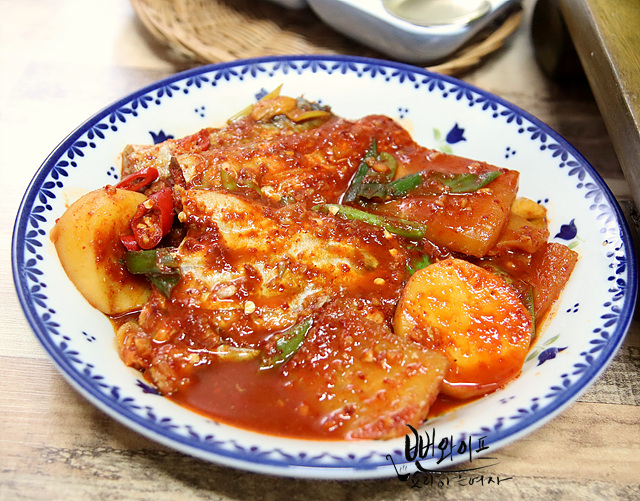
Spicy Galchi Jorim (Braised Hairtail Fish) with Radish
A side dish made by layering thick hairtail fish and radish with a basic seasoning sauce and braising them in a shallow, flavorful broth.
Translated from Korean by AI and not yet checked by a native speaker. Amounts and numbers are taken directly from the original recipe. Read the Korean original →
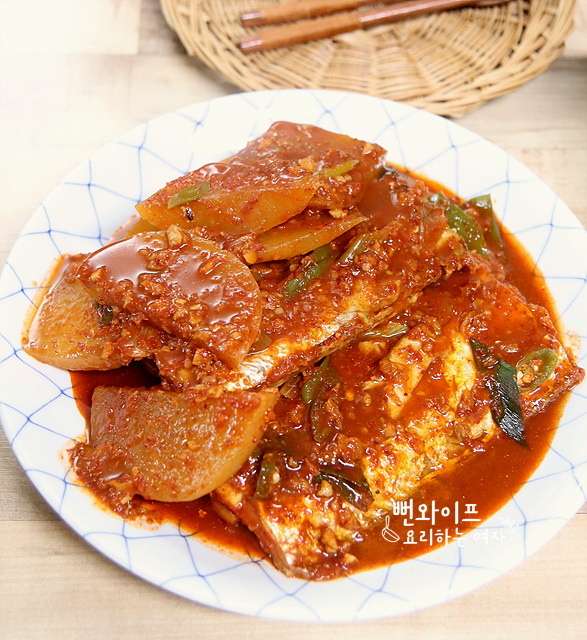
This braised fish dish combines refreshing radish and thick hairtail fish with a spicy basic sauce, simmered down until shallow and rich. After adding water from washing rice and bringing it to a boil, braise over medium-low heat while spooning the broth over the fish so the flavors soak in, making it a wonderful side dish for rice.
- Servings
- 2–3 servings
- Difficulty
- Easy
- Spiciness
- Spicy
Ingredients
Ingredients
- Hairtail fish1 whole, 580 g
- Korean radish (mu)300 g
- Large green onion (daepa)1 stalk
- Cheongyang chili pepper (hot green chili)2
- Water from washing rice (or water)4 cups
Seasoning
- Gochugaru (Korean chili flakes)3 tbsp
- Regular soy sauce (jin-ganjang) or brewed soy sauce (yangjo-ganjang) (or brewed soy sauce (yangjo-ganjang))4 tbsp
- Gochujang (Korean red chili paste)1 tbsp
- Minced garlic1 tbsp
- Minced ginger1 tsp
- Mirin (cooking rice wine)2 tbsp
- Sugar1 tbsp
- Ground black peppera little
Steps
Prepare the ingredients
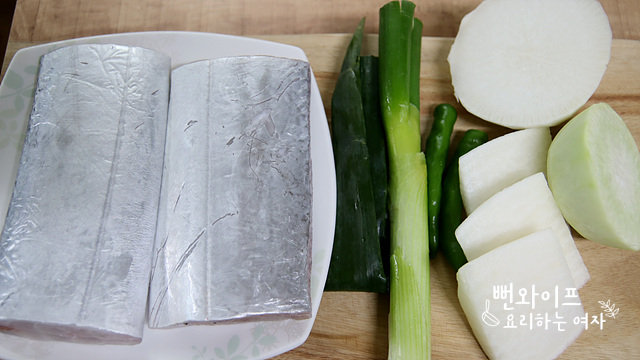
These are two pieces of giant hairtail fish, which equal 1 large whole hairtail fish.
Since it's delicious with plenty of refreshing seasonal Korean radish, use 300g. Along with 1/2 large green onion and 2 Cheongyang chili peppers, the ingredients are truly simple.
Slice the ingredients
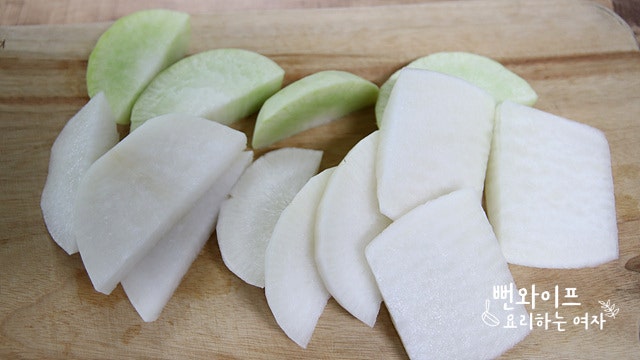
Cut the radish into large, thick slices.
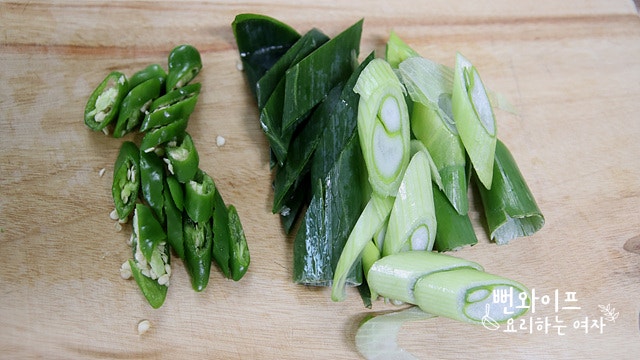
Slice the large green onion and Cheongyang chili peppers diagonally.
Make the sauce
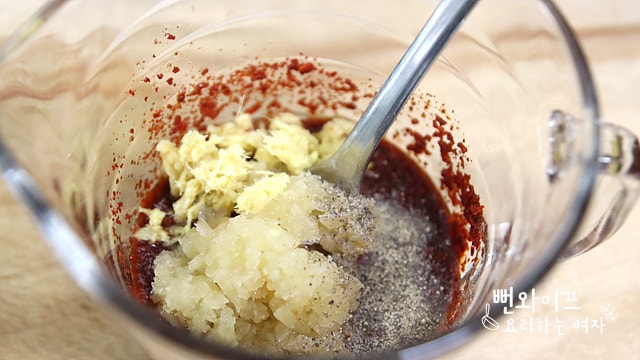
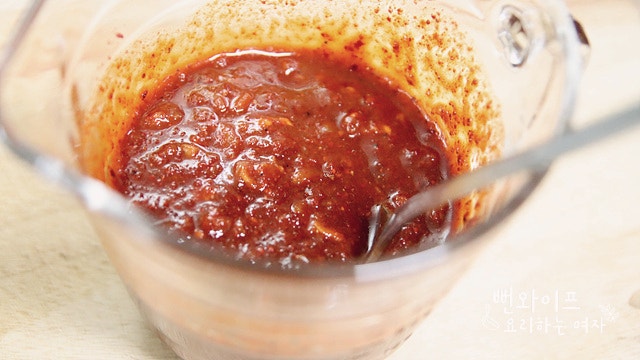
Combine all the sauce ingredients (3 tbsp gochugaru, 4 tbsp regular soy sauce, 1 tbsp gochujang, 1 tbsp minced garlic, 1 tsp minced ginger, 2 tbsp mirin, 1 tbsp sugar, and a pinch of ground black pepper) and mix well. If the sauce is too stiff, mix in a little water from washing rice or regular water to soften it.
Layer the ingredients and sauce
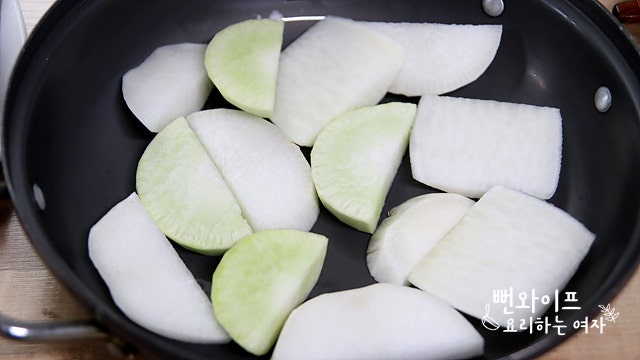
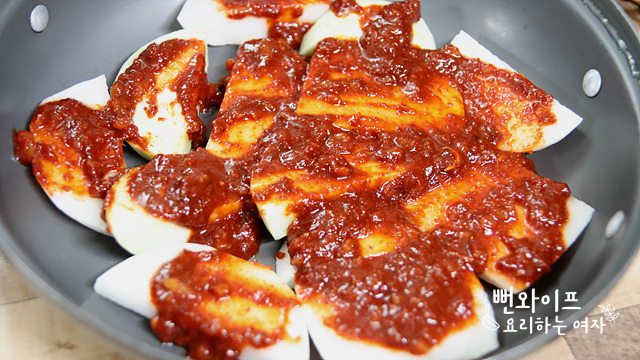
Arrange the radish evenly across the bottom of the pan.
Spread half of the sauce evenly over the radish.
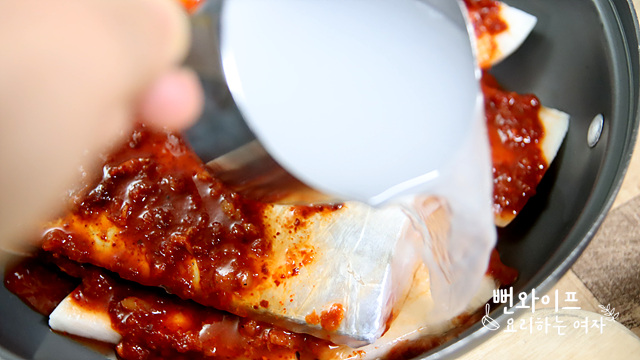
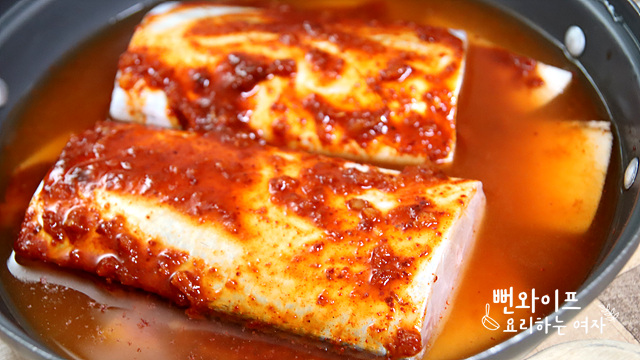
Place the hairtail fish on top, spread all the remaining sauce over it, and pour 3 cups of water from washing rice around the edges. (I added about 1 cup of water later while braising.)
If the radish is thicker than the hairtail fish, add the water and half of the sauce first, cook the radish until half done, and then add the hairtail fish and the rest of the sauce to braise.
Braise
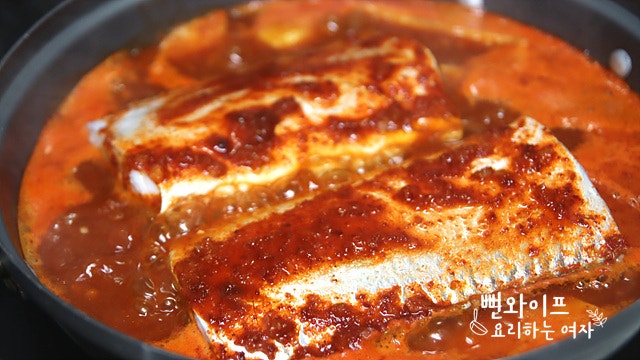
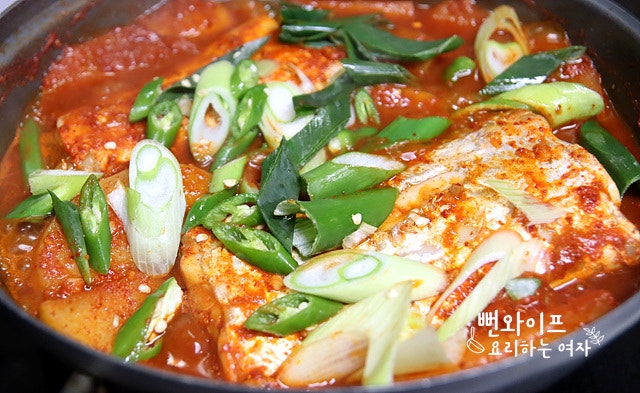
Raise the heat to high, and once it comes to a steady rolling boil, reduce the heat to medium-low and braise for about 20 minutes until the liquid reduces to a shallow simmer.
Because the hairtail fish is not completely submerged in sauce, flip it once halfway through or spoon the braising broth over it as it cooks.
Since the radish and hairtail fish are thick, it takes longer to braise them until tender; if you feel there is not enough broth, pour in more water and continue braising.
Place the large green onion and Cheongyang chili peppers right on top...
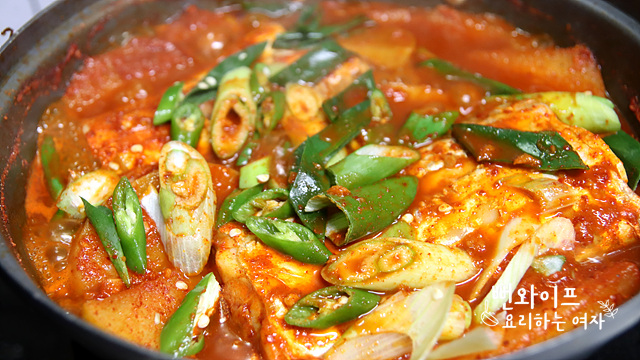
Finish by simmering a bit longer until shallow so the aromas of the green onion and chili peppers infuse throughout.
Complete
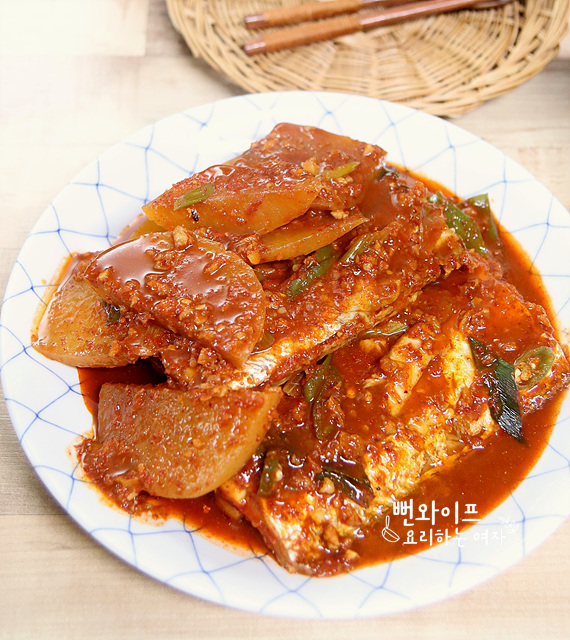
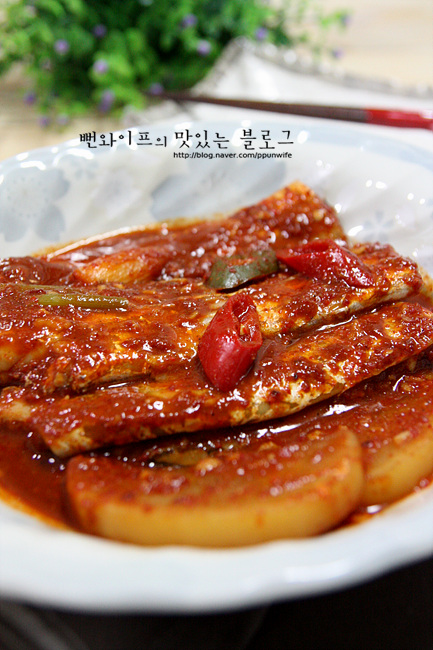
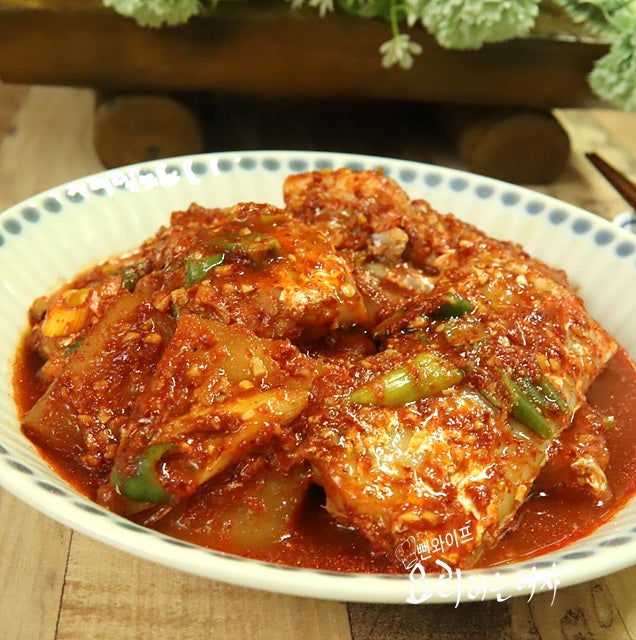
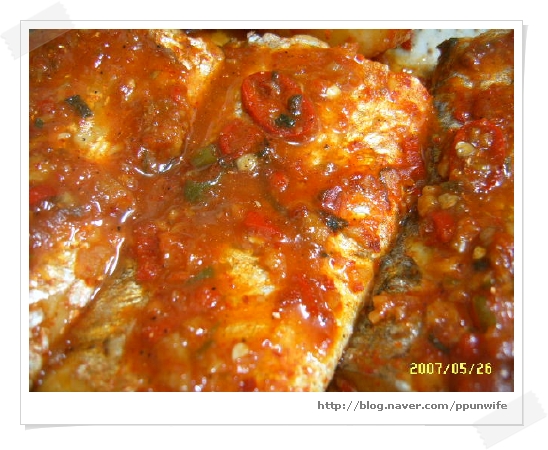
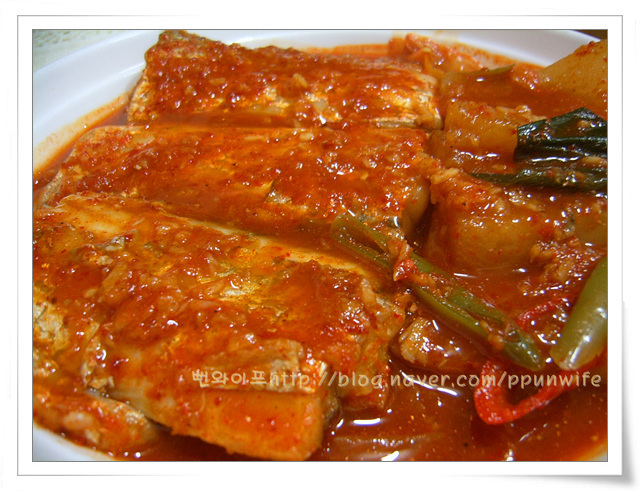
The hairtail fish is so large that eating just one body piece feels like eating a whole fish.
Just as its price tag suggests, the taste is top-notch.
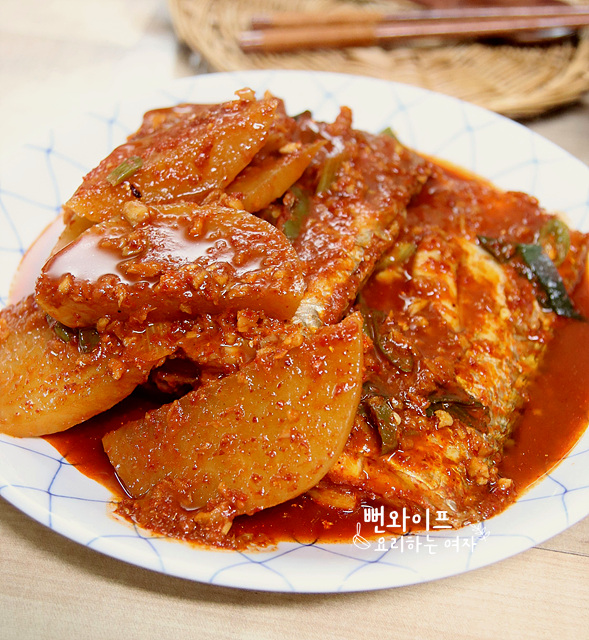
Even with simple basic seasoning, the radish and sauce do all the work.
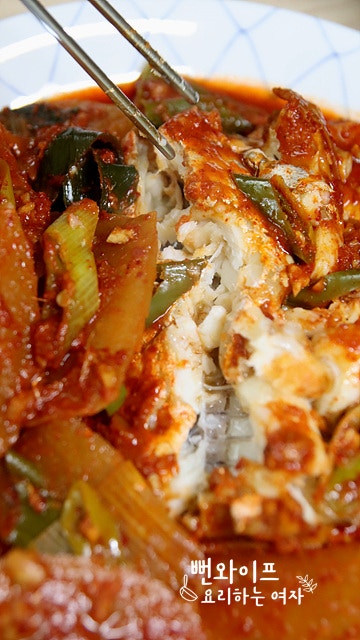
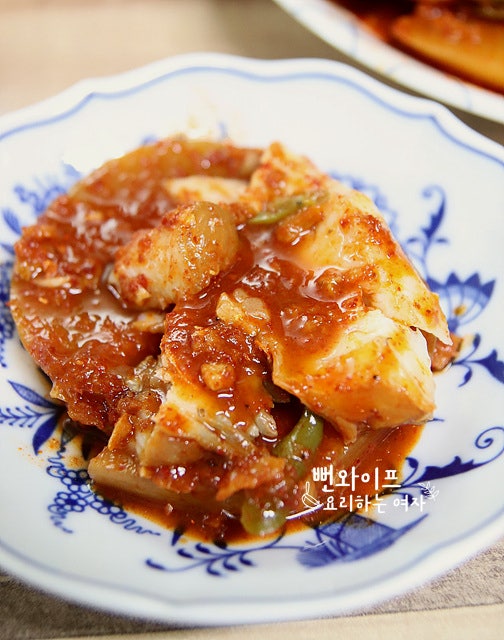
Spoon over the thick, spicy sauce and take a bite together with the radish—it is pure heaven in your mouth.
Since it is Friday night, indulge yourself with delicious galchi jorim instead of meat.
 Ppunwife's tips
- If the sauce is too stiff, mix in a little water from washing rice or regular water to soften it.
- If the radish is thicker than the hairtail fish, add the water and half of the sauce first, cook the radish until half done, and then add the hairtail fish and the rest of the sauce to braise.
- Because the hairtail fish is not completely submerged in sauce, flip it once halfway through or spoon the braising broth over it as it cooks.
- Since the radish and hairtail fish are thick, it takes longer to braise them until tender; if you feel there is not enough broth, pour in more water and continue braising.
FAQ
How should I cook it if the radish is thicker than the hairtail fish?
If the radish is thick, put the water and half of the sauce in the pot first and cook the radish until half done, then place the hairtail fish on top with the remaining sauce and braise together.
How do I make sure the sauce absorbs evenly into the hairtail fish?
The hairtail fish is not fully submerged in the broth, so it is best to flip it once while braising or spoon the broth over the top as it cooks.
What should I do if the sauce is too stiff when mixing?
If the sauce ingredients are too stiff to mix easily, stir in a small amount of water from washing rice or regular water to loosen it.
Can I use regular water if I do not have water from washing rice?
You can use an equal amount of regular water instead of water from washing rice.