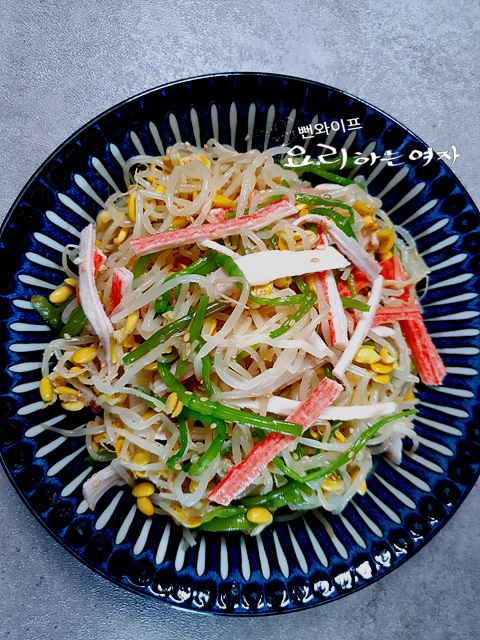
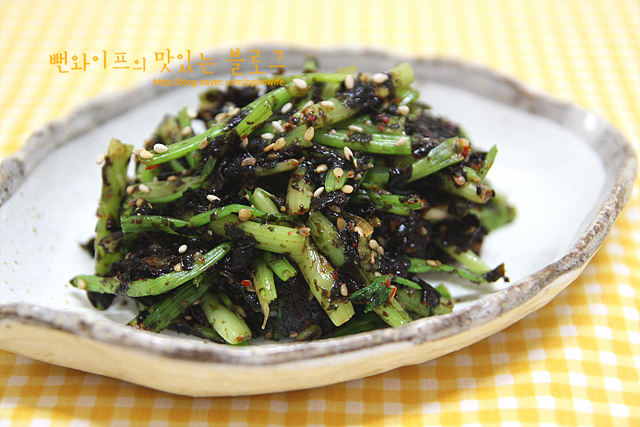
Spicy Kongnamul Muchim (Seasoned Soybean Sprouts) with Minari
A side dish of crisp-boiled soybean sprouts tossed with fragrant water dropwort and spicy seasoning.
Translated from Korean by AI and not yet checked by a native speaker. Amounts and numbers are taken directly from the original recipe. Read the Korean original →

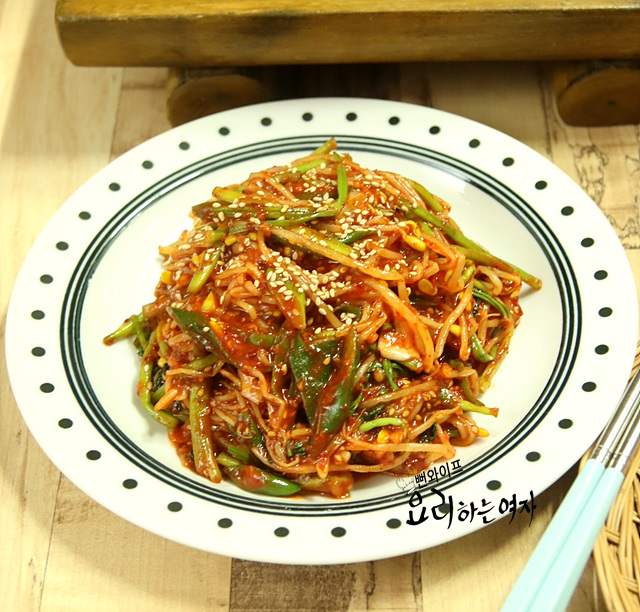
This side dish steams soybean sprouts in a small amount of water to keep them crisp, then pairs them with the refreshing aroma of water dropwort. Seasoned with gochugaru and tuna extract sauce for a spicy, deep savory flavor, it makes a satisfying everyday banchan.
- Servings
- 3–4 servings
- Difficulty
- Easy
- Spiciness
- Mildly spicy
Ingredients
Ingredients
- Soybean sprouts300 g
- Water dropwort (minari)50 g
- Coarse sea salt1/2 tbsp
- Water2 cups
Seasoning
- Gochugaru (Korean chili flakes)2 tbsp
- Tuna extract sauce (chamchi-aek)2 tbsp
- Minced garlic1 tbsp
- Salta little
- Toasted sesame oil1 tbsp
- Toasted sesame seeds1 tbsp
- A little bit of the white part of a large green onion is plenty, and you can also add about 1 Cheongyang chili pepper for heat.
- If the water dropwort is thin and tender, toss it in raw. If it is thick and plump, wilting it slightly in the residual heat while cooling the boiled soybean sprouts will make it tender.
Steps
Prepare the ingredients
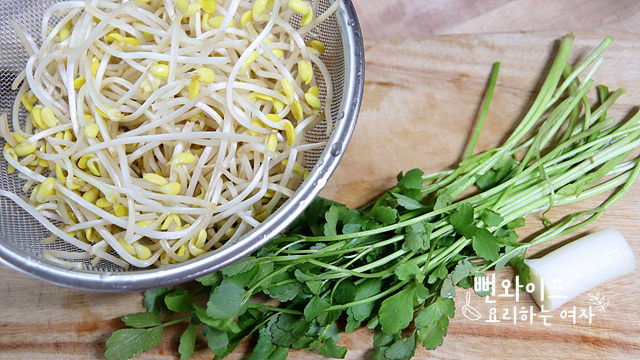
Wash the soybean sprouts to yield about three handfuls, and prepare half a handful of water dropwort and a little bit of the white part of a large green onion.
You can also add about 1 Cheongyang chili pepper for a spicy kick.
Cut the ingredients
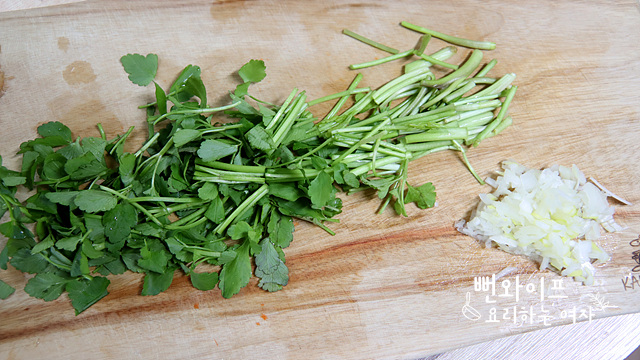
Cut the water dropwort into lengths similar to the soybean sprouts and finely mince the large green onion.
You will need about 3 tbsp of minced large green onion.
How to boil soybean sprouts
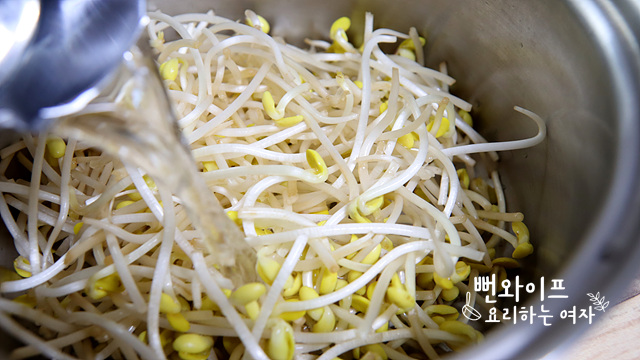
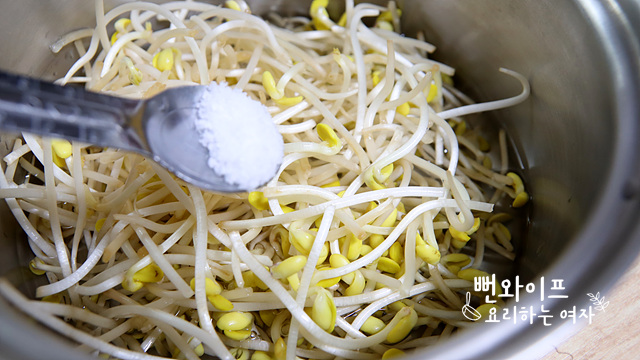
Add the soybean sprouts and about 2 cups of water (about halfway up the sprouts) to a pot, and scatter 1/2 tbsp of salt evenly over them.
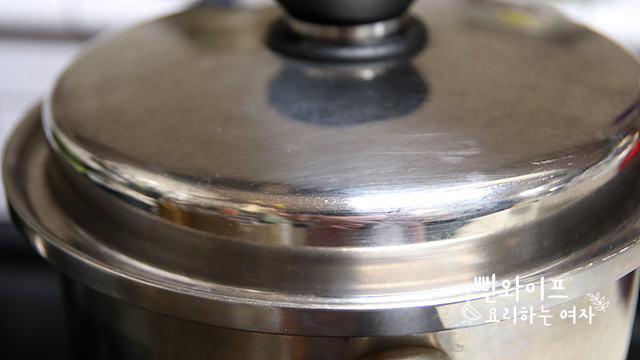
Cover with the lid, set over high heat, and after about 3 to 4 minutes it will begin to steam and boil.
After 2 minutes from that point, the raw bean smell will turn into a nutty aroma.
Turn off the heat and let it sit covered for about 2 minutes to finish steaming.
Steaming the soybean sprouts in a small amount of water instead of using plenty keeps the texture pleasantly crisp and prevents the flavor from leaching out.
If boiling soybean sprouts with the lid off, add the sprouts once the water is boiling vigorously.
Once it comes back to a boil, cook for 4 to 5 minutes until it smells nutty. Toss top to bottom once halfway through.
To prevent any fishy bean odor when boiling soybean sprouts:
Whether you boil with the lid closed or with it open, just do not open and close the lid midway until they are fully cooked.
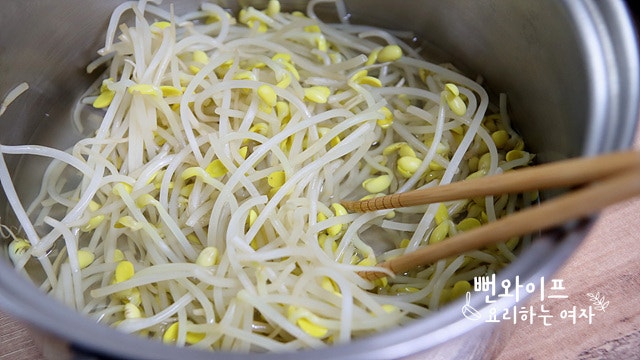
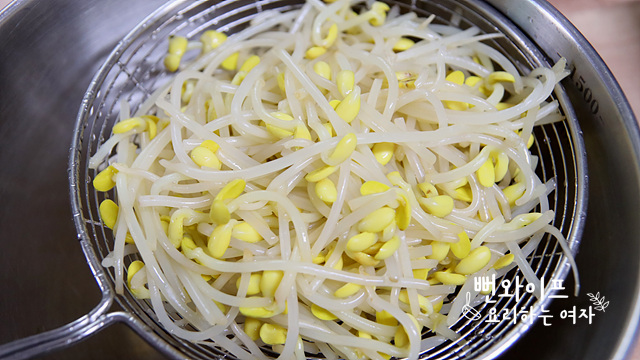
When you open the lid, the soybean sprout stems are plump and cooked with a nutty aroma.
Drain in a colander to remove the water and let the heat cool down.
If you want an even crispier texture like fresh salad greens, you can rinse them in cold water.
Season the soybean sprouts
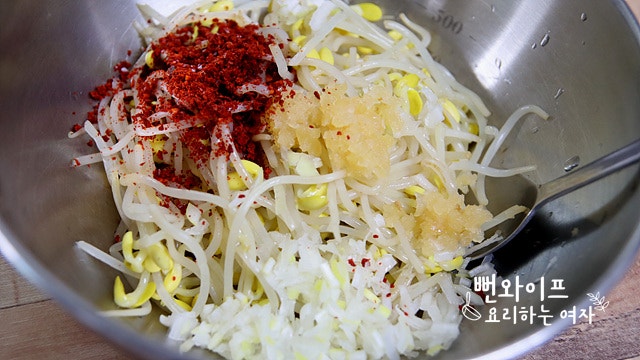
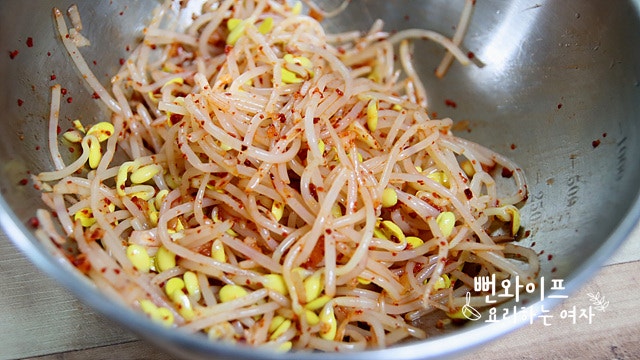
In a bowl, combine the soybean sprouts, minced green onion, 2 tbsp gochugaru, 2 tbsp tuna extract sauce, and 1 tbsp minced garlic, then toss together.
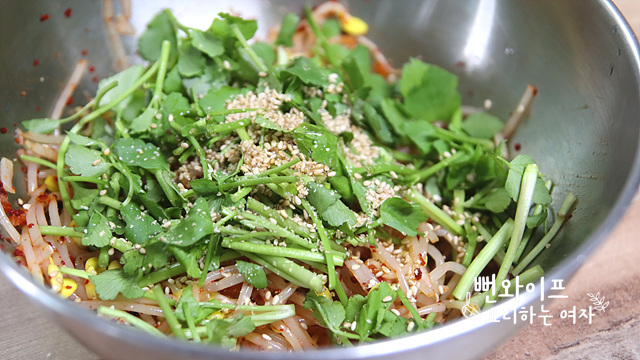
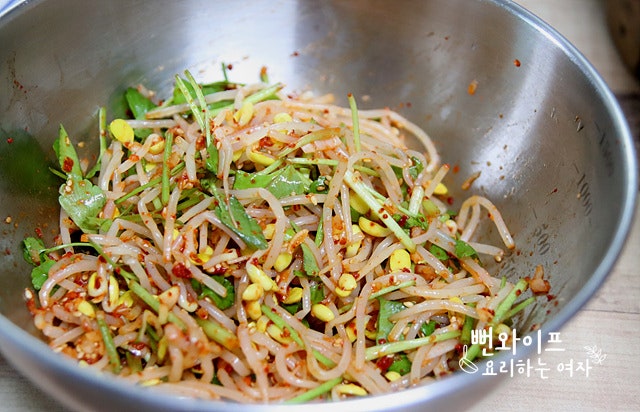
Adding the water dropwort will dilute the seasoning, so add a little salt to taste, then toss with 1 tbsp toasted sesame oil and 1 tbsp toasted sesame seeds, lightly ground.
Since my water dropwort was thin and tender, I tossed it in raw.
If your water dropwort is thick and plump, letting it wilt slightly in the residual heat while cooling the boiled soybean sprouts before tossing will let you enjoy it tender.
Finish


Kongnamul muchim is always delicious.
When freshly tossed, eat it as a side dish with rice.


When leftovers are eaten the next day, it usually ends up mixed into rice.
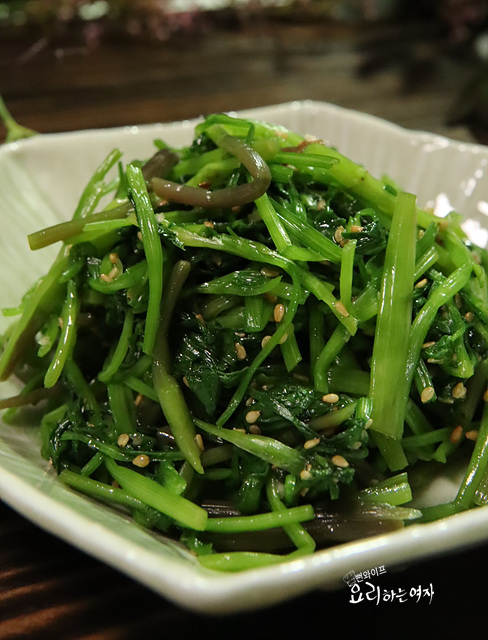
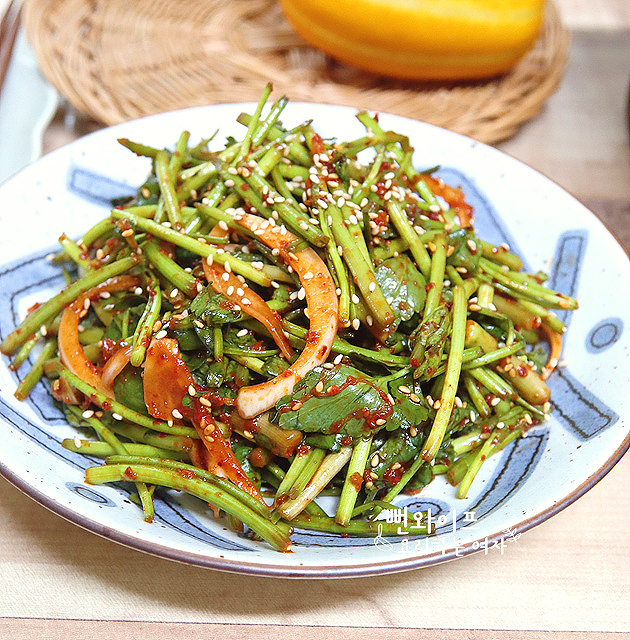
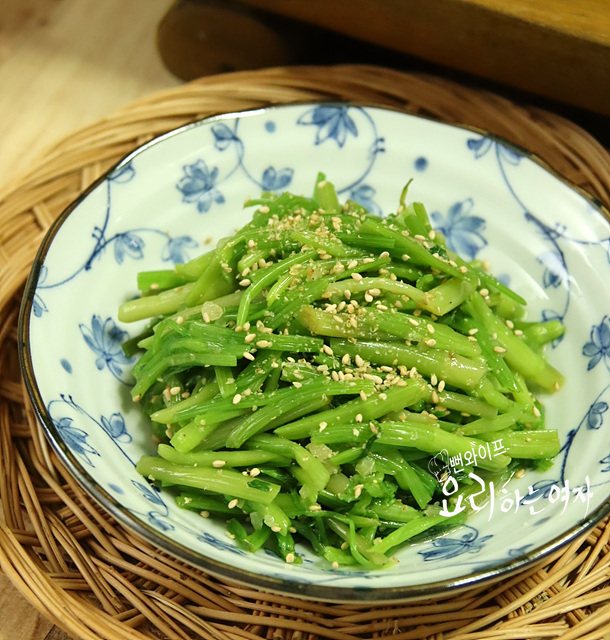
Just adding a bit of water dropwort makes this kongnamul muchim feel like spring has arrived with its lovely fragrance.
Wishing you an energetic day filled with the spirit of spring.
 Ppunwife's tips
- Steaming the soybean sprouts in a small amount of water instead of using plenty keeps the texture pleasantly crisp and prevents the flavor from leaching out.
- When boiling soybean sprouts with the lid open, add them once the water is at a rolling boil, cook for 4 to 5 minutes after it returns to a boil until it smells nutty, and toss top to bottom once halfway through.
- To prevent any raw bean smell, whether you boil with the lid closed or open, never open and close the lid midway until the sprouts are fully cooked.
- If you want an even crispier texture like fresh salad greens, you can rinse the boiled soybean sprouts in cold water.
FAQ
How should I boil soybean sprouts to prevent a raw bean smell?
Either keep the lid closed from the start or leave it completely open, and the key is never to open and close the lid midway until they are fully cooked.
Do I add the water dropwort raw or blanched?
If the stems are thin and tender, tossing them raw works well; if they are thick and firm, wilting them slightly in the residual heat of the boiled soybean sprouts makes them pleasantly tender to eat.
How should I cool them for an even crispier texture?
Letting them cool naturally in a colander is fine, but if you want to enhance that cool, crisp bite like fresh salad greens, lightly rinse them in cold water.
How can I use the leftover soybean sprout cooking water?
Adding a few more soybean sprouts and boiling it up makes it great to use as a rich, refreshing soybean sprout soup.