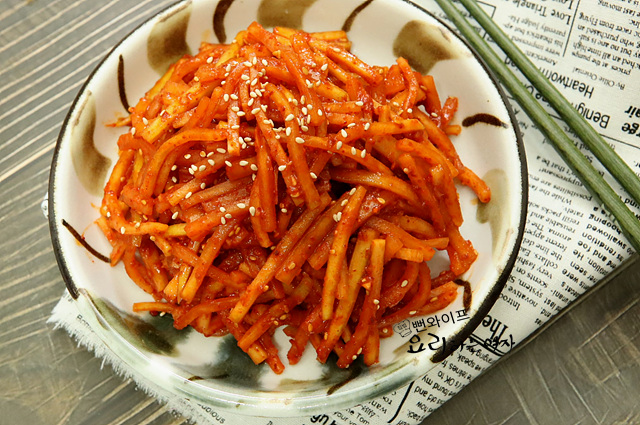
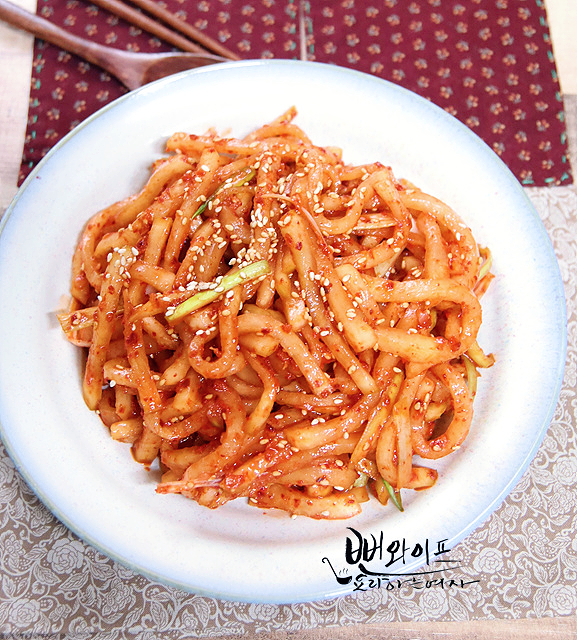
Crisp Musaengchae (Spicy Radish Salad) Salted for No Excess Moisture
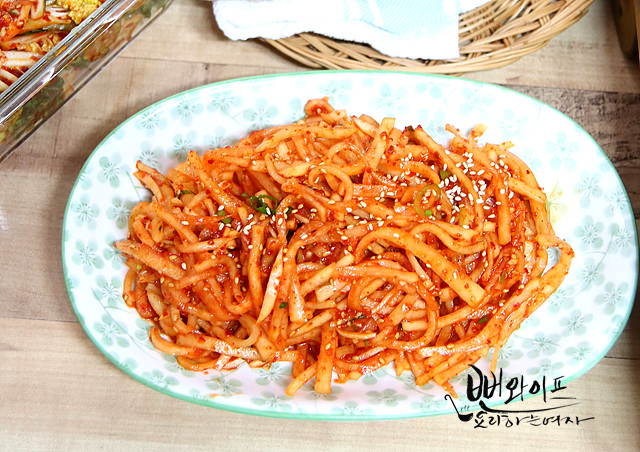
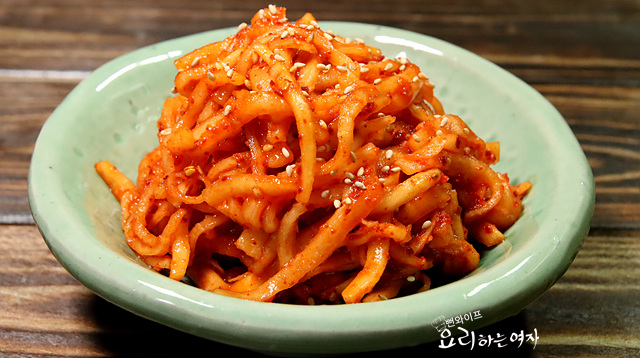
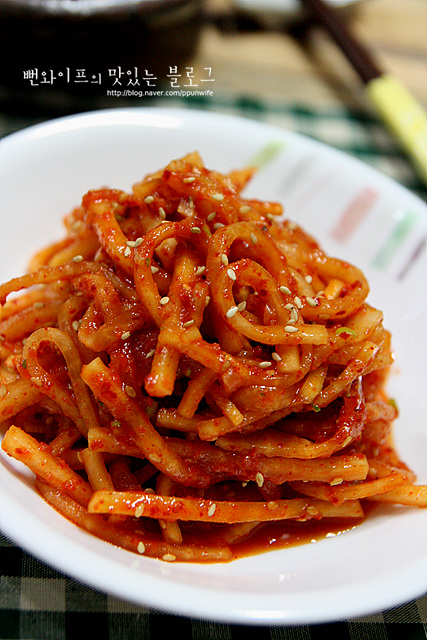
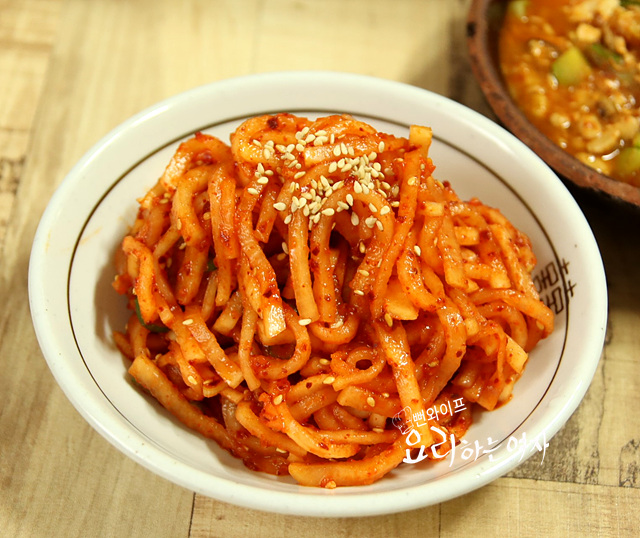
A side dish of thickly julienned autumn radish, salted so it stays crisp without turning watery, and tossed in seasonings.
Translated from Korean by AI and not yet checked by a native speaker. Amounts and numbers are taken directly from the original recipe. Read the Korean original →
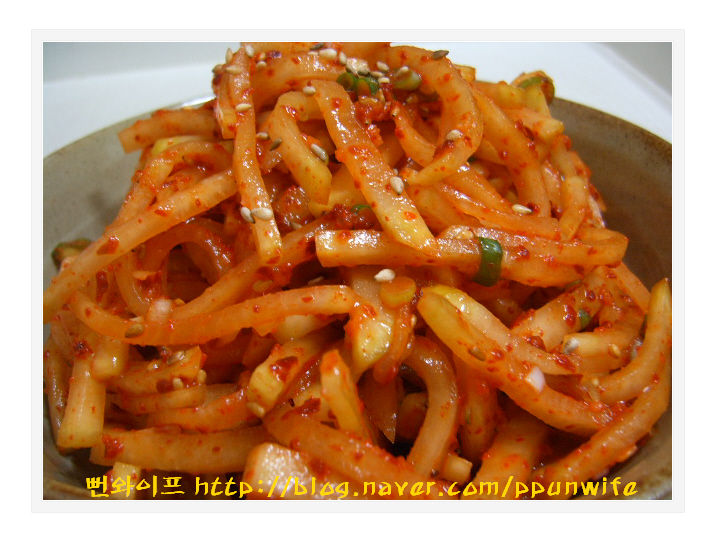
This salad uses sweet, juicy autumn radish cut into thick matchsticks to highlight its crisp texture. Salting the radish beforehand draws out excess moisture, keeping the dish neat and preventing liquid from pooling even after standing. Tossed in a sweet and spicy seasoning, it pairs wonderfully with meat dishes or as an everyday side dish for rice.
- Servings
- about 3–4 servings
- Difficulty
- Medium
- Spiciness
- Mildly spicy
Ingredients
Musaengchae Ingredients
- Korean radish (mu)300 g
- Fine salt1 tsp
Seasoning
- Gochugaru (Korean chili flakes)1.5 tbsp
- Minced garlic0.5 tbsp
- Sugar1 tsp
- Vinegar1 tsp
- Toasted sesame oil0.5 tsp
- Ground toasted sesame seeds
Chicken-mu (Pickled Radish) Ingredients
- Korean radish (mu)400 g
- Water1/2 cup
- Sugar1/2 cup
- Vinegar1/2 cup
- Fine salt1 tsp (based on a paper cup)
- Add 1 tsp of salt and mix by hand, then let it salt for approx. 30 minutes to soften quickly.
- The top stem part of the radish is especially sweet and tasty, which is why I use this section for the salad.
Steps
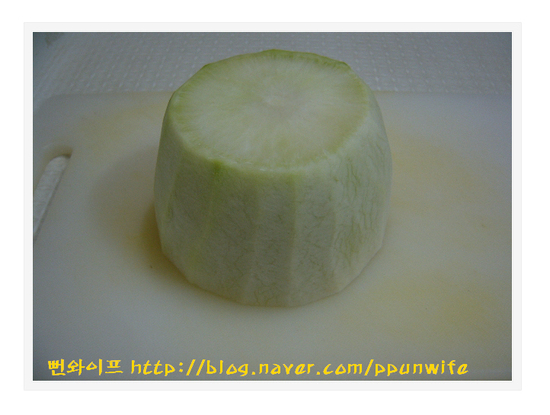
Autumn radish these days is full of moisture, not spicy even when eaten raw, and wonderfully sweet and delicious.
The top stem part of the radish is especially sweet and tasty. I will use this part for the raw salad.
Julienne the radish, but do not slice it too thin or fine.
Once seasoned, thin shreds go completely limp, so it is better to cut them slightly thick.
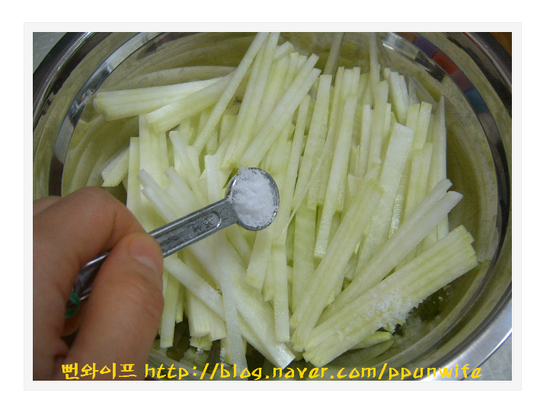
Julienned thick, it feels stiff at first.
Add 1 tsp of salt, mix by hand, and let it sit for approx. 30 minutes, and it will quickly soften.
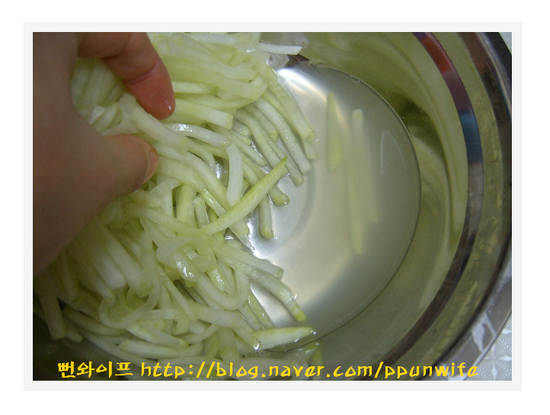
See how the radish has softened and released plenty of moisture.
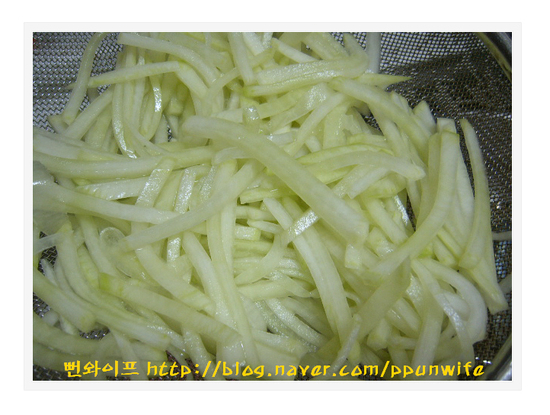
Do not rinse the salted radish; simply drain the moisture through a sieve.
Salting it like this is great because moisture will not pool once seasoned.
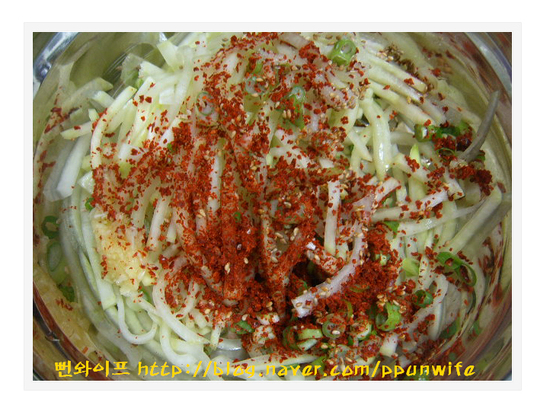
Add all of the listed seasonings to the drained julienned radish and gently mix with your hands.
Since it was salted beforehand, you do not need to add extra salt to season it.
If it tastes bland to you, add a bit more salt.
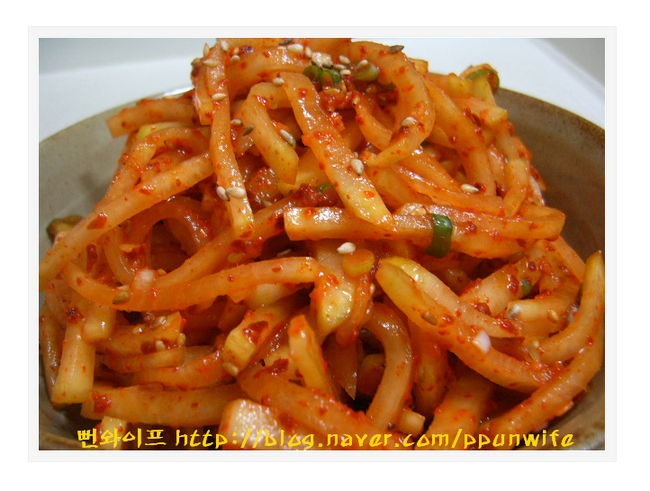
The musaengchae is tossed and looks so appetizing.
I mixed this yesterday evening, and even after a full day, no liquid has pooled.
Crispy musaengchae is super easy and simple.
Chicken-mu (pickled radish) ingredients: Korean radish (mu) 400g, water 1/2 cup, sugar 1/2 cup, vinegar 1/2 cup, fine salt 1 tsp (based on a paper cup).
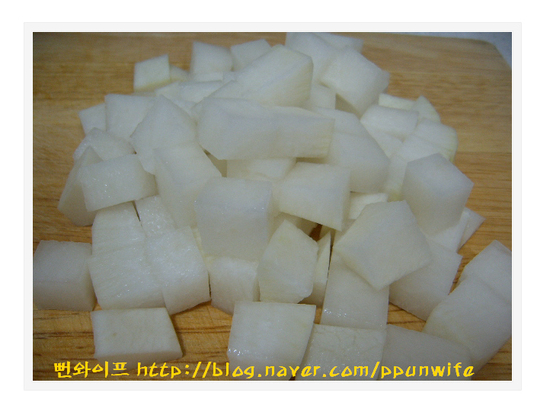
Dice the radish into 1-1.5 cm cubes.
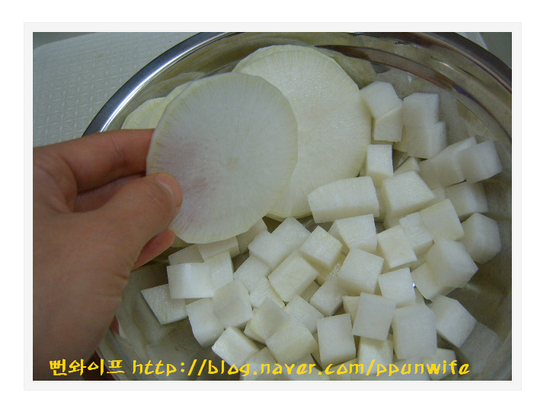
With a bit of leftover radish, I also made thin slices.
Place the ingredients into a glass jar or airtight container.
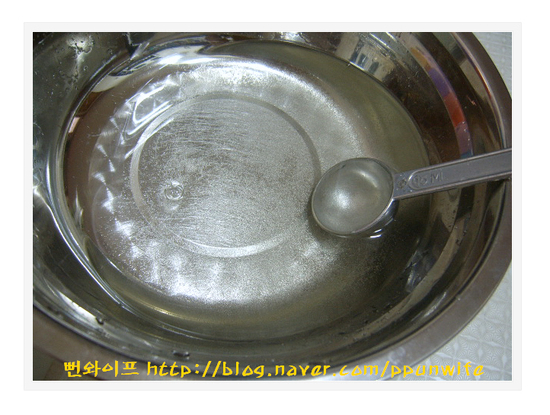
Combine the water, vinegar, sugar, and salt, and stir until completely dissolved.
If you like a more sour flavor, add more vinegar.
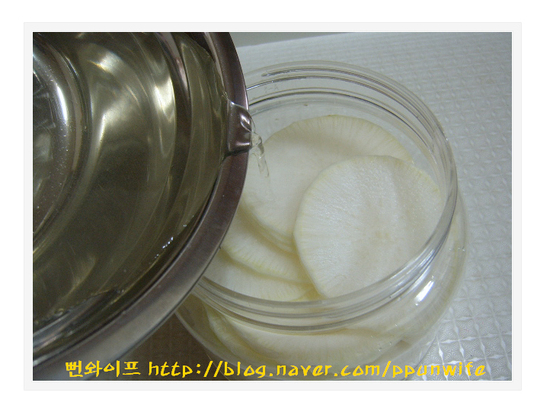
Pour the vinegar brine into the container over the radish.
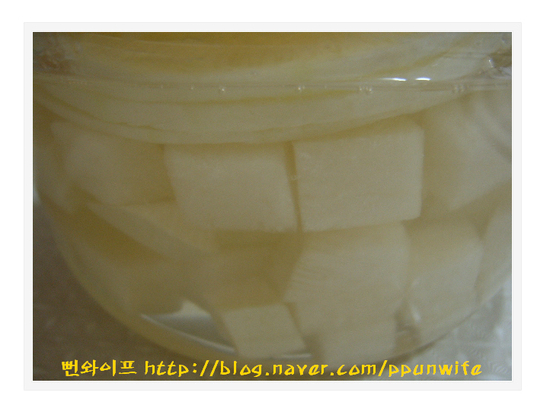
Close the lid.
The vinegar water might sit below the ingredients at first, but once moisture releases from the radish, it will soon be submerged.
Let it mature like this at cool room temperature or in the refrigerator for two days.
Turn the container upside down from time to time.
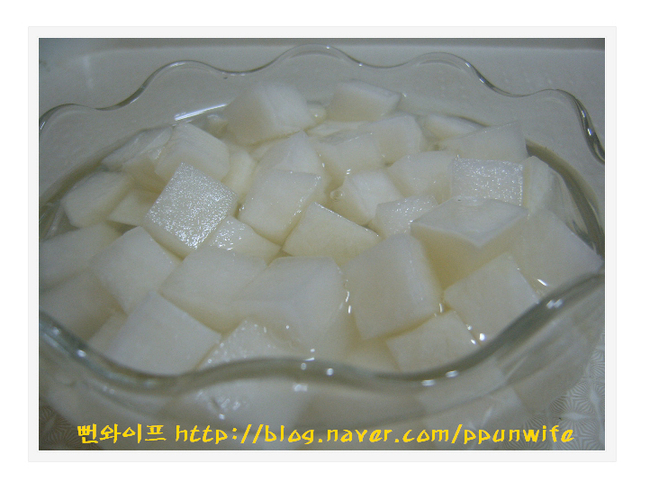
This one is chicken-mu to eat with fried chicken, refreshing the palate after rich meat.
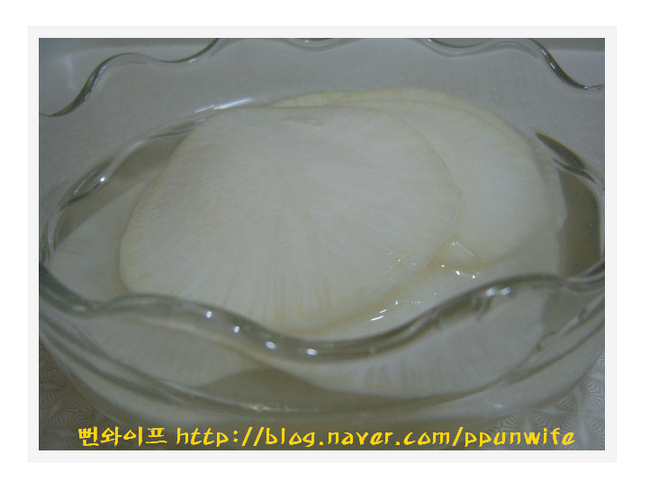
This one is for wrapping when eating meat.
 Ppunwife's tips
- Once seasoned, thin shreds go completely limp, so it is better to cut them slightly thick.
- Do not rinse the salted radish; simply drain the moisture through a sieve. Salting it like this is great because moisture will not pool once seasoned.
- If you like a more sour flavor, add more vinegar.
- The brine level might sit below the radish at first, but once moisture releases from the radish, it will soon be fully submerged. Turn the container upside down from time to time.
FAQ
Why shouldn't the radish be julienned too thinly when making musaengchae?
If the radish is sliced too thin, it can lose its crispness and go completely limp once seasoned, so it is best to cut it on the thicker side.
Should the salted radish be rinsed in water?
The salted radish should not be washed with water; just drain the excess liquid through a sieve before tossing with seasonings.
How long does chicken-mu (pickled radish) need to mature?
After pouring in the sweet vinegar brine and closing the lid, let it mature at cool room temperature or in the refrigerator for about two days.