Crispy Musaengchae (Spicy Radish Salad)
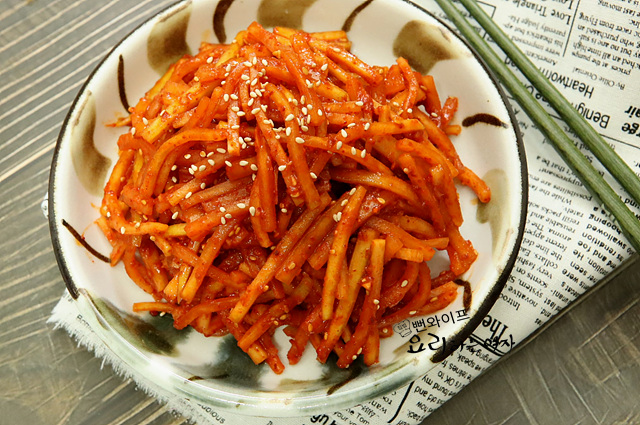
A bossam-style Musaengchae (spicy radish salad) seasoned crisp and moisture-free after salting with corn syrup and salt.
Translated from Korean by AI and not yet checked by a native speaker. Amounts and numbers are taken directly from the original recipe. Read the Korean original →
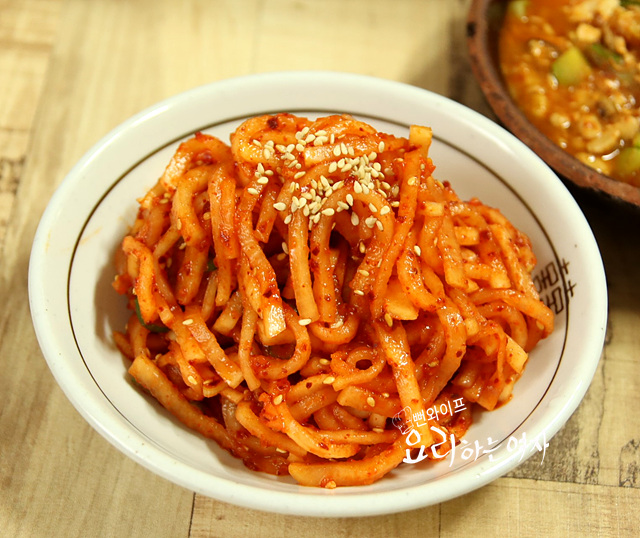
By salting the radish with salt and corn syrup and squeezing out the moisture thoroughly, it hardly gets watery even after being kept for days. Shredded to just the right thickness, it keeps a crunchy texture and can be tossed cleanly with simple everyday ingredients.
- Servings
- about 6–8 servings
- Difficulty
- Easy
- Spiciness
- Mildly spicy
Ingredients
Ingredients
- Korean radish (mu)1 kg
- Large green onion (daepa)1/2 stalk
- Salt1 1/2 tbsp
- Corn syrup (mulyeot)5 tbsp
Seasoning
- Gochugaru (Korean chili flakes)3 tbsp
- Minced garlic2 tbsp
- Sand lance fish sauce (or dried anchovies)2 tbsp
- Vinegar2 tbsp
- Sugar1 1/2 tbsp
- Toasted sesame oil1 tbsp
- Toasted sesame seeds1 tbsp
- This is about 2/3 of a medium-sized Korean radish.
- I prepared 1/2 stalk of large green onion, but you can also use 6-7 scallions.
- If you salt it with salt and corn syrup for over 30 minutes, it softens and releases a lot of moisture from the radish.
Steps
Slice the ingredients
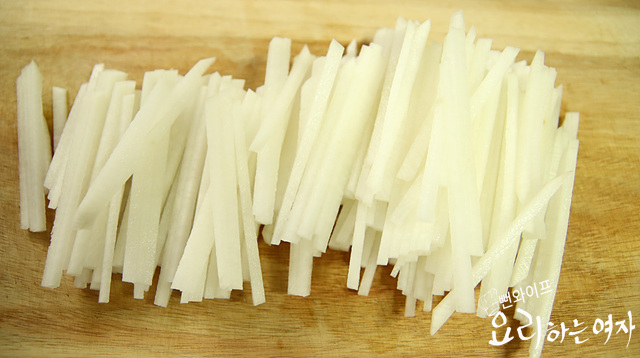
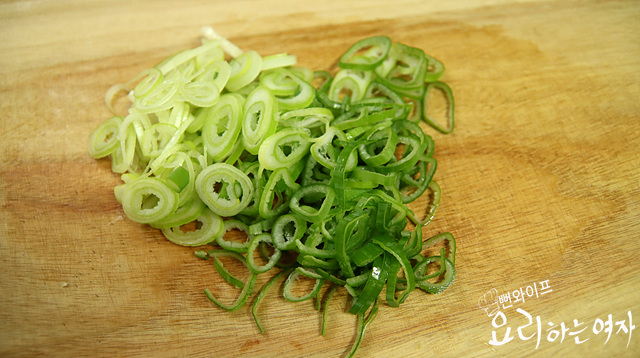
Since the radish will be salted and seasoned, slicing it too thinly will make it look messy and ruin the texture.
Julienne it to about 0.4 cm thick, and thinly slice the large green onion into small rounds.
Salt the radish
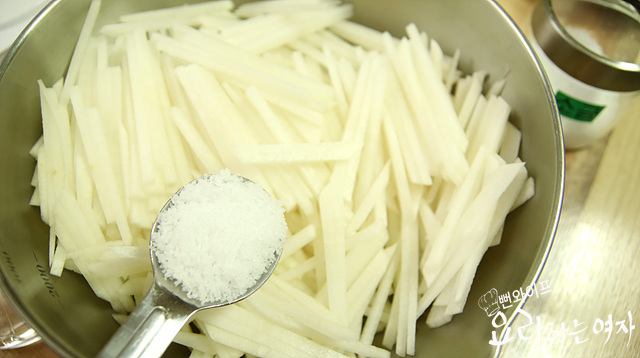
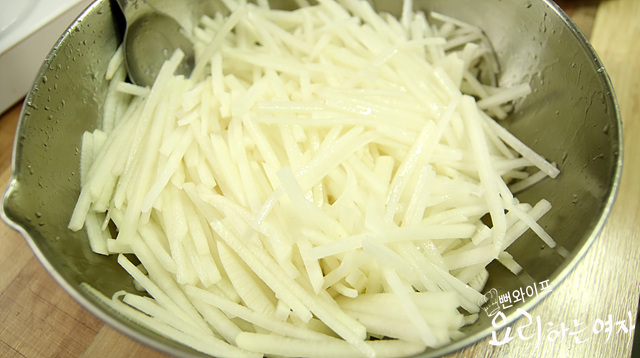
Add 1 1/2 tbsp of salt and 5 tbsp of corn syrup (mulyeot), then mix thoroughly.
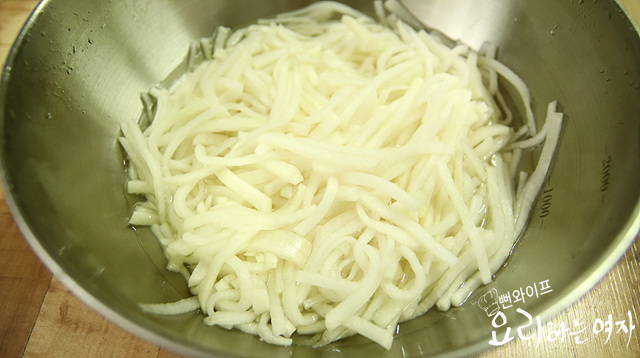
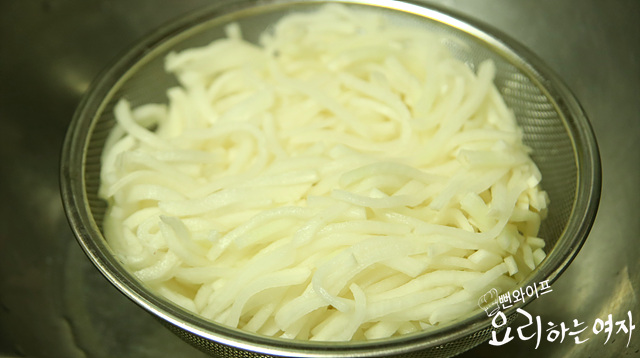
If you let it salt for over 30 minutes, it wilts down and a lot of moisture is drawn out of the radish.
Although it is salted in corn syrup, it only extracts the moisture and improves the crunch, so it is not overly sweet.
First, drain the liquid through a strainer, then squeeze out the remaining moisture tightly using a cotton cheesecloth or your hands.
Season the salad
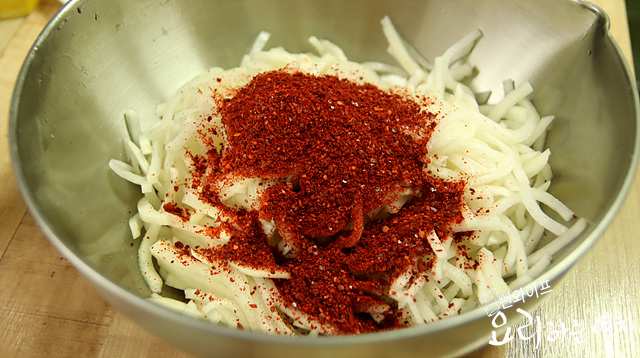
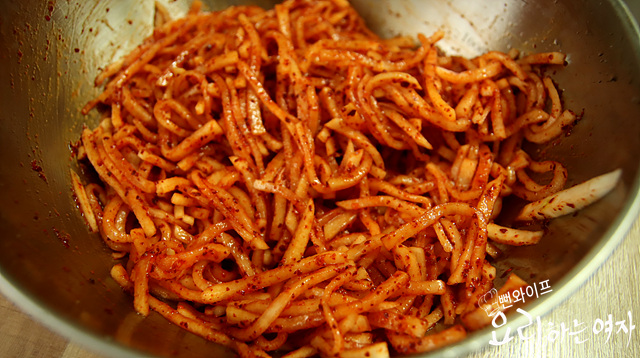
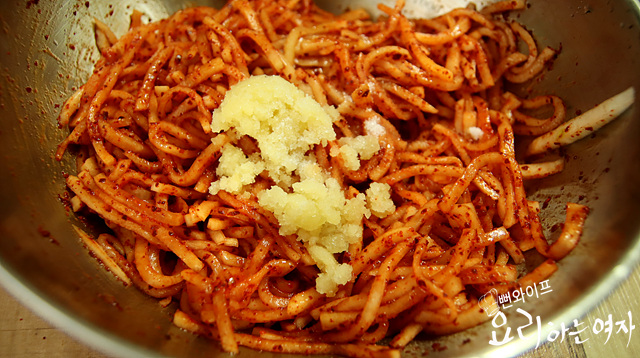
Add 3 tbsp of gochugaru (Korean chili flakes) to the bowl and mix well to dye the radish with color.
Once the chili flakes swell and give it a lovely red color, add 2 tbsp of minced garlic, 1 1/2 tbsp of sugar, 2 tbsp of vinegar, and 2 tbsp of sand lance fish sauce, then toss and massage gently so the seasonings absorb.
Taste it and adjust with more vinegar or sugar to your liking, and if it feels bland, add a little salt to balance it.
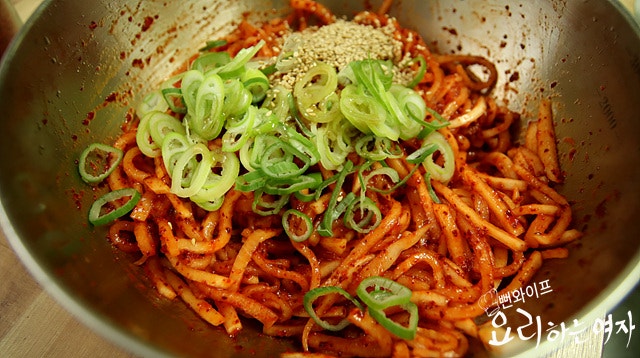
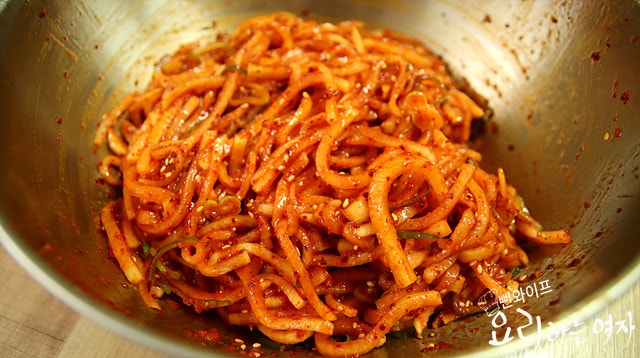
Finally, add the large green onion, 1 tbsp of toasted sesame oil, and 1 tbsp of toasted sesame seeds, toss evenly, and finish.
Complete
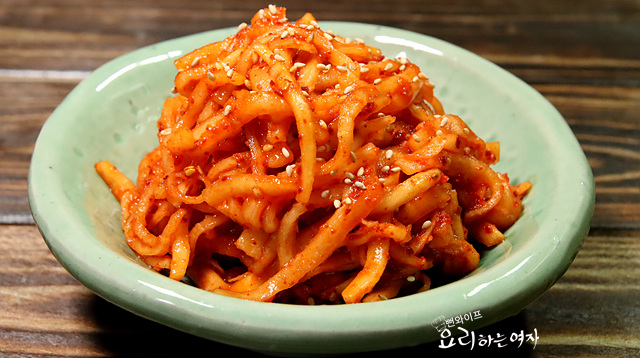
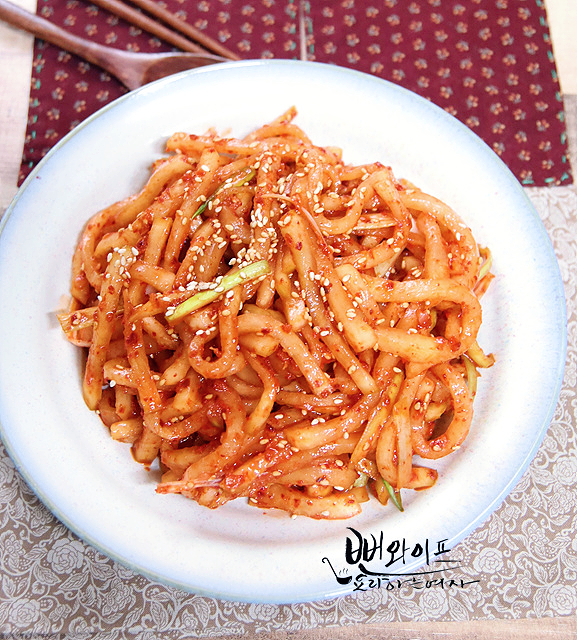
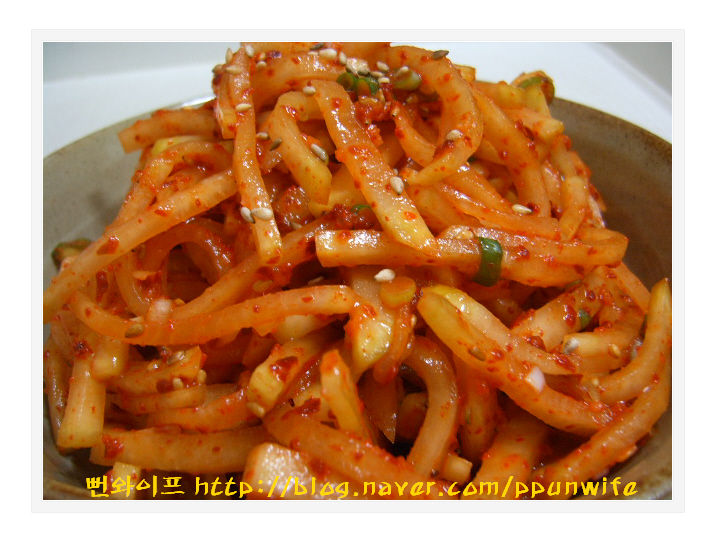
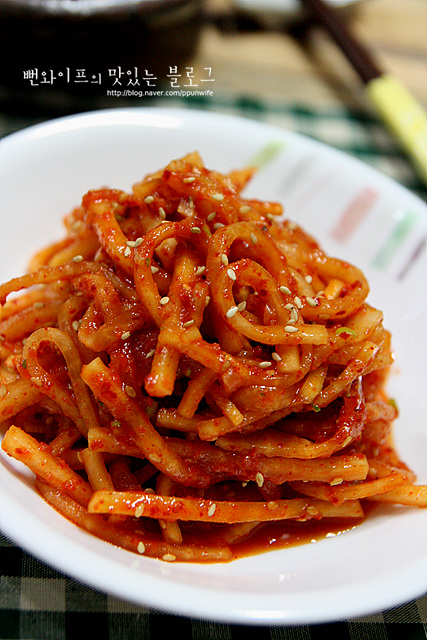
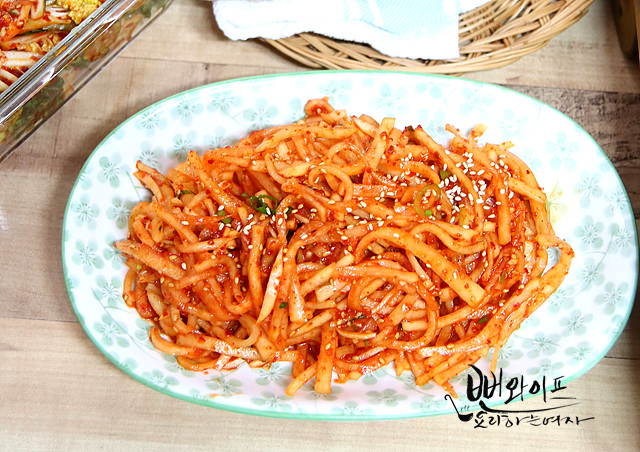
Because it was not julienned too thinly, it didn't wilt flat and limp even after being salted and seasoned.
It looks appetizing and has a wonderfully crisp, crunchy bite.
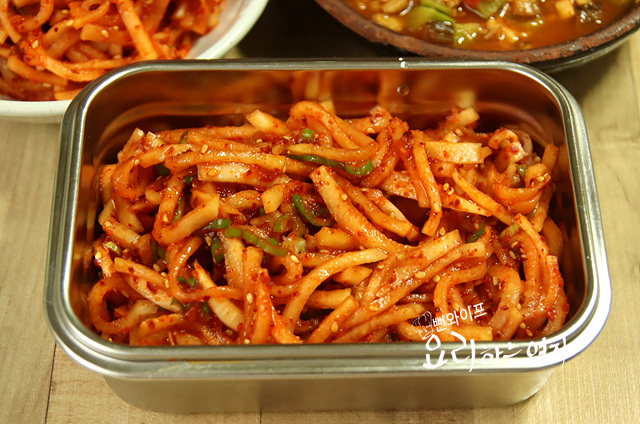
Even if you make a large batch, store it in an airtight container, and eat it over several days, it will not become very watery.
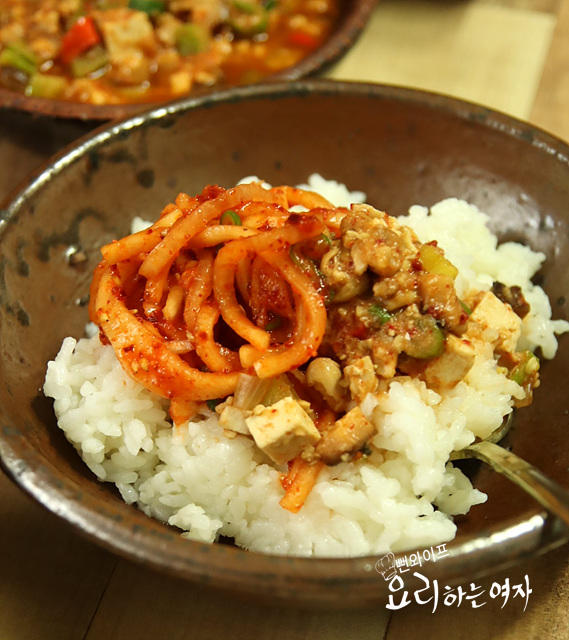
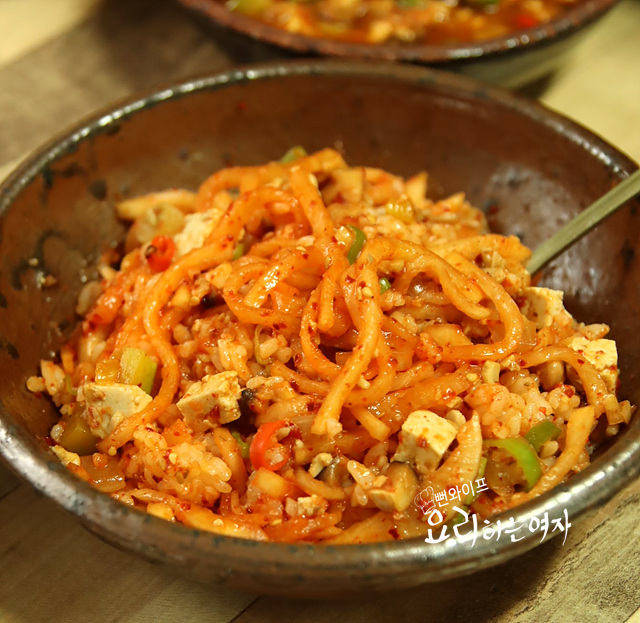
On this day, I also made cheonggukjang jjigae (rich fermented soybean paste stew) while making the radish salad and mixed them both together with rice.
The radish salad is not salty, so adding a generous amount to mix gives a delightful crunch in your mouth.
Eating more radish salad than rice lets you enjoy a filling meal while keeping carbohydrate intake low.
 Ppunwife's tips
- Since the radish will be salted and seasoned, slicing it too thinly makes it look messy and gives it a poor texture, so julienne it to about 0.4 cm thick.
- Although salted in corn syrup, it only extracts moisture and improves texture, so it does not turn out overly sweet.
- Even if you toss a large amount, store it in a container, and eat it over several days, it does not release much water.
FAQ
Doesn't Musaengchae become too sweet when salted with corn syrup?
Corn syrup serves to draw out moisture from the radish and enhance its crunch, so it does not leave behind excessive sweetness.
Is there a recommended thickness when julienning the radish?
Because it is salted before being tossed, slicing it to about 0.4 cm thick—not too thin—keeps it from wilting flat and preserves a great crunch.
Can I use another ingredient instead of large green onion?
Instead of 1/2 stalk of large green onion, you can prepare and use 6-7 scallions.
If I do not have sand lance fish sauce, can I use anchovy fish sauce?
Since anchovy fish sauce is also listed as an option in the ingredients, you can use it as a substitute.