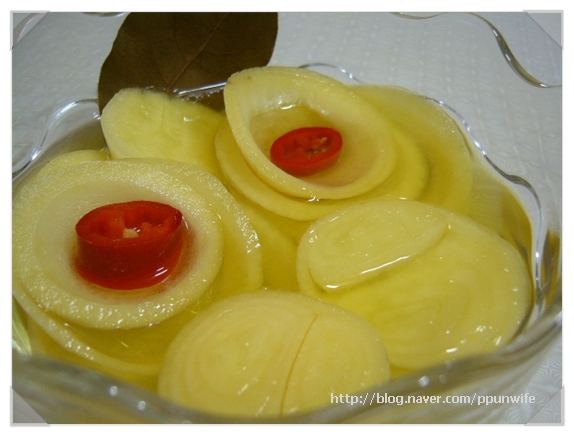
Crunchy Yangpa Jangajji (Pickled Onions in Soy Sauce)
A crunchy pickled side dish made by pouring boiled and cooled sweet-and-tangy soy brine over onions.
Translated from Korean by AI and not yet checked by a native speaker. Amounts and numbers are taken directly from the original recipe. Read the Korean original →
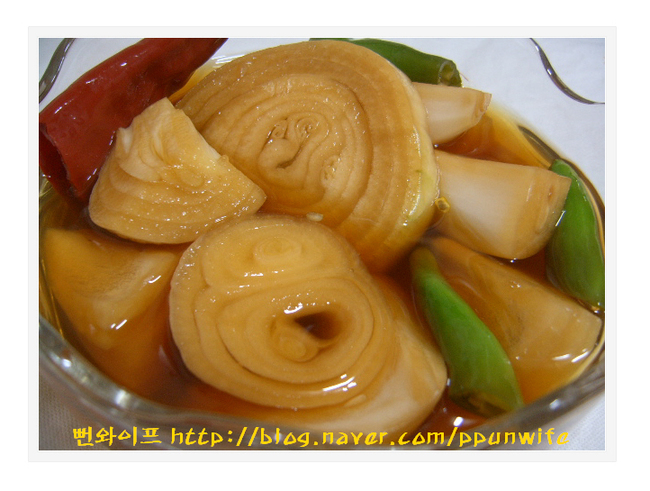
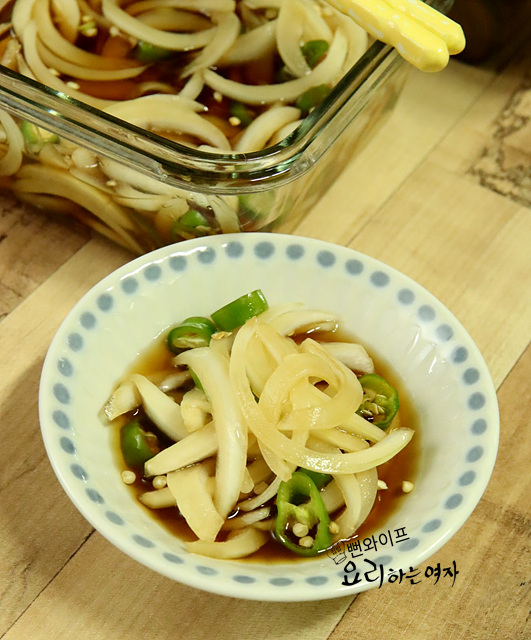
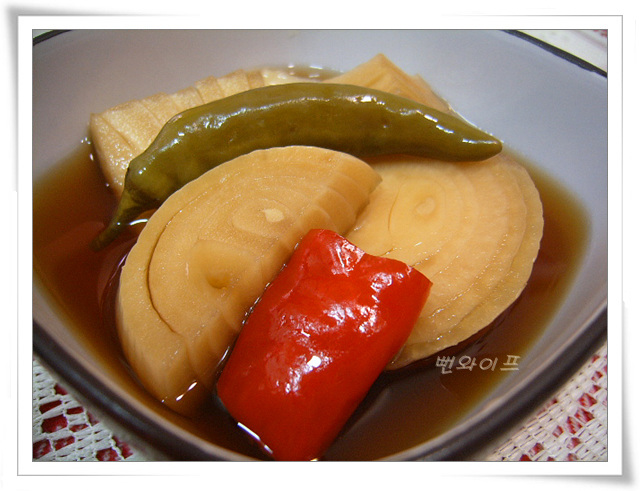
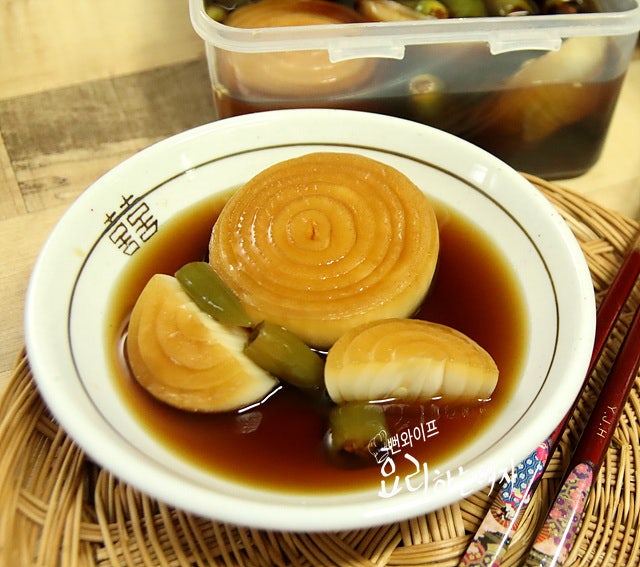
Firm onions paired with spicy chilies are pickled in a boiled and cooled sweet-and-tangy soy brine. Cooling the soy brine before pouring preserves a fresh, crisp texture. Served alongside meat dishes, it makes a reliable side dish that cleanses the palate.
- Servings
- about 5–6 servings
- Difficulty
- Easy
- Spiciness
- Mildly spicy
Ingredients
Ingredients
- Onion5 (medium)
- Cheongyang chili pepper (hot green chili)2
- Dried red chili pepper2
Soy brine
- Regular soy sauce (jin-ganjang)1 cup
- Water2 cups
- Vinegar1/2 cup
- Sugar1/2 cup
- Using firm onions makes the pickles crunchy and delicious.
- Peel and wash them, dry thoroughly, and cut into your desired shape.
- If you do not have dried red chili pepper, fresh red chili pepper works too.
Steps
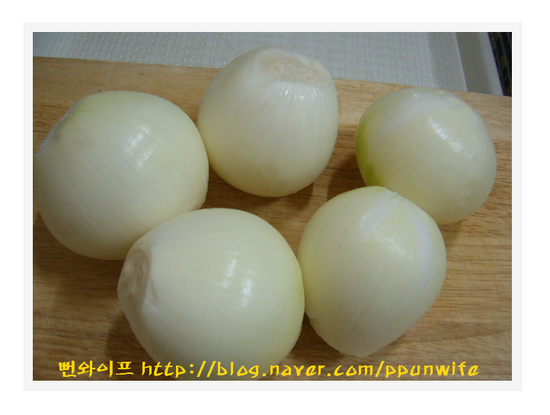
Using firm onions makes the pickles crunchy and delicious.
These look a bit small.
Peel and wash them, then dry the moisture thoroughly...
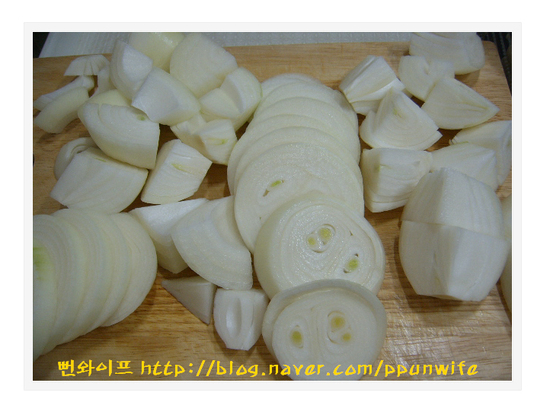
Cut into whatever shape you like...
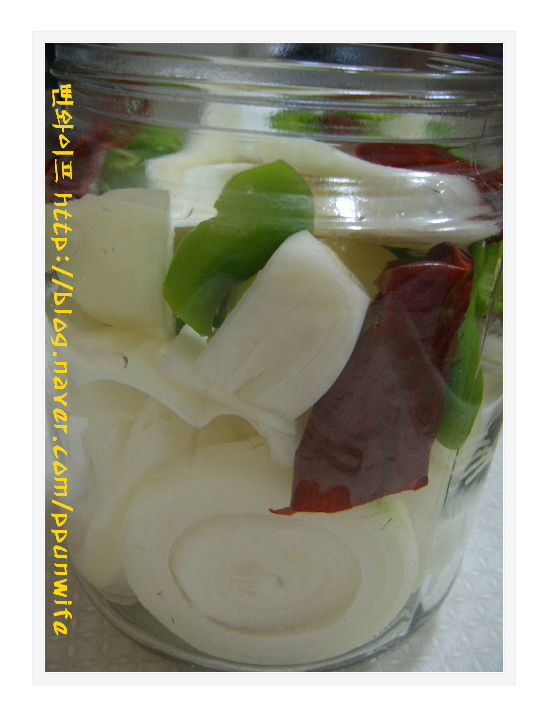
Place the onions, Cheongyang chili pepper (hot green chili), and dried red chili pepper into a glass jar.
Adding chili peppers when making jangajji gives it a nicer spicy kick.
If you do not have dried red chili peppers, fresh red chili peppers are fine too...
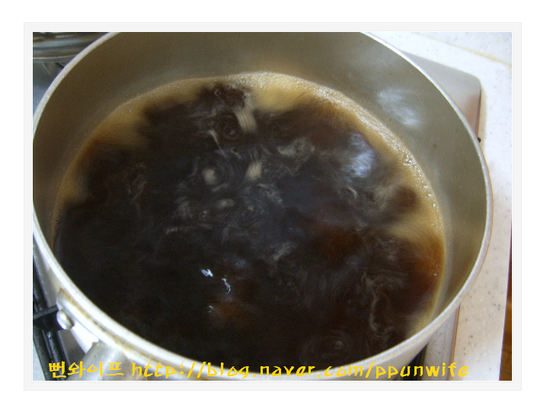
Add the soy brine ingredients in the amounts listed above and bring to a rolling boil.
Adjust the vinegar or sugar to your taste.
The amount of soy brine needed varies depending on the size of the onions, so make plenty.
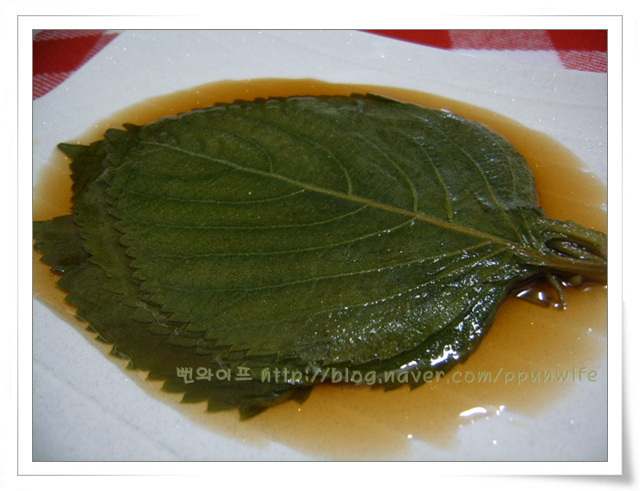
If you have leftover brine, you can also add perilla leaves (kkaennip) or green chili peppers to make more.
Let the soy brine cool down.........
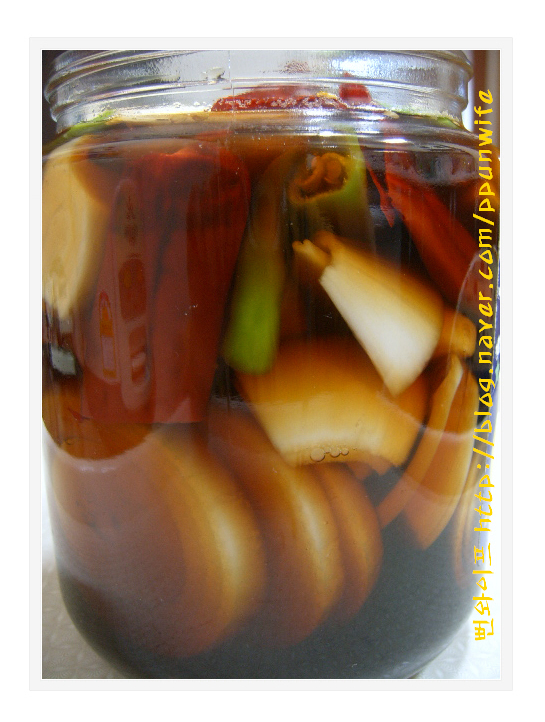
Pour it into the glass jar until full.
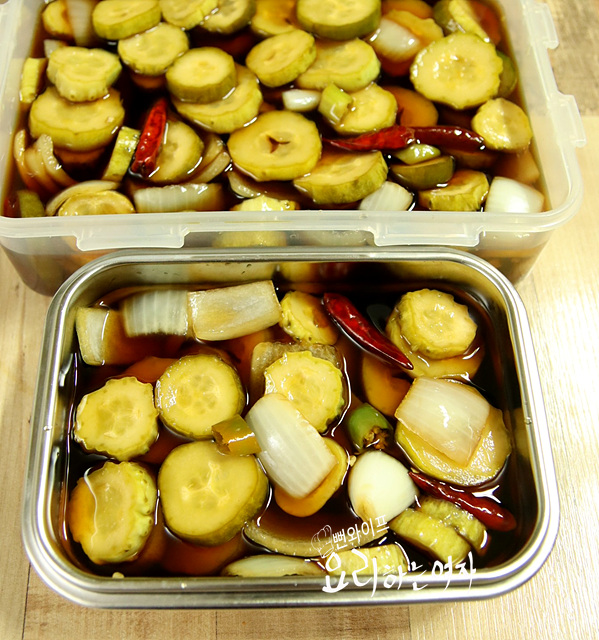
In the past, I made cucumber pickles by pouring boiling water straight in.
There are two methods, but today I poured it cooled to preserve the fresh crunch of the onions.
Seal well and let mature in a cool place or in the refrigerator for a day or two before eating.
If you want to keep them for a long time, after a week or ten days, boil just the soy brine once more, let it cool, and pour it back in.
 Ppunwife's tips
- Adding chili peppers when making jangajji gives it a nicer spicy kick.
- Adjust the vinegar or sugar to your taste.
- The amount of soy brine needed varies depending on the size of the onions, so make plenty. If there is extra, you can also add perilla leaves or green chili peppers.
- The soy brine was poured cooled to maintain the fresh crunch of the onions.
- If you plan to store them for a long time, after a week or ten days, boil just the soy brine once more, let it cool, and pour it back in.
FAQ
Why is the soy brine cooled before pouring instead of poured while hot?
It is poured after cooling to preserve the onion's natural fresh and crunchy texture.
What should I do if I don't have dried red chili peppers?
You can use fresh red chili peppers instead of dried red chili peppers.
How should I store and maintain it to keep it for a long time?
After about a week or ten days, pour off just the soy brine, bring it to a rolling boil once more, let it cool completely, and pour it back over.
When can I start eating the finished jangajji?
Seal it tightly and let it mature in a cool place or in the refrigerator for a day or two before eating so the flavor absorbs properly.