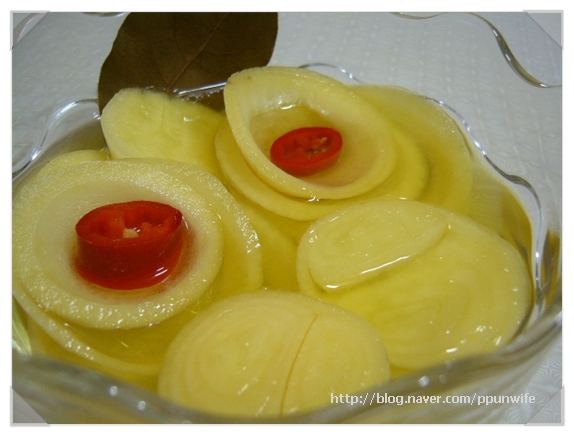
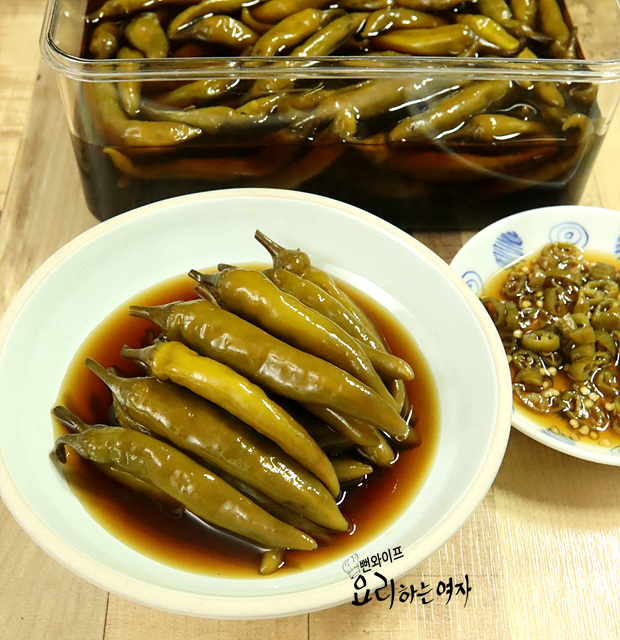
Yangpa Jangajji (Pickled Onions in Soy Sauce)
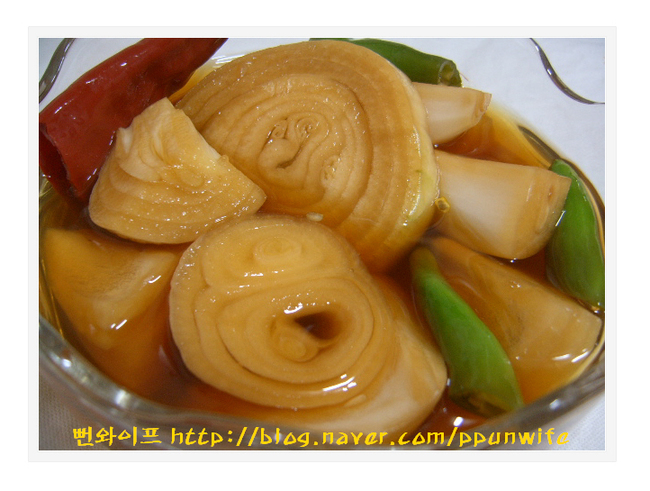
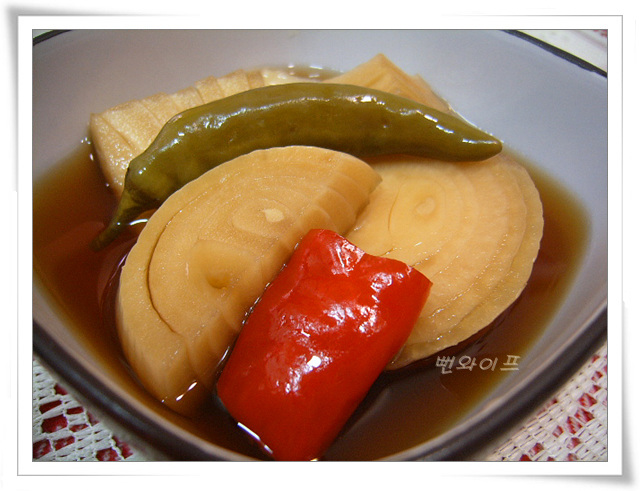
An onion side dish made by pouring a boiled pickling brine with both soy sauce and salt over onions for a subtle color.
Translated from Korean by AI and not yet checked by a native speaker. Amounts and numbers are taken directly from the original recipe. Read the Korean original →
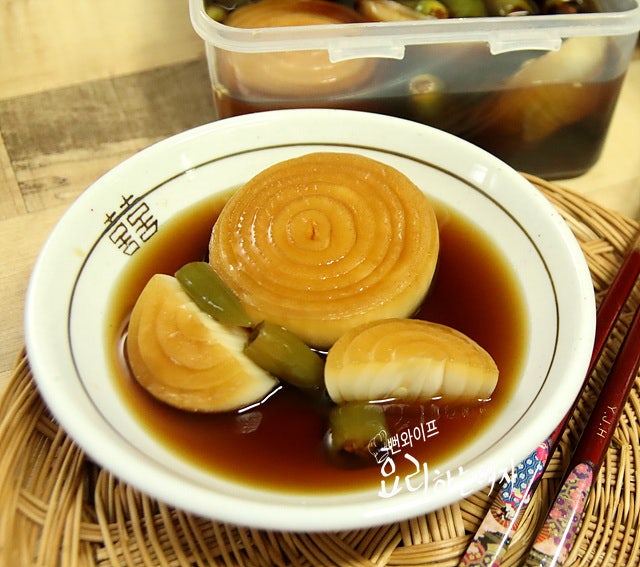
Firm spring fresh-harvest onions are pickled crunchy by pouring a hot brine seasoned with both soy sauce and salt over them. The pungency softens nicely, making it great to serve with meats or Western dishes, and it comes together easily with simple ingredients.
- Servings
- about 5–6 servings
- Difficulty
- Easy
- Spiciness
- Mildly spicy
Ingredients
Ingredients
- Fresh-harvest onion4
- Cheongyang chili pepper (hot green chili)7
Soy sauce brine
- Water3 cups
- Regular soy sauce (jin-ganjang) (or brewed soy sauce (yangjo-ganjang))1 cup
- Vinegar1 cup
- Sugar1 cup
- Salt2 tbsp
- Soju1/3 cup
- If you like chilies, you can prepare more, and instead of Cheongyang chili peppers, non-spicy asaki peppers, cucumber peppers, or green chili peppers are also great.
Steps
Prepare the ingredients
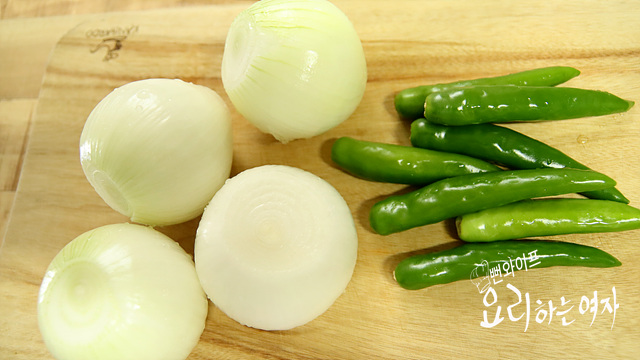
Prepare 4 medium fresh-harvest onions and 7 Cheongyang chili peppers (hot green chili).
If you like chilies, you can prepare more, and instead of Cheongyang chili peppers, non-spicy asaki peppers, cucumber peppers, or green chili peppers (put-gochu) are also great.
Cut the ingredients
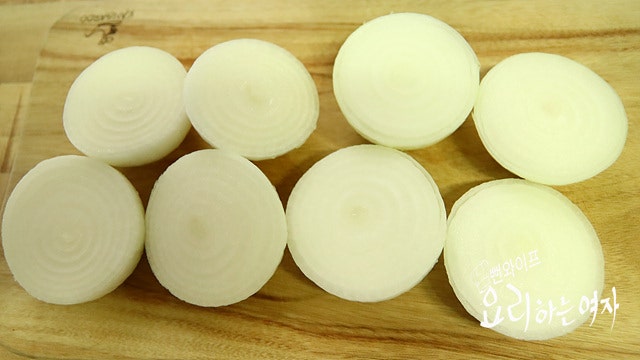
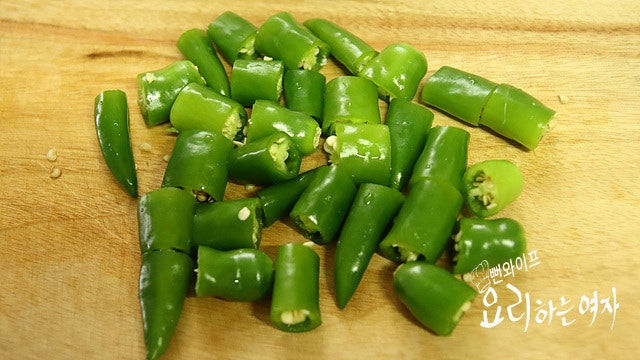
Cut the onions and chilies into any size or shape you like.
I halved the onions and cut the Cheongyang chili peppers into thick pieces.
Place in a container
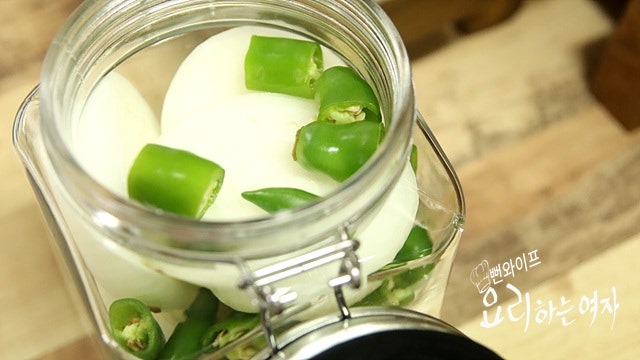
Pack the onions and chilies neatly into a sterilized container.
Boil the soy sauce brine
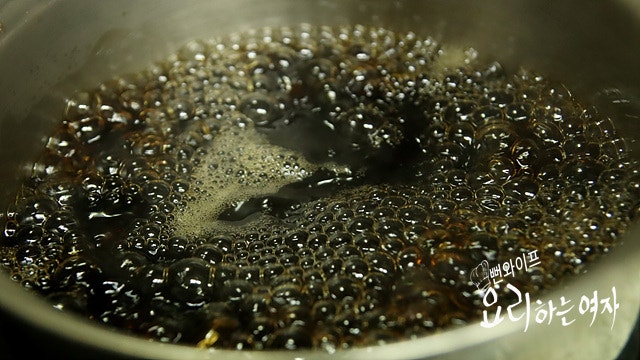
In a pot, combine 3 cups water, 1 cup regular soy sauce (jin-ganjang), 1 cup vinegar, 1 cup sugar, and 2 tbsp salt, then boil for about 30 seconds until bubbling vigorously.
Since some people mentioned that the green garlic pickle last time was quite tart, I adjusted only the amount of vinegar slightly this time.
This ratio is tailored to my taste after all, so when making the brine, you can adjust the vinegar or sugar to suit your own preference.
Pour the soy sauce brine
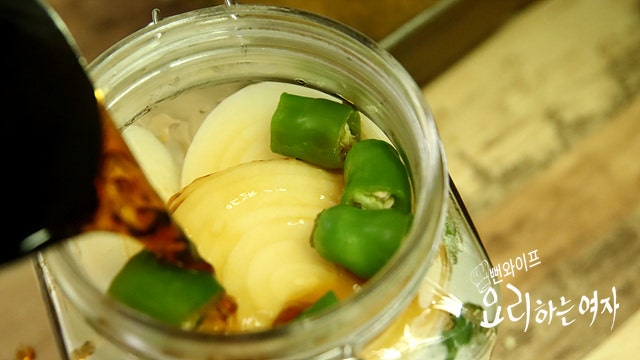
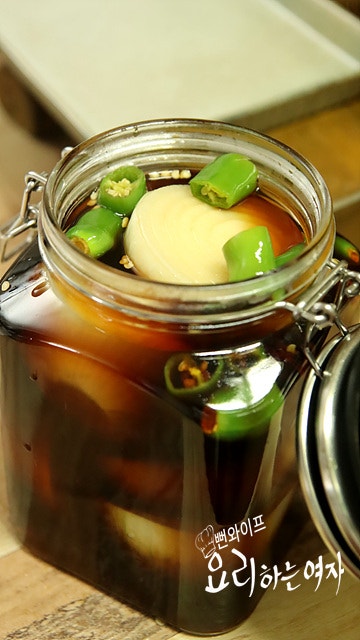
Right after boiling the soy sauce brine, pour it immediately into the container with the onions.
Do not let it cool; pour it while it is hot.
Once it has cooled down somewhat, add 1/3 cup of soju, which acts as a preservative and disinfectant, let it age overnight at room temperature, and then...
Keep it in the refrigerator, and it will be perfectly flavored in 2 to 3 days. If you slice the onions smaller, you can even eat them in a single day.
 Ppunwife's tips
- When making jangajji, seasoning solely with soy sauce turns the ingredients too dark and unappealing, but balancing it appropriately with salt yields a subtle, refined soy sauce color.
- Right after boiling the brine, pour it directly into the container holding the onions. Do not let it cool; pour it while it is hot.
- The soy sauce brine left over after finishing the pickles contains moisture drawn out from the vegetables, so bring it to a rolling boil to evaporate the remaining water. You can reuse it as pickling brine or use it in sweet-and-tangy tossed salads.
FAQ
Should I cool the soy sauce brine before pouring it in?
Do not let it cool; pour it into the container straight off the heat while hot to keep the texture crunchy.
How soon can I eat it after pickling?
After it cools down, add the soju, let it age at room temperature overnight, and keep it in the refrigerator for 2 to 3 days to develop the full flavor. If you cut the onions into smaller pieces, you can eat them after a single day.
What can I use instead of Cheongyang chili peppers to make it less spicy?
If you want to avoid spicy heat, you can substitute with asaki peppers, cucumber peppers, or green chili peppers.
How do I use the leftover soy sauce brine after eating the pickles?
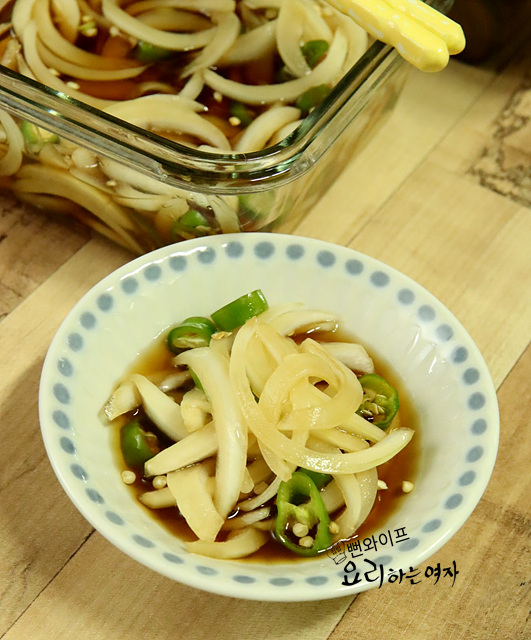
Boil it vigorously to evaporate excess moisture, then reuse it as a pickling brine, as a dressing for sweet-and-tangy salads, or as a sauce for thinly sliced onion salad.