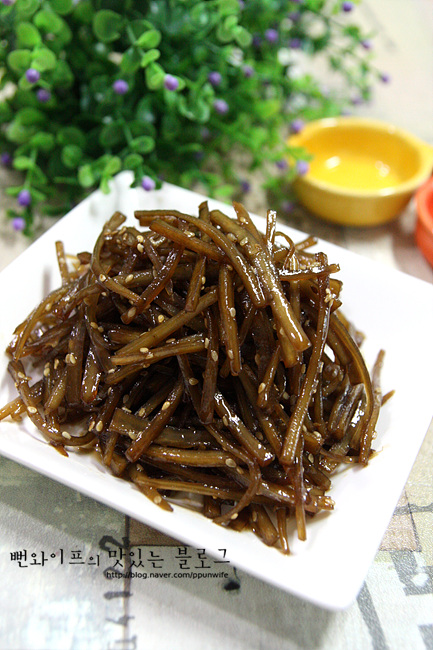
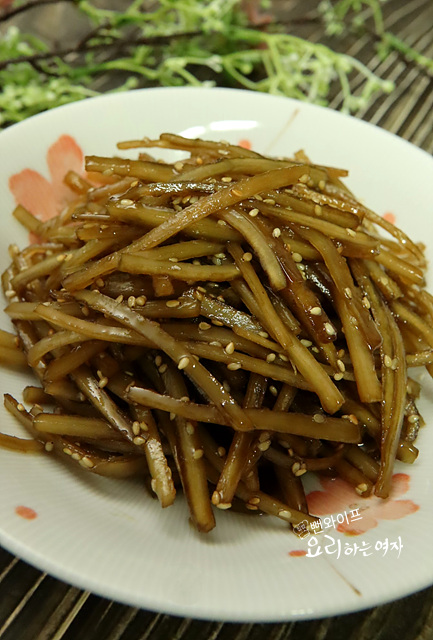
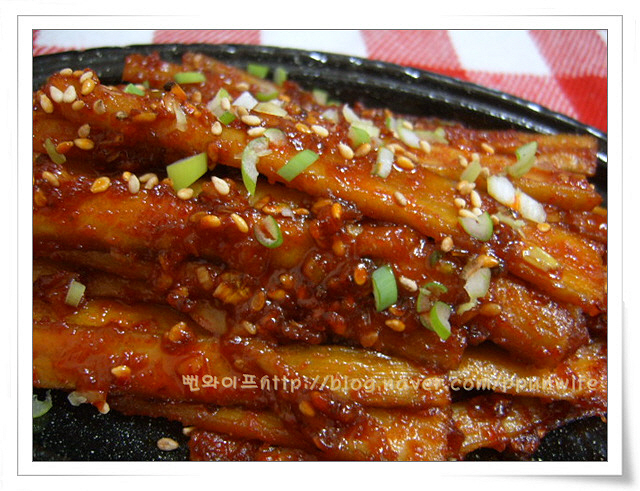
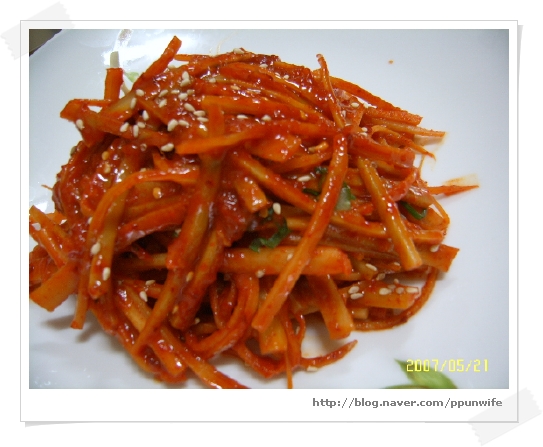
Sweet, Salty, and Crunchy Ueong Jorim (Braised Burdock Root)
A side dish made with burdock root soaked in vinegar water to remove bitterness, then braised until sweet and savory.
Translated from Korean by AI and not yet checked by a native speaker. Amounts and numbers are taken directly from the original recipe. Read the Korean original →
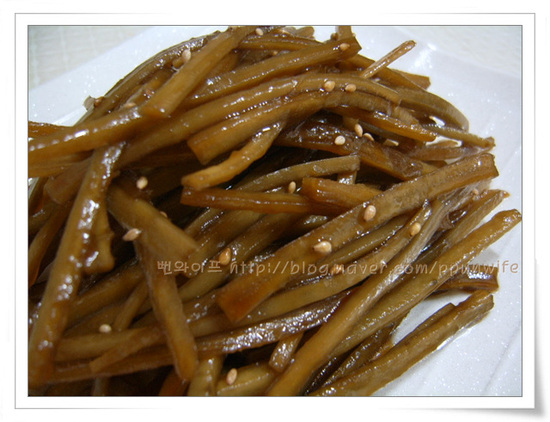
This side dish features burdock root, known for its pleasant aroma and crunchy texture, braised in a savory soy sauce seasoning. Soaking it in vinegar water removes any bitter taste, and stir-frying before braising allows the flavors to absorb evenly. It also makes a wonderful filling for gimbap or rice balls.
- Servings
- 4 servings
- Difficulty
- Medium
- Spiciness
- Not spicy
Ingredients
Ueong jorim ingredients
- Burdock root2 roots, 500 g
Seasoning
- Regular soy sauce (jin-ganjang)6 tbsp
- Mirin (cooking rice wine) (or cheongju (Korean rice wine))3 tbsp
- Corn syrup (mulyeot)3 tbsp
- Sugar2 tbsp
- Toasted sesame oil1 tsp
- Toasted sesame seeds
- Rubbing gently with the back of a knife peels the skin easily. Using a vegetable peeler shaves off too much of the flesh.
- Add 5 tbsp of vinegar and enough water to submerge it, then soak for at least 30 minutes to draw out bitterness and dark water.
Steps
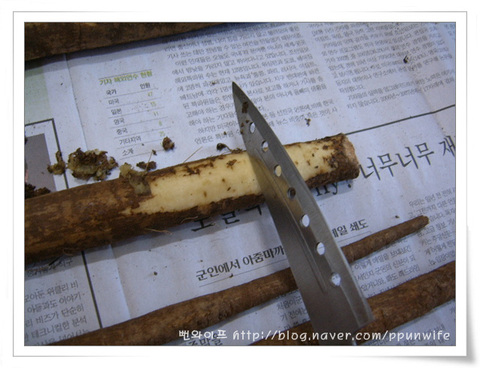
One burdock root is usually around 250 g. I am preparing two roots.
Two roots make enough side dish for a family of 4 to enjoy for a few days.
Rubbing gently with the back of a knife peels the skin easily. Using a vegetable peeler shaves off too much of the flesh.
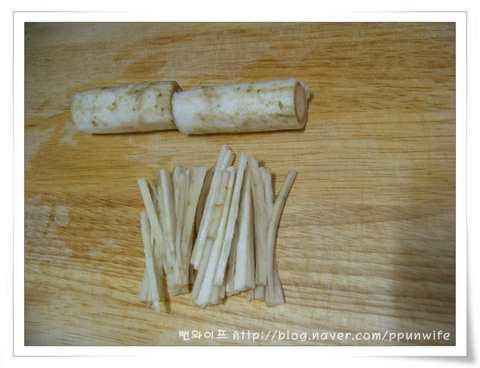
Cut into 4-5 cm segments, then julienne them.
If you slice them diagonally and julienne, the ends will taper and become thin, so cut them to a uniform thickness.
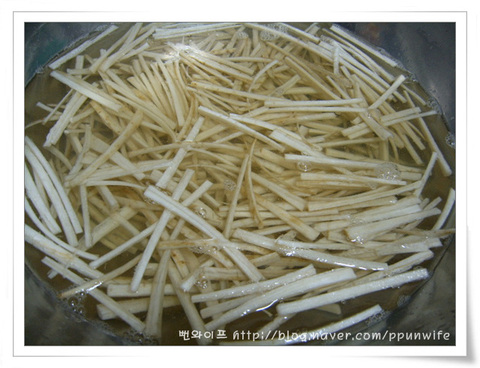
Add 5 tbsp of vinegar and enough water to submerge it, then soak for at least 30 minutes to draw out bitterness and dark water.
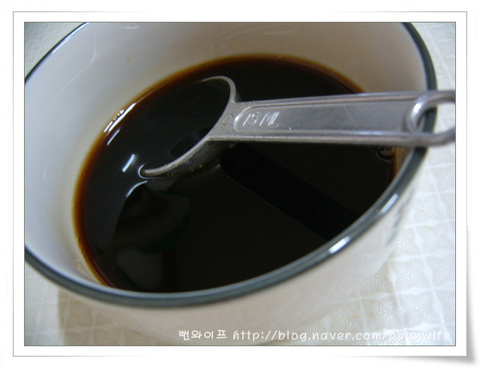
Mix all the seasoning ingredients together in the specified amounts, except for the corn syrup.
With 6 tbsp of regular soy sauce, it turns out slightly salty as a side dish. Keep this in mind and adjust the amount of soy sauce.
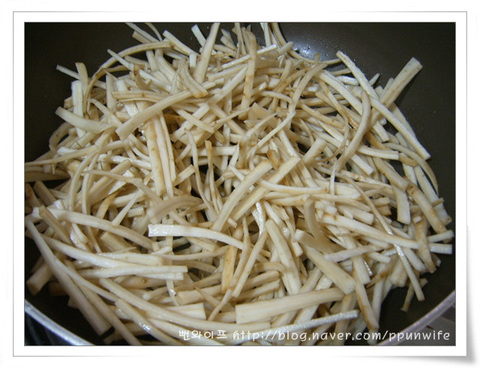
Rinse the julienned burdock root retrieved from the vinegar water in clean water and drain.
Coat a heated pan with oil and stir-fry over about medium heat.
Stir-fry until the stiffness of the burdock root softens (about 5 minutes).
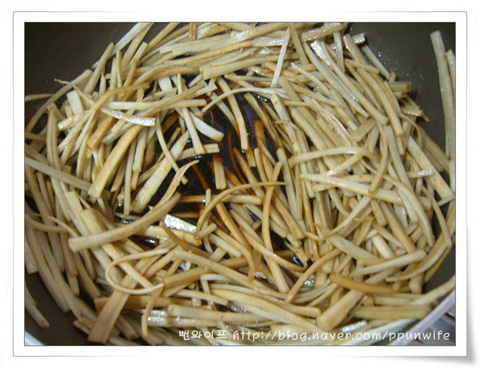
Pour in the seasoning sauce and bring to a boil over high heat, then continue braising over medium heat.
Stir frequently so the flavor and color soak in evenly.
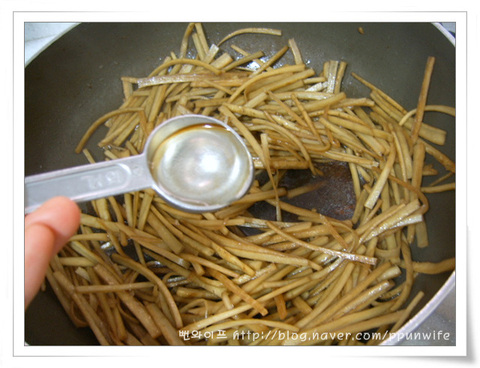
When about 2-3 tbsp of liquid remains, add the corn syrup and braise over high heat while stirring.
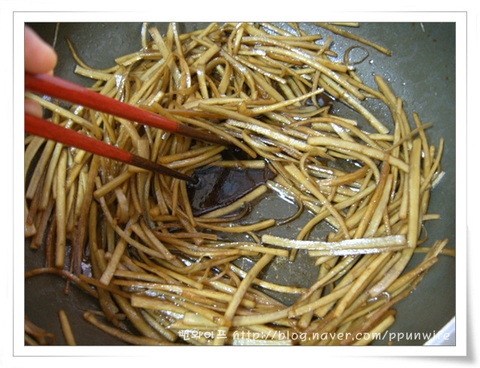
As shown, when a little liquid remains at the bottom, finish by adding the toasted sesame oil and toasted sesame seeds and mixing well.
 Ppunwife's tips
- Rubbing gently with the back of a knife peels the skin easily. Using a vegetable peeler shaves off too much of the flesh.
- If you slice them diagonally and julienne, the ends will taper and become thin, so cut them to a uniform thickness.
- With 6 tbsp of regular soy sauce, it turns out slightly salty as a side dish. Keep this in mind and adjust the amount of soy sauce.
FAQ
Is there a trick to peeling burdock root easily?
Using a peeler shaves off a lot of the inner flesh, so it is better to scrape it off gently using the back of a knife.
How do you remove the astringency and bitterness from burdock root?
Submerge the cut burdock root in water mixed with 5 tbsp of vinegar and let it soak for at least 30 minutes to draw out the bitterness and dark water.
When should the corn syrup be added during cooking?
After pouring in the seasoning sauce and braising, add the corn syrup when about 2 to 3 tbsp of liquid remains, then braise over high heat while stirring.
Can I use cheongju instead of mirin?
Yes, you can choose to use 3 tbsp of either mirin or cheongju in the seasoning.