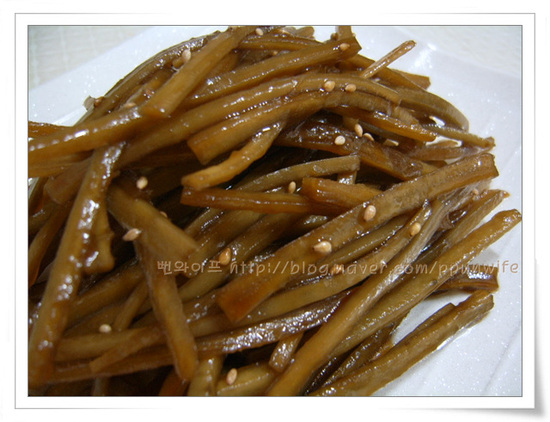
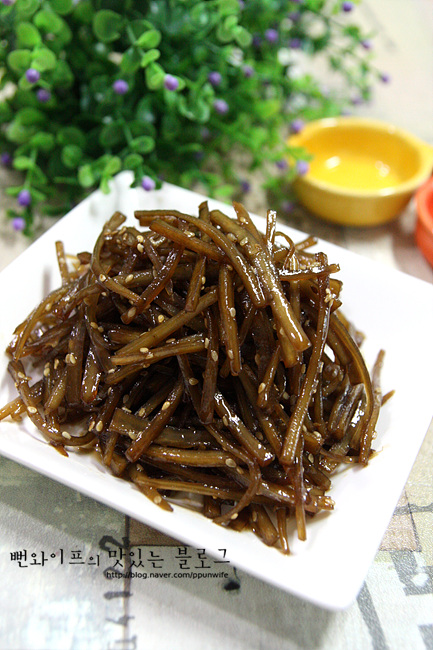
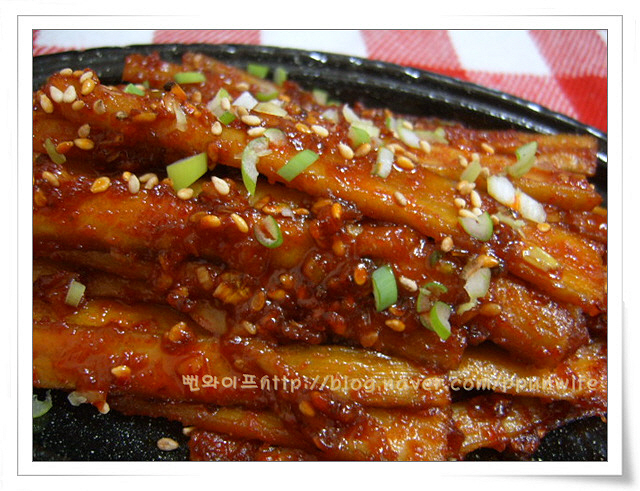
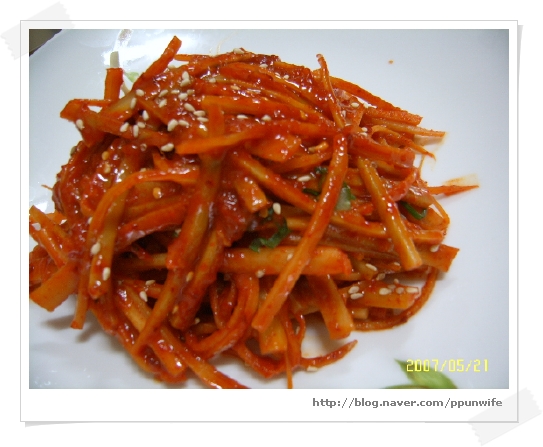
Fragrant Ueong Jorim (Braised Burdock Root) without Blanching
A sweet and savory side dish of ueong jorim (braised burdock root) cooked directly without blanching to preserve its deep aroma.
Translated from Korean by AI and not yet checked by a native speaker. Amounts and numbers are taken directly from the original recipe. Read the Korean original →
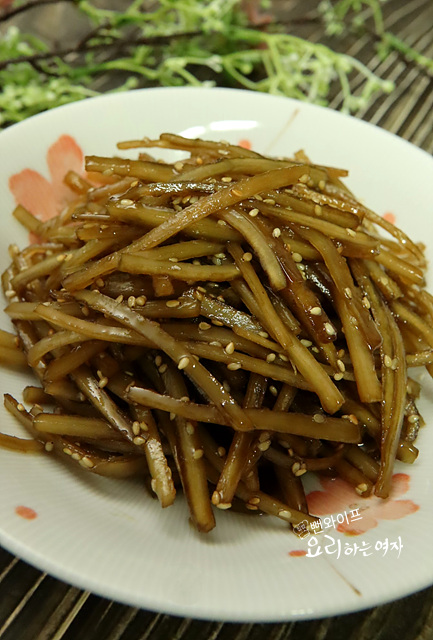
To fully preserve the distinctive, deep flavor of burdock root, the blanching step is skipped, and it is simmered gently instead. After stir-frying in oil, the seasoned liquid is poured in and it is left to steam-cook until soft yet pleasantly chewy. Finished with a sweet and savory glaze, it makes an excellent everyday side dish and a wonderful filling for gimbap.
- Servings
- about 4–5 servings
- Difficulty
- Easy
- Spiciness
- Not spicy
Ingredients
Ingredients
- Burdock root2 roots, 270 g (after cleaning)
Seasoning
- Regular soy sauce (jin-ganjang) (or brewed soy sauce (yangjo-ganjang))4 tbsp
- Mirin (cooking rice wine)2 tbsp
- Sugar2 tbsp
- Rice syrup (jocheong) (or corn syrup (mulyeot))3 tbsp
- Water1 cup
- Toasted sesame oil1/2 tbsp
- Toasted sesame seeds1 tbsp
- Scrape the skin off the burdock root using a knife.
- Submerge the pieces in water as you slice them. Once everything is cut, rinse under running water and drain. It is completely fine if it browns, since it will be braised in a dark soy sauce seasoning.
- I used rice syrup for the rich color, but corn syrup or oligosaccharide syrup works just as well.
Steps
Prepare the burdock root
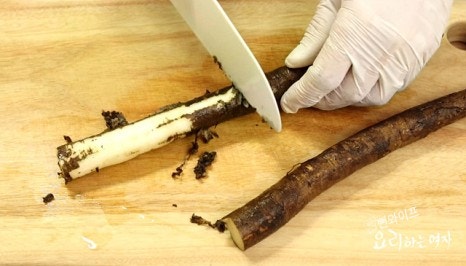
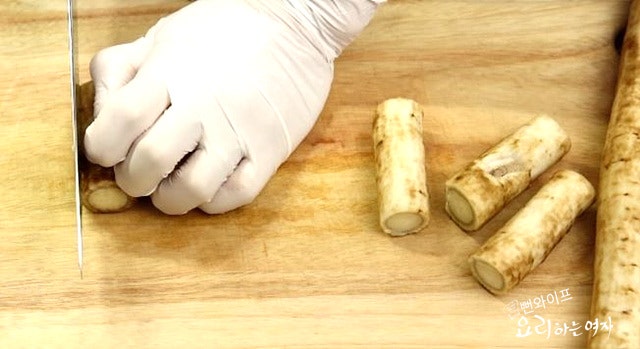
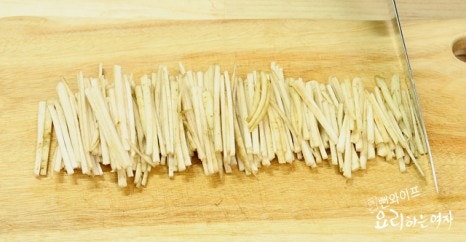
2 roots of burdock root weigh 300 g, which becomes 270 g after cleaning.
Scrape the skin off the burdock root using a knife.
Rinse under running water, cut into lengths of about 5 cm, then julienne into strips about 2 mm thick.
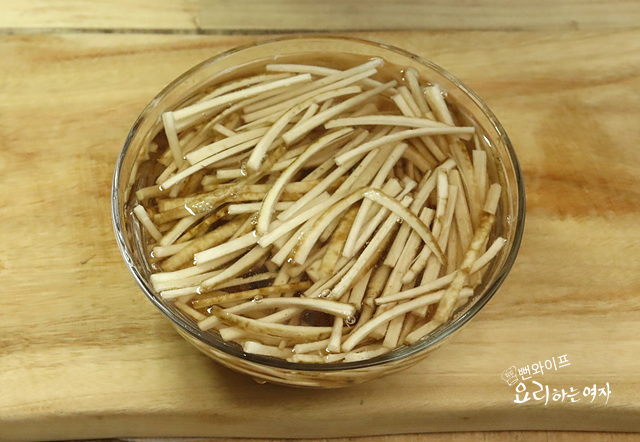
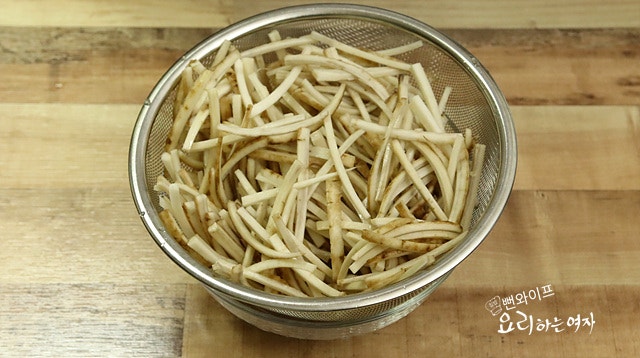
Submerge the pieces in water as you slice them. Once everything is cut, rinse under running water and drain.
It is completely fine if it browns, since it will be braised in a dark soy sauce seasoning.
Stir-fry with seasonings
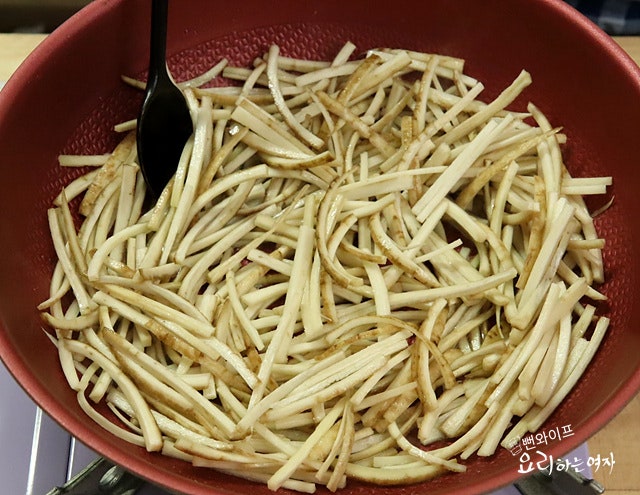
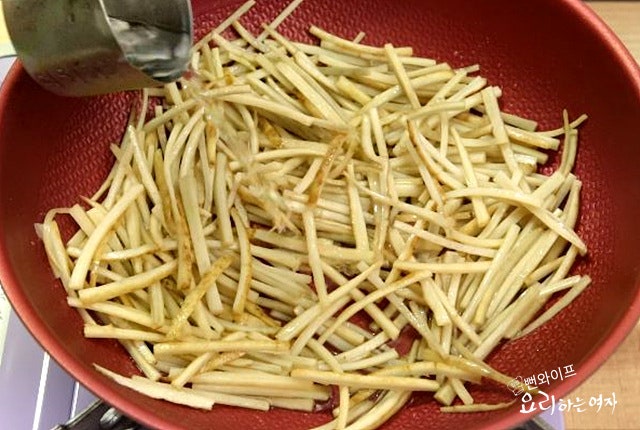
Heat a pan, add a generous swirl of cooking oil, and stir-fry the burdock root.
Once the oil coats the burdock root and the surface turns translucent, pour in 1 cup of water and...
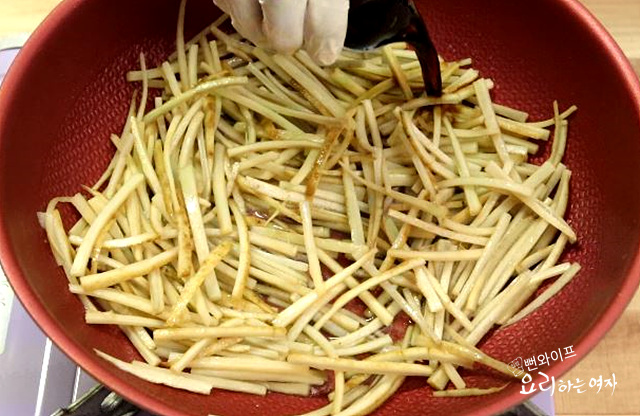
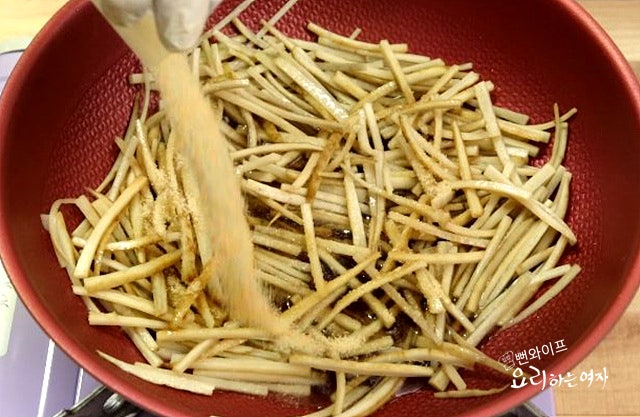
Add 4 tbsp regular soy sauce (jin-ganjang), 2 tbsp sugar, and 2 tbsp mirin (cooking rice wine).
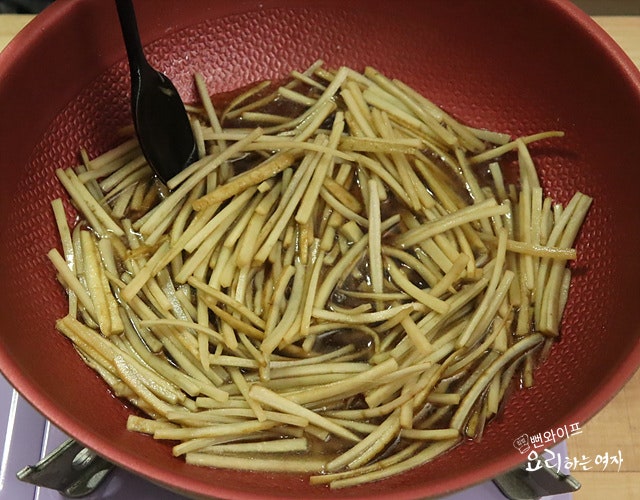
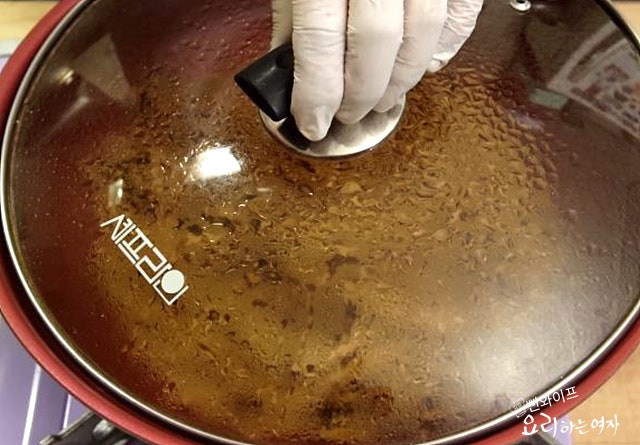
Mix thoroughly, and when the liquid comes to a rolling boil, cover with a lid and let it steam over medium-low heat so the burdock root cooks tender.
Stir occasionally to check how tender it is.
If the burdock root feels a bit thick, simply add more water as you go and stir-fry until fully cooked.
Braise down
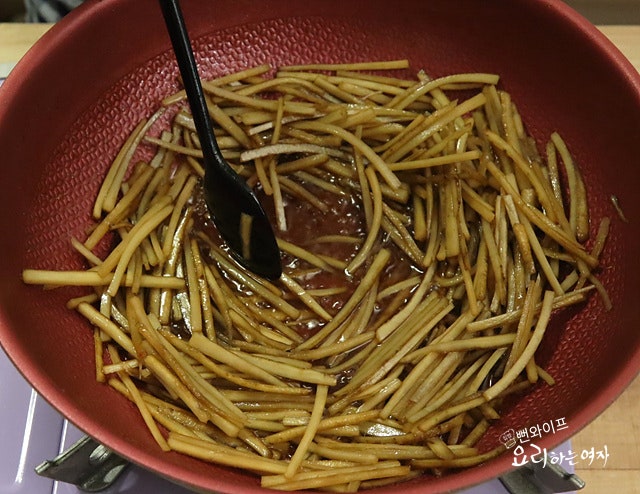
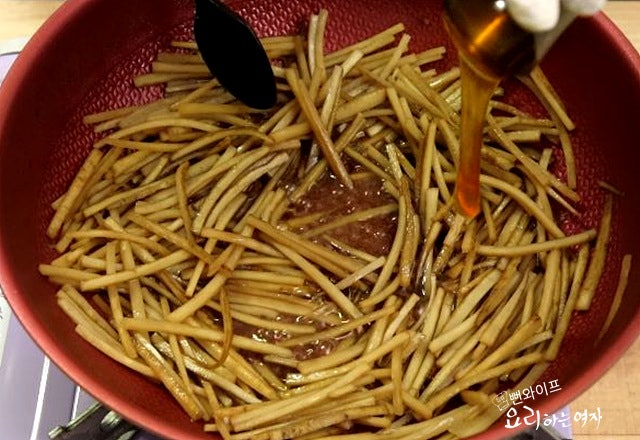
Once the burdock root is tender, remove the lid and stir-fry until the liquid reduces down, then add 3 tbsp rice syrup (jocheong) and braise until glossy.
I used rice syrup for the color, but corn syrup or oligosaccharide syrup is also fine.
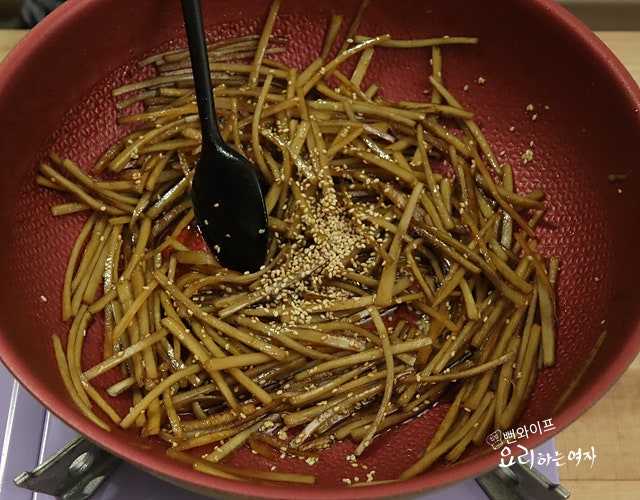
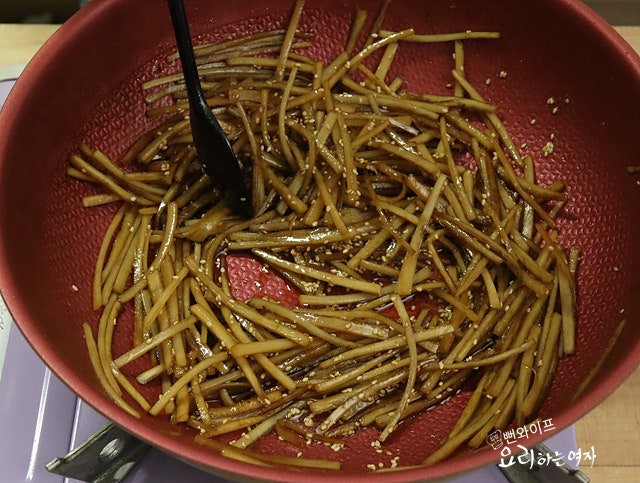
When about 2 to 3 tbsp of liquid remains, turn off the heat, stir in the toasted sesame oil and toasted sesame seeds, and it is done.
 Ppunwife's tips
- I skipped the blanching step to keep the burdock root's natural fragrance intact. For this reason, pouring in plenty of seasoning and water to braise it slowly yields an aromatic and delicious ueong jorim.
- If the burdock root feels a bit thick, simply add more water as you go and cook until it is tender.
FAQ
Is it okay to braise burdock root without blanching it first?
To preserve its natural aroma, it is cooked without blanching. Simply add plenty of water and seasoning and braise it gently, and it will turn out wonderfully delicious.
The julienned burdock root turned brown, is that okay?
Since this dish is braised down in a rich soy sauce seasoning, browning during preparation is not a problem at all.
Can I use a different sweetener instead of rice syrup?
Rice syrup is used for its deep color, but you can swap it with corn syrup or oligosaccharide syrup according to your preference.
What should I do if the burdock root is still tough and not fully cooked?
If the burdock root was cut on the thicker side, add a little extra water during braising and continue cooking until tender.