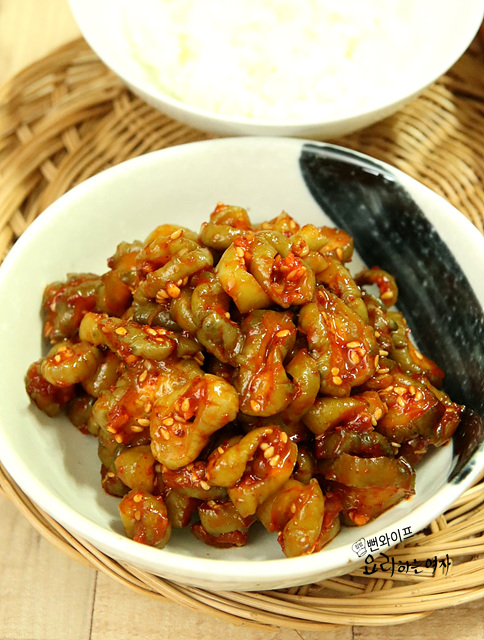
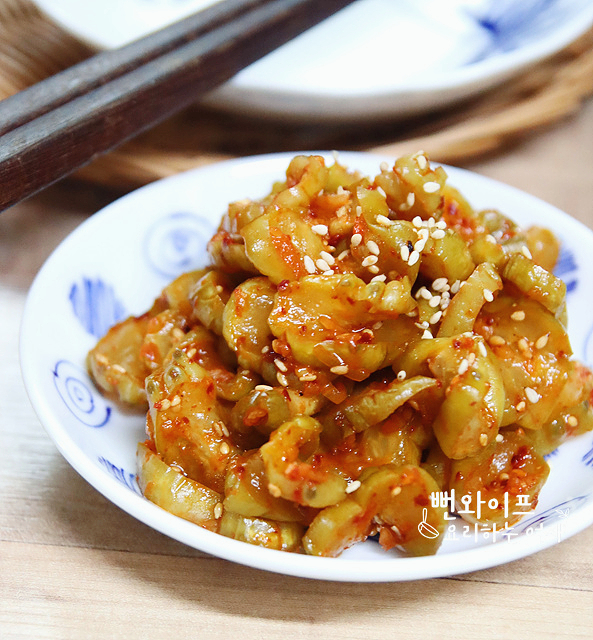
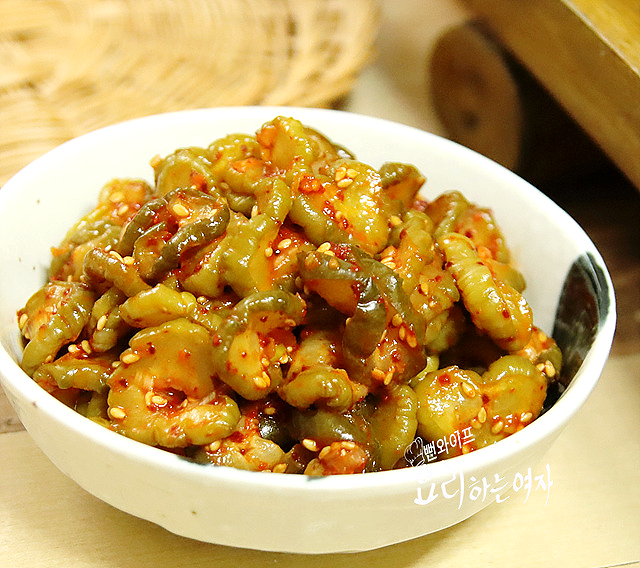
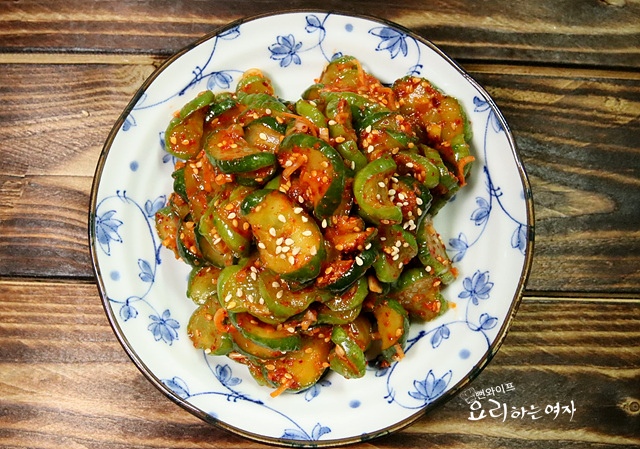
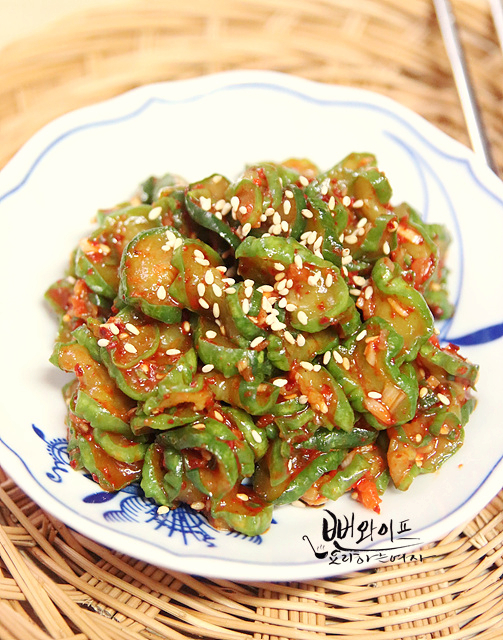
Crispy Oiji Muchim (Seasoned Pickled Cucumbers)
A crunchy side dish made by slicing pickled cucumbers and tossing them in a sweet and spicy seasoning.
Translated from Korean by AI and not yet checked by a native speaker. Amounts and numbers are taken directly from the original recipe. Read the Korean original →
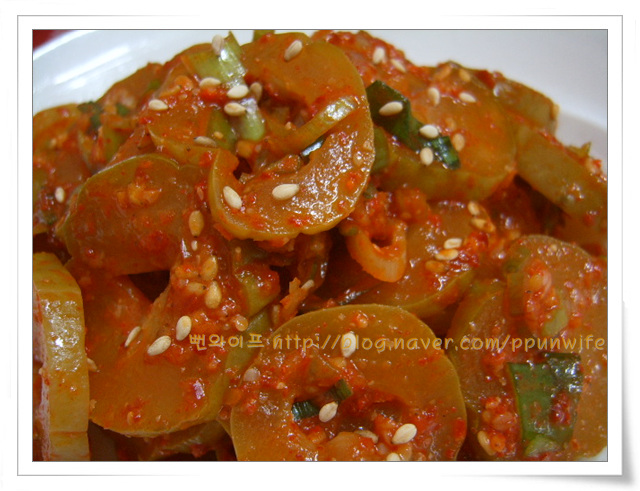
A sweet and spicy side dish made using homemade pickled cucumbers made from firm Korean cucumbers. Rinse off excess salt, squeeze out the moisture with a clean cloth, and toss with seasonings to highlight their signature refreshing taste and crisp, crunchy texture.
- Servings
- about 2–3 servings
- Cook time
- 10 minprep not included
- Difficulty
- Medium
- Spiciness
- Mildly spicy
Ingredients
Pickled cucumber ingredients
- Korean cucumber (joseon-oi)10
- Coarse sea salt1.5 cups
- Water17 cups
Seasoned pickled cucumbers
- Pickled cucumber (oiji)2, 200 g
- Gochugaru (Korean chili flakes)1 tbsp
- Sugar1 tsp
- Minced green onion2 tbsp
- Minced garlic1 tsp
- Toasted sesame oil0.5 tbsp
- Ground toasted sesame seeds1 tsp
- The best cucumbers for making oiji are Korean cucumbers (joseon-oi); they have a pretty color, fewer seeds than spiny cucumbers, and a firm surface that keeps them crunchy for a long time.
Steps
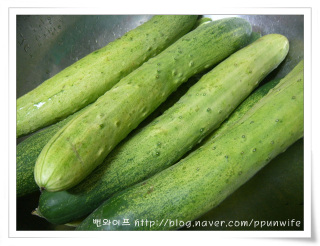
1. The best cucumbers for making oiji are Korean cucumbers (joseon-oi).
When made into oiji, they keep a pretty color and have fewer seeds than spiny cucumbers.
Also, the surface is firm, so you can enjoy a crunchy oiji texture for a long time.
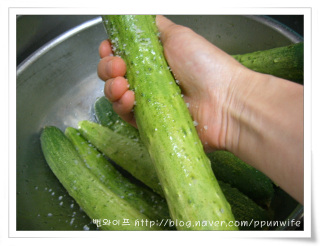
2. Wash the cucumbers by rubbing them with coarse sea salt.
Rinse thoroughly in water, drain the moisture, and place them in a container.
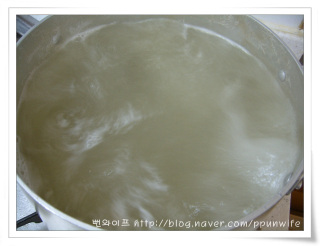
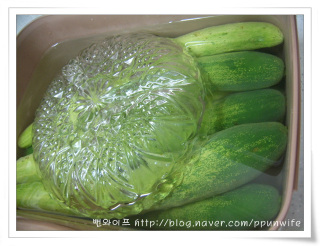
3. Pour in 1.5 cups of coarse sea salt and 17 cups of water, and bring to a rolling boil.
4. Pour the boiling brine directly into the container over the cucumbers.
Weigh the cucumbers down so they do not float. Once the water cools, close the lid and let ferment at room temperature for about 3 days.
(When pouring boiling water, use a glass container or earthenware pot rather than plastic; once the water cools, you can transfer them to another container to ferment.)
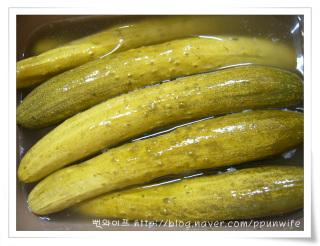
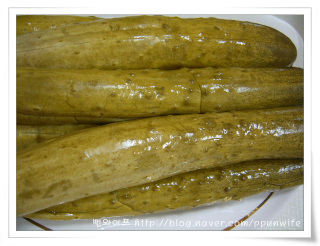
5. After 3 days, drain only the brine into a pot and bring it to a rolling boil.
Boil for over 10 minutes, cool it completely this time, pour it back over the cucumbers, and ferment again at room temperature for about 5 days.
If you repeat boiling, cooling, and pouring the brine 2-3 times, you will have well-pickled oiji in about ten days or 2 weeks.
Store the well-fermented oiji submerged in the brine in the refrigerator as you eat them.
6. On the 12th day, I took out the oiji. They seem properly and nicely fermented.
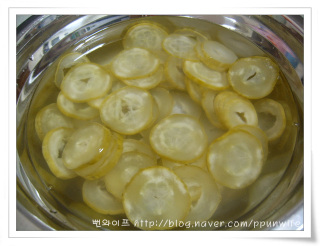
7. To make seasoned pickled cucumbers, first slice 2 pickled cucumbers (oiji) into rounds and rinse in water.
If the oiji is too salty, soak it in fresh water for at least 30 minutes, changing the water occasionally to draw out the salt.
With the brine proportions above, the seasoning should turn out just right to eat.
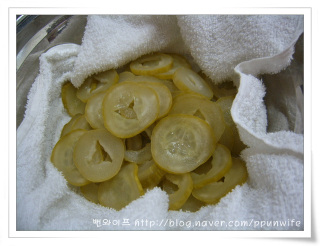
8. Squeeze out the moisture with a clean, dry dishcloth.
10
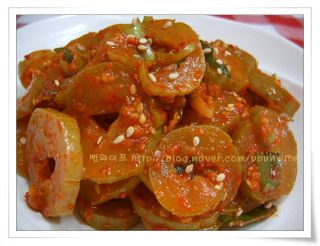
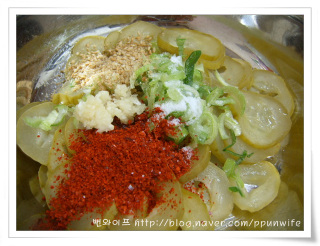
9. Combine the oiji with 1 tbsp gochugaru (Korean chili flakes), 1 tsp sugar, 2 tbsp minced green onion, 1 tsp minced garlic, 0.5 tbsp toasted sesame oil, and 1 tsp ground toasted sesame seeds, and gently toss together with your hands. The refreshing cucumber flavor without added vinegar is wonderful.
(Depending on your taste, you can add a little vinegar for a tangy kick.)
10. Delicious seasoned pickled cucumbers are complete. Try making cold soup with this oiji as well.
 Ppunwife's tips
- When pouring boiling water, use a glass container or earthenware pot rather than plastic; once the water cools, you can transfer them to another container to ferment.
- Store the fully fermented oiji submerged in the brine in the refrigerator as you eat them.
- If the oiji is too salty, soak it in fresh water for at least 30 minutes, changing the water occasionally to draw out the salt.
- Depending on your taste, you can add a little vinegar for a tangy kick.
FAQ
Which type of cucumber is best for making oiji?
It is best to use Korean cucumbers (joseon-oi). They have a nice color, fewer seeds than spiny cucumbers, and a firm surface that preserves their crunchy texture for a long time.
What should I do if the oiji is too salty?
If the oiji is too salty, slice it and soak it in fresh water for at least 30 minutes, changing the water occasionally to draw out the excess salt.
Can I add vinegar to the seasoning?
Yes, depending on your taste, you can add a small amount of vinegar to give it a tangy flavor.
How should I store the finished oiji?
Keep the properly fermented oiji submerged in their brine in the refrigerator, taking them out as needed to eat.