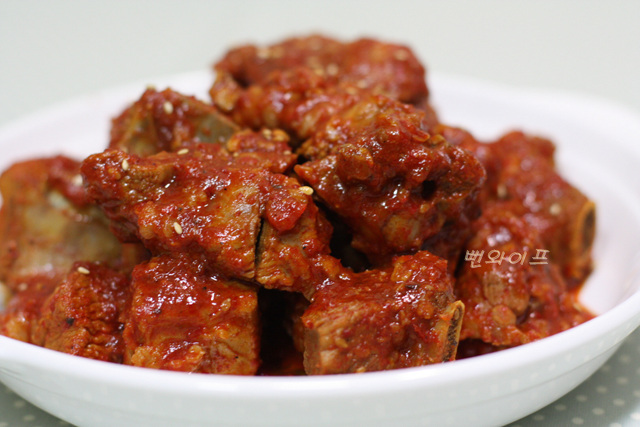
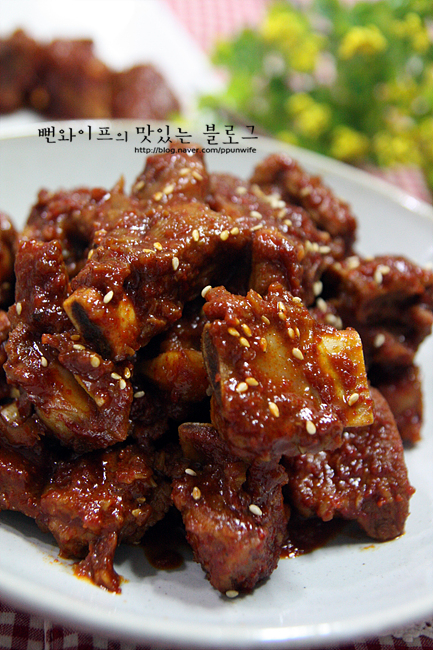
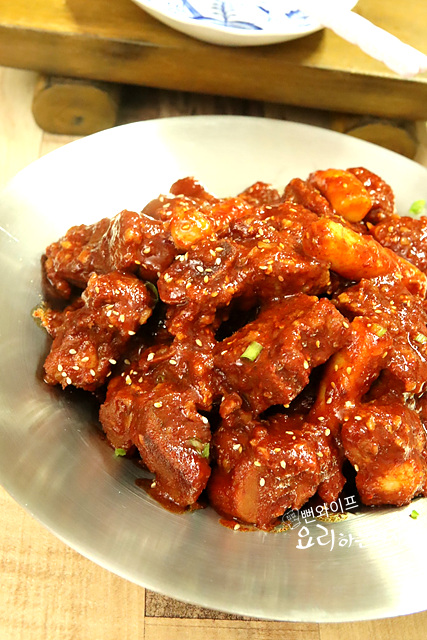
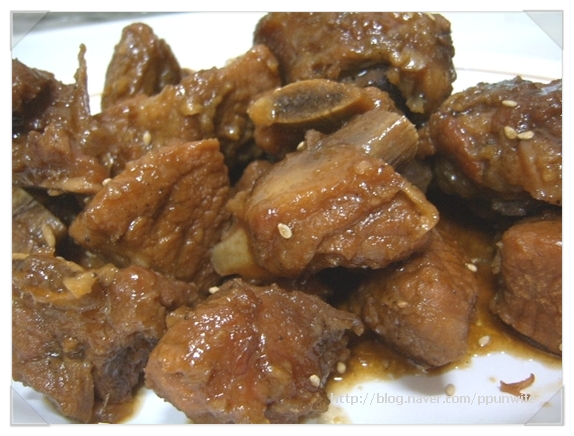
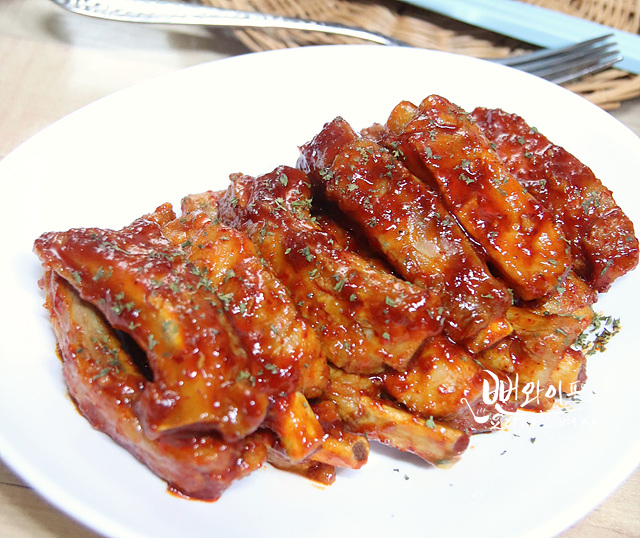
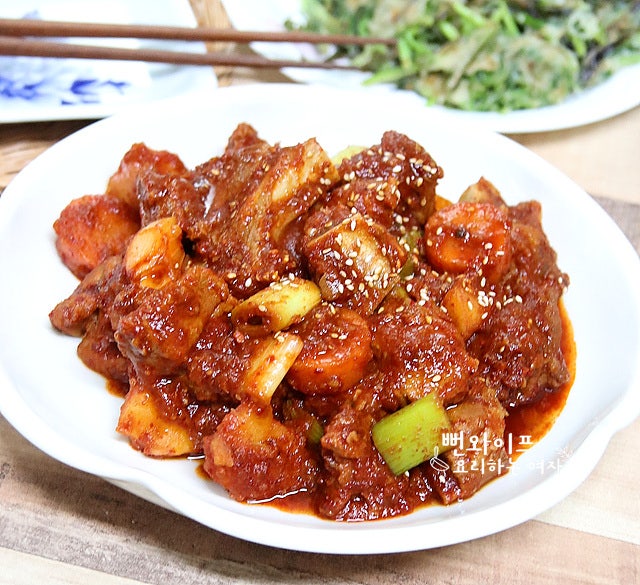
Spicy Dwaeji Galbijjim (Braised Pork Ribs)
A spicy braised pork rib dish trimmed of excess fat and cooked down with Cheongyang chili peppers and gochugaru.
Translated from Korean by AI and not yet checked by a native speaker. Amounts and numbers are taken directly from the original recipe. Read the Korean original →
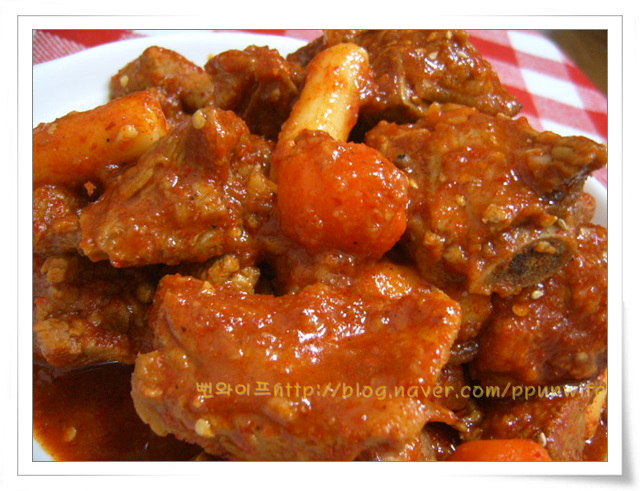
Pork ribs are trimmed of excess fat and blanched with aromatics to remove any off-odors, then braised in a spicy sauce made with grated Korean pear and Cheongyang chili peppers. Simmering them gently in kelp broth creates a tender, chewy texture and a deep savory flavor, while rice cakes and carrots make it a hearty meal.
- Servings
- 3–4 servings
- Difficulty
- Hard
- Spiciness
- Very spicy
Ingredients
Ingredients
- Pork ribs1 kg
- Onion1 (medium)
- Carrot1 (medium)
- Cheongyang chili pepper (hot green chili)4
- Tteokbokki rice cakesabout 10
- Kelp broth2 cups
For boiling the meat
- Water5 cups
- Bay leaves3-4 leaves
- Ground black pepper20 peppercorns
- Garlic7 heads
- Soju1/2 cup
Seasoning
- Gochugaru (Korean chili flakes)2 tbsp
- Fine gochugaru (Korean chili flakes)2 tbsp
- Regular soy sauce (jin-ganjang)3 tbsp
- Oyster sauce2 tbsp
- Minced garlic3 tbsp
- Corn syrup (mulyeot)3 tbsp
- Mirin (cooking rice wine)3 tbsp
- Ginger powder0.5 tsp
- Korean pear1 (grated)
- Onion1/2 (grated)
- Instead of pear juice, you can also use apple juice, kiwi juice, or syrup from canned fruit.
- If you like potatoes or sweet potatoes, you can add about 2 medium ones instead of rice cakes.
Steps
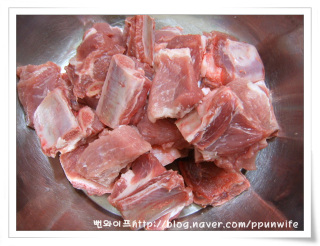
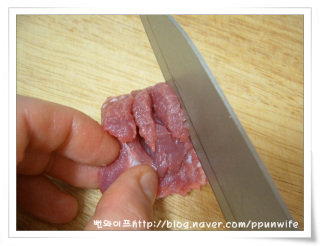
1. Remove all the excess fat from the pork ribs. Out of 1.2kg, 200g was pure fat.
(If you save the fat rendered from pork ribs and add a little bit when boiling aged kimchi stew, it tastes delicious.)
Cut into bite-sized pieces.
2. Score thick pieces of meat or prick them all over with a fork or the tip of a knife so the seasoning absorbs well.
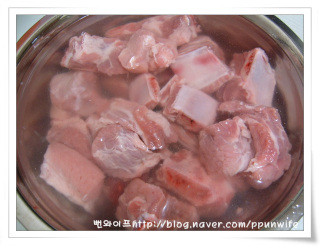
3. Soak in water, changing the water occasionally, until blood no longer seeps out.
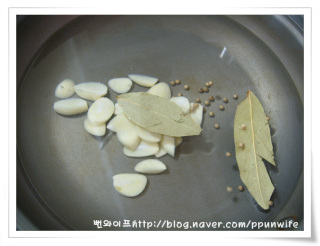
4. Add 5 cups water, 3-4 bay leaves, 20 black peppercorns, 7 heads of garlic, and 5 tbsp soju, then bring to a rolling boil.
(Adding doenjang or instant coffee to the boil also goes a long way in removing the gamy smell of the meat.)
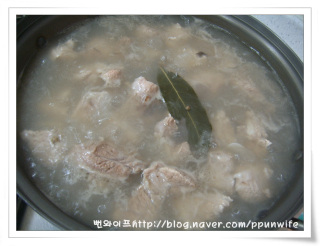
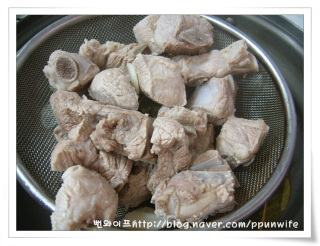
5. Add the meat and boil. Once it comes back to a boil, cook for 2-3 minutes.
This is just to remove excess fat and off-odors, so do not boil it for too long.
6. Rinse once in clean water and drain.
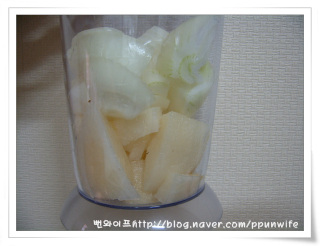
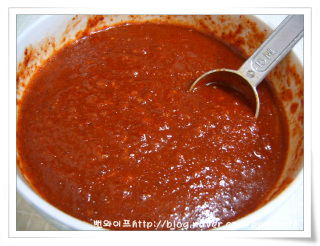
7. Here are the pear and onion for the marinade. You can also grind the Cheongyang chili peppers together with them.
It is best to strain them through a sieve and use only the clear juice, as otherwise the marinade becomes too thick.
(You can also use kiwi, apple, or syrup from canned fruit to help tenderize the meat.)
8. Mix all the seasoning ingredients according to the recipe amounts.
10
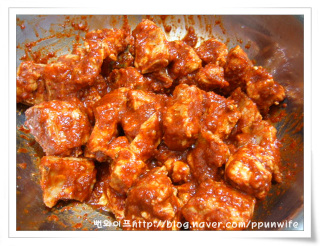
9. Place the meat and the prepared marinade in a bowl, mix thoroughly to coat, and let it marinate in the refrigerator overnight.
You can also marinate it in the morning to eat for dinner.
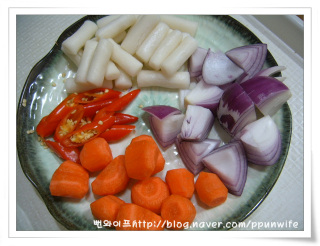
10. Here are the vegetables and rice cakes that go into the galbijjim.
Cut the vegetables into large chunks; I forgot to add the Cheongyang chili peppers to the blender, so I will add them with the vegetables when braising.
I always add rice cakes to spicy braised dishes, but you can leave them out if you prefer.
If you like potatoes or sweet potatoes, you can add about 2 medium ones instead of rice cakes.
11
12
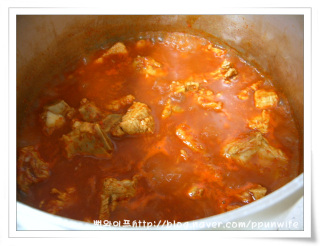
11. Place the marinated meat in a pot, pour in 2 cups kelp broth, cover with a lid, and simmer gently.
(Kelp broth is made by soaking dried kelp in cold water for over 30 minutes, then briefly simmering it to extract the flavor.)
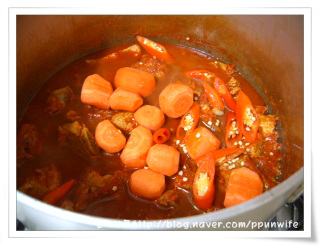
12. After simmering for about 30 minutes, once the liquid has reduced by half, add the carrots (or potatoes) and Cheongyang chili peppers, and braise uncovered, stirring occasionally.
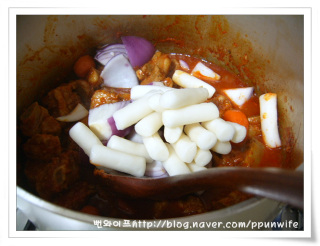
At the end, add the rice cakes and onion, and braise until the sauce is reduced and slightly thickened.
If you prefer more broth, reduce the braising time.
 Ppunwife's tips
- Score thick pieces of meat or prick them all over with a fork or the tip of a knife so the seasoning absorbs well.
- Adding doenjang or instant coffee to the boil also goes a long way in removing the gamy smell of the meat.
- It is best to strain them through a sieve and use only the clear juice, as otherwise the marinade becomes too thick.
- If you prefer more broth, reduce the braising time.
FAQ
Can I substitute other ingredients for the pear in the marinade?
Instead of pear juice, using apple juice, kiwi juice, or syrup from canned fruit will also help tenderize the meat.
Is there another way to remove off-odors when blanching the meat?
Stirring a little doenjang or instant coffee into the boiling water also effectively reduces the meat's gamy smell.
Can I add other ingredients instead of rice cakes?
If you do not care for rice cakes or want an alternative, adding about 2 medium potatoes or sweet potatoes works great.
Why strain the pureed fruit and onion through a sieve when making the marinade?
Straining to use only the clear juice prevents the marinade from becoming excessively thick.