Hearty and Tender Dwaeji Galbijjim (Braised Pork Ribs)
Tender braised pork ribs, parboiled first to remove excess fat and odor, then simmered in a spicy, savory sauce.
Translated from Korean by AI and not yet checked by a native speaker. Amounts and numbers are taken directly from the original recipe. Read the Korean original →
The sauce is made by pureeing apple and Cheongyang chili peppers and straining them through a sieve for a clean, sharp heat without any grittiness. Parboiling the ribs first with aromatics cuts excess fat and gamey odors, and braising them in a pressure cooker makes the meat melt-in-your-mouth tender.
- Servings
- about 3–4 servings
- Difficulty
- Medium
- Spiciness
- Mildly spicy
Ingredients
Ingredients
- Pork ribs750 g
Seasoning
- Soy sauce5 tbsp
- Garlic2 tbsp
- Corn syrup (mulyeot)3 tbsp
- Mirin (cooking rice wine)3 tbsp
- Dark brown sugar1 tbsp
- Toasted sesame oil1 tbsp
- Ground black pepper1 tsp
- Ginger1 tsp
- Apple1 (pureed)
- Cheongyang chili pepper (hot green chili)3 (pureed)
- Onion1/2 (pureed)
Boiling liquid
- Water3 cups
- Bay leaves2-3 leaves
- Ground black pepper20 peppercorns
- Garlic5 cloves
- Soju5 tbsp
- Cut the pork ribs into bite-sized pieces and soak them in water to draw out the blood, changing the water until it runs clear. Pricking the meat here and there with a fork or the tip of a knife helps the marinade soak in well.
- If you are sensitive to spicy food or cooking for children, it is best to omit the Cheongyang chili pepper.
- If your family loves vegetables, feel free to add plenty of potatoes or other vegetables.
Steps
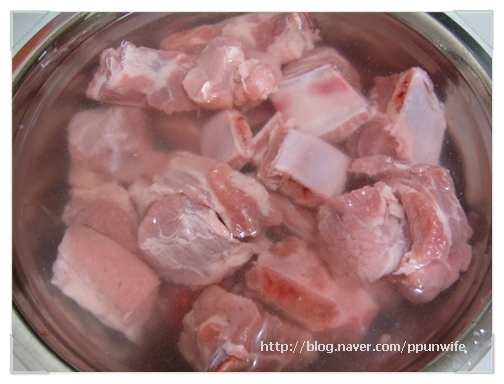
Cut the pork ribs into bite-sized pieces and soak them in water to draw out the blood.
Change the water until no more blood comes out.
Pricking the meat here and there with a fork or the tip of a knife helps the seasoning soak in well.
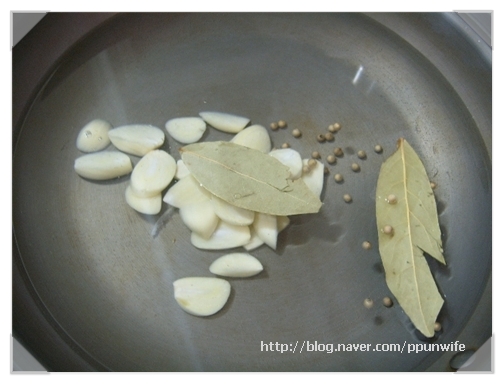
Pour water into a pot and add the bay leaves, garlic, whole black pepper, and soju, then bring to a rolling boil.
I sliced the garlic into pieces.
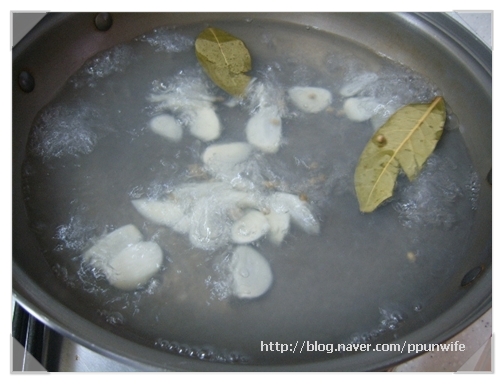
Once the water begins to boil rapidly...
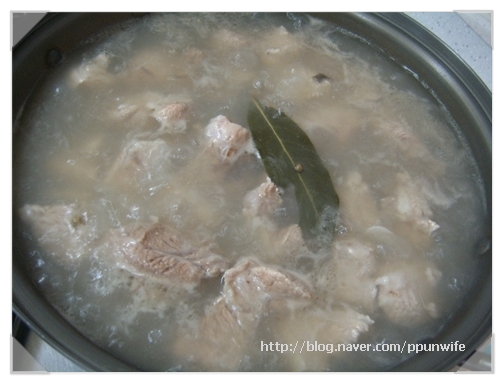
Add the drained ribs and boil for about 5 minutes.
This removes the excess fat and gamey odor from the ribs, making the final dish much cleaner and lighter in taste.
Do not boil them for too long.
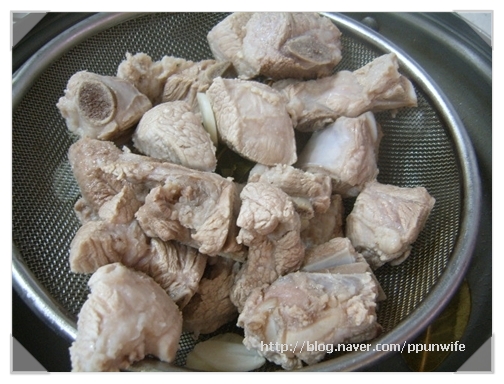
Transfer the boiled meat to a strainer and drain the water.
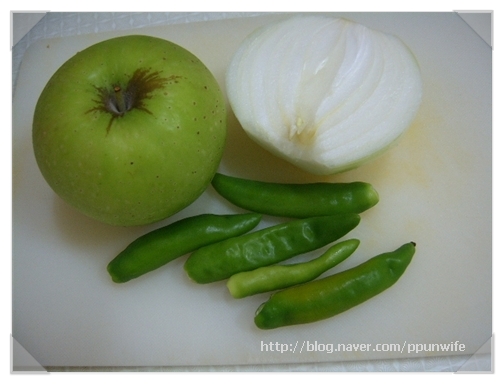
Blend the apple, onion, and Cheongyang chili peppers to mix into the seasoning sauce.
I only had green apples at home, so I made do with those.
If you dislike spicy food, leave out the chili peppers. It turned out spicier to eat than it looks.
It suited our taste, but for homes with children, it would be better to omit the chili peppers.
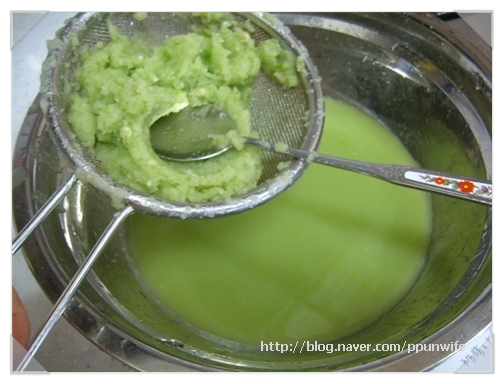
I pureed the apple, onion, and chili peppers in a blender and strained the pulp through a sieve.
Using the pulp as is makes the sauce overly thick and heavy, which I do not prefer.
I was worried about using green apples, but they brown anyway, so it doesn't matter.
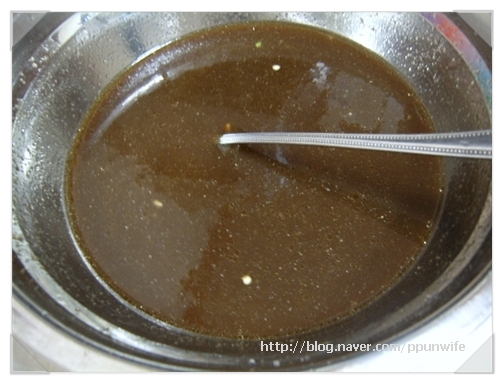
Add the seasoning ingredients listed above and mix well.
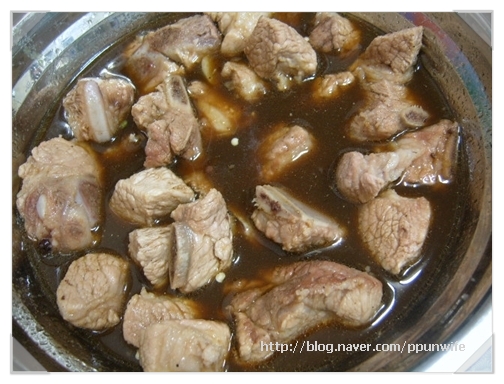
Add the meat to the marinade and let it marinate for at least half a day.
I always let mine marinate overnight before cooking.
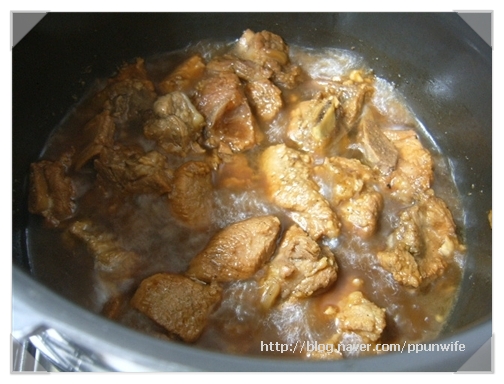
I cooked them under pressure in a pressure cooker for 3-4 minutes, then opened the lid and braised until the liquid simmered down.
If your ribs are thick, cook them like I did; if they are thin, you can simply put them in a pan and simmer them down from the start.
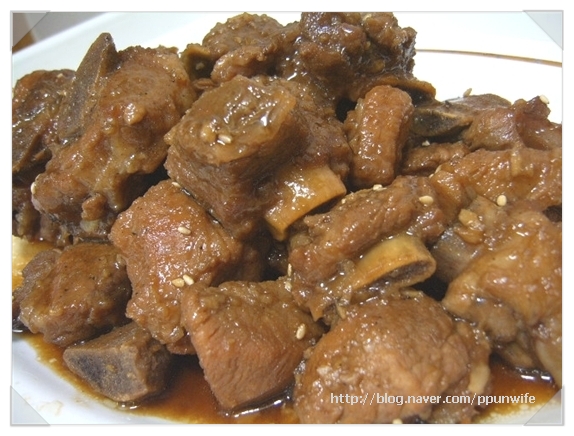
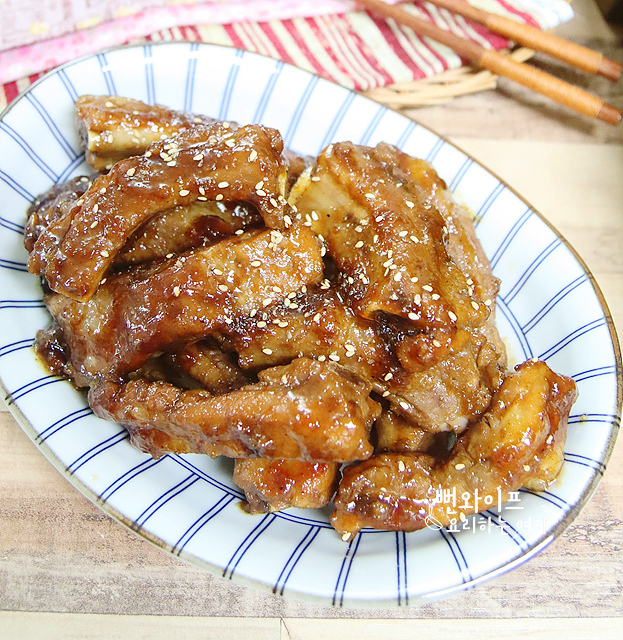
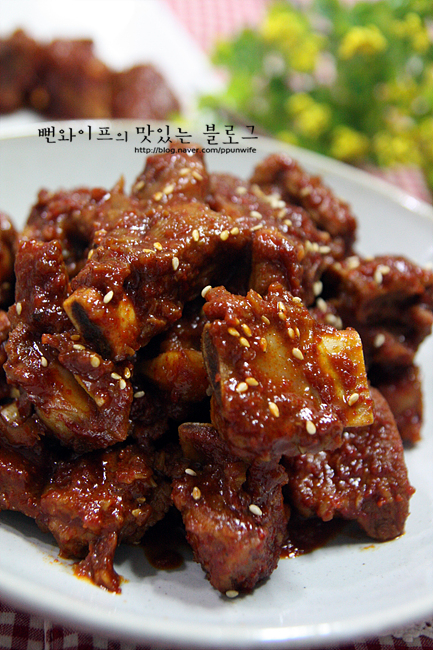
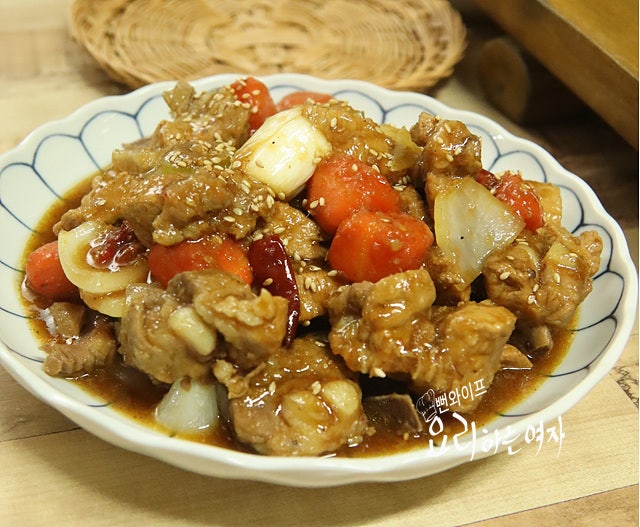
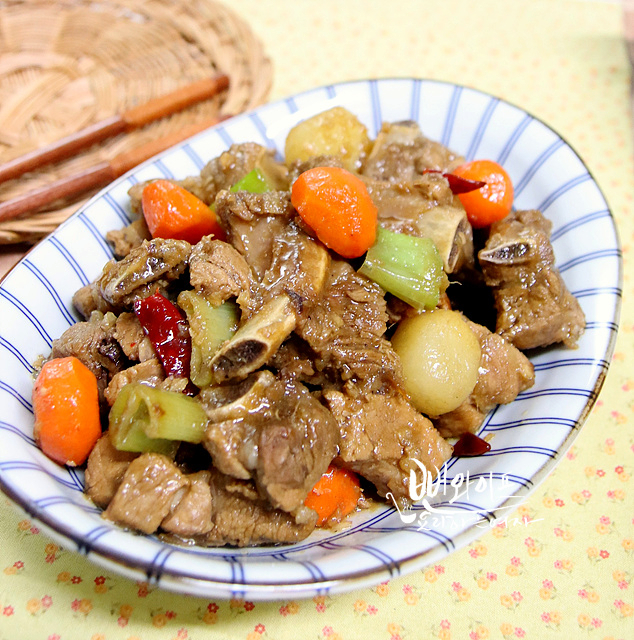
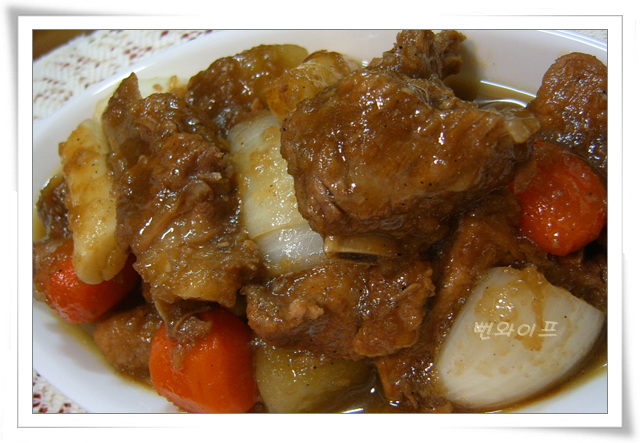
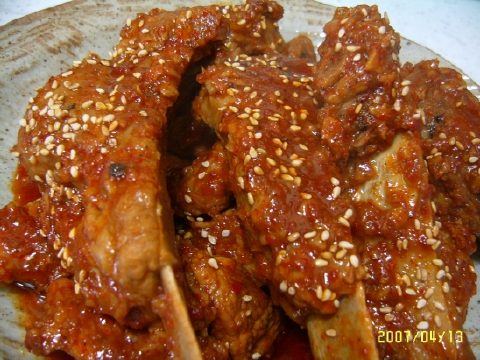
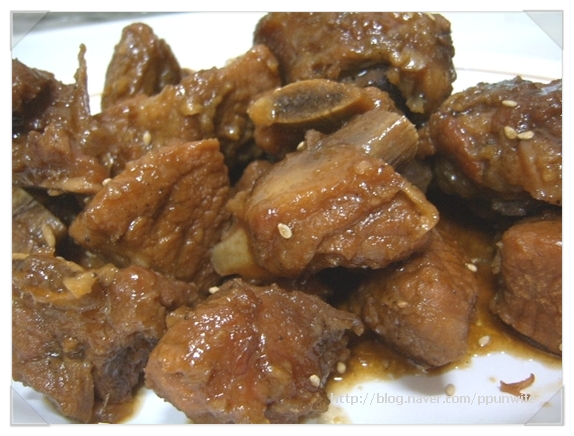
Here is the finished braised pork ribs. It might look a bit plain with only meat, but in our house, whenever I add potatoes and other vegetables, everyone only eats the meat and leaves the vegetables behind. I'd end up eating the leftover vegetables alone until I got tired of them and threw them out.
If your family likes vegetables, feel free to add plenty.
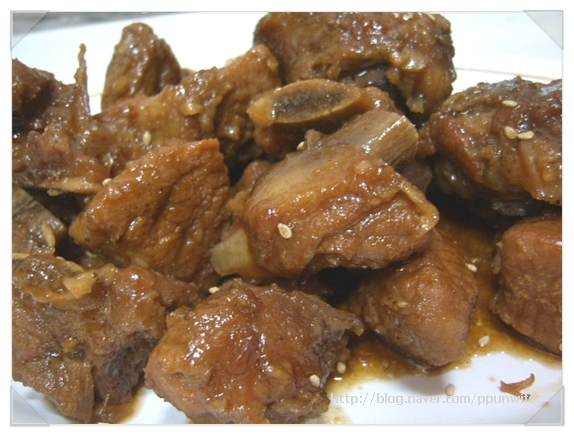
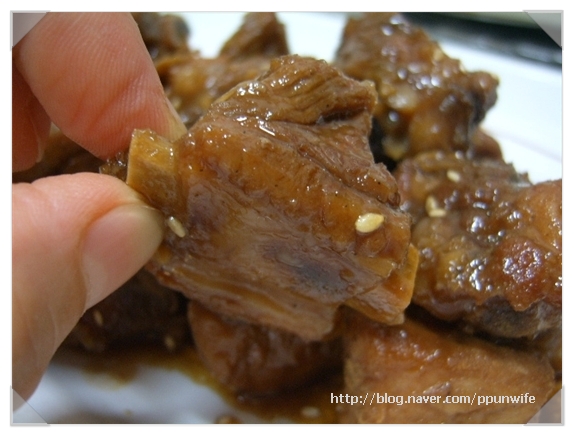
Tear into a piece of tender and sweet dwaeji galbijjim (braised pork ribs).
Yum yum!
Take care of your health with delicious cooking.
Please no more scrapbooking without leaving a comment...
If you like pork ribs, please hit like...
Author: Ppunwife (ppunwife) http://blog.naver.com/ppunwife/140041431465
 Ppunwife's tips
- Pricking the meat here and there with a fork or the tip of a knife helps the seasoning soak in well.
- Parboiling the meat in boiling water removes excess fat and odors, making the flavor much cleaner and lighter.
- Blending the apple, onion, and chili pepper and straining the pulp through a sieve keeps the sauce clean without making it overly thick.
- If the ribs are thick, cook them in a pressure cooker; if they are thin, you can braise them down in a pan from the beginning.
FAQ
What should I do if someone cannot eat spicy food or if I am cooking for kids?
Omit the Cheongyang chili peppers from the seasoning sauce for a mild flavor.
Why do you strain the blended apple and vegetables through a sieve?
Adding the pulp directly makes the braising liquid thick and pasty, so only the strained juice is used for a clear, smooth sauce.
Can I use a regular pan or pot if I don't have a pressure cooker?
If the ribs are thin, you can place the meat and sauce directly into a regular pan and braise them over low heat until the liquid reduces.