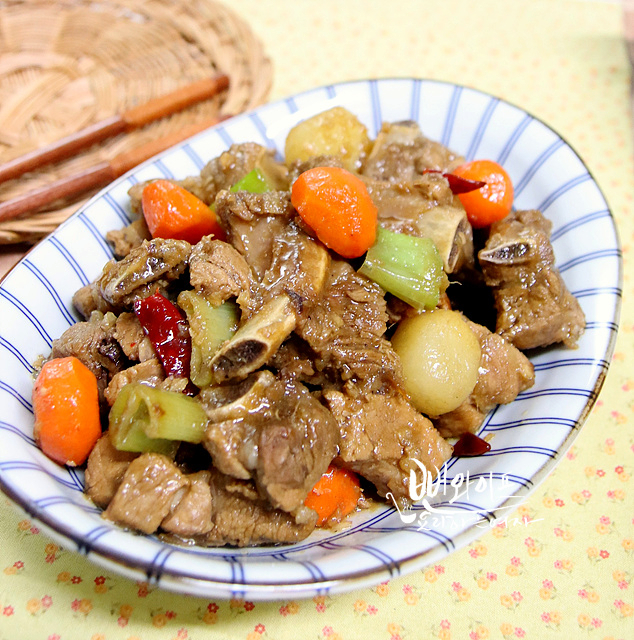
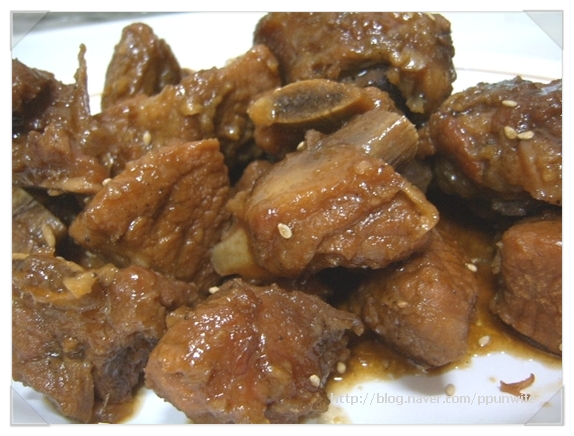
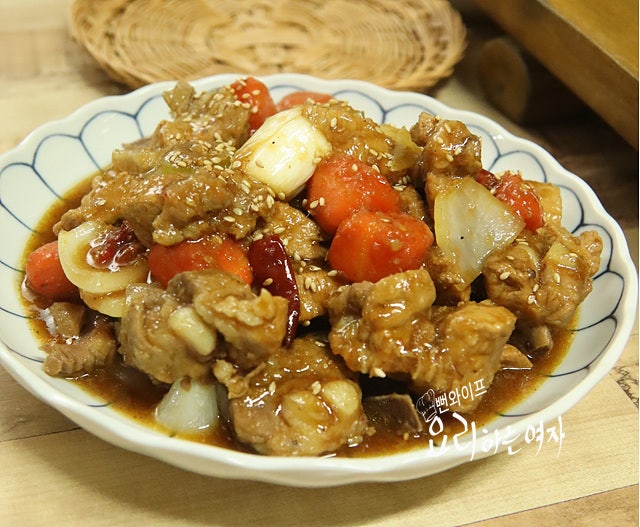
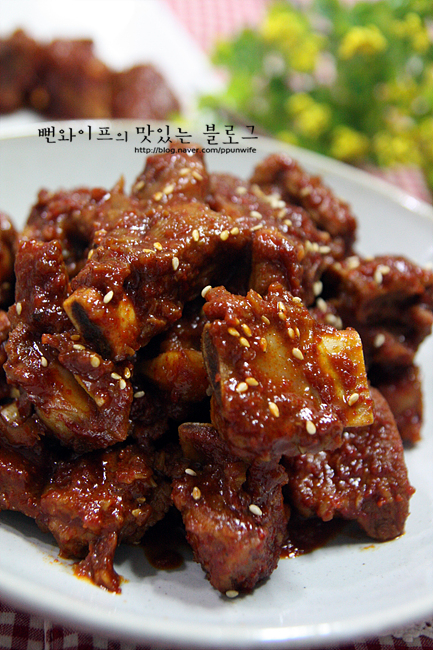
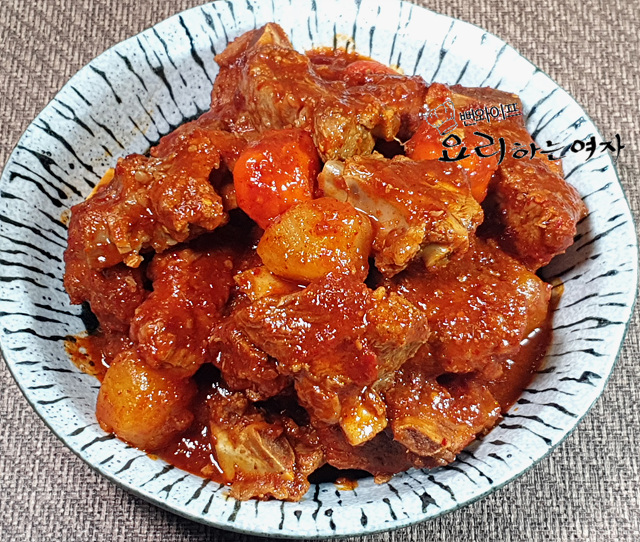
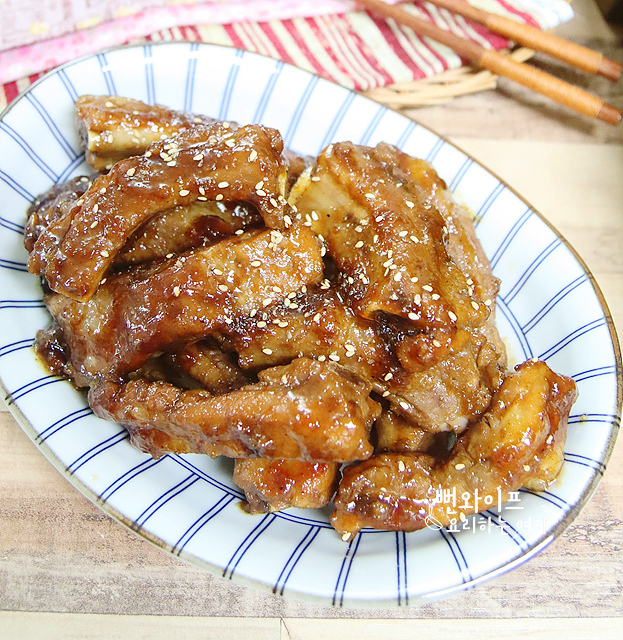
Tender Dwaeji Galbijjim (Braised Pork Ribs)
Tender braised pork ribs for 3-4 servings, marinated in apple and onion juice with no gaminess.
Translated from Korean by AI and not yet checked by a native speaker. Amounts and numbers are taken directly from the original recipe. Read the Korean original →
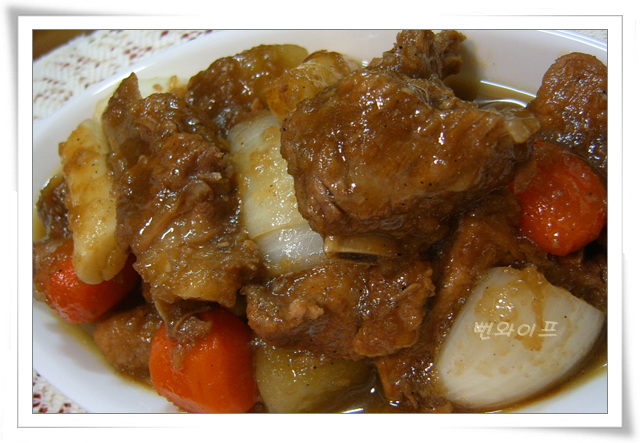
This braised pork rib dish marinates the meat in pureed apple and onion for a clean yet deep, savory flavor. The key is briefly blanching the ribs in boiling water with aromatics to cleanly eliminate excess grease and any unpleasant odors. Braised generously with radish, carrots, and chewy rice cakes, it makes a wonderful centerpiece for dinner guests or housewarmings.
- Servings
- 3–4 servings
- Difficulty
- Hard
- Spiciness
- Not spicy
Ingredients
Ingredients
- Pork ribs800 g (for braising)
- Carrot1/2
- Korean radish (mu)150 g
- Onion1/2
- Rice cakes10
- Kelp broth1.5 cups (1 1/2 cups)
For blanching the meat
- Bay leaves2-3
- Whole black peppercorns20 peppercorns
- Whole garlic cloves5 cloves
- Soju1/3 cup (4-5 tbsp)
Seasoning
- Regular soy sauce (jin-ganjang)5 tbsp
- Minced garlic2 tbsp
- Corn syrup (mulyeot)1 tbsp
- Dark brown sugar1 tbsp
- Mirin (cooking rice wine)2 tbsp
- Toasted sesame oil1 tbsp
- Ginger juice0.5 tbsp
- Ground black pepper0.5 tsp
- Apple1
- Onion1/2
- Soak the ribs in cold water for about 2-3 hours, changing the water occasionally, until blood no longer seeps out.
- You can use pear instead of apple, or use half an apple and half a pear together.
- Instead of rice cakes, you can also use potatoes, sweet potatoes, chestnuts, jujubes, and more.
Steps
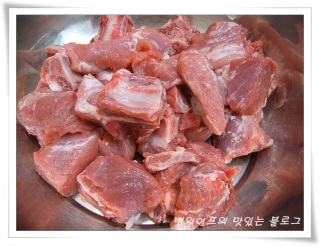
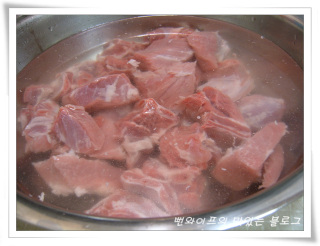
1. Remove all excess fat from the pork ribs for braising.
My 1 kg of pork ribs shrank to 800 g once all the fat was trimmed off.
Cut the pork ribs into bite-sized pieces, then
prick the thicker parts with a fork or the tip of a knife so the marinade penetrates well and they cook evenly.
2. Soak the ribs in cold water to draw out the blood.
Change the water for about 2-3 hours until blood no longer seeps out.
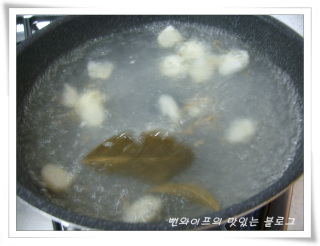
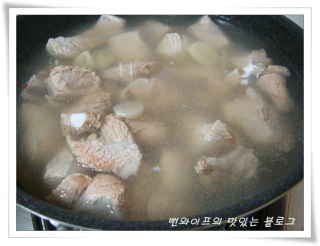
3. Pour water into a pot, add the bay leaves, sliced garlic, whole black peppercorns, and soju, and bring to a rolling boil.
(Boiling with doenjang or instant coffee also significantly helps remove any gaminess from the meat.)
4. Add the meat and boil it. Boil for 2-3 minutes once it starts boiling...
Do not boil it for too long, as this is just to remove grease and odors from the meat.
Rinse once in clean water and drain.
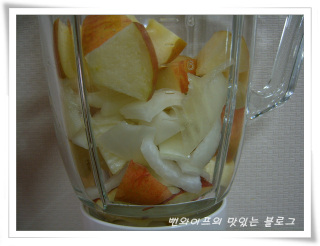
5. These are the apple and onion for the marinade.
Place 1 medium apple and 1/2 medium onion into a blender and blend until smooth.
Strain through a cheesecloth to extract only the clear juice.
You can use pear instead of apple, or use half an apple and half a pear together.
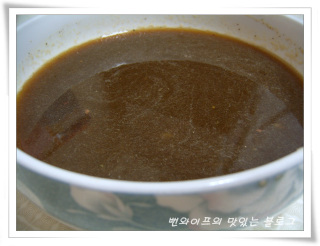
6. Add all the measured marinade ingredients, including the apple and onion juice, and mix together.
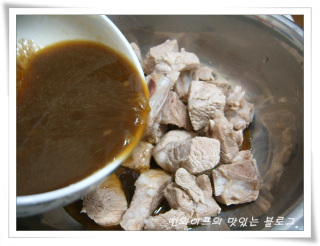
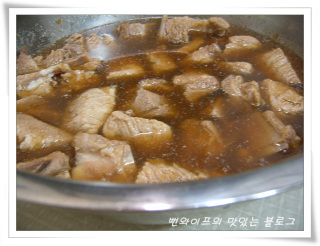
7. In a bowl, pour the prepared marinade over the meat, mix well, and marinate overnight in the refrigerator.
8. If that is difficult, you can marinate it in the morning and eat it for dinner.
10
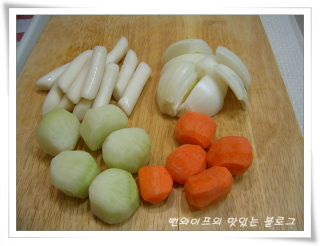
9. These are the vegetables and rice cakes to go into the braised ribs.
The Korean radish soaked in the rib sauce is truly delicious, so make sure to add it.
Dice the Korean radish and carrot, then round off the edges into spheres.
Use the trimmed scraps when making broth. Slice the onion into large pieces.
I always add rice cakes to braises and stir-fries, but if you do not like them, leave them out.
Try using potatoes, sweet potatoes, chestnuts, jujubes, and more as well.
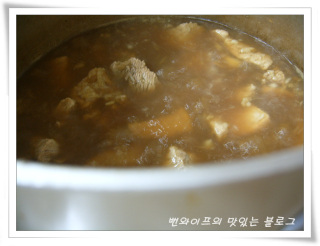
10. Pour all the meat and marinade liquid into a pot, add 1.5 cups of kelp broth, and once it begins to boil,
cover with a lid and simmer over low heat.
(Kelp broth is made by soaking dried kelp in cold water for at least 30 minutes, then briefly boiling it to extract the flavor.
If cooking the meat in a pressure cooker, omit the kelp broth or only use enough to submerge the meat.)
Pork ribs cooked in a pressure cooker are here ⇒ http://blog.naver.com/ppunwife/140041431465
11
12
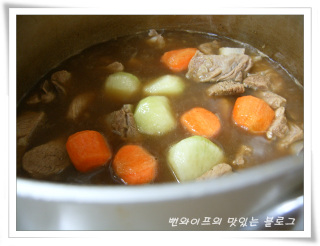
11. Boil for about 20-30 minutes until the liquid reduces by half, then add the Korean radish and carrot,
remove the lid, and braise while stirring occasionally.
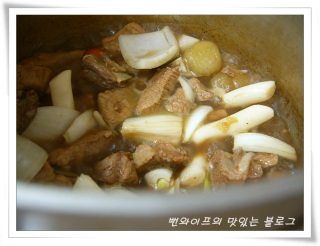
12. When the radish and carrot are almost fully cooked, add the rice cakes and onion at the end and simmer down until the sauce is shallow and reduced...
If you prefer more sauce, shorten the braising time.
 Ppunwife's tips
- Prick the thicker parts of the pork ribs with a fork or the tip of a knife so the marinade penetrates well and they cook evenly.
- Boiling with doenjang or instant coffee also significantly helps remove any gaminess from the meat.
- Do not boil it for too long, as this is just to remove grease and odors from the meat.
- Use the trimmed scraps from dicing the radish and carrot when making broth.
- If you prefer more sauce, shorten the braising time.
FAQ
Can I use other fruits instead of the apple in the marinade?
You can use pear instead of apple, or use half an apple and half a pear mixed together.
How long should I marinate the ribs?
It is best to toss them in the marinade and let them age in the refrigerator overnight. If that is difficult, marinating in the morning to cook for dinner works well too.
Are there other ingredients I can add besides radish and carrots?
Depending on your preference, you can also add potatoes, sweet potatoes, chestnuts, jujubes, and more while braising.
Are there other ways to reduce gaminess when blanching the meat?
In addition to bay leaves and garlic, dissolving doenjang or instant coffee into the boiling water when blanching helps eliminate gaminess from the meat.