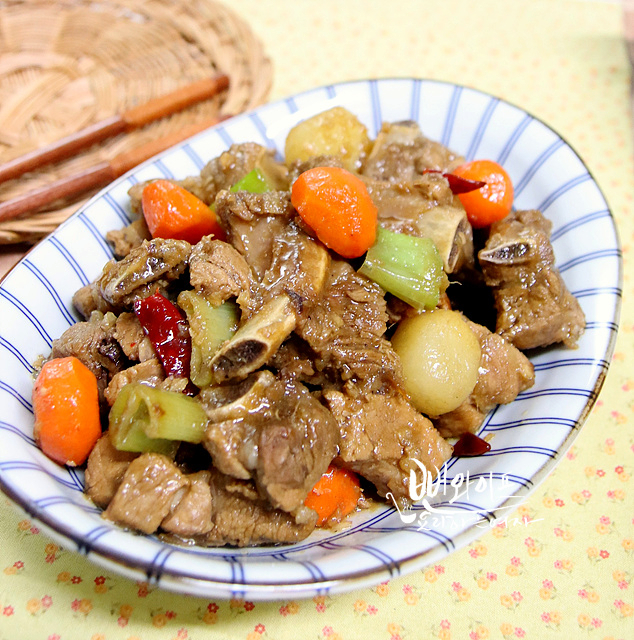
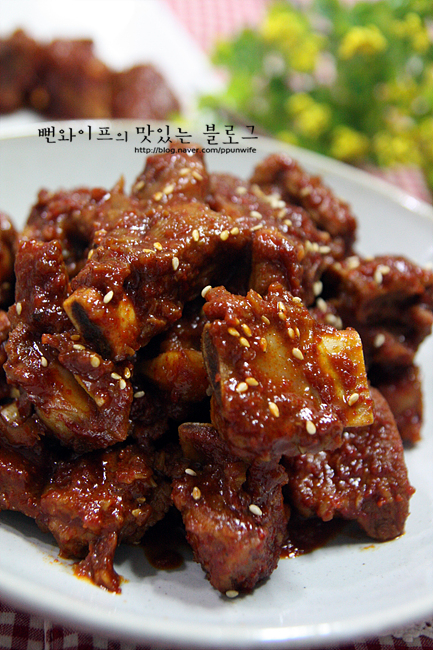
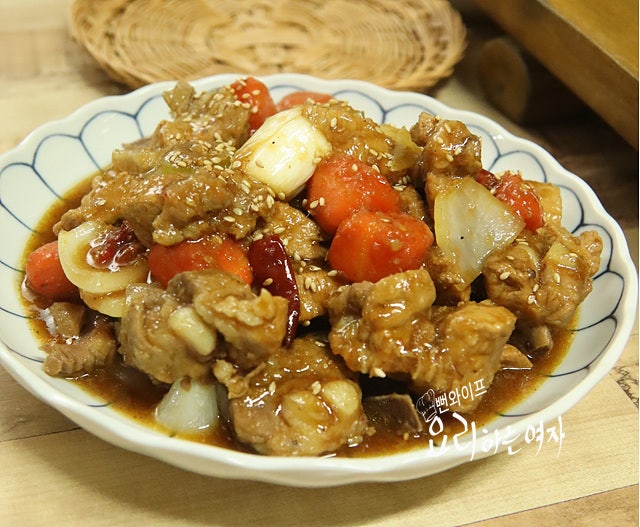
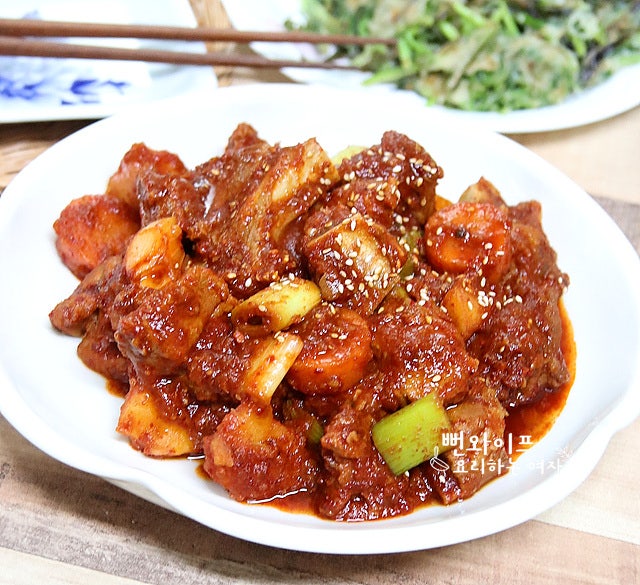
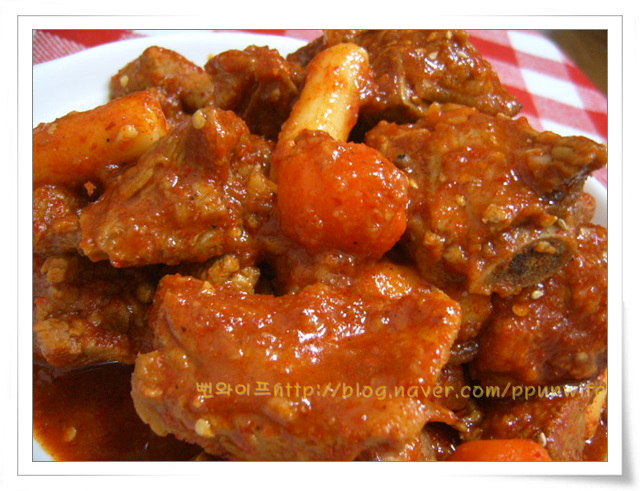
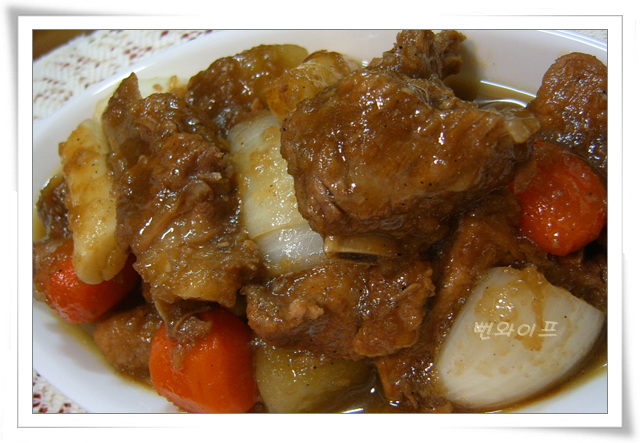
Spicy-Sweet Dwaeji Galbijjim (Braised Pork Ribs) with Radish
Dwaeji galbijjim (braised pork ribs) simmered in a spicy-sweet sauce made with grated fruit and refreshing Korean radish.
Translated from Korean by AI and not yet checked by a native speaker. Amounts and numbers are taken directly from the original recipe. Read the Korean original →
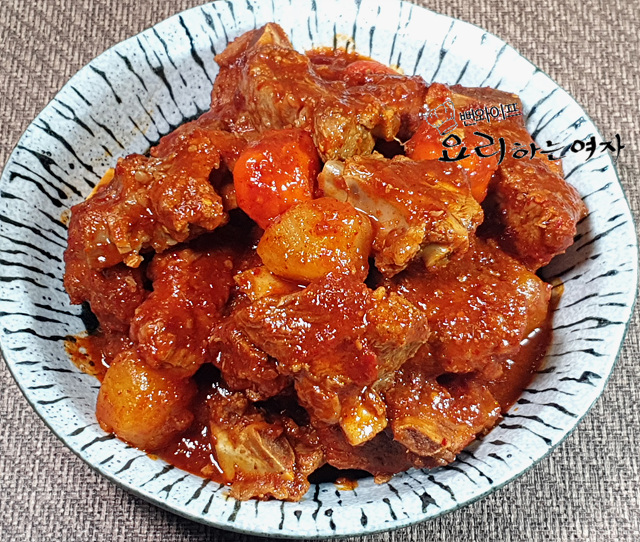
Thickly sliced Korean radish gives the braising liquid a clean, refreshing taste, and the braised radish turns out just as savory and flavorful as the meat itself. Marinating the pork thoroughly in a spicy-sweet special sauce with grated fruit makes the ribs tender and chewy.
- Servings
- 3–4 servings
- Difficulty
- Medium
- Spiciness
- Spicy
Ingredients
Ingredients
- Pork ribs1.2 kg
- Korean radish (mu)1/4, 300 g
- Carrot1
- Kelp broth (or water)1 1/2 cups
For parboiling the ribs
- Water5 cups
- Bay leaves3-4 leaves
- Whole black peppercorns1 tbsp
- Soju1/2 cup
Seasoning
- Gochugaru (Korean chili flakes)4 tbsp
- Regular soy sauce (jin-ganjang) (or brewed soy sauce (yangjo-ganjang))3 tbsp
- Oyster sauce3 tbsp
- Minced garlic3 tbsp
- Corn syrup (mulyeot)2 tbsp
- Sugar1 tbsp
- Mirin (cooking rice wine)3 tbsp
- Ginger juice1/2 tbsp
- Ground black pepper1/2 tsp
- Grated apple1 cup
- Grated onion1 cup
- Steep a 5cm piece of dried kelp (dasima) on all sides in 2 cups of water for at least 30 minutes.
- Instead of apple juice, you can use grated pear, kiwi juice, or even canned fruit cocktail syrup.
- To add more heat, try adding Cheongyang chili flakes or slicing about 3 Cheongyang chili peppers into the dish.
- Soak the trimmed ribs in water for about 1 hour to draw out the blood, changing the water occasionally.
Steps
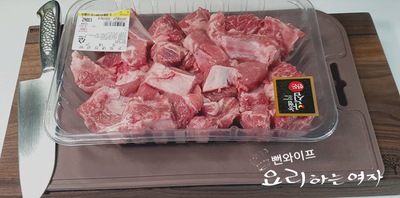
I prepared 1.2 kg of pork ribs for braising.
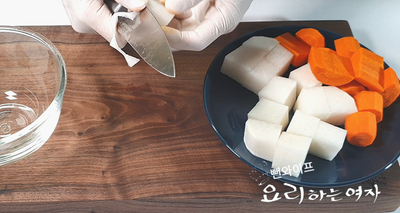
For vegetables, I prepared 1/4 of a medium Korean radish and 1 carrot, then cut them into roughly 2 cm cubes.
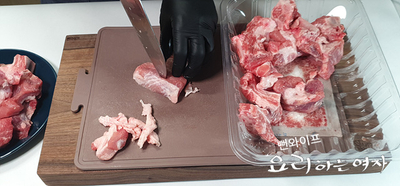
Trim the fat from the pork ribs.
Cut thick pieces into bite-size portions and score the meat using the tip of a knife; this helps the blood drain out well and lets the seasoning penetrate better.
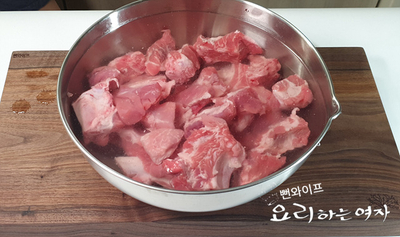
Soak the trimmed ribs in water for about 1 hour to draw out the blood, changing the water occasionally.
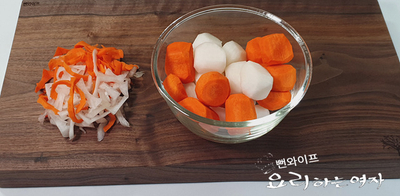
Round the edges of the radish and carrot cubes.
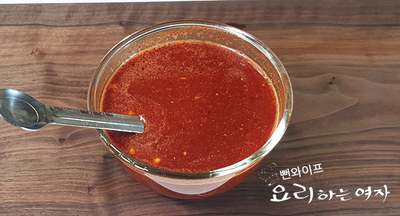
Add all the seasoning ingredients together and mix well.
For the fruit juice in the sauce, I used grated apple, but if you have other fruits, use whatever you have.
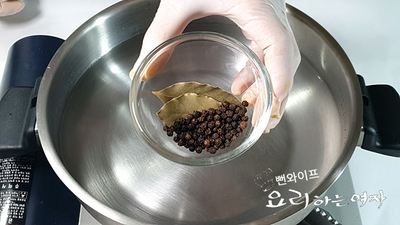
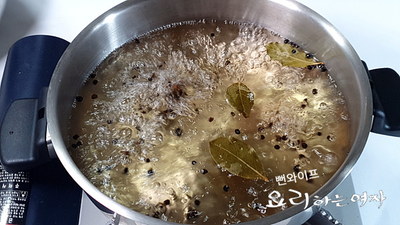
Briefly parboiling the ribs in boiling water with aromatics helps remove impurities and unpleasant meat odors.
You can also use doenjang and garlic instead of aromatics.
Add 5 cups of water, 3-4 bay leaves, 20 black peppercorns, 7 cloves of garlic, and 1/2 cup of soju all together, and bring to a rolling boil.
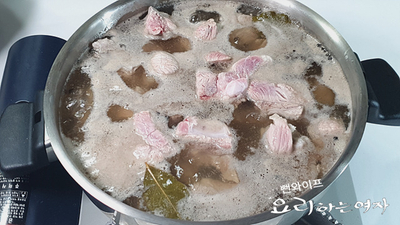
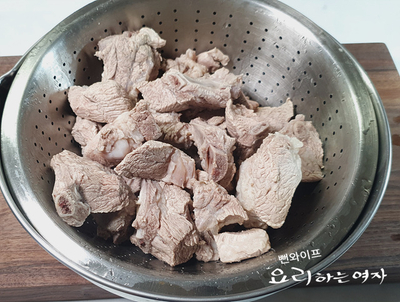
Add the ribs, and once the water returns to a boil, cook for 2 to 3 minutes...
Rinse them under running water and drain them roughly in a colander.
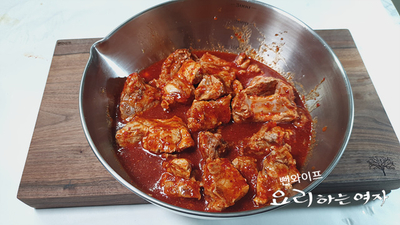
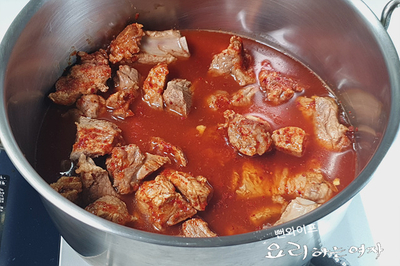
Place the ribs in a pot, pour over the seasoning, and marinate for at least 2 hours.
Pour the kelp broth over the marinated ribs and bring to a rolling boil.
At this point, the kelp broth (=water) is meant to cook the meat evenly, so just enough to submerge it is plenty.
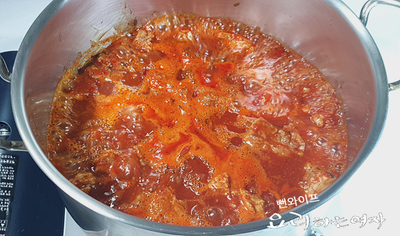
Once it begins to boil, cover with a lid, reduce the heat to low, and cook the meat for about 20 minutes.
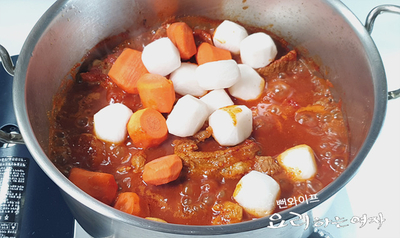
When the meat is fully cooked, add the radish and carrot, and simmer until they are tender.
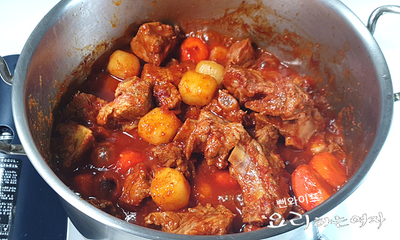
If a lot of liquid remains, braise over high heat until the sauce reduces to a shallow simmer.
Because it is over high heat, the liquid reduces quickly, so stir frequently and turn off the heat once the right amount of sauce remains.
 Ppunwife's tips
- Cut thick pieces into bite-size portions and score the meat using the tip of a knife; this helps the blood drain out well and lets the seasoning penetrate better.
- Briefly parboiling the ribs in boiling water with aromatics helps remove impurities and unpleasant meat odors.
- The kelp broth (=water) is meant to cook the meat evenly, so just enough to submerge it is plenty.
- Because it is over high heat, the liquid reduces quickly, so stir frequently and turn off the heat once the right amount of sauce remains.
FAQ
Can I use other fruits instead of the apple in the sauce?
Instead of apple, you can use grated pear, grated kiwi juice, or the syrup from canned fruit cocktail.
What should I do if I don't have bay leaves or whole peppercorns for parboiling the meat?
You can boil the water with doenjang and whole garlic cloves instead of aromatics to parboil the ribs and reduce unpleasant odors.
What can I add to make it spicier?
You can bring out more heat by adding Cheongyang chili flakes to the seasoning or slicing about 3 Cheongyang chili peppers into the pot.
Why do you round the edges of the radish and carrot? AI-generated
In braised dishes, trimming the sharp corners of root vegetables keeps them from breaking apart as they simmer, resulting in a cleaner broth.