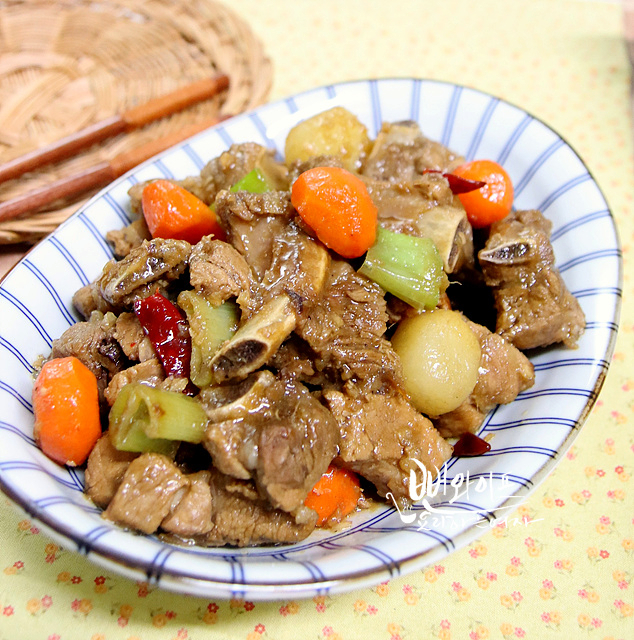
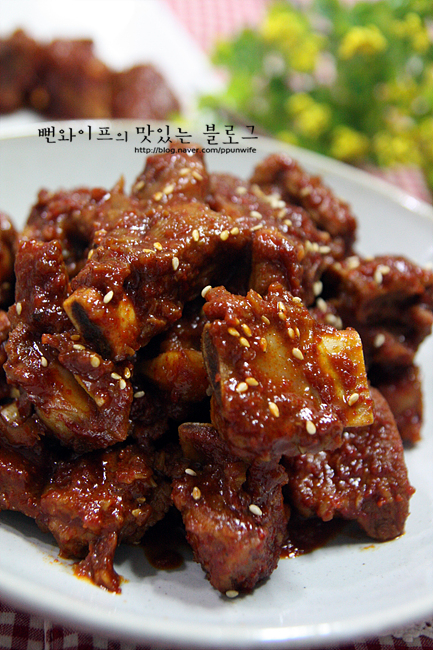
Sweet and Tender Dwaeji Galbijjim (Braised Pork Ribs)
Tender and sweet braised pork ribs simmered in a pear drink and soy sauce marinade.
Translated from Korean by AI and not yet checked by a native speaker. Amounts and numbers are taken directly from the original recipe. Read the Korean original →
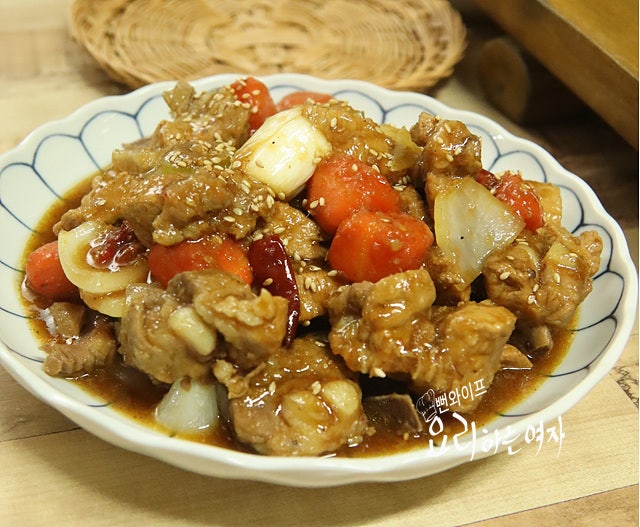
This braised pork rib dish serves 3 to 4, featuring a sweet soy sauce seasoning enhanced with oyster sauce for deep umami flavor. Soaking thoroughly to draw out the blood and briefly parboiling keeps off-flavors away, then braising until the liquid is shallow and glossy yields tender meat the whole family will love.
- Servings
- 3–4 servings
- Difficulty
- Medium
- Spiciness
- Not spicy
Ingredients
Ingredients
- Pork ribs1 kg
- Carrot1/2
- Onion1
- Large green onion (daepa)white part
- Soju1/2 cup
- Dried kelp (dasima) broth (or water)3 cups
Seasoning
- Pear drink2 cups
- Regular soy sauce (jin-ganjang)3 tbsp
- Oyster sauce2 tbsp
- Minced garlic3 tbsp
- Minced ginger1 tsp
- Corn syrup (mulyeot)2 tbsp
- Sugar1 tbsp
- Mirin (cooking rice wine)3 tbsp
- Ground black peppera little
- Soak the pork ribs in water for about 1 hour, changing the water occasionally to draw out the blood.
- Place the meat and all seasoning ingredients into the cooking pot, mix thoroughly, and let sit for about 1 to 2 hours so the flavor absorbs.
- Radish, potatoes, or mushrooms also work great as vegetables in braised ribs.
Steps
Prepare the ingredients
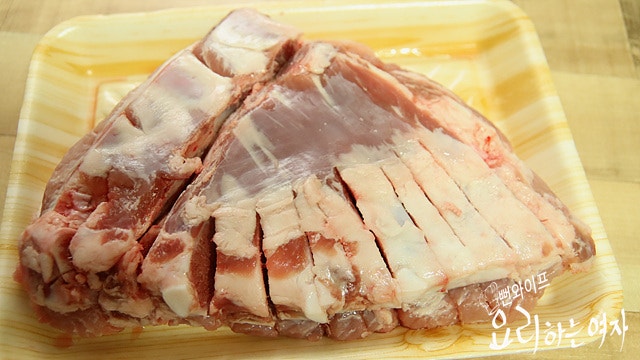
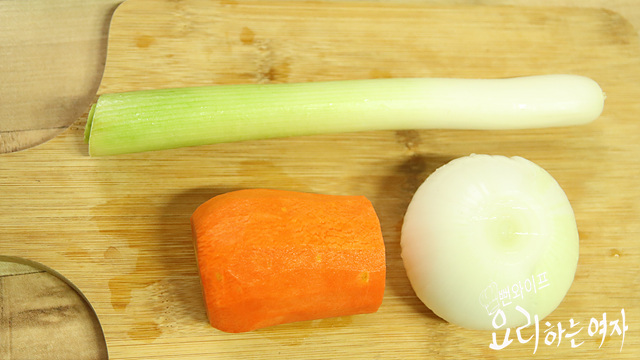
Here is 1 kg of pork ribs.
For the vegetables going into the braised ribs, I prepared onion, carrot, and the thick white part of large green onion (daepa).
I kept it simple like this, but radish, potatoes, or mushrooms are also great additions.
Cut the ingredients
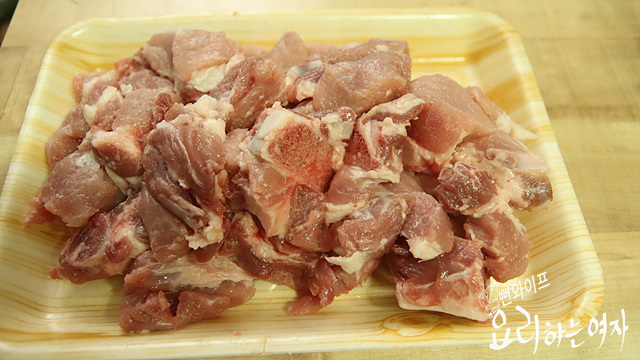
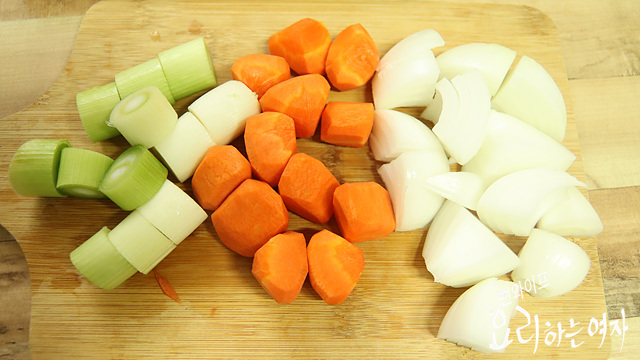
Separate the pork ribs between the bones, cut them into bite-sized pieces, and trim away excess fat.
Cut the onion, carrot, and large green onion into similar sizes.
Drain blood and parboil the ribs
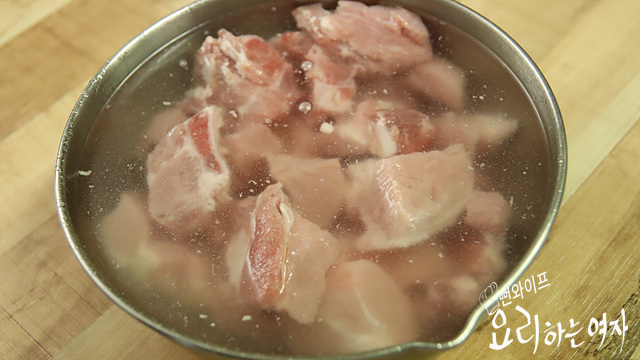
Soak the pork ribs in water for about 1 hour to draw out the blood, changing the water along the way.
Soaking bone-in meat to remove blood helps eliminate gamey odors.
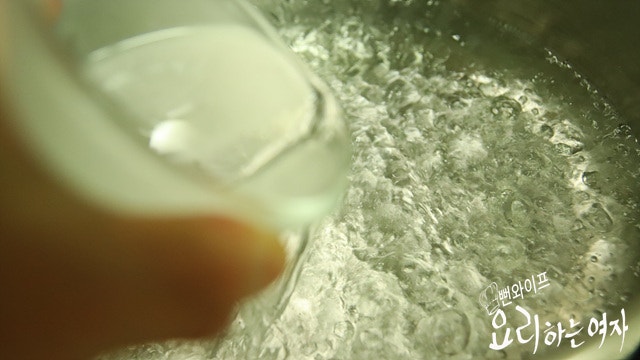
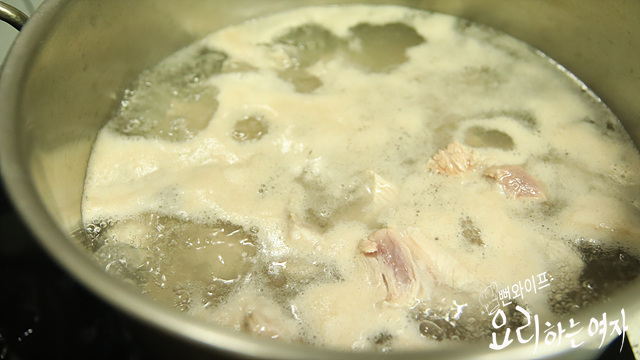
Today, without any extra aromatics, I simply poured 1/2 cup of soju into vigorously boiling water, added the meat, and parboiled it.
For frozen pork ribs or baby back ribs, it is good to add aromatics such as bay leaves, whole black peppercorns, garlic, and ginger while parboiling.
Boil just until the fat and impurities float up in the foam and the surface appears lightly cooked.
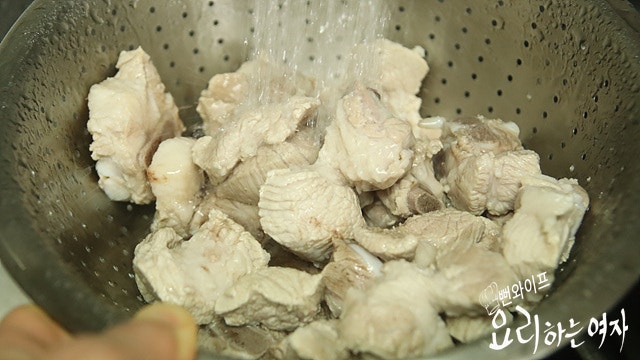
Rinse clean under running water.
Season the pork ribs
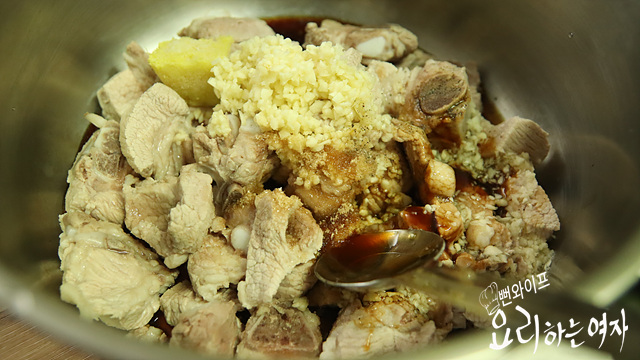
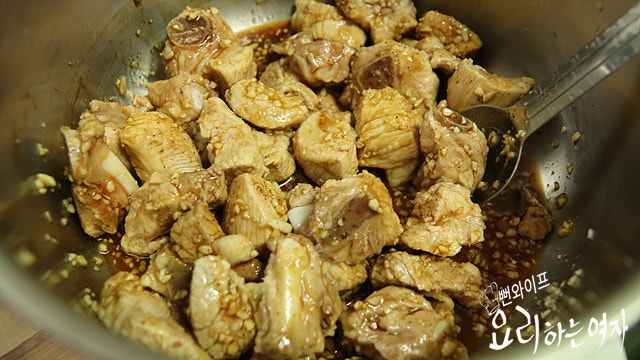
Add the meat and all the seasoning ingredients to the cooking pot, mix thoroughly, and let marinate for about 1 to 2 hours so the flavors soak in.
Simmer
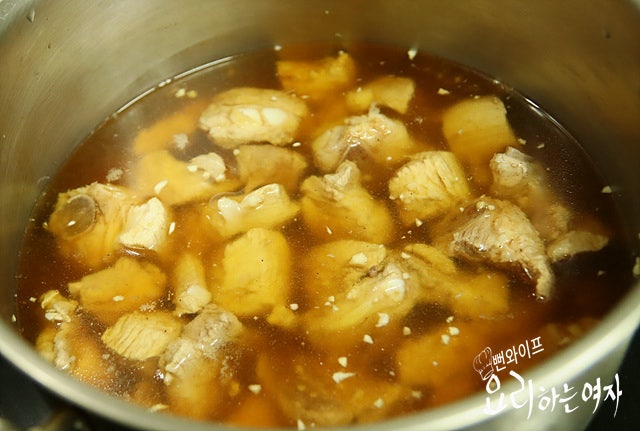
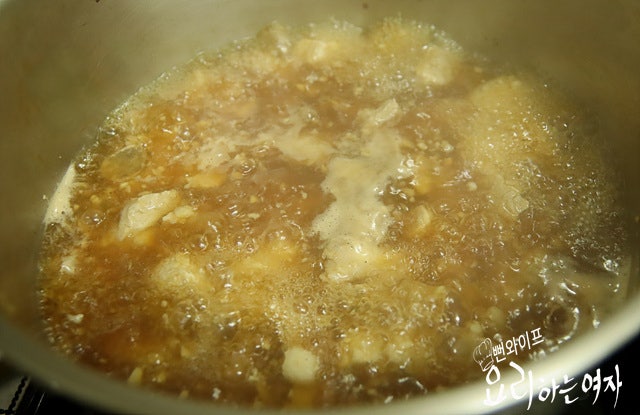
Pour 3 cups of dried kelp (dasima) broth or water over the marinated ribs and bring to a rolling boil.
Because the pork needs to cook until completely tender, reduce the heat to medium-low and cover with a lid.
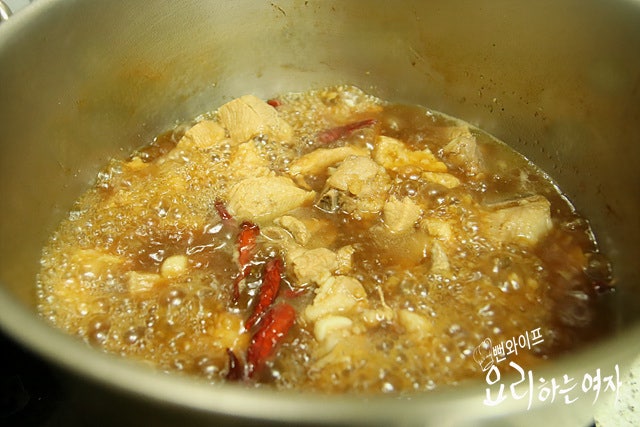
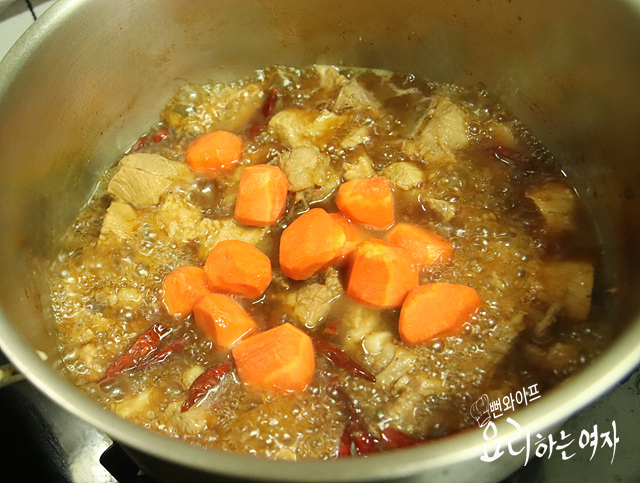
Simmer until the liquid has reduced by about half. Add the carrots...
I did not list Vietnamese chili peppers in the ingredients, but I tossed some in now for a touch of heat.
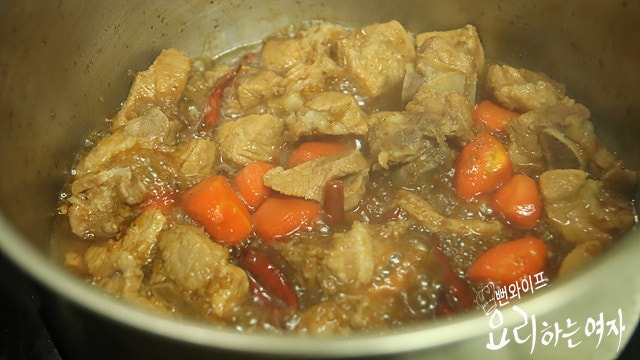
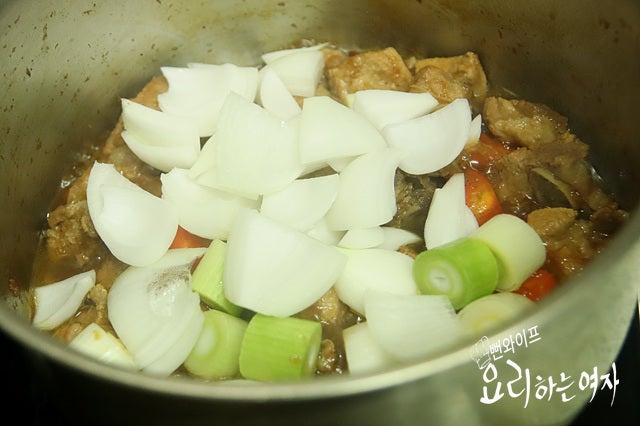
When the carrots feel somewhat cooked, remove the lid, add the onion and large green onion, and braise over high heat while stirring occasionally.
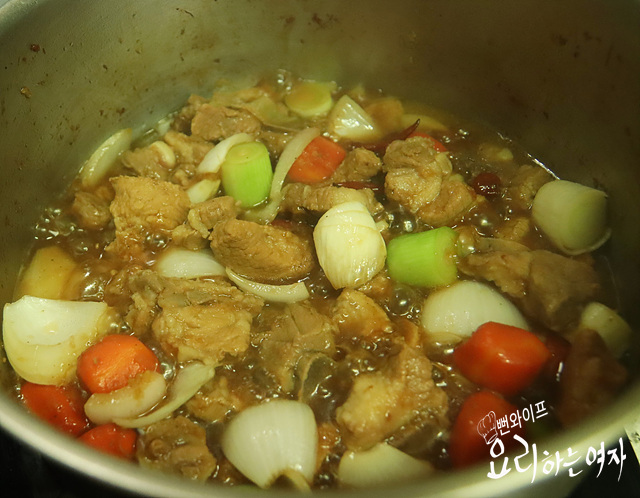
Once the large green onion and onion are tender, their aroma has infused, and the sauce is shallow and glossy, it is finished.
If you want the ribs moist and tender, take care not to boil down the liquid completely dry.
Finish
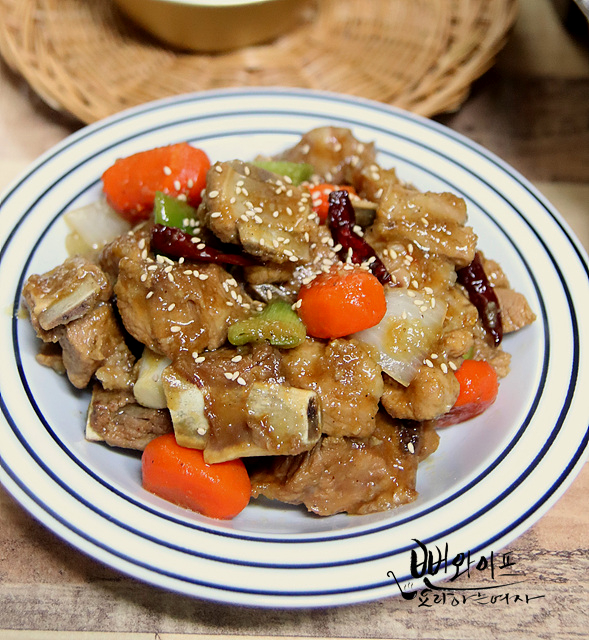
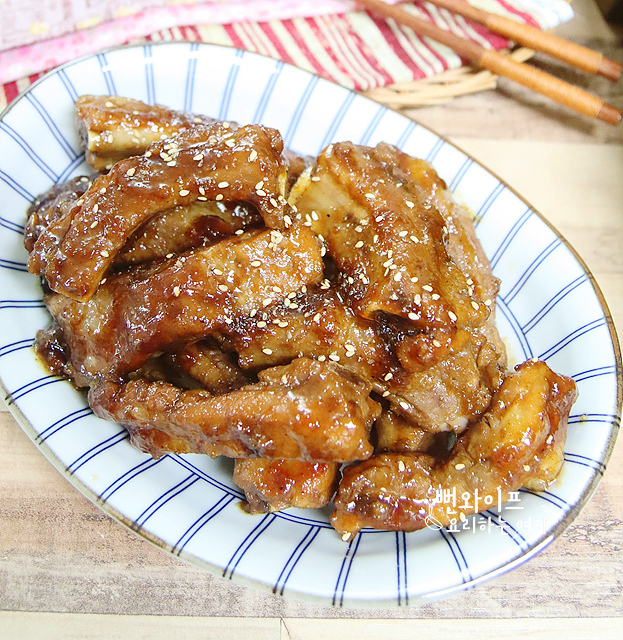
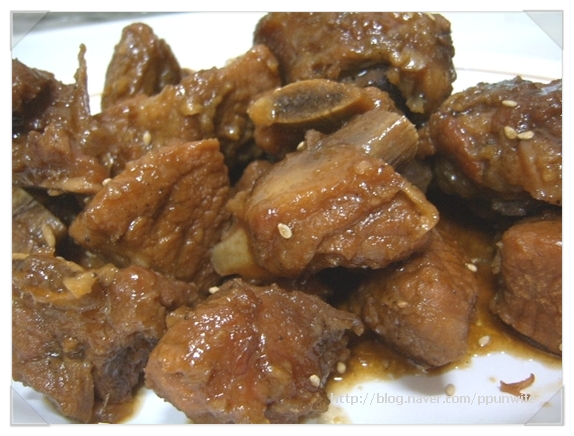
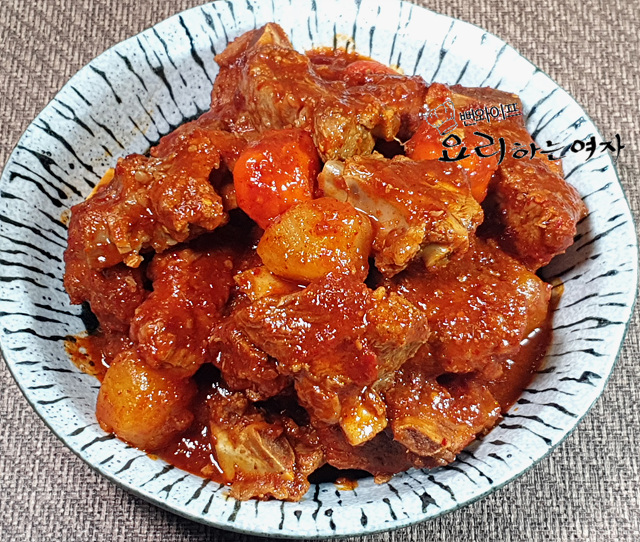
The ribs are glossy, with the soy sauce color and seasoning soaking deeply and evenly into the meat.
Made this way with a soy sauce base without spicy heat, kids love it too, making it a great dinner menu for the entire family.
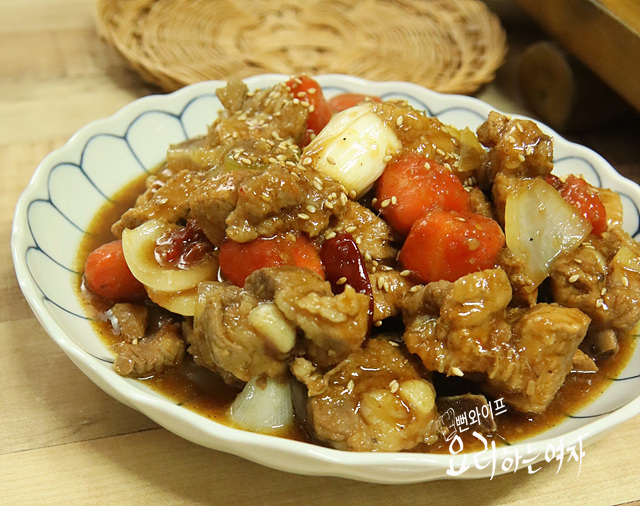
At less than half the price of beef short ribs, the rib meat is just as tender and rich, and the sweet sauce is simply outstanding.
Over the long holiday, as you relax and enjoy time with your family, choose braised pork ribs for a delicious home-cooked meal.
 Ppunwife's tips
- Soaking bone-in meat to remove the blood helps eliminate gamey odors.
- For frozen pork ribs or baby back ribs, it is good to add aromatics like bay leaves, whole black peppercorns, garlic, and ginger while parboiling.
- To keep the meat moist and tender, do not let the braising liquid boil completely dry.
FAQ
How long should I soak the pork to remove the blood?
Soaking it for about 1 hour while changing the water helps remove remaining blood along the bone and tames gamey odors.
Are there any tips to reduce off-flavors when using frozen meat?
When parboiling the meat, it helps to add aromatic vegetables and spices like bay leaves, whole black peppercorns, garlic, and ginger alongside the soju.
Can I add vegetables other than carrots and onions?
Potatoes, radish, or mushrooms can be added to suit your preference, and they pair wonderfully.
How much should I reduce the braising liquid?
To preserve a moist, tender texture, do not reduce the sauce until completely dry; leave a shallow layer of broth at the bottom.