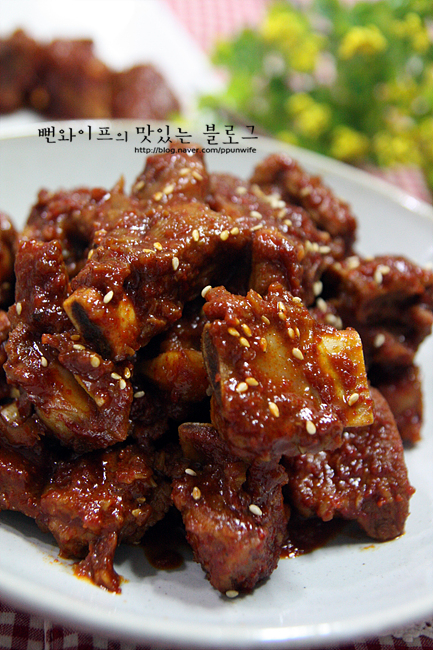
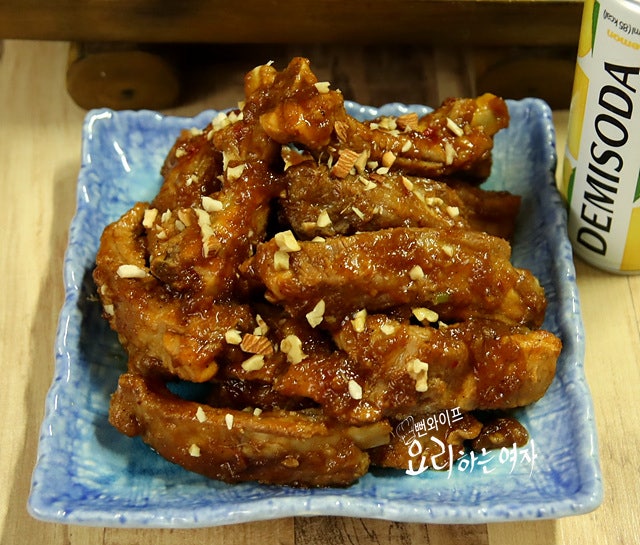
Sweet and Tender Dwaeji Galbijjim (Braised Pork Ribs)
Tender holiday-style soy sauce braised pork ribs gently simmered in a pear juice and soy sauce marinade.
Translated from Korean by AI and not yet checked by a native speaker. Amounts and numbers are taken directly from the original recipe. Read the Korean original →
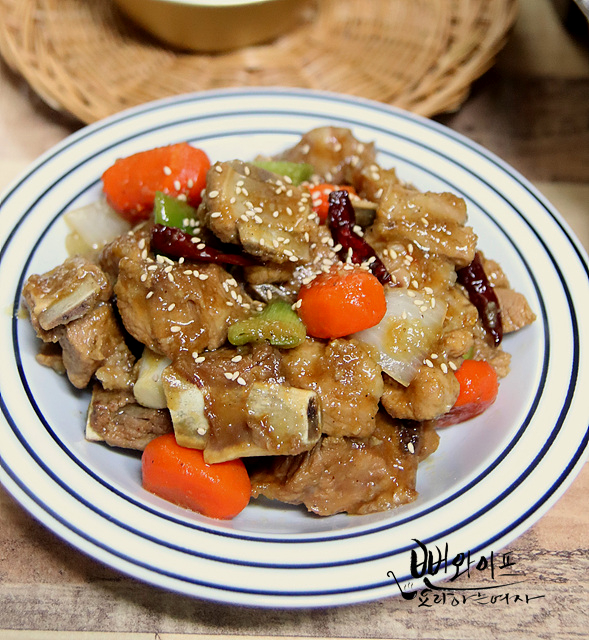
This standout dish features lean, savory pork ribs simmered sweet and savory in a pear juice and soy sauce marinade. Bird's eye chilies add a clean, spicy kick, while soaking out the blood and parboiling first ensures tender meat with no gamey odor.
- Servings
- 3–4 servings
- Cook time
- 20 minprep not included
- Difficulty
- Medium
- Spiciness
- Mildly spicy
Ingredients
Ingredients
- Pork ribs1 kg
- Carrot1/2
- Onion1 (medium)
- Large green onion (daepa)1/2 stalk
- Bird's eye chili (or 2 Cheongyang chili peppers (hot green chili))5
- Dried kelp (dasima) broth (or water)3 cups
For parboiling meat
- Soju1/2 cup
- Bay leaves5
Meat marinade
- Pear juice (or pear drink)2 cups
- Regular soy sauce (jin-ganjang) (or brewed soy sauce (yangjo-ganjang))3 tbsp
- Oyster sauce2 tbsp
- Mirin (cooking rice wine)3 tbsp
- Corn syrup (mulyeot)2 tbsp
- Sugar1 tbsp
- Minced garlic3 tbsp
- Minced ginger1/2 tbsp
- Ground black peppera little
- Soaking the ribs in cold water helps remove any gamey odor, so drain the blood for approx. 1 hour while changing the water.
- If you want to make it look fancier and more abundant for a holiday, you can also add chestnuts or jujubes.
- Depending on how fresh the meat is, you can add more ingredients for parboiling, such as ginger, whole black peppercorns, or doenjang.
Steps
Prepare the ingredients
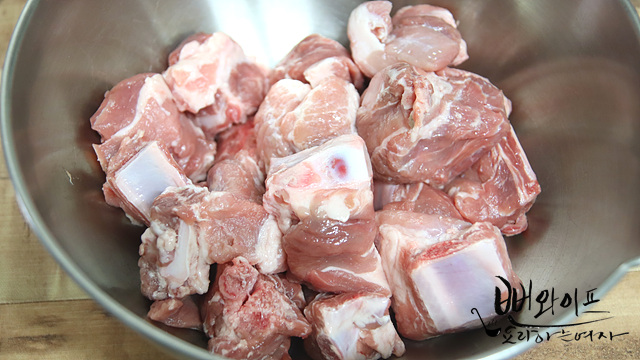
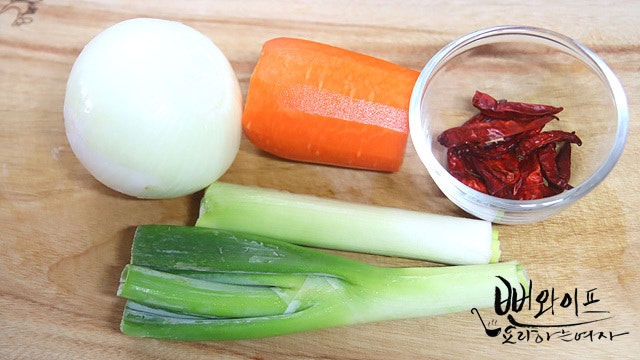
Prepare 1kg of pork ribs.
Along with onion, carrot, and large green onion (daepa), prepare bird's eye chilies or Cheongyang chili peppers if you want a spicy kick.
If you want to make it look fancier and more abundant for a holiday, you can also add chestnuts or jujubes.
Chop the vegetables
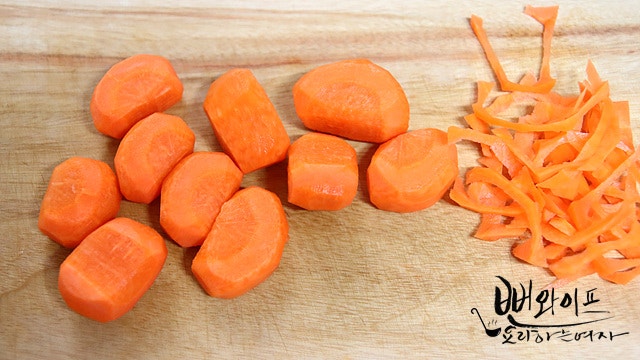
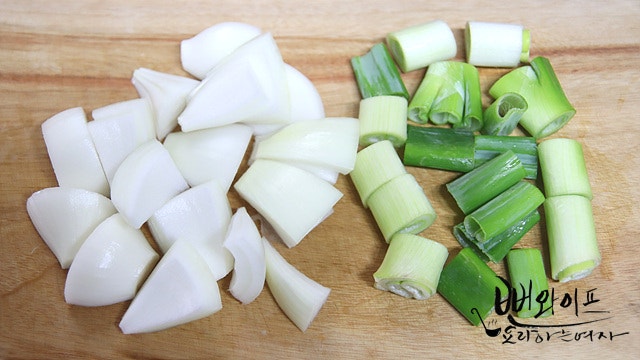
Cut the carrot into bite-sized pieces and round off the sharp edges, then cut the onion and large green onion (daepa) into large chunks.
Soak and parboil the pork ribs
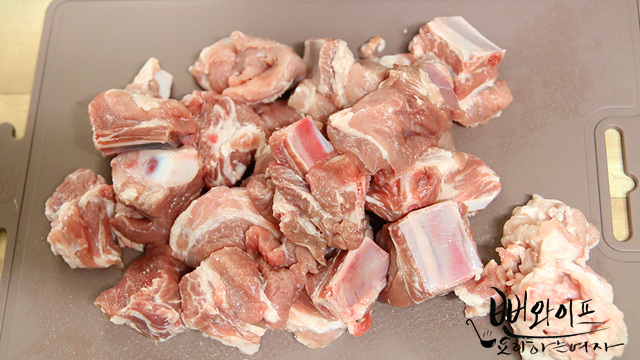
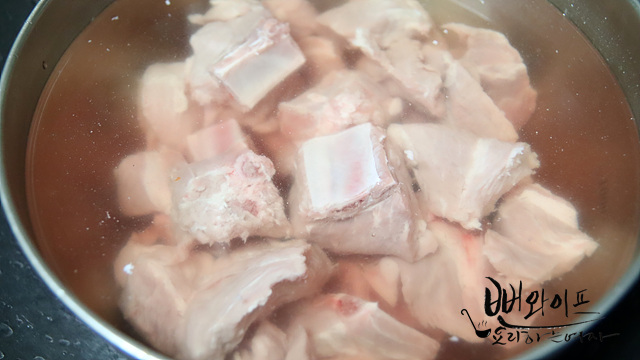
Trim off any excess fat on the pork ribs, and cut them into bite-sized pieces if they are too large.
Soaking the ribs in cold water helps remove any gamey odor, so drain the blood for approx. 1 hour while changing the water.
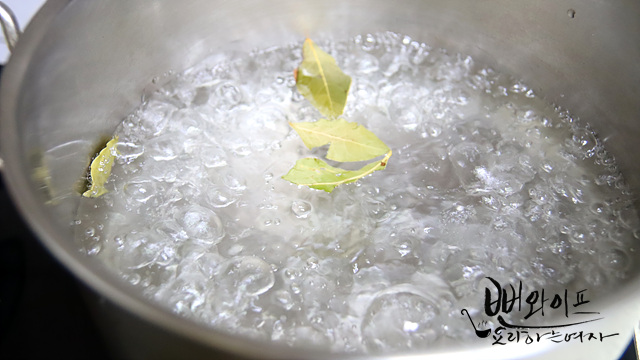
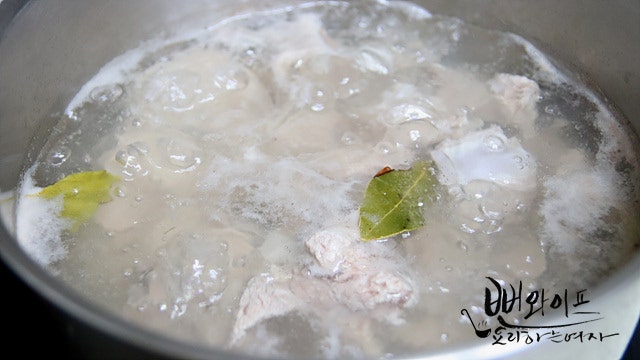
Pour in enough water to parboil the ribs, add the bay leaves and soju, and bring to a rolling boil.
Depending on how fresh the meat is, you can add more ingredients for parboiling, such as ginger, whole black peppercorns, or doenjang.
Once it comes to a rolling boil, the outside of the meat will begin to cook and scum mixed with impurities will start to form.
Once a good amount of scum has risen, you can rinse the meat.
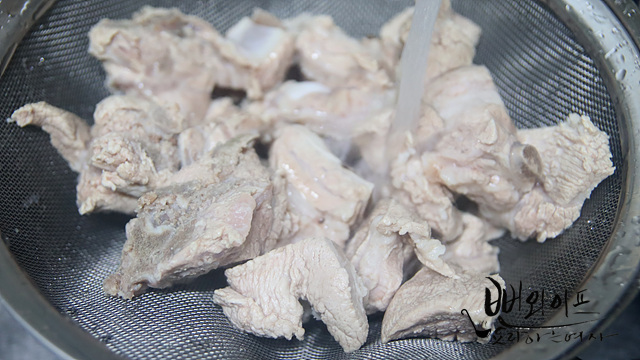
Run your fingers along the bones to wipe away any clinging bits of impurities, and rinse thoroughly under running water.
Marinate the pork ribs
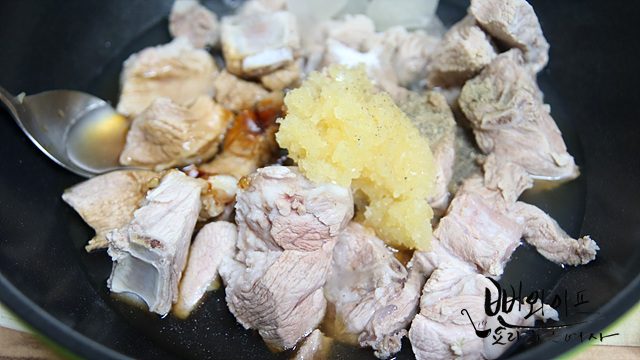
Add all the pork rib marinade ingredients, mix well, and let sit for 1 to 2 hours to let the flavors absorb.
It is also delicious if you leave it in the refrigerator overnight and braise it the next day.
If the parboiled meat feels very tough, grinding and adding 1/2 kiwi or approx. 1 canned pineapple ring will tenderize the meat through its enzymatic action.
Simmer
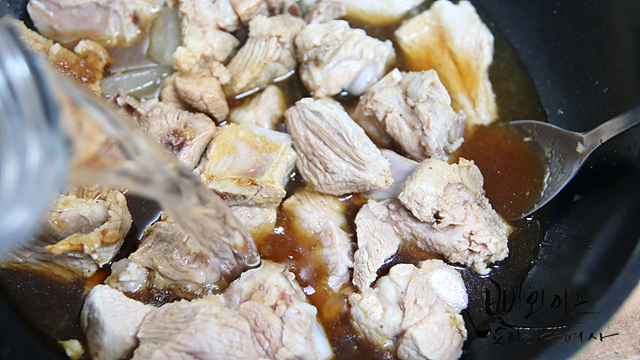
Pour in 3 cups of dried kelp (dasima) broth or water.
Since the ribs need to simmer for a long time to cook through completely, pour in a generous amount of liquid.
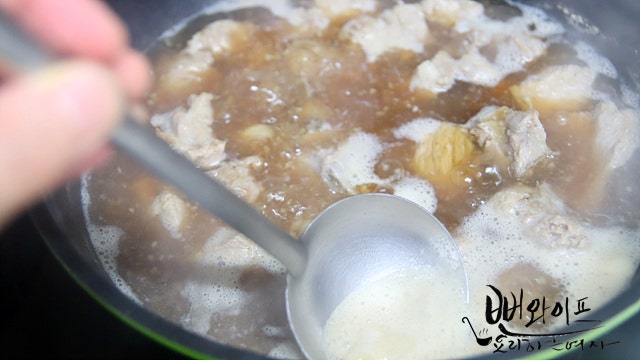
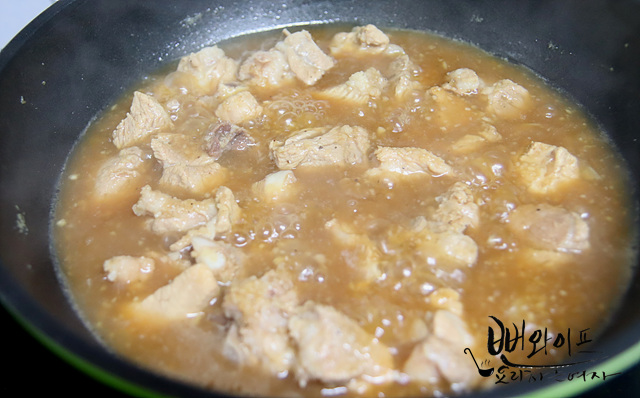
Once it begins to boil vigorously, skim off any scum, lower the heat, cover with a lid, and simmer gently for around 20 minutes.
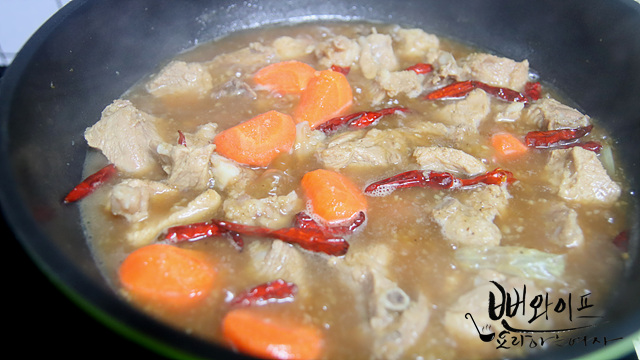
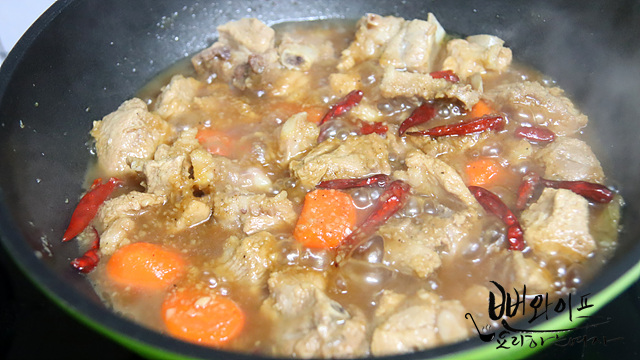
When the meat is cooked and the liquid has reduced by about half, add the carrot and bird's eye chilies, stir so the carrot cooks, cover with the lid, and let it simmer.
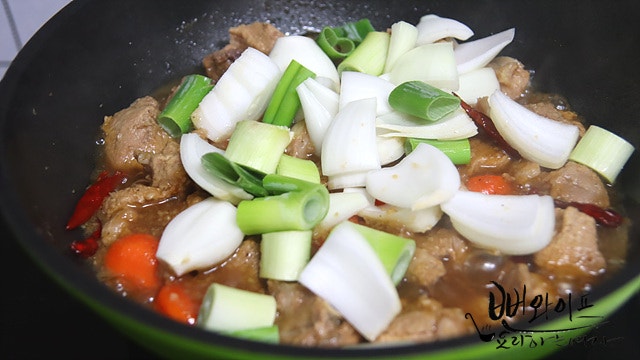
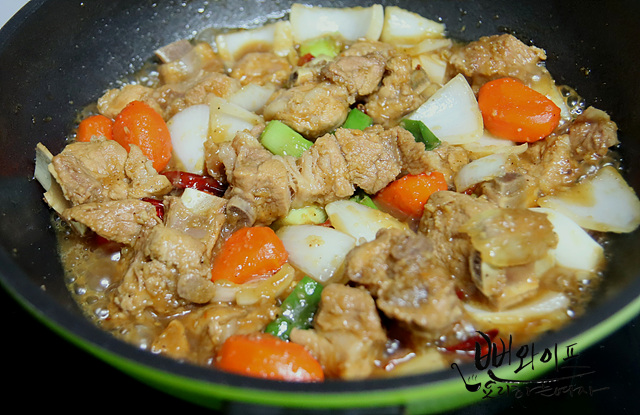
Once the carrot is tender, add the large green onion (daepa) and onion, take off the lid, and cook down the liquid.
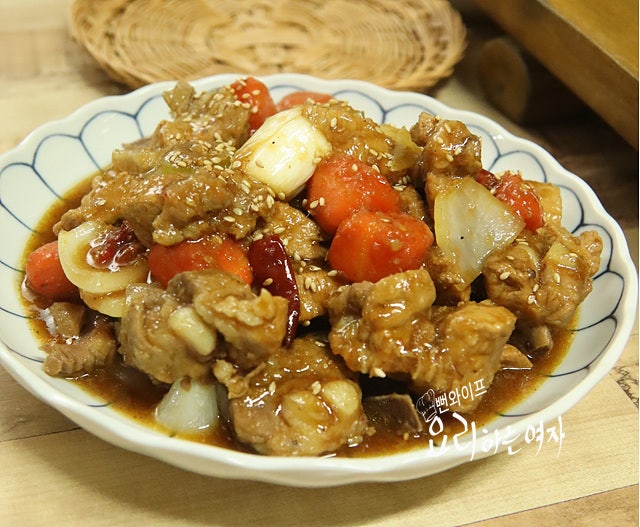
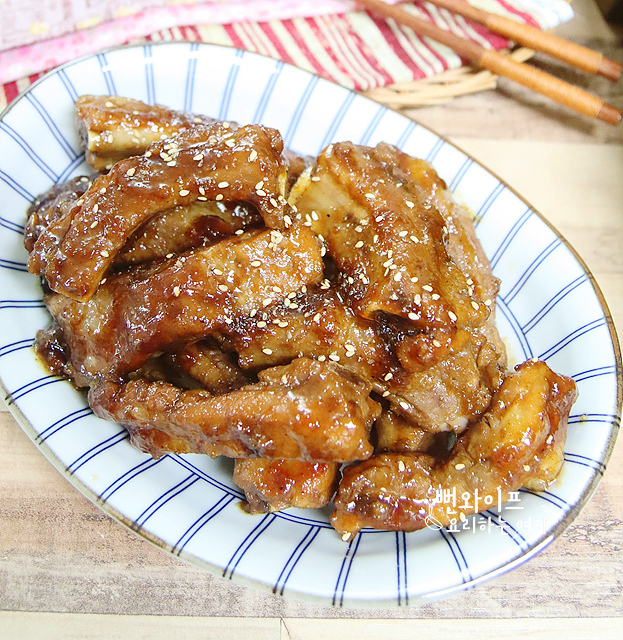
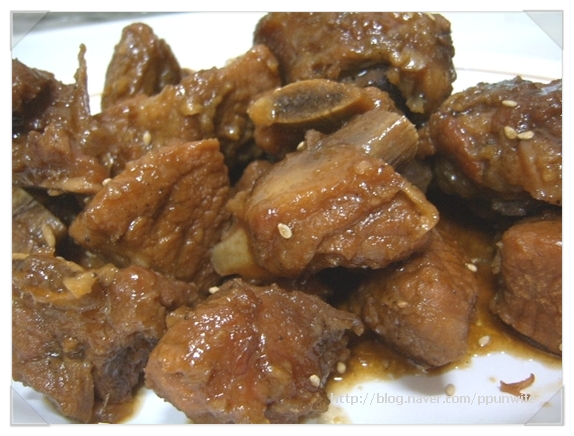
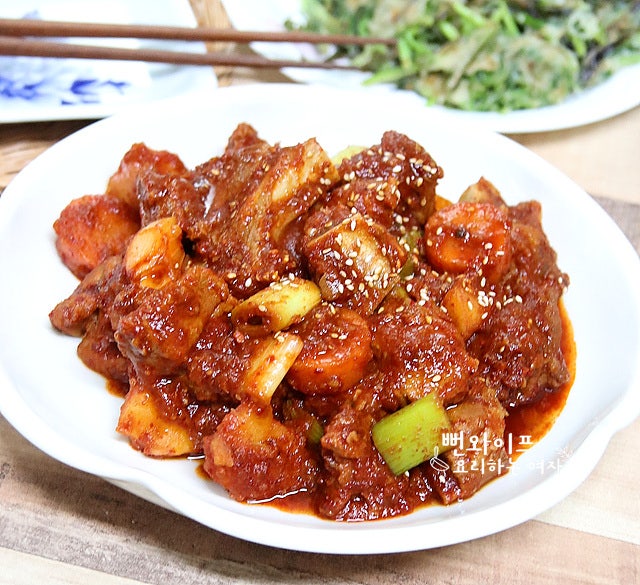
Once the sauce reduces to a shallow glaze, turns glossy, and deeply coats the meat with a rich soy color, it is ready.
Finish
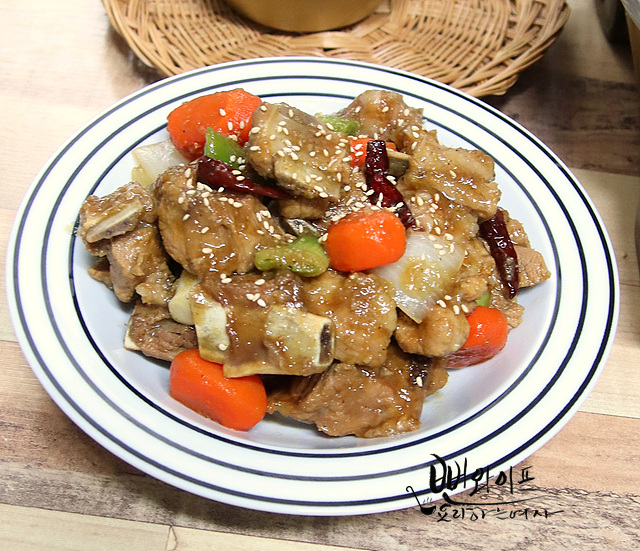
Because it is braised with bird's eye chilies instead of gochugaru, it has a clean and gently spicy finish.
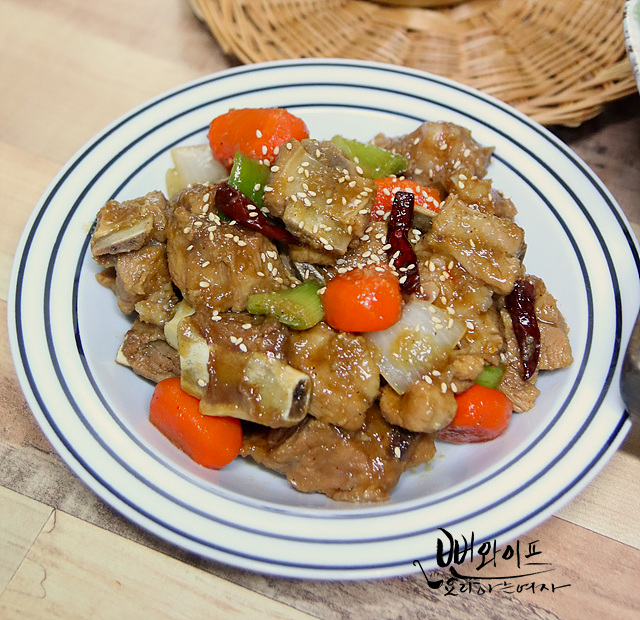
Enjoy tearing into the tender meat at your own pace, serve it on a plate, and finish by mixing rice into the remaining sauce in the pan.
The seasoning blended with the savory meat juices creates a wonderful umami flavor.
I hope this is helpful if you want to make pork ribs instead of beef ribs for the Chuseok holiday.
 Ppunwife's tips
- It is also delicious if you leave it in the refrigerator overnight and braise it the next day.
- If the parboiled meat feels very tough, grinding and adding 1/2 kiwi or approx. 1 canned pineapple ring will tenderize the meat through its enzymatic action.
- Run your fingers along the bones to wipe away any clinging bits of impurities, and rinse thoroughly under running water.
FAQ
How can I tenderize the meat if it is tough?
If the parboiled meat is tough, puree half a kiwi or approx. 1 slice of canned pineapple and mix it into the marinade to help tenderize the meat.
What do you add to the water when parboiling pork to remove odors?
Bring water to a boil with soju and bay leaves; depending on the condition of the meat, you can also add ginger, whole black peppercorns, or doenjang.
What can I use instead of bird's eye chilies?
You can substitute 2 Cheongyang chili peppers for the bird's eye chilies to add heat.
How long should the marinated meat be rested?
After mixing in the marinade, let it rest for 1 to 2 hours, or refrigerate overnight to braise the following day.