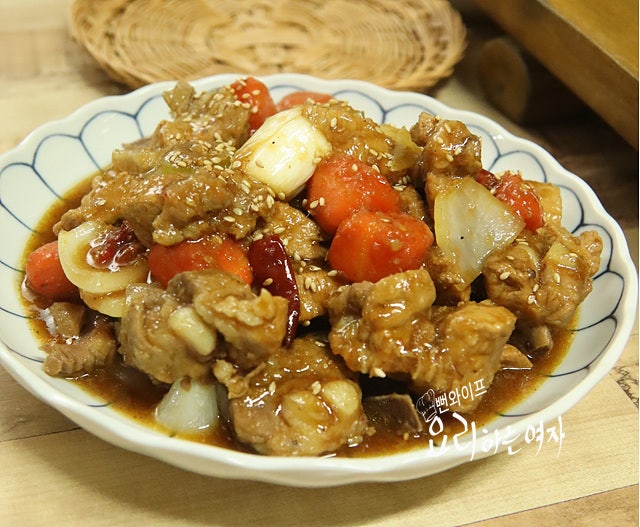
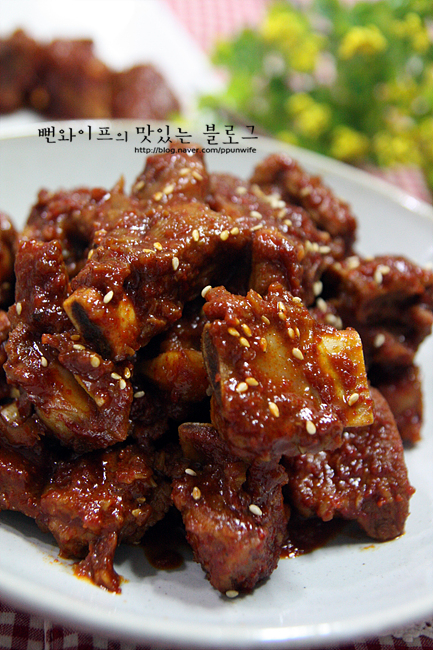
Dwaeji Deunggalbijjim (Braised Pork Ribs)
A special main dish of pork baby back ribs braised until sweet and savory in a soy sauce glaze after thoroughly removing the membrane and soaking away any blood.
Translated from Korean by AI and not yet checked by a native speaker. Amounts and numbers are taken directly from the original recipe. Read the Korean original →
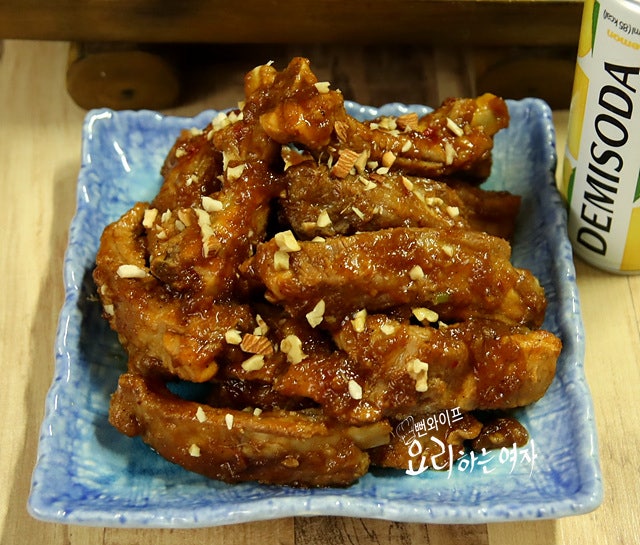
This special main dish removes any gamey odor by peeling off the tough membrane and parboiling the pork baby back ribs with aromatics. Instead of using chili flakes, the ribs are simmered down in a savory-sweet soy sauce glaze that is gentle on the palate. The mild, balanced flavor makes it wonderful as a side dish for children and an excellent pairing with beer.
- Servings
- 3–4 servings
- Difficulty
- Medium
- Spiciness
- Mildly spicy
Ingredients
Ingredients
- Pork baby back ribs2 stalks, 1 kg
- Soju1/3 cup
- Whole black peppercorns1 tbsp
- Bay leaves4 leaves
- Sliced ginger10 g
Seasoning
- Water3 cups
- Regular soy sauce (jin-ganjang) (or brewed soy sauce (yangjo-ganjang))2 tbsp
- Oyster sauce1 tbsp
- Mirin (cooking rice wine)2 tbsp
- Minced garlic2 tbsp
- Corn syrup (mulyeot)2 tbsp
- Sugar1 tbsp
- Ketchup2 tbsp
- Ground black peppera little
- Bird's eye chili (or 2 Cheongyang chili peppers (hot green chili))3
- Pour cold water over the ribs and soak them for about 30 minutes, changing the water occasionally to draw out the blood.
- Add all seasoning ingredients except water, mix thoroughly with the ribs, and let sit for about 30 minutes so the flavors soak in.
- Instead of bird's eye chilies, you can finely mince about 2 Cheongyang chili peppers (hot green chilies).
Steps
Prepare the pork baby back ribs
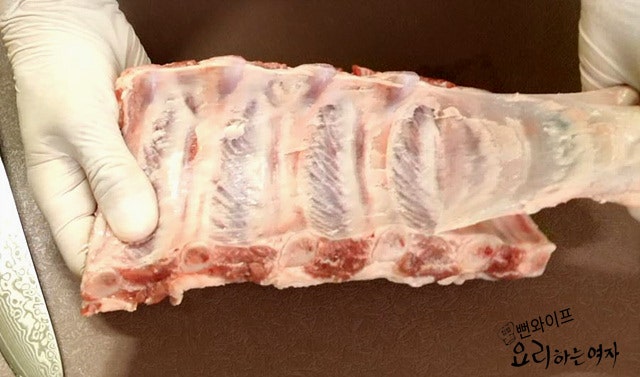
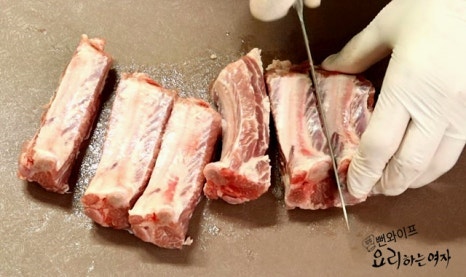
Whole racks of ribs often still have the membrane attached.
Lift the edge of the membrane with a knife to get a grip, then pull it all the way off to remove it.
If left on, the membrane becomes tough and keeps seasonings from penetrating, so be sure to remove it, then slice between the bones to separate them into individual ribs.
Parboil
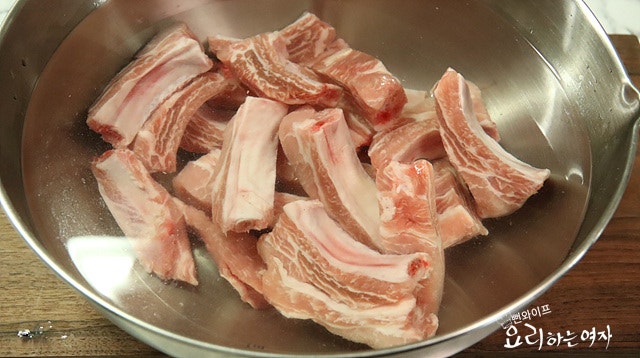
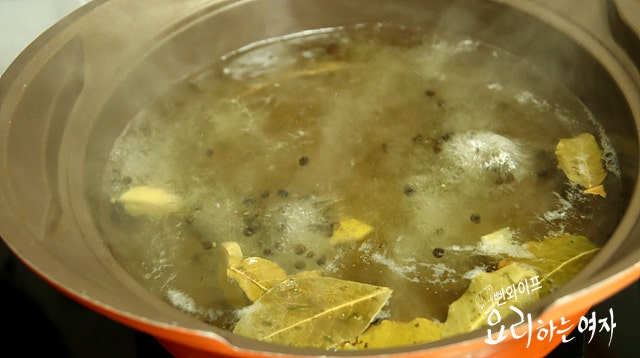
Cover the ribs in cold water and soak for about 30 minutes, changing the water occasionally to draw out the blood and eliminate any gamey odor.
Pour in enough water to submerge the ribs, add the bay leaves, whole black peppercorns, sliced ginger, and soju, and bring to a rolling boil...
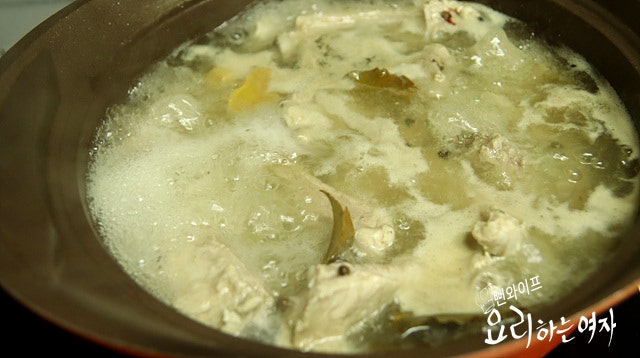
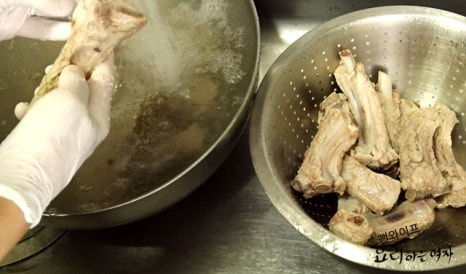
Add the ribs and boil.
Skim off any foam that rises and boil for about 5 minutes.
Parboiling like this extracts impurities and helps remove any remaining pork odor.
Rinse thoroughly under running water to wash away clinging impurities, then drain.
Season
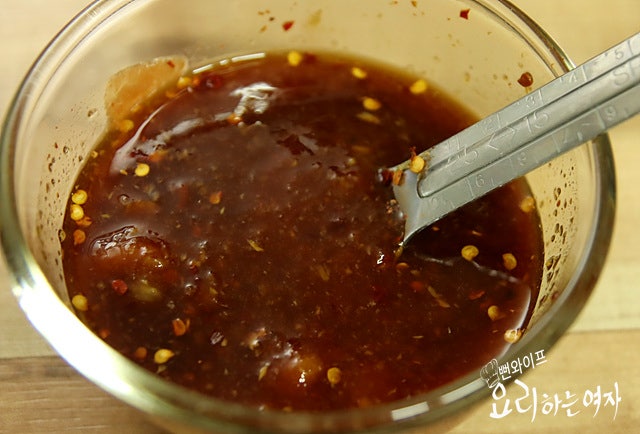
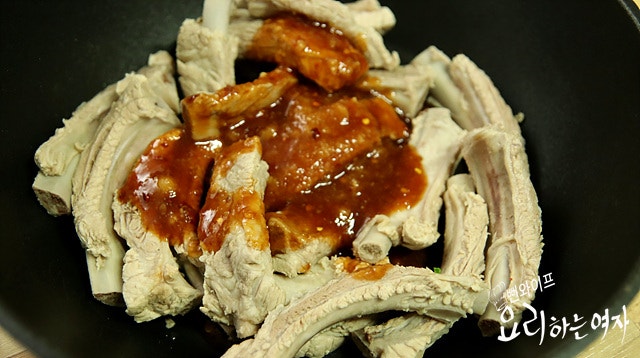
Add all seasoning ingredients except water, toss well with the ribs, and let sit for about 30 minutes to absorb the flavors evenly.
I crushed the bird's eye chilies before adding them, but you can also finely mince about 2 Cheongyang chili peppers instead.
Simmer
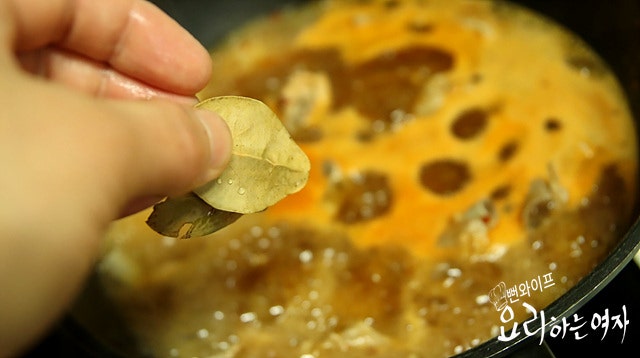
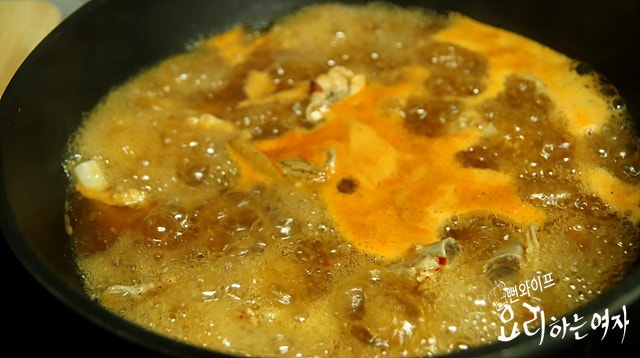
Add about 2 bay leaves and pour in 3 cups of water—enough to generously cover the ribs—bring to a boil, then lower the heat and simmer gently.
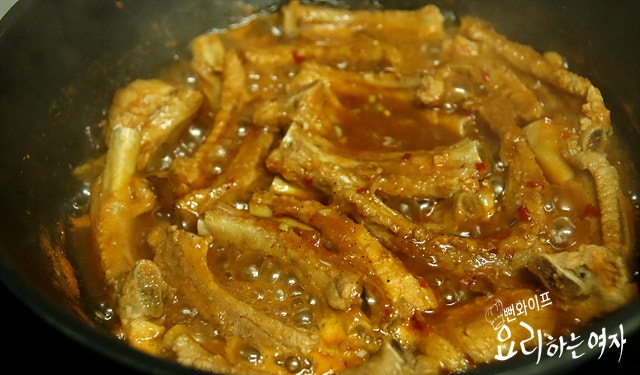
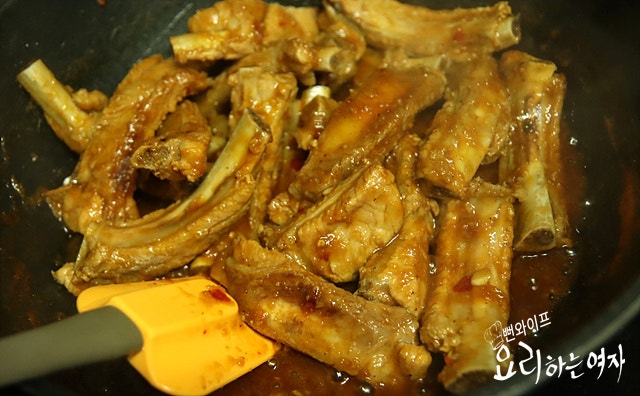
When the liquid has reduced by half, turn the heat up to high and stir constantly until the glaze is reduced down tightly over the ribs.
Finish
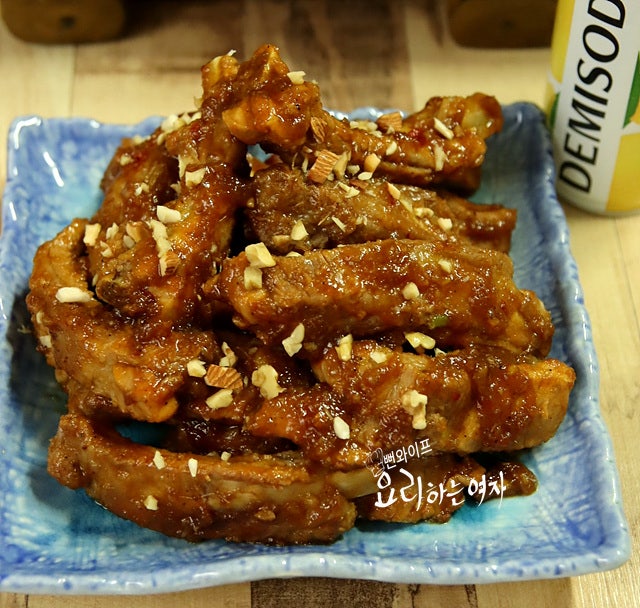
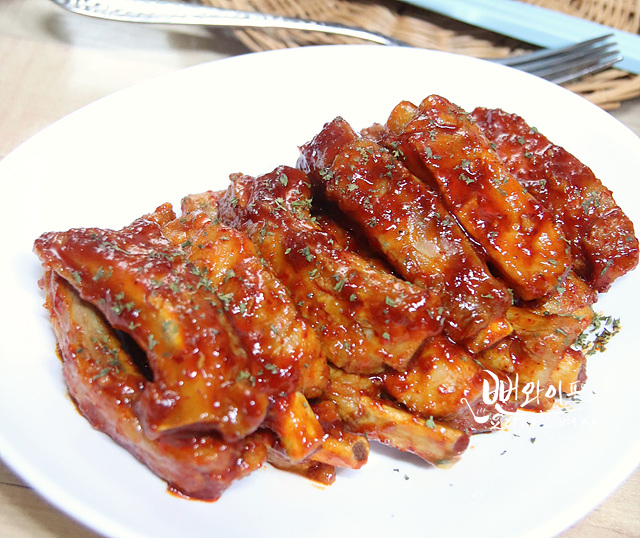
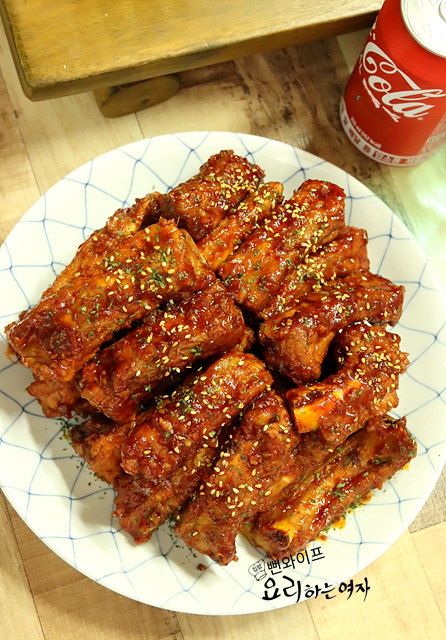
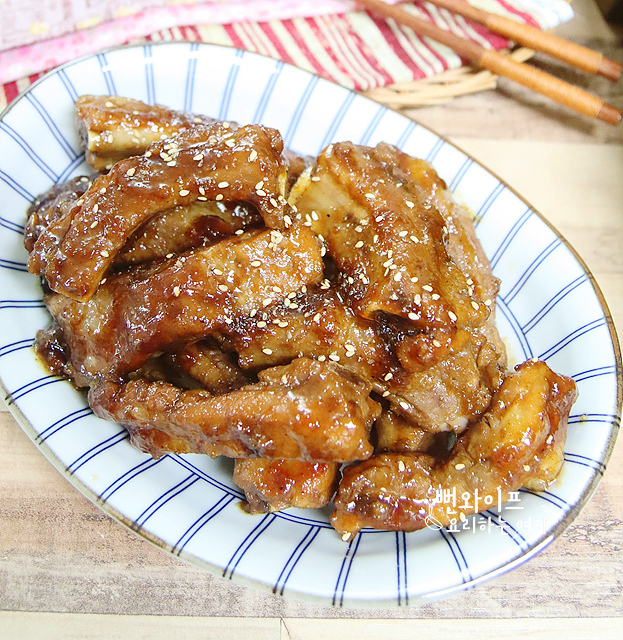
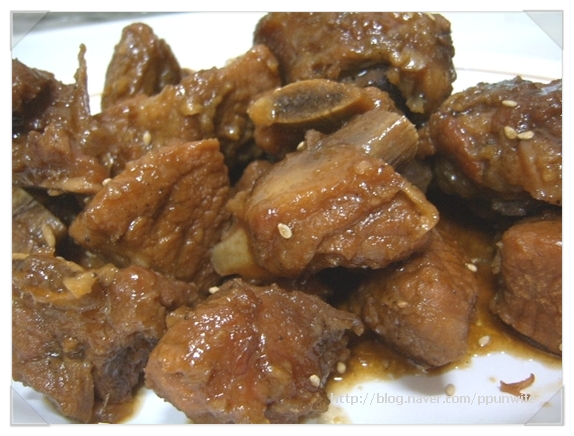
Juicy, tender, and pleasantly chewy braised pork ribs are complete.
I had some nuts on hand, so I chopped them finely and sprinkled them on top.
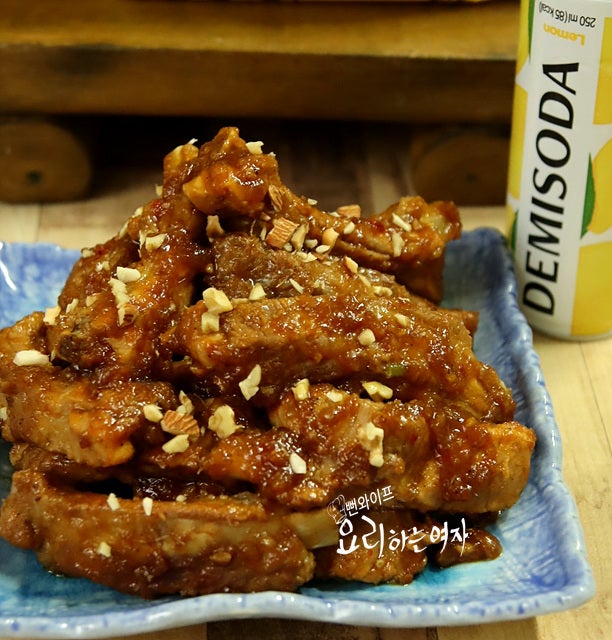
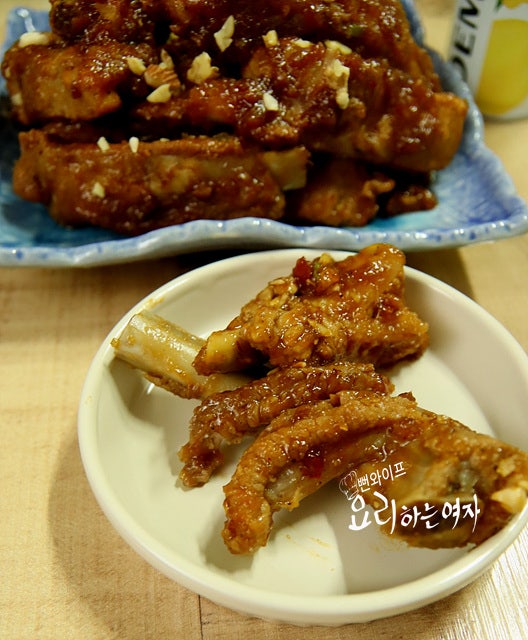
Adding just a bit of bird's eye chili keeps it from being spicy while cutting through richness for a clean finish.
It has a sweet and savory taste that is not too salty even eaten on its own, so kids will love it too.
It is delicious as is, or you can pop it briefly in the air fryer to add a hint of smoky charred flavor.
 Ppunwife's tips
- Be sure to remove the membrane, as leaving it on makes the meat tough and prevents seasonings from penetrating.
- Parboiling the ribs helps purge impurities and eliminates any remaining pork odor.
- They are delicious as is, or you can heat them briefly in an air fryer to add a touch of smoky flavor.
FAQ
Why do I need to remove the membrane attached to the rib bones?
Leaving the membrane on makes the meat tough and prevents the sauce from seeping in deeply while braising, so it is best to grab it with the tip of a knife and peel it off.
What can I use instead of bird's eye chilies?
Finely mincing about 2 Cheongyang chili peppers will neatly cut through any greasy richness.
Is there a tip to make them even more delicious?
Briefly heating the finished ribs in an air fryer adds a subtle charred, smoky flavor that makes them even tastier.
How long should I soak the pork to remove the blood?
Soaking it in cold water for about 30 minutes while changing the water occasionally will effectively eliminate the cause of off-odors.