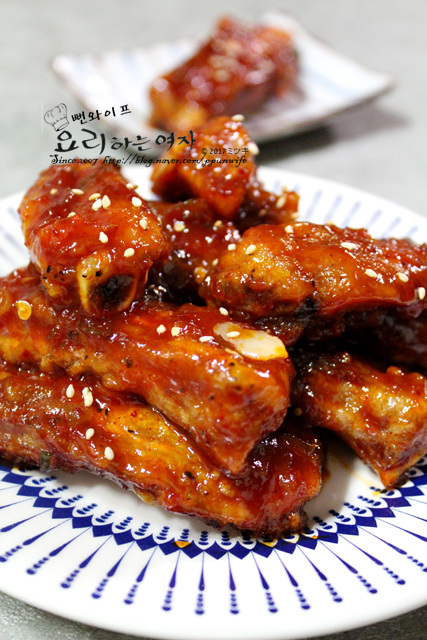
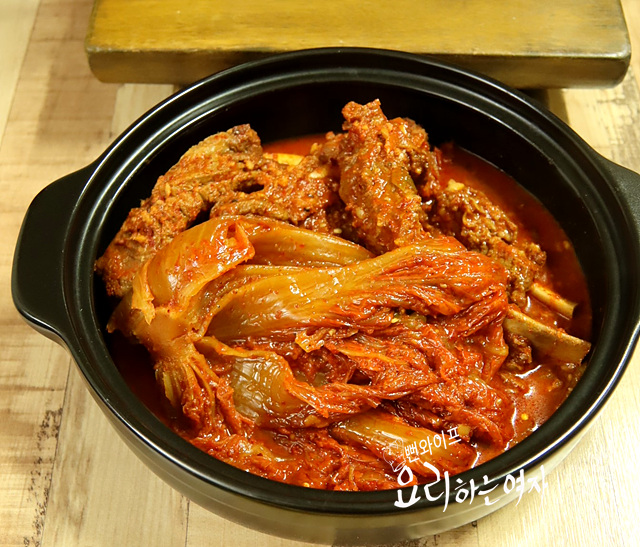
Sweet and Spicy Deunggalbi Jjim (Braised Pork Ribs)
A 4–5 serving main dish of blanched baby back ribs braised tender in a special sweet and spicy sauce.
Translated from Korean by AI and not yet checked by a native speaker. Amounts and numbers are taken directly from the original recipe. Read the Korean original →
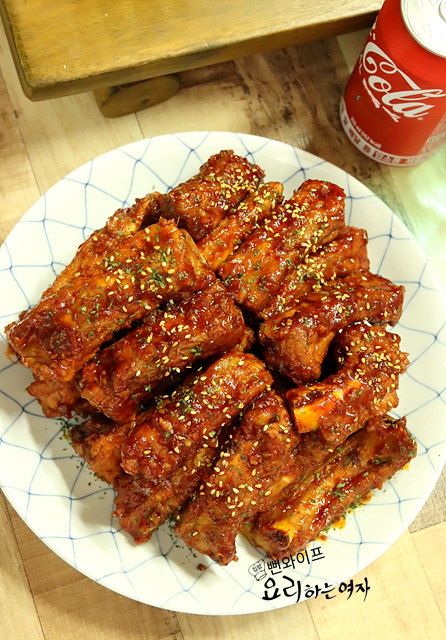
The ribs are trimmed of their membrane and excess fat, then blanched with aromatic ingredients to eliminate any gamey odor. After marinating in a sauce made of gochujang, gochugaru, ketchup, and oyster sauce, they are simmered until thoroughly tender, resulting in a rich, savory flavor that clings to the meat without being overly sharp. The meat pulls easily off the bone, making it an ideal weekend treat for the whole family or a great dish to enjoy with drinks.
- Servings
- 4–5 servings
- Difficulty
- Medium
- Spiciness
- Mildly spicy
Ingredients
Ingredients
- Baby back ribs2 stalks, 1.5 kg
- Soju1/2 cup
- Whole black peppercorns1 tbsp
- Bay leaves5 leaves
- Ginger10 g
Seasoning
- Gochugaru (Korean chili flakes)1 1/2 tbsp
- Gochujang (Korean red chili paste)1 1/2 tbsp
- Minced garlic2 tbsp
- Ketchup2 tbsp
- Oyster sauce (or regular soy sauce (jin-ganjang))2 tbsp
- Mirin (cooking rice wine)3 tbsp
- Corn syrup (mulyeot)4 tbsp
- Sugar1 tbsp
- Minced ginger1/2 tsp
- Water3 cups
- Doenjang, whole garlic cloves, large green onions, or onions are also great ingredients for removing odors, so feel free to prepare those.
- For whole racks of baby back ribs that have not been separated, gently peel off the membrane from the edges, then slice between the bones with a knife to separate individual ribs and trim off excess fat.
- Soak the baby back ribs in cold water for about 30 minutes, changing the water occasionally, to draw out the blood.
Steps
Prepare the baby back ribs
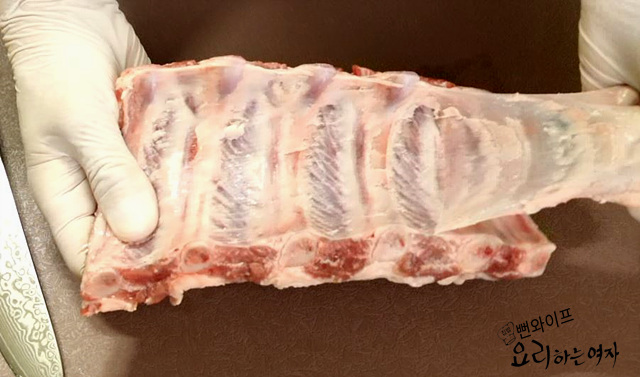
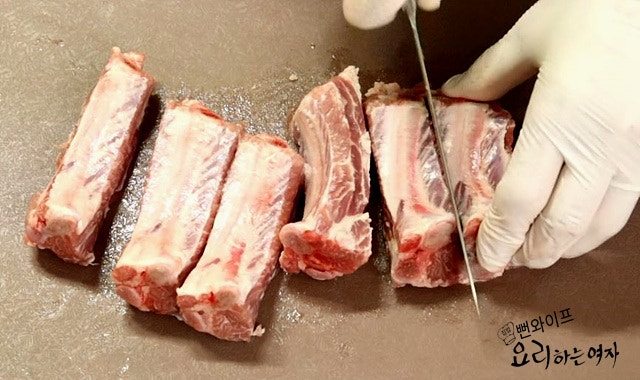
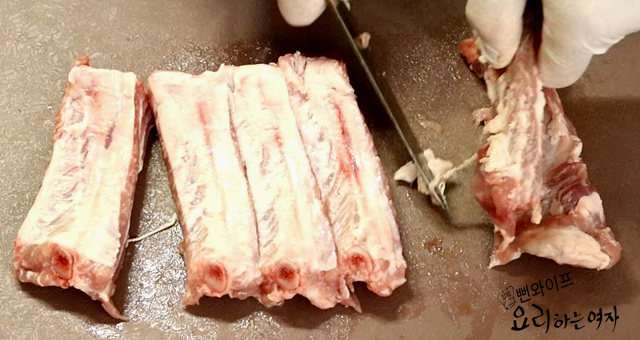
I bought a whole rack of baby back ribs that had not been separated.
When the ribs are whole, the membrane is often still attached.
If you gently peel from the edge and pull firmly, it separates like this.
If you cook them without removing the membrane, they will be tough and the seasoning will not penetrate well.
Pre-cut ribs already have the membrane removed, so you can use them as they are.
Cut between the bones with a knife to separate the ribs into individual pieces. Trim off any excess fatty parts as well.
Drain the blood
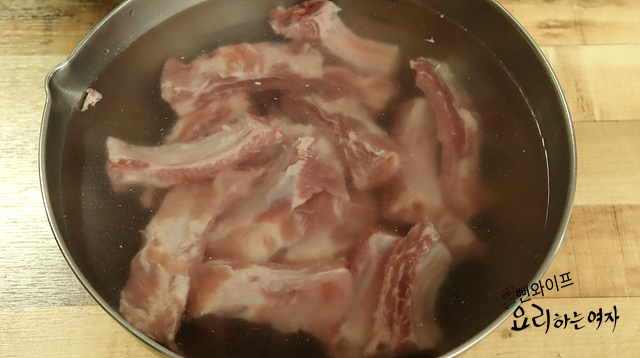
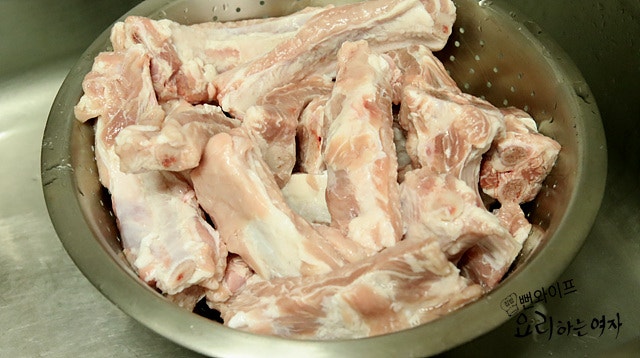
Soak the baby back ribs in cold water to draw out the blood.
Let them soak for about 30 minutes, changing the water occasionally, then drain in a colander.
Blanch the baby back ribs
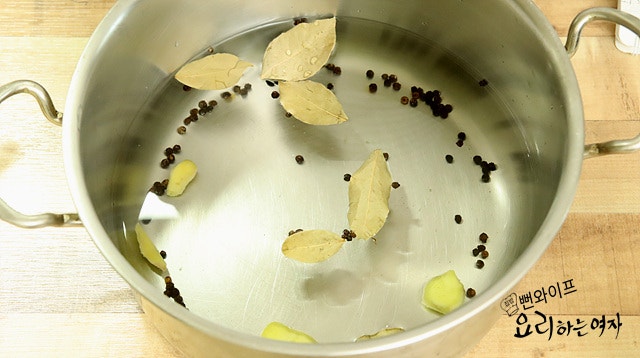
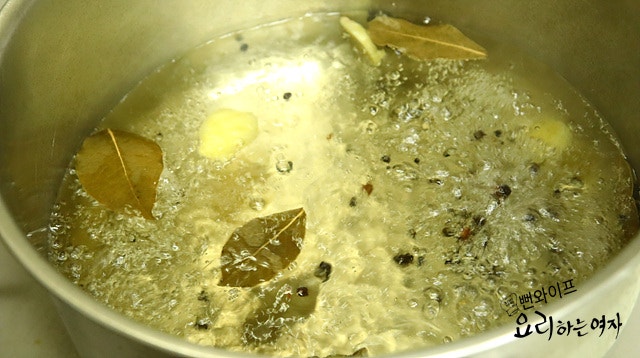
Pour in enough water to submerge the baby back ribs (about 10 cups), add 1 tbsp whole black peppercorns, 5 bay leaves, ginger, and 1/2 cup soju, and bring to a rolling boil.
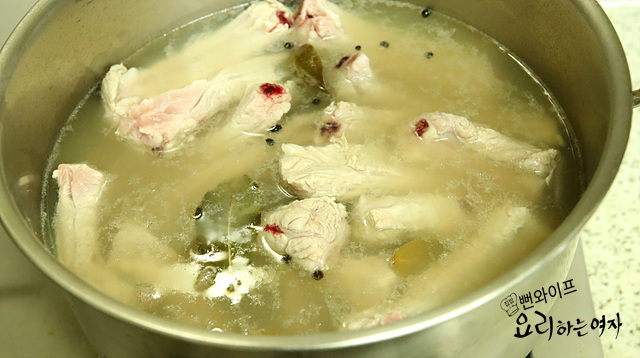
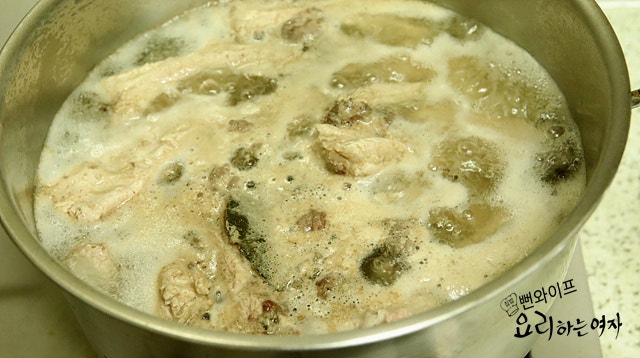
Add the baby back ribs and boil for about 5 minutes.
A lot of impurities from between the bones will surface as they boil.
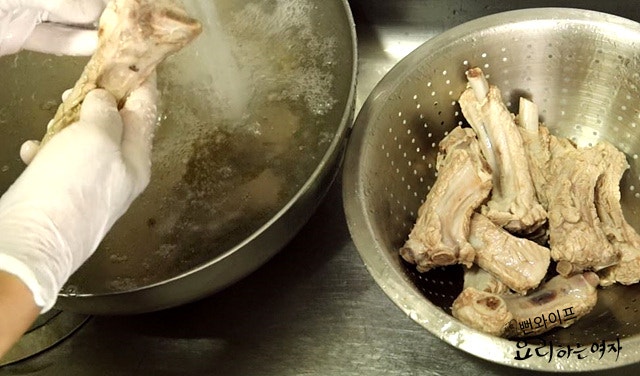
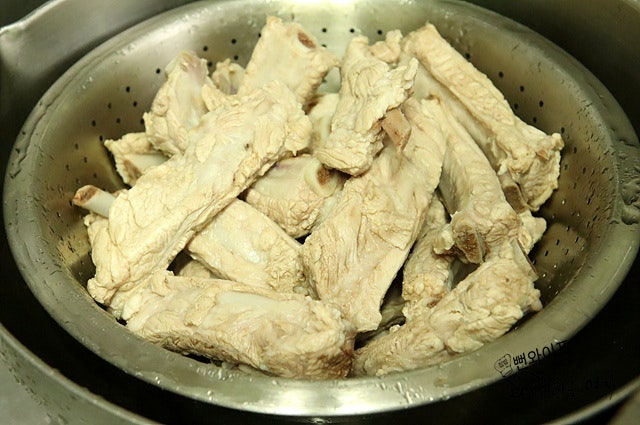
Wash thoroughly under running water, rubbing away any sticking impurities.
Roughly shake off excess water.
Season the ribs
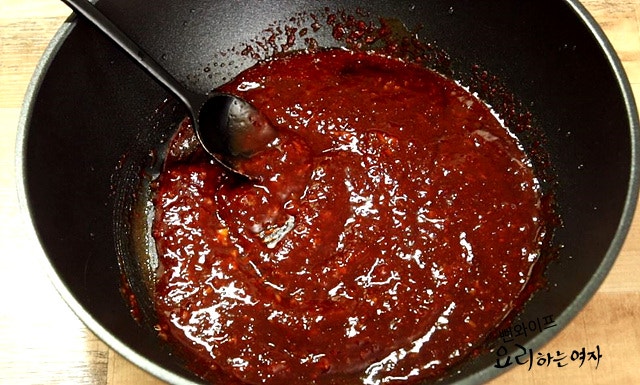
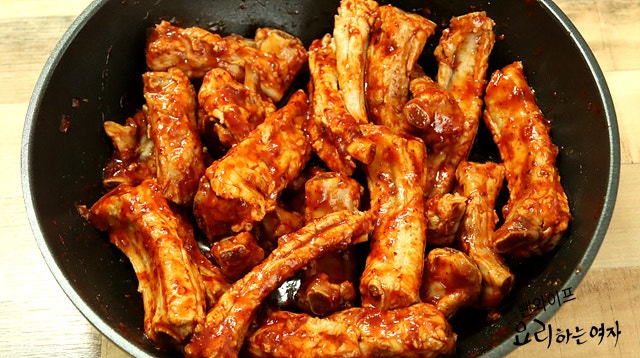
Combine all the seasoning ingredients except the water, mix well, then add the baby back ribs and toss evenly.
Let them marinate for about 30 minutes so the flavors soak in.
Simmer
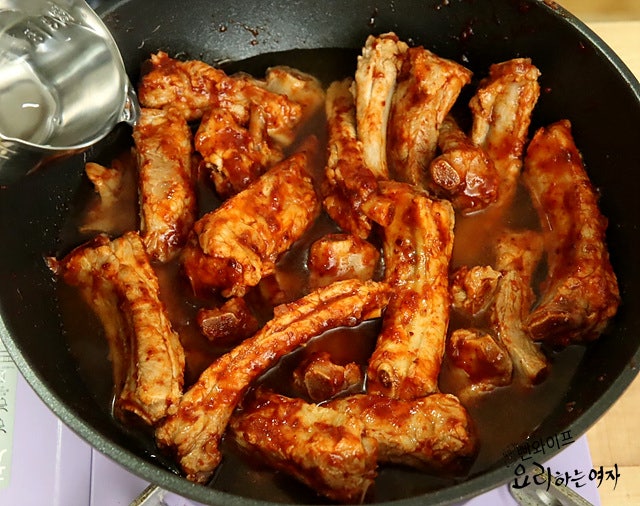
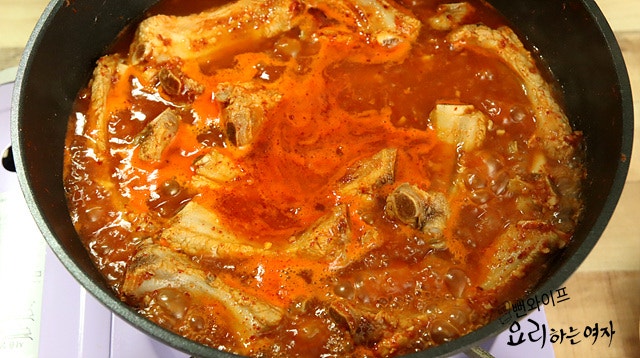
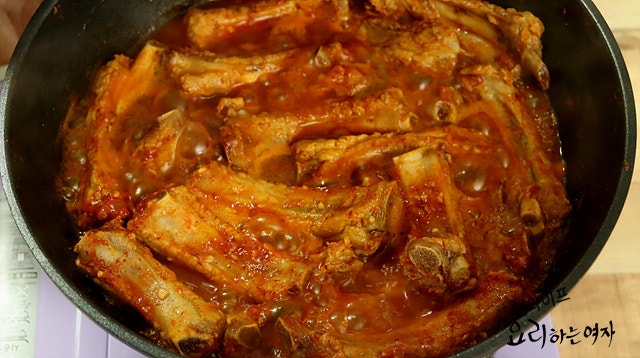
Pour in 3 cups of water and bring to a rolling boil. Lower the heat to medium, cover with a lid, and simmer for about 20 minutes.
The meat should become tender and the liquid should be reduced by about half.
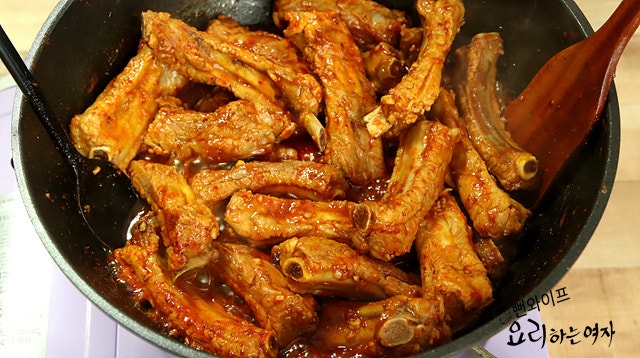
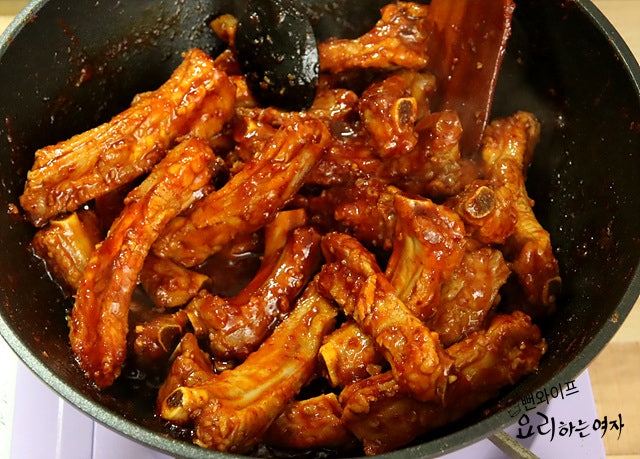
Turn the heat to high and braise down, stirring frequently.
When the sauce turns glossy and clings tightly to the baby back ribs, it is done.
Finish
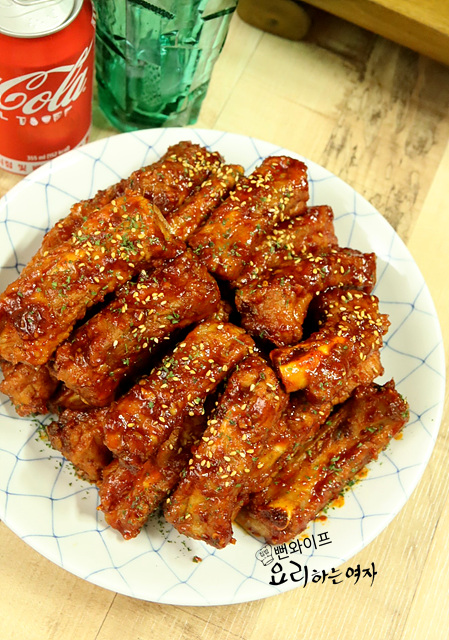
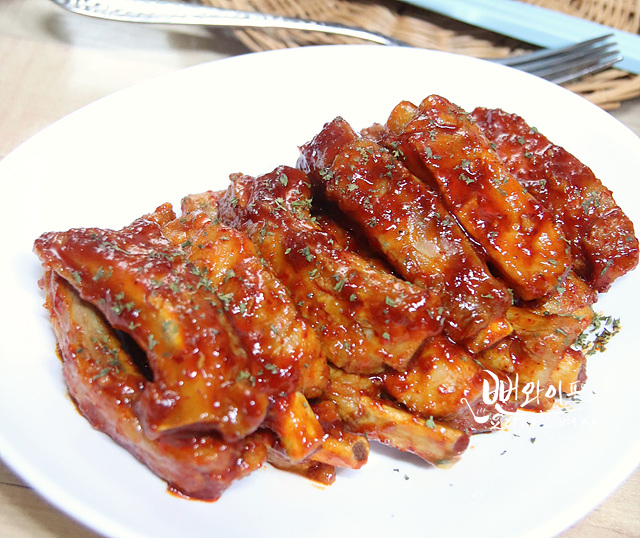
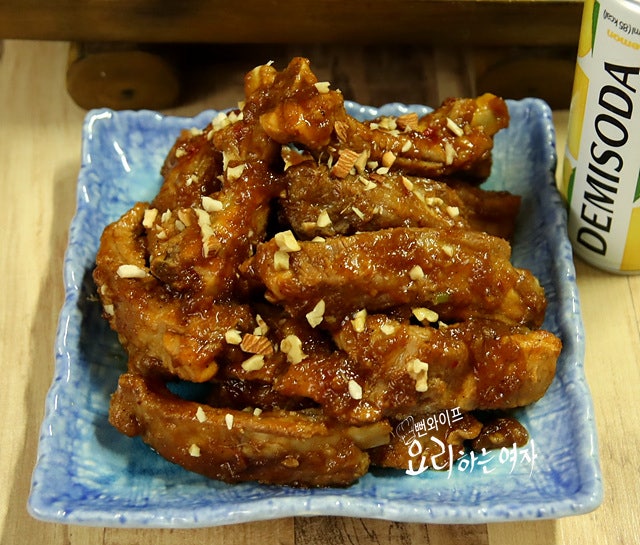
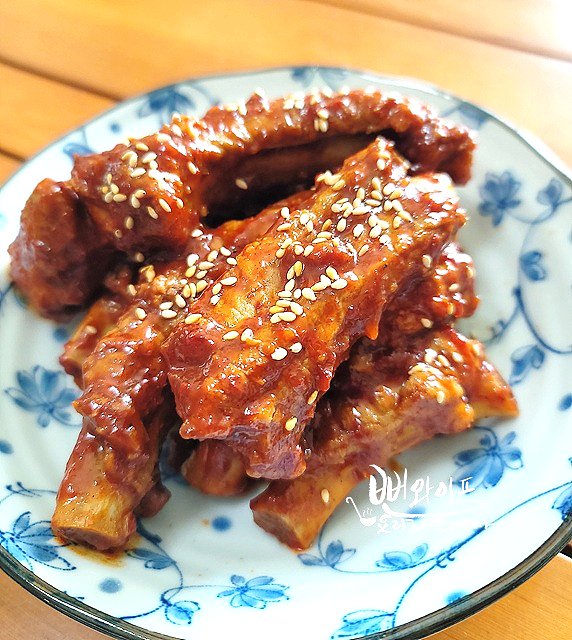
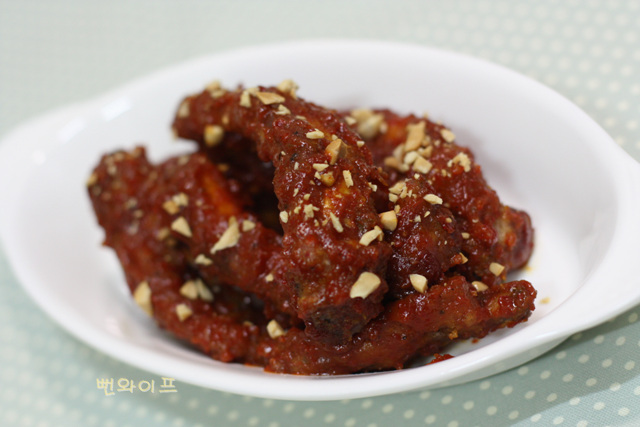
Because the baby back ribs were thick, I braised them for a long time, and the meat turned out tender and truly delicious.
It is soft enough that even elderly folks with weak teeth can easily enjoy it.
The sauce does not slip off; it is completely absorbed into the meat, so the sauce is the meat and the meat is the sauce.
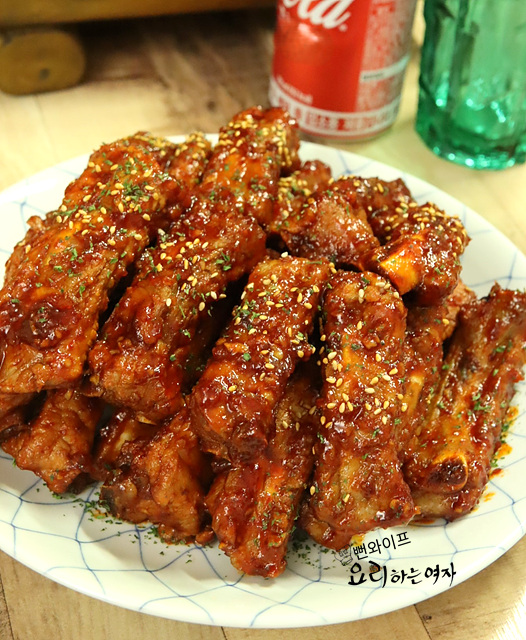
Since no overly spicy ingredients were added, it has an appetizing flavor that even kids can enjoy.
It is a perfect deunggalbi jjim with not even 0.0001% of gamey odor.
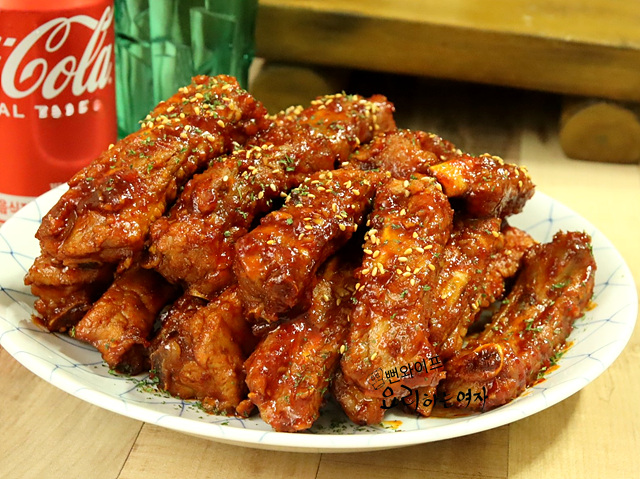
How could you eat something this delicious plain?
You definitely need a glass of beer.
Make a generous batch as a weekend meal for the whole family to enjoy. Everyone will welcome it with open arms.
I can personally guarantee the flavor.
 Ppunwife's tips
- If you cook them without removing the membrane, they will be tough and the seasoning will not penetrate well.
FAQ
Do I really need to peel off the thin membrane on the baby back rib bones?
If you cook a whole rack of ribs without removing the membrane, the texture will be tough and the seasoning cannot penetrate deeply, so it is best to pull and remove it starting from one edge.
What should I do if I don't have oyster sauce for the seasoning?
You can use an equal amount of regular soy sauce (jin-ganjang) instead of oyster sauce.
What can I add if I don't have enough aromatic ingredients for blanching the meat?
Besides whole black peppercorns, bay leaves, and ginger, you can use doenjang (Korean soybean paste), large green onions, regular onions, or whole garlic cloves to eliminate meat odors.
How can I adjust the heat if I want it spicier? AI-generated
You can add Cheongyang chili peppers (hot green chilies) or spicy gochugaru to the seasoning according to your taste for a sharper, spicier kick.