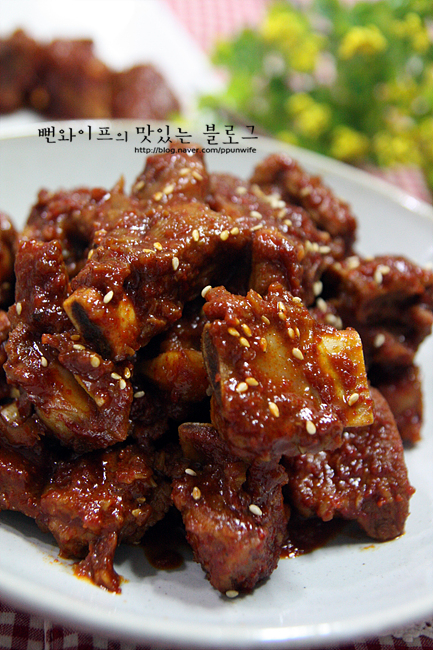
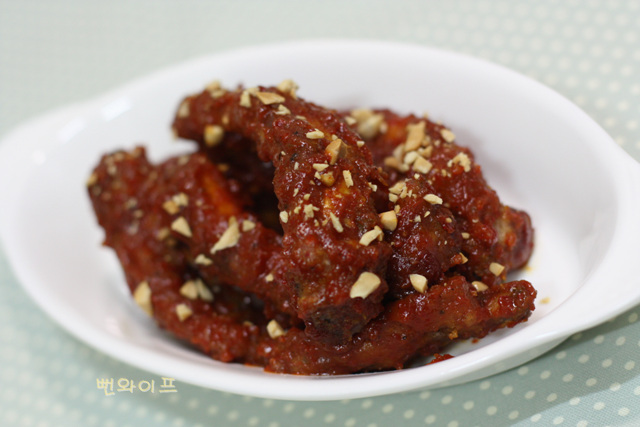
Spicy Deunggalbi Jjim (Braised Pork Ribs) with Tonkatsu Sauce
Spicy braised pork ribs simmered tender with tonkatsu sauce and ketchup to eliminate gaminess.
Translated from Korean by AI and not yet checked by a native speaker. Amounts and numbers are taken directly from the original recipe. Read the Korean original →
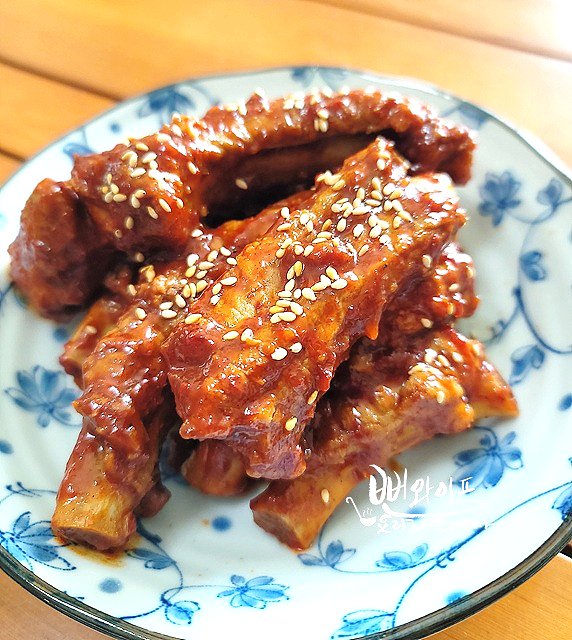
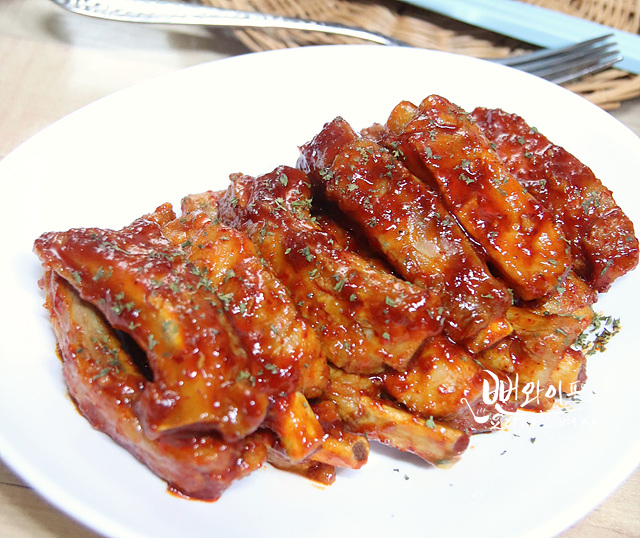
This pork rib dish uses store-bought sauces like tonkatsu sauce and ketchup to remove gaminess and bring out aromatic savory depth. A touch of gochugaru adds gentle heat so it eats cleanly without feeling greasy. Removing the thin membrane and parboiling ensures the meat pulls away tenderly from the bone.
- Servings
- 2–3 servings
- Difficulty
- Medium
- Spiciness
- Mildly spicy
Ingredients
Ingredients
- Pork baby back ribs1 kg
- Soju1/3 cup
- Ginger1 clove
- Whole black peppercorns1 tbsp
Seasoning
- Gochugaru (Korean chili flakes)2 tbsp
- Minced garlic1 tbsp
- Tonkatsu sauce3 tbsp
- Ketchup2 tbsp
- Oyster sauce1 tbsp
- Mirin (cooking rice wine)2 tbsp
- Corn syrup (mulyeot)2 tbsp
- Ground black peppera little
- Water3 cups
- Soak the cut ribs in cold water for about 30 minutes, changing the water occasionally, to draw out the blood.
- If you bought whole racks of ribs that have not been separated, peel off the membrane first. Loosen it slightly from the edge and pull firmly to strip it off easily.
- Bay leaves or doenjang (Korean soybean paste) also work well as parboiling ingredients.
Steps
Prepare the ingredients
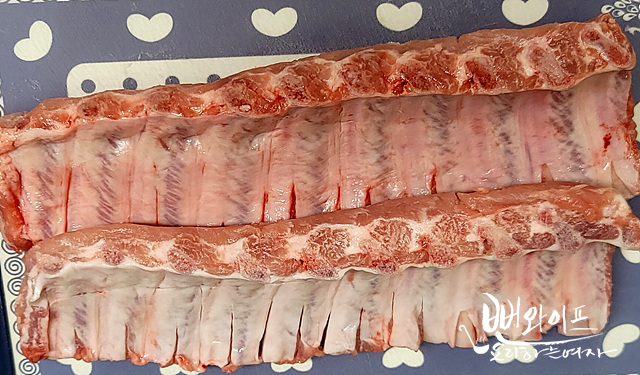
Here are 2 small racks of pork baby back ribs.
Prep the ribs
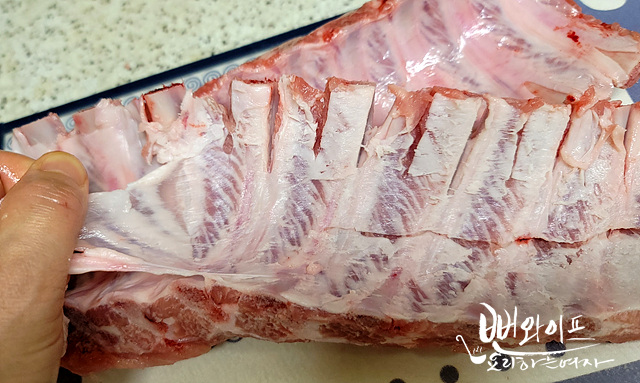
If you bought whole racks of ribs that have not been separated, peel off the membrane first.
Loosen it slightly from the edge and pull firmly to strip it off easily. Removing this helps the seasoning absorb better and makes the meat much more tender to eat.
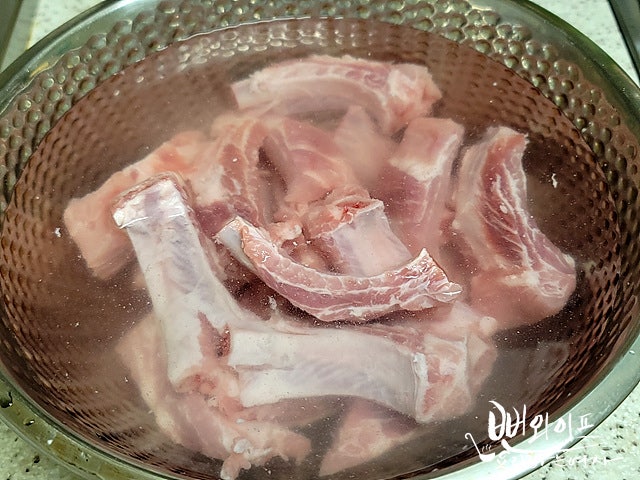
Soak the cut ribs in cold water for about 30 minutes, changing the water occasionally, to draw out the blood.
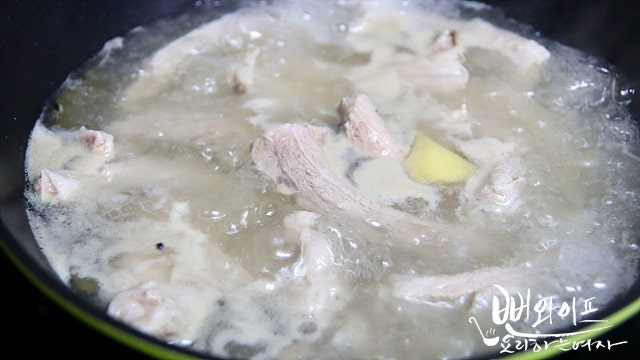
Pour in enough water to submerge the ribs, add 1 slice of ginger, 1 tbsp whole black peppercorns, and 1/3 cup soju, and once it comes to a rolling boil, add the ribs and parboil for 5 minutes.
Bay leaves or doenjang (Korean soybean paste) also work well as parboiling ingredients.
Parboiling the ribs once like this to remove impurities helps eliminate gaminess.
Rinse the parboiled ribs under running water.
Boil
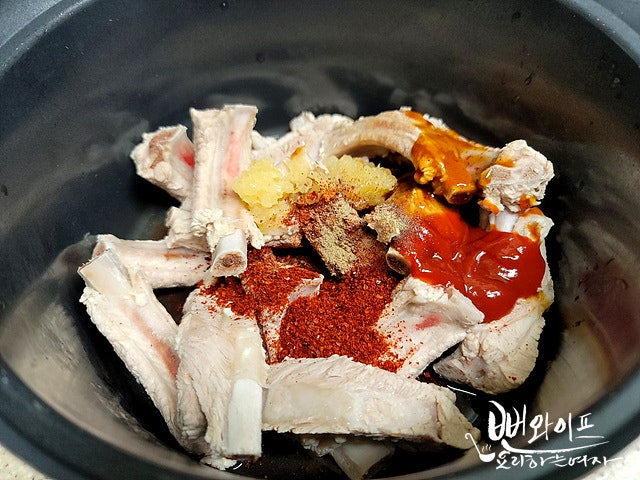
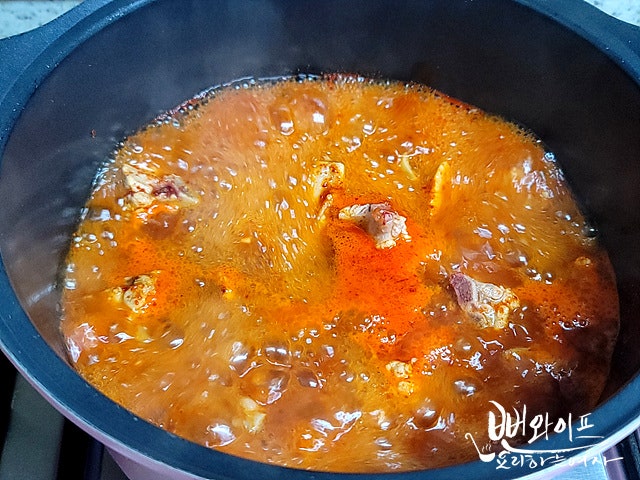
Place the ribs in a pot, add 2 tbsp gochugaru (Korean chili flakes), 1 tbsp minced garlic, 3 tbsp tonkatsu sauce, 2 tbsp ketchup, 1 tbsp oyster sauce, 2 tbsp mirin (cooking rice wine), 2 tbsp corn syrup (mulyeot), and a little ground black pepper, mix well, and let sit for about 30 minutes so the seasoning absorbs.
Pour in 3 cups water to fully submerge the ribs, and once it starts to boil, lower the heat, cover with a lid, and simmer gently for about 20 minutes.
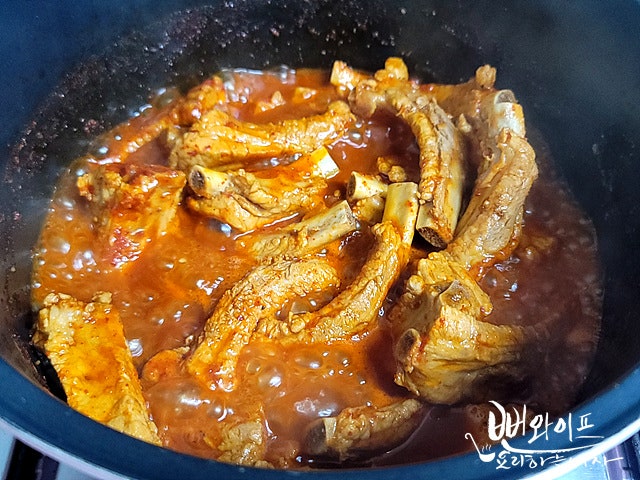
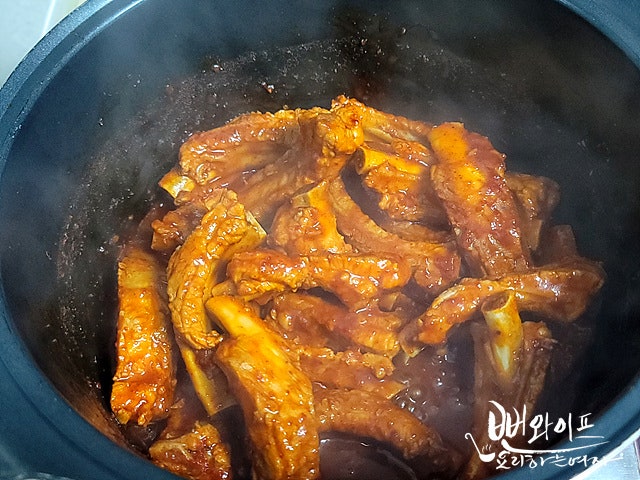
The liquid will have reduced by more than half, and the meat will be completely cooked through.
Now remove the lid and braise down until glossy, stirring frequently so it does not burn.
Finish
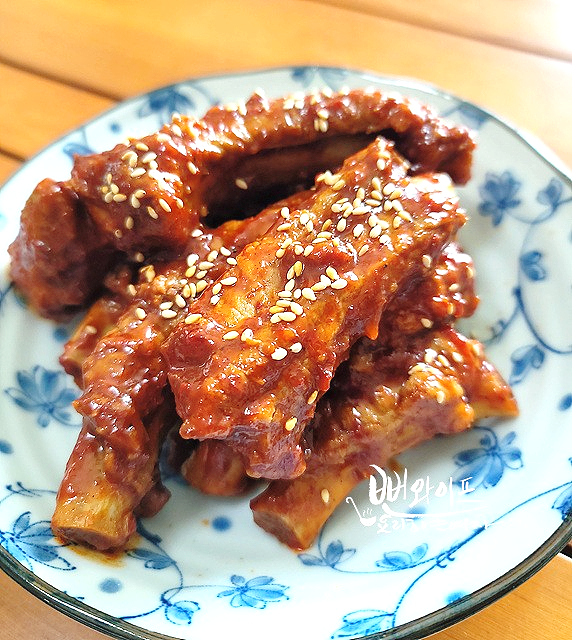
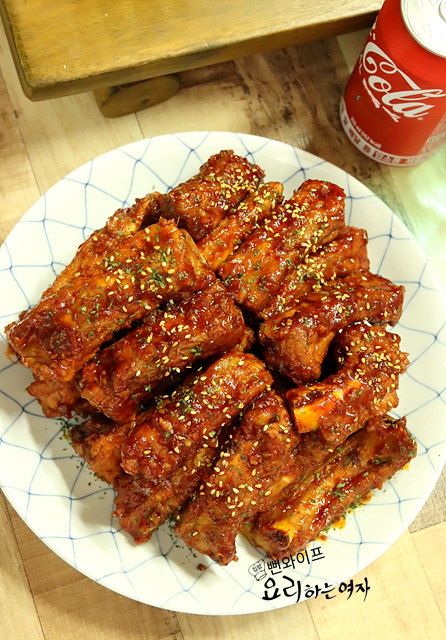
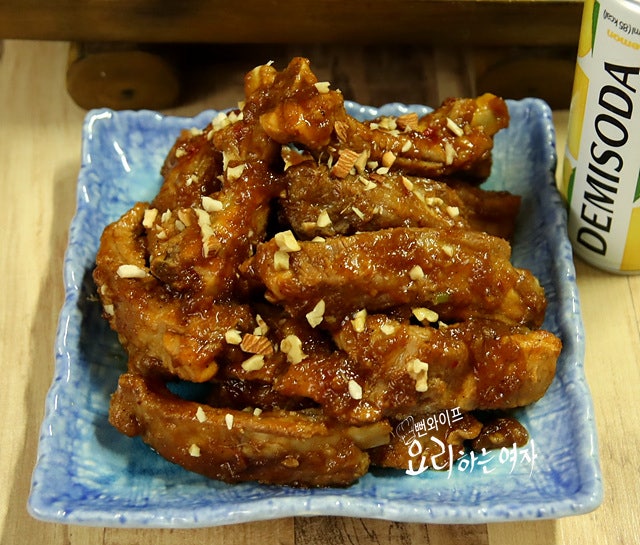
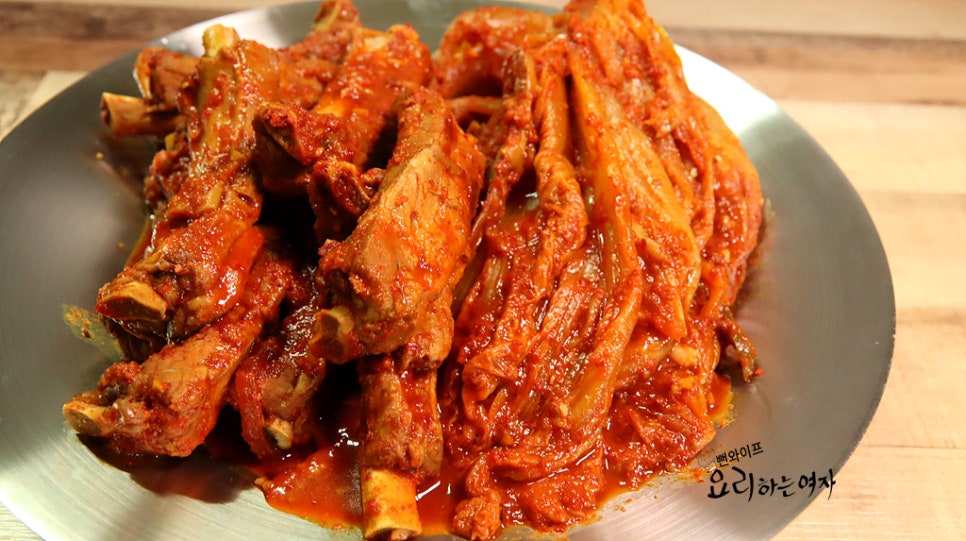
Adding plenty of tonkatsu sauce instead of soy sauce makes it fragrant and delicious.
With the addition of gochugaru, it is pleasantly spicy and not greasy at all.
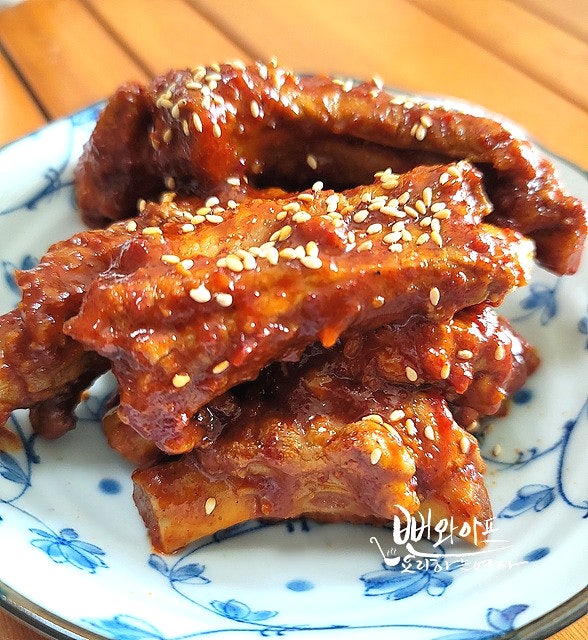
If you just reduce or omit the gochugaru, even kids can easily enjoy it.
If you have forgotten bottles of sauce sitting in the fridge, try using them in braised ribs like I did.
 Ppunwife's tips
- Removing the membrane from whole ribs helps the seasoning absorb better and makes the meat much more tender to eat.
- Parboiling the ribs once to remove impurities helps eliminate gaminess.
FAQ
Do I have to peel off the thin membrane attached to the rib bones?
If you strip the membrane away starting from the edge, the seasoning penetrates deeper and the texture becomes much more tender.
Can I add other ingredients when parboiling the ribs the first time?
In addition to ginger and whole black peppercorns, adding bay leaves or doenjang (Korean soybean paste) to parboil also helps reduce off-odors.
How do I adjust the seasoning to eat this with young children?
If you reduce the amount of gochugaru (Korean chili flakes) or leave it out completely, it will not be spicy, making it great for kids to eat.
Is it okay to use Worcestershire sauce instead of tonkatsu sauce?
Using Worcestershire sauce or other spiced sauces you have in the fridge also works nicely to eliminate odors and add savory flavor.