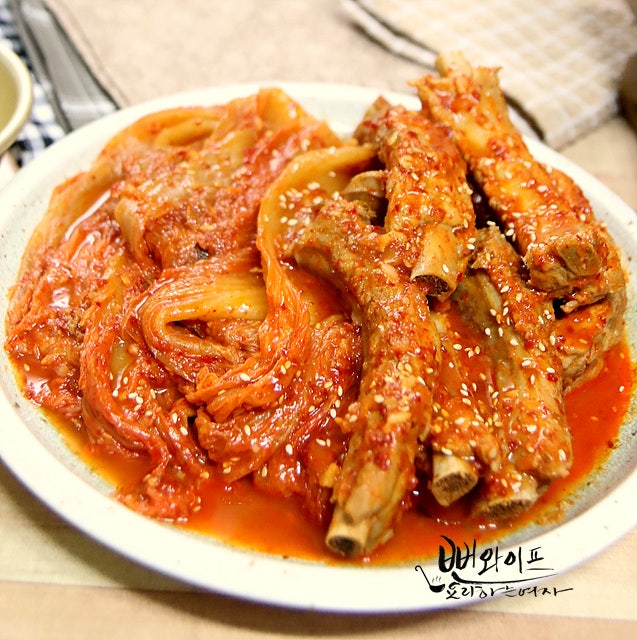
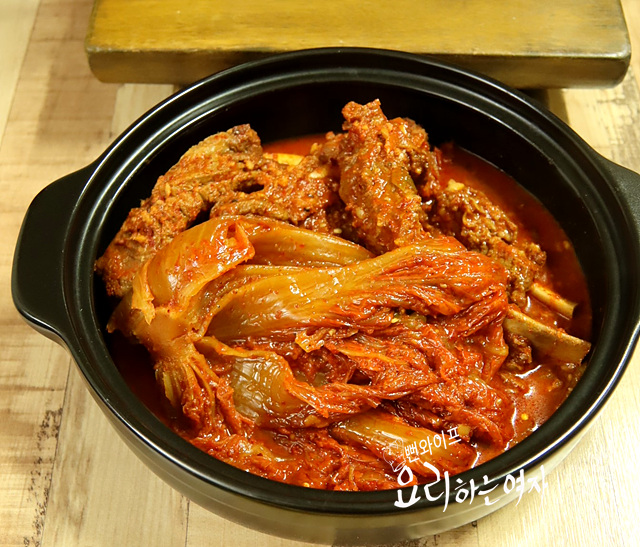
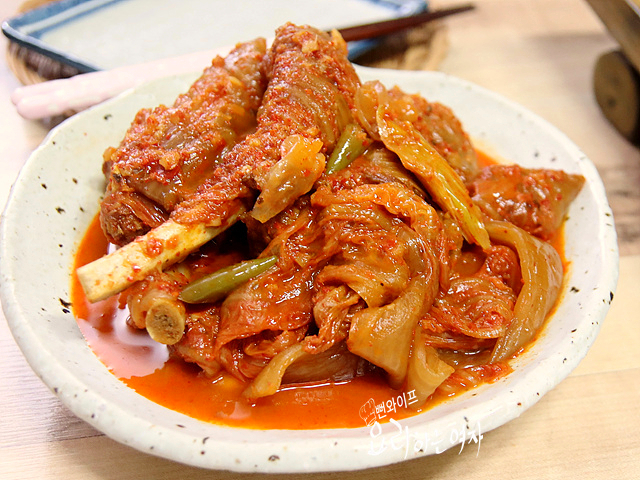
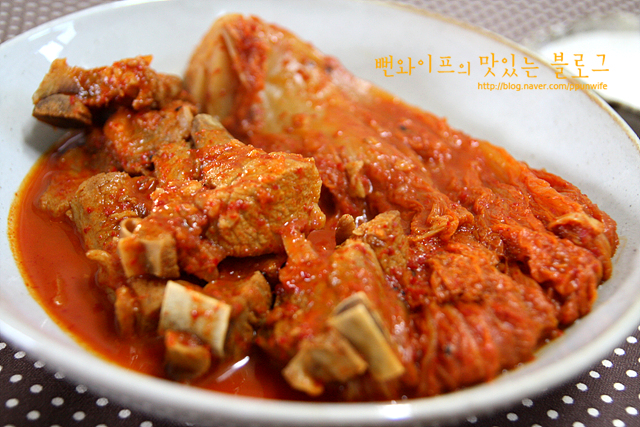
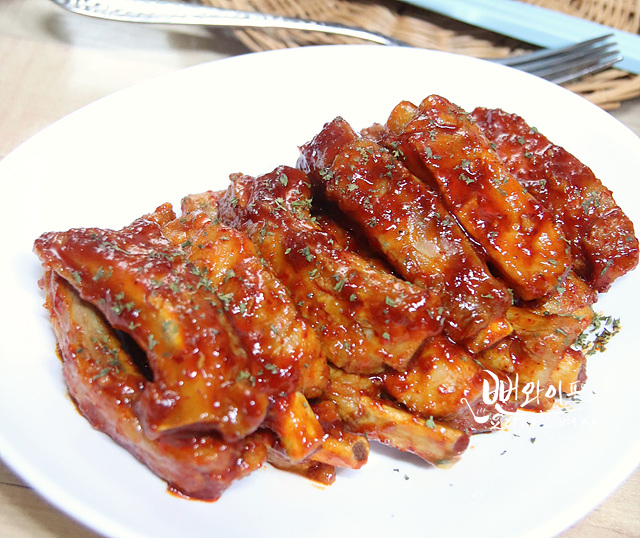
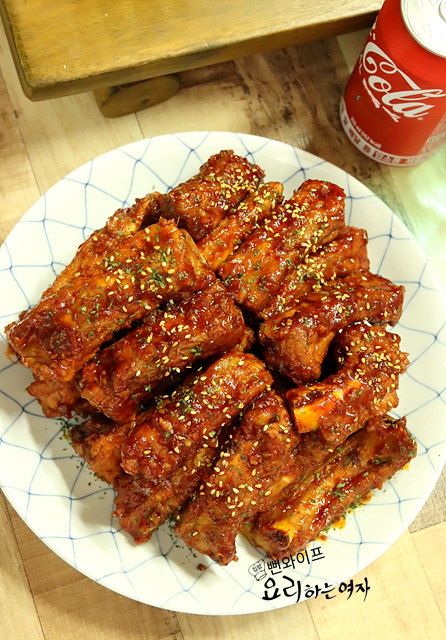
Hearty Deunggalbi Kimchi Jjim (Braised Pork Ribs with Kimchi)
A hearty braised dish made by topping seasoned baby back ribs with aged sour kimchi and simmering gently.
Translated from Korean by AI and not yet checked by a native speaker. Amounts and numbers are taken directly from the original recipe. Read the Korean original →
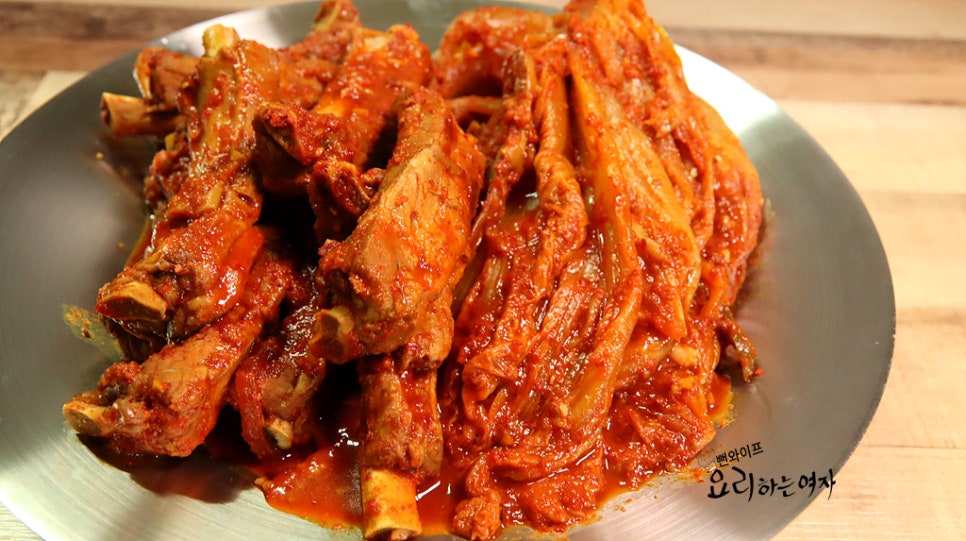
This braised dish parboils baby back ribs and seasons them beforehand so the meat flavors blend seamlessly with the kimchi. Layering onions on the bottom and simmering gently with aged sour kimchi keeps the meat tender and brings out a deep savory richness in the kimchi. Spicy and filling, it is wonderful for a weekend dinner or alongside drinks.
- Servings
- 3–4 servings
- Cook time
- 23 minprep not included
- Difficulty
- Medium
- Spiciness
- Spicy
Ingredients
Ingredients
- Baby back ribs1 stalk, 600 g
- Aged sour kimchi1/2 head (2 cloves)
- Onion1
- Large green onion (daepa)1/2 stalks
- Cheongyang chili pepper (hot green chili)2
- Kimchi brine1 cup
- Anchovy broth (or water from washing rice, beef bone broth)3 cups
- Sugar1 tbsp
- Gochugaru (Korean chili flakes)2 tbsp
- Bay leaves5 leaves
- Doenjang (Korean soybean paste)2 tbsp
- Whole black peppercorns1 tbsp
- Soju1/3 cup
- Water7 cups
Rib marinade
- Minced garlic1 tbsp
- Regular soy sauce (jin-ganjang) (or brewed soy sauce (yangjo-ganjang)) (or brewed soy sauce (yangjo-ganjang))1 tbsp
- Mirin (cooking rice wine)1 tbsp
- Ground black peppera little
- Soak the ribs in cold water for about 30 minutes, changing the water occasionally, to draw out residual blood and eliminate gamey odor.
- If you bought a whole slab rather than individually cut ribs, peel off the thin membrane so the seasoning penetrates well and the meat stays tender.
- You can also add ginger, garlic, or large green onion when boiling the ribs.
- Besides baby back ribs, braising pork ribs, pork shoulder, picnic shoulder, or ham all pair wonderfully with kimchi.
Steps
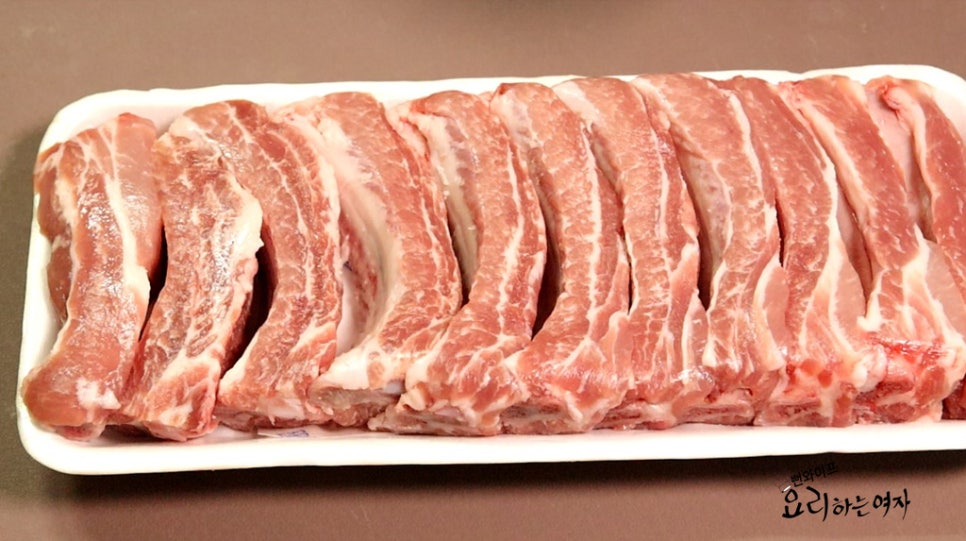
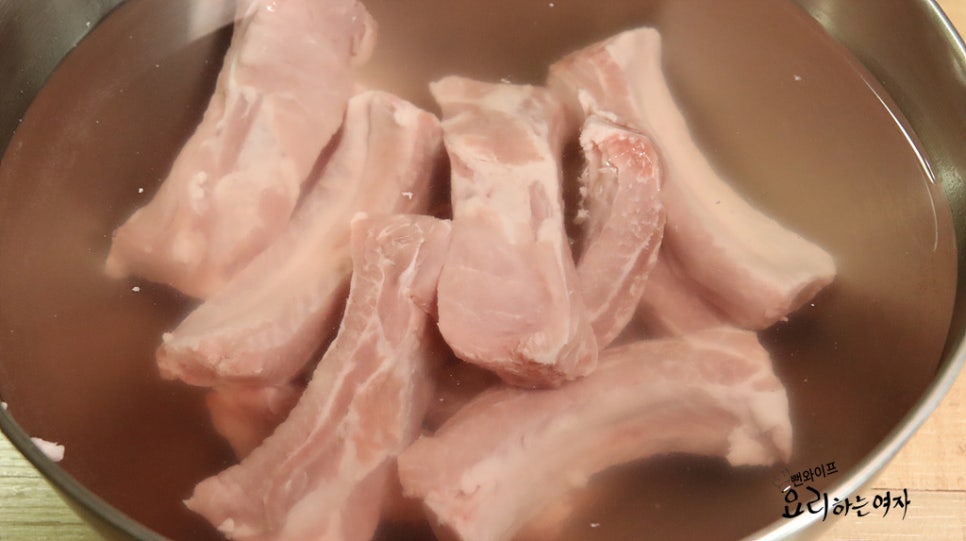
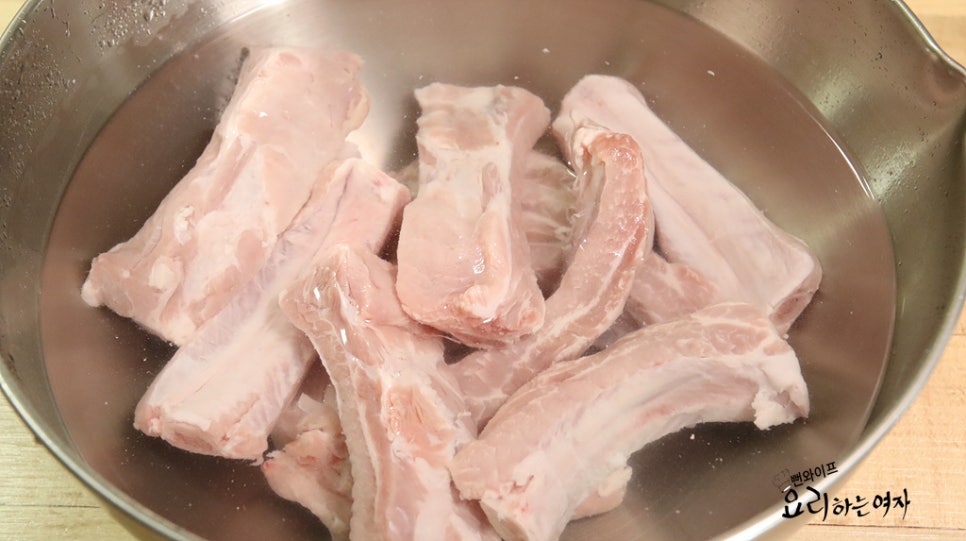
I bought ribs that were already cut apart into individual pieces.
If you bought a whole slab rather than cut ribs, peel off the thin membrane so the seasoning penetrates well and the meat stays tender.
To eliminate gamey odor, soak the meat in cold water for about 30 minutes, changing the water occasionally to draw out the blood.
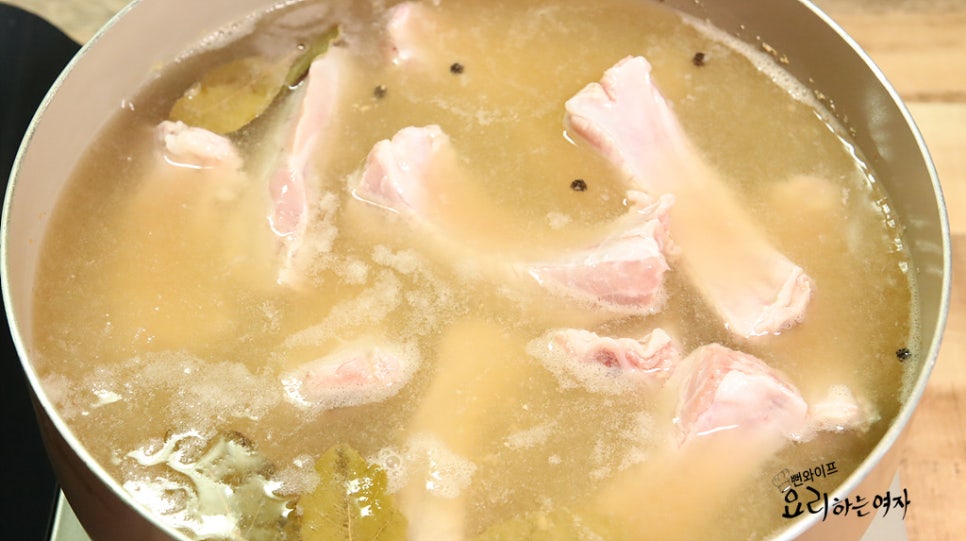
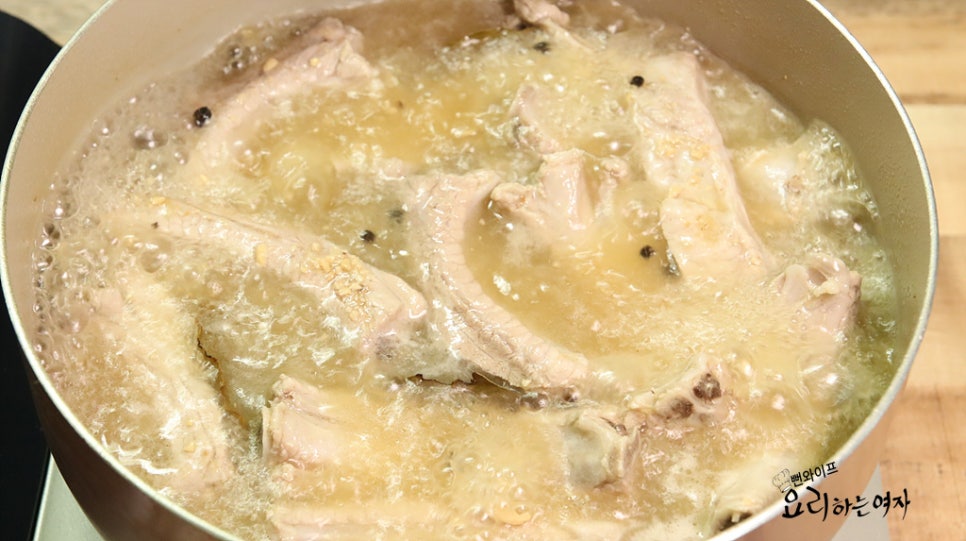
In a pot, bring 7 cups of water (enough to submerge the ribs), bay leaves, doenjang, whole black peppercorns, and soju to a rolling boil.
Add the ribs and boil for about 3 minutes.
Boiling the meat with these aromatic ingredients removes any lingering gamey odor.
Besides the ingredients I prepared, you can also add ginger, garlic, or large green onion when boiling the ribs.
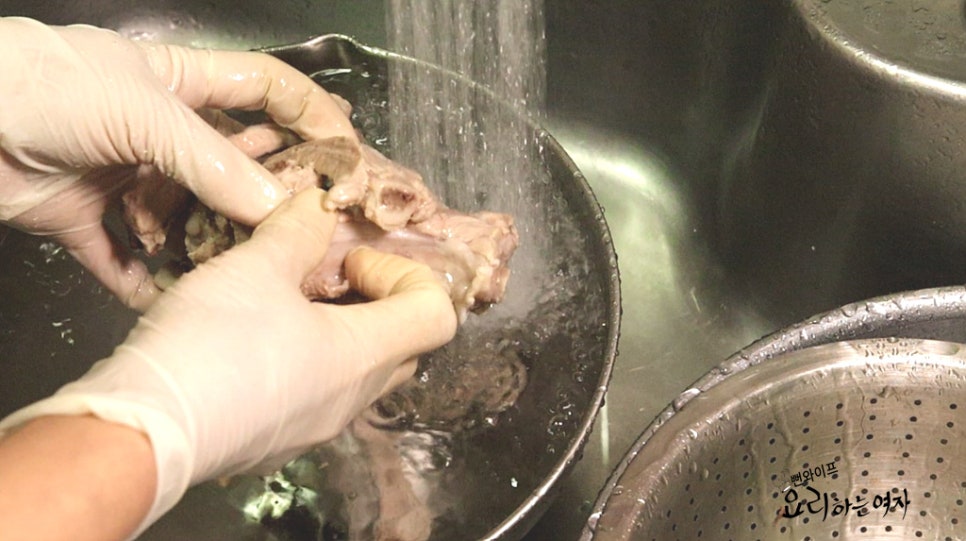
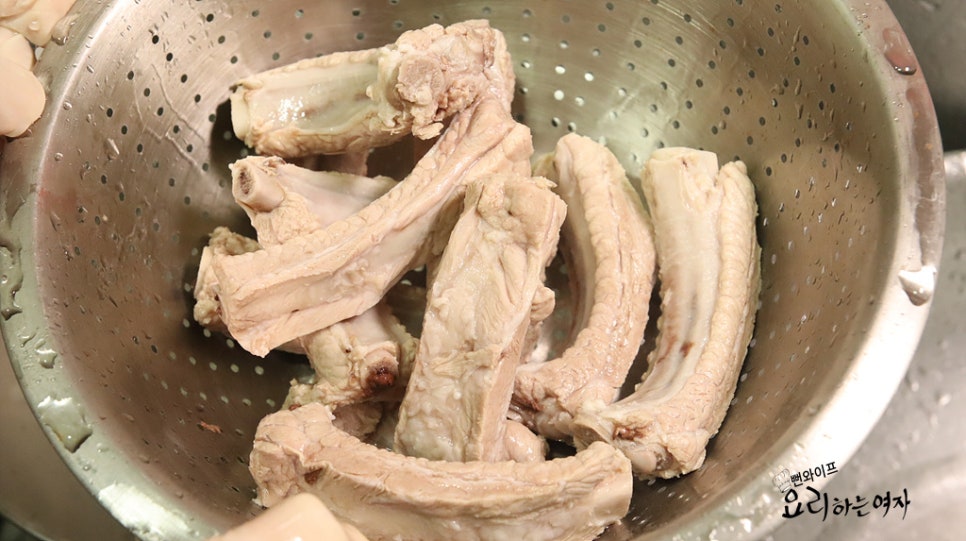
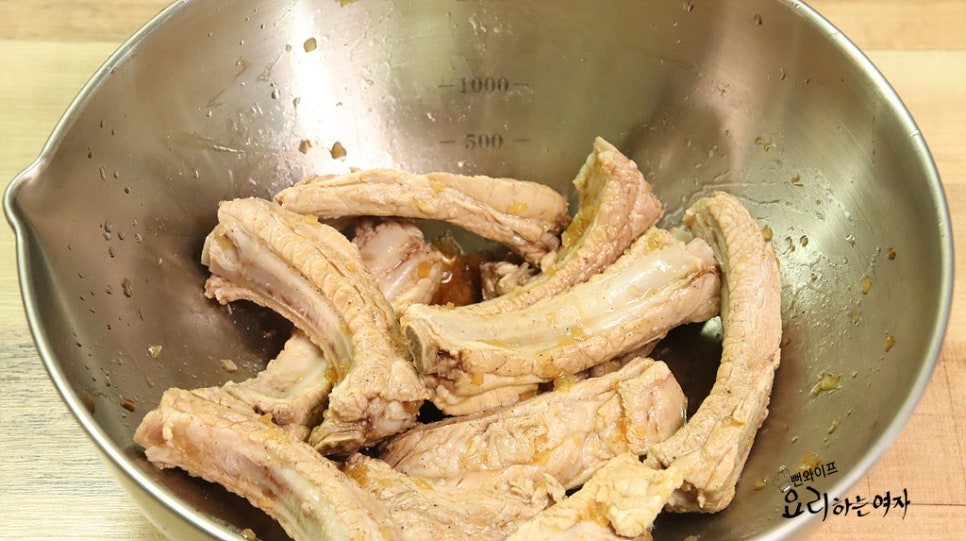
Rinse the ribs under running water and drain off excess moisture roughly.
Add minced garlic, soy sauce, mirin, and ground black pepper, then mix well to season.
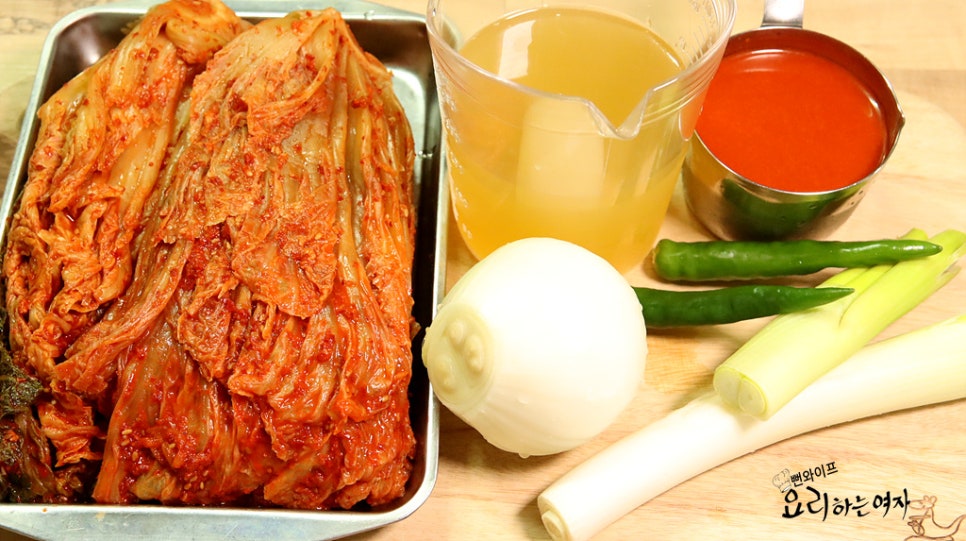
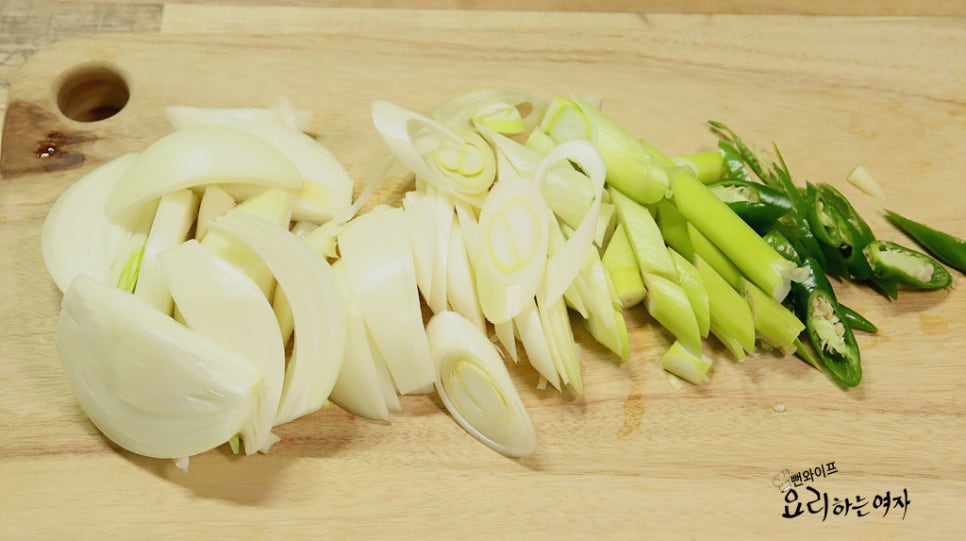
Prepare two quarters (1/2 head) of aged sour kimchi, anchovy broth, kimchi brine, onion, large green onion, and chili peppers.
If the kimchi has a lot of stuffing, brush some off, and cut the vegetables into rough, thick slices.
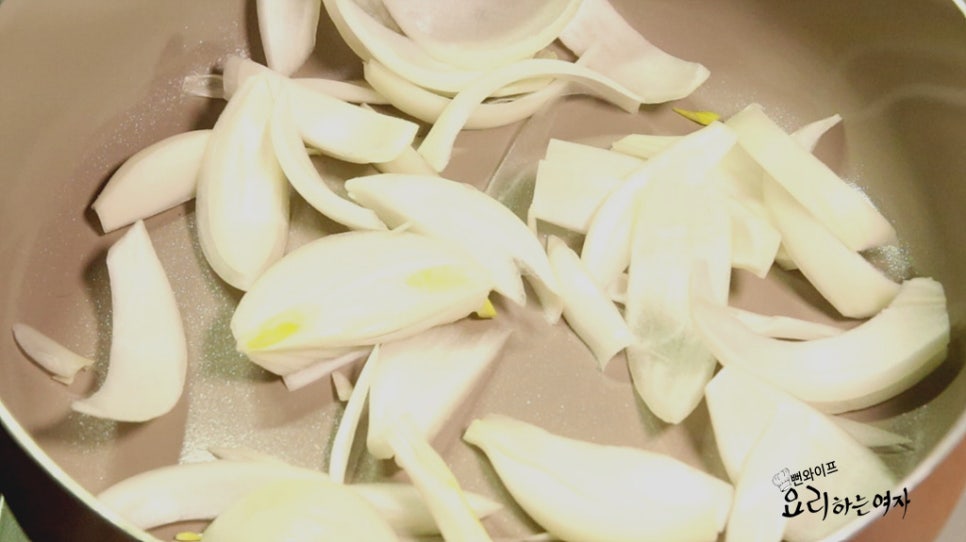
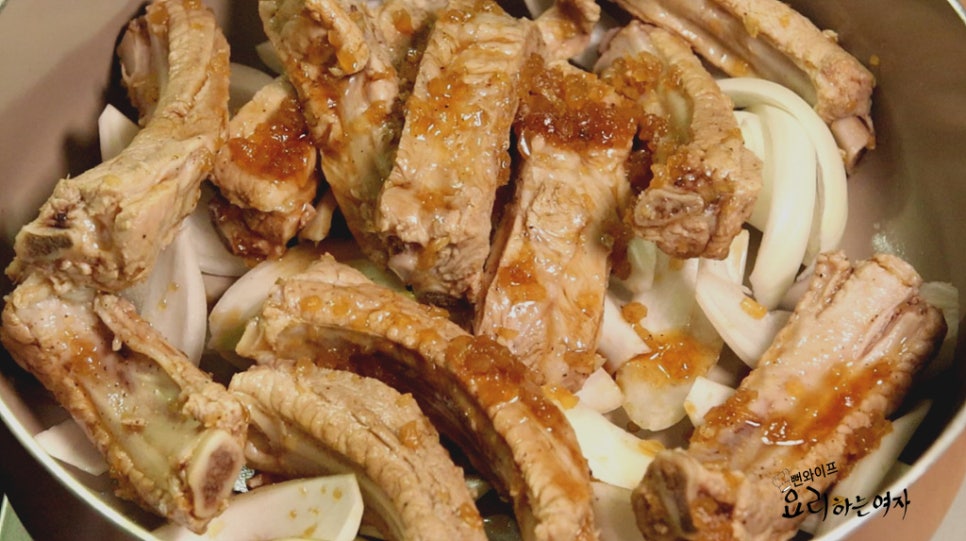
Spread the sliced onion evenly across the bottom of the pot and add the seasoned meat on top.
Placing the onion on the bottom allows its natural sweetness to blend well with the meat and kimchi broth.
Pre-seasoning the meat brings its seasoning closer to the salt level of the kimchi, so the flavors do not clash and it tastes much better.
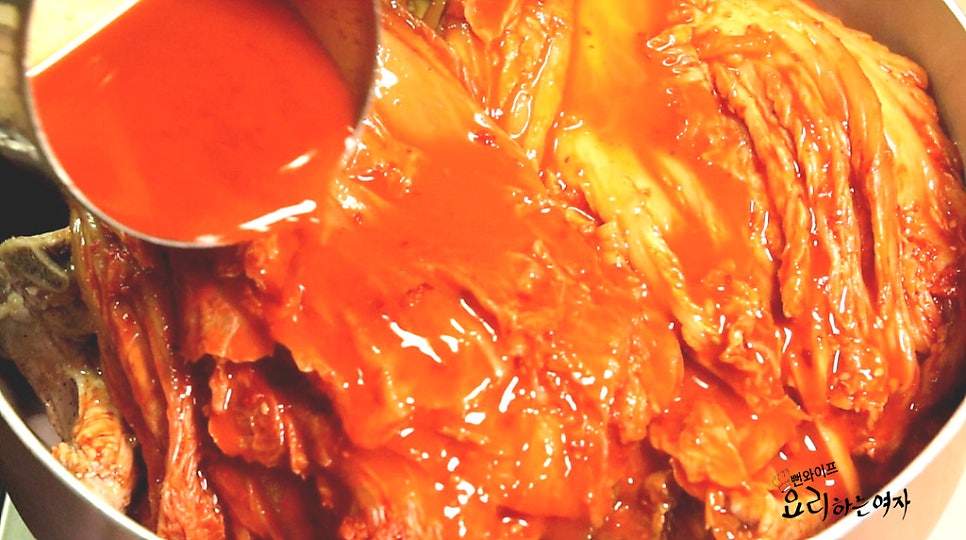
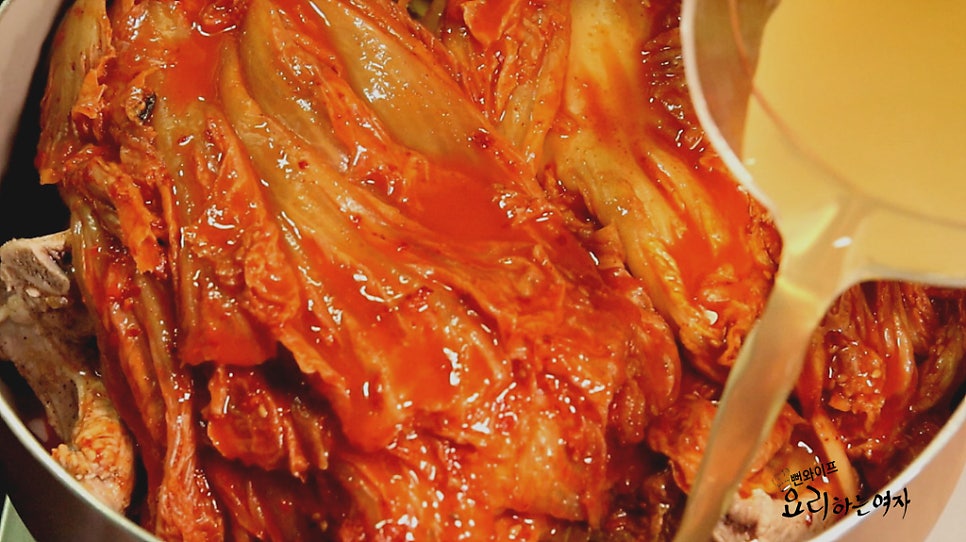
Spread the two pieces of kimchi over the top, then pour in all the kimchi brine and broth.
You need enough liquid to submerge about half of the kimchi; if there is not enough, simply add more water.
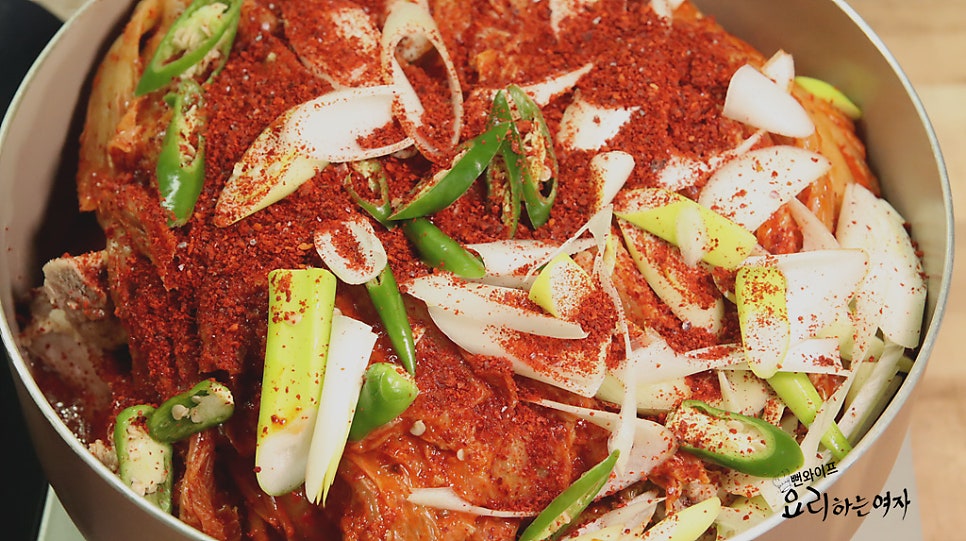
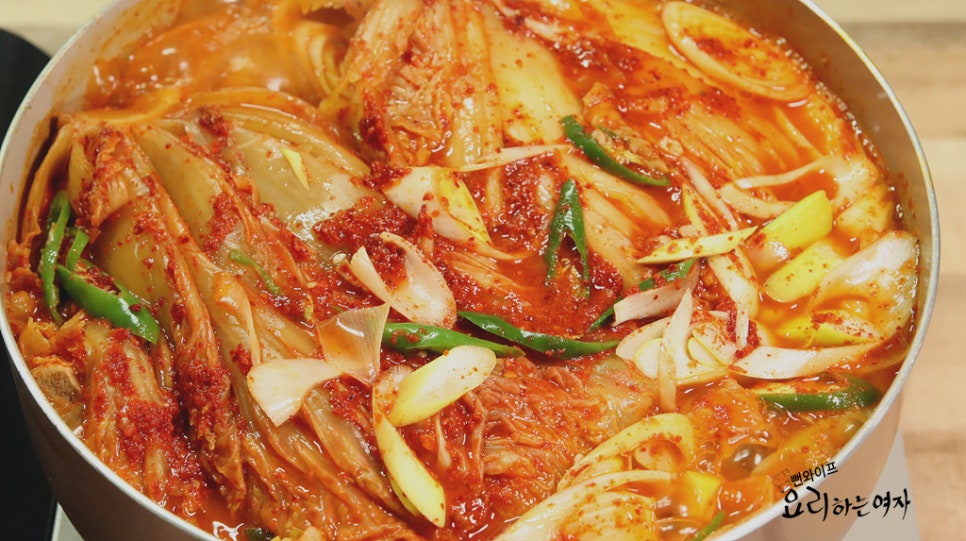
Add gochugaru, sugar, large green onion, and Cheongyang chili pepper. Bring to a rolling boil over high heat, then reduce to low heat and simmer gently for about 20 minutes.
If your kimchi already has a lot of seasoning paste, you can reduce the amount of gochugaru; the sugar is added to mellow the tartness, but you may skip it if you prefer.
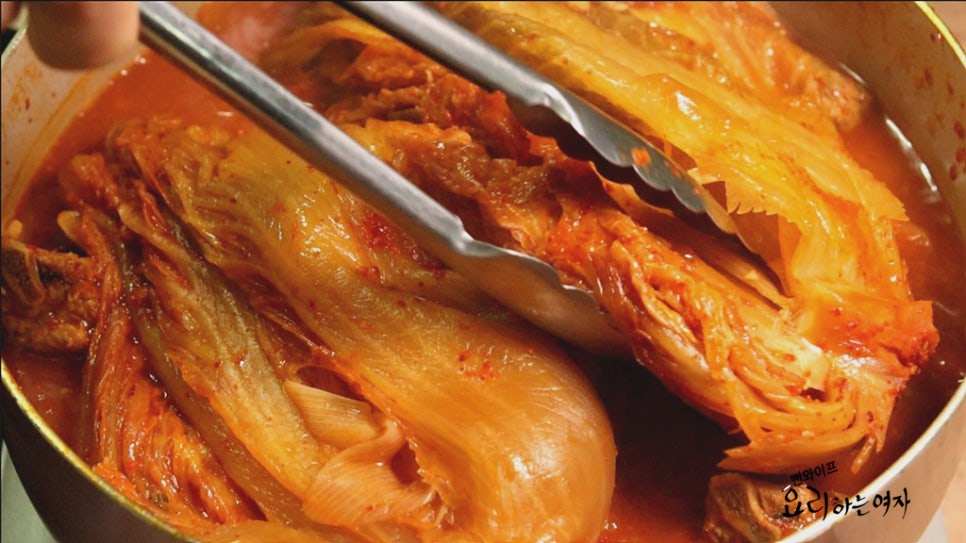
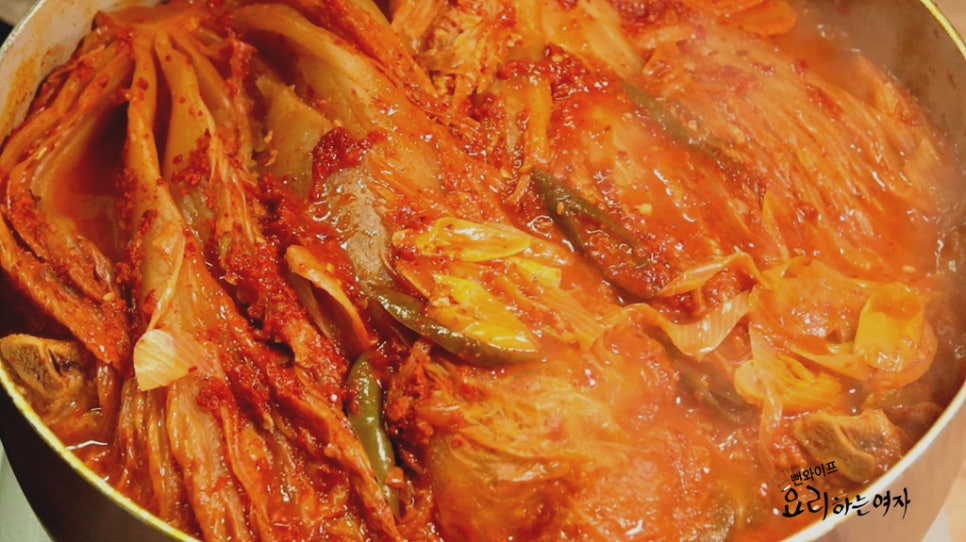
Midway through the 20 minutes of simmering, turn the kimchi over so it cooks evenly. Once the kimchi is tender, the dish is done.
 Ppunwife's tips
- Placing the onion on the bottom allows its natural sweetness to blend well with the meat and kimchi broth.
- Pre-seasoning the meat brings its seasoning closer to the salt level of the kimchi, so the flavors do not clash and it tastes much better.
- You need enough liquid to submerge about half of the kimchi; if it seems short, simply add a bit more water.
- If your kimchi already has a lot of seasoning paste, you can reduce the amount of gochugaru; the sugar is added to mellow the tartness, but you may skip it if you prefer.
- Midway through the 20 minutes of simmering, turn the kimchi over so it cooks evenly. Once the kimchi is tender, the dish is done.
FAQ
Do I really need to remove the membrane on the ribs?
Removing the thin membrane from a whole slab of ribs ensures the seasonings penetrate deeply and prevents the meat from turning tough.
Why do you season the meat beforehand?
Pre-seasoning the ribs balances their salt level with the kimchi, preventing the meat and broth flavors from tasting separate.
Can I use another broth instead of anchovy broth?
Yes, water from washing rice (ssaltteumul) or beef bone broth (sagol broth) also works very well.
Can I use different cuts of pork instead of baby back ribs?
Yes, braising pork ribs, pork collar, pork picnic shoulder, or pork ham all pair wonderfully with kimchi.