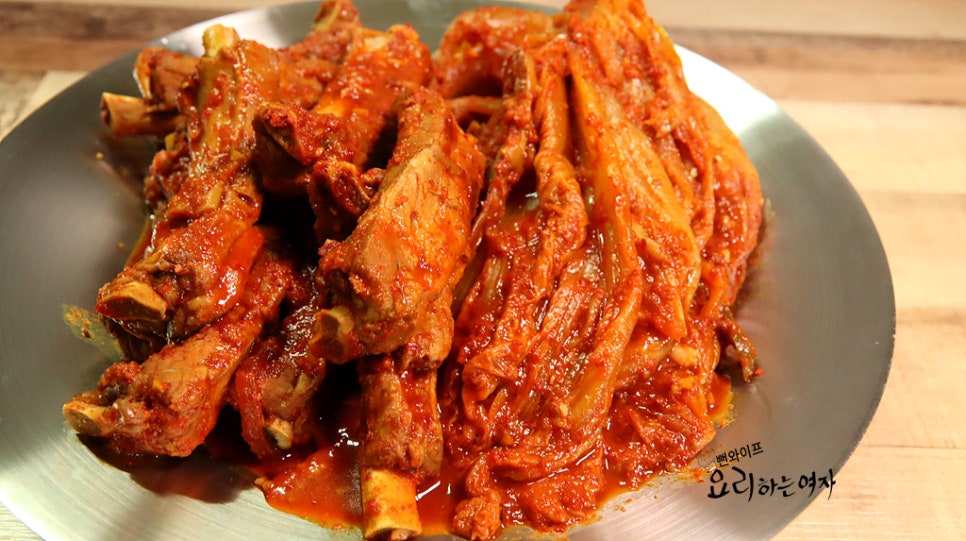
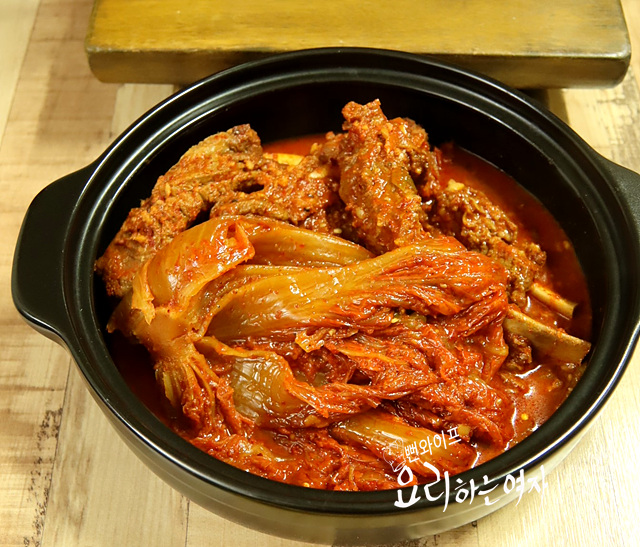
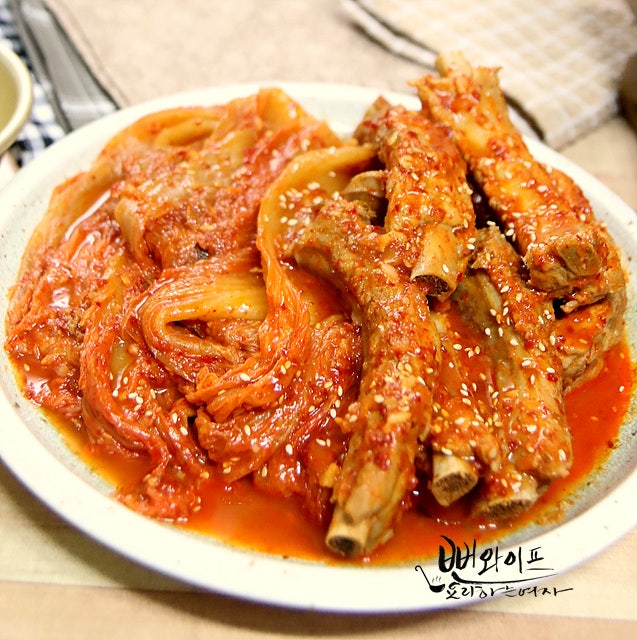
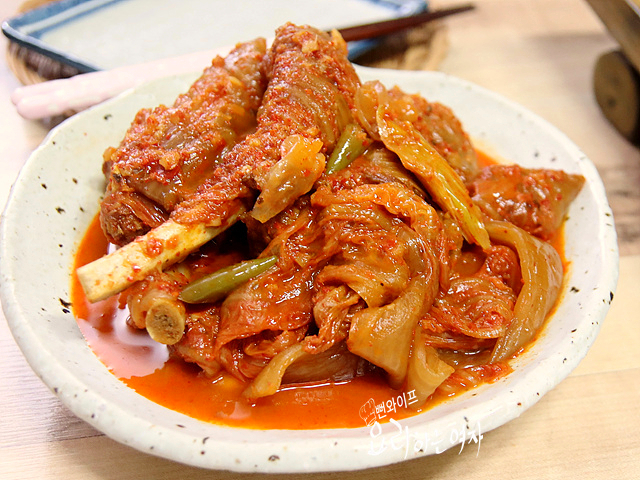
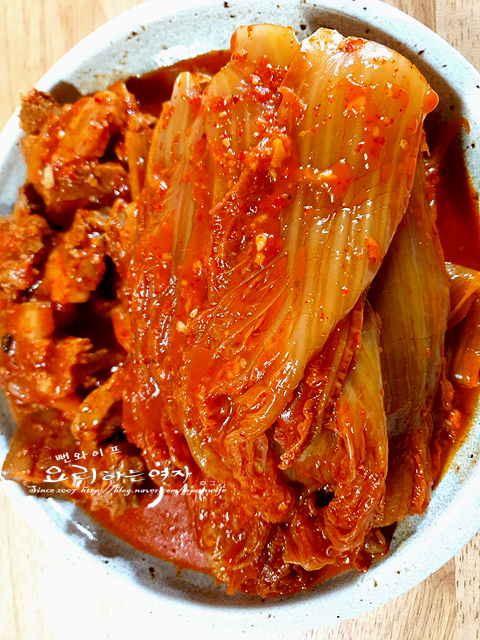
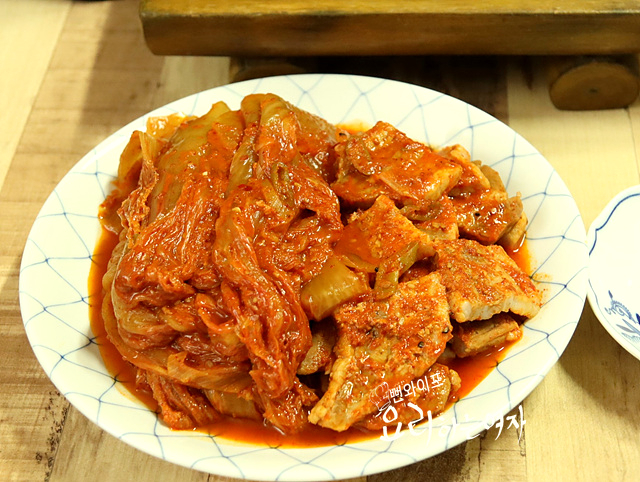
Slow-Simmered Dwaeji Galbi Kimchi Jjim (Braised Pork Ribs with Kimchi)
A braised dish made by topping blanched pork ribs with aged sour kimchi and simmering them slowly until tender.
Translated from Korean by AI and not yet checked by a native speaker. Amounts and numbers are taken directly from the original recipe. Read the Korean original →
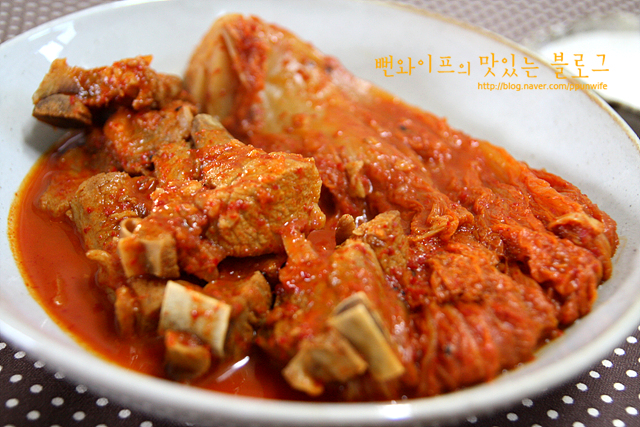
This one-dish meal features well-fermented kimchi and thoroughly soaked pork ribs simmered down in rich anchovy broth. Blanching the meat briefly with aromatic ingredients is the secret to getting rid of unwanted odors and excess grease. Simmered slowly over low heat for at least 30 minutes, it makes a wonderful side dish for rice or a satisfying accompaniment for drinks.
- Servings
- 2–3 servings
- Cook time
- 33 minprep not included
- Difficulty
- Medium
- Spiciness
- Spicy
Ingredients
Ingredients
- Pork ribs300 g
- Kimchi1 clove (1/4 head)
- Onion1/2
- Anchovy broth2 cups
- Gochugaru (Korean chili flakes)1 tbsp
Blanching ingredients
- Water2 cups
- Soju3 tbsp
- Doenjang (Korean soybean paste)1 tbsp
- Ginger1 knob
- Garlic3 cloves
- Whole black peppercorns1 tsp
Pork rib marinade
- Kimchi brine1/2 cup
- Minced garlic1/2 tbsp
- Cheongju (Korean rice wine) (or mirin (cooking rice wine))1 tbsp
- Ground black peppera little
Kimchi seasoning
- Sugar1 tbsp
- Soak the ribs in cold water for about 2 hours, changing the water occasionally, until no more blood comes out.
- Instead of pork ribs, you can use baby back ribs, pork shoulder, pork belly, or chunks of pork front leg.
- Instead of doenjang in the blanching ingredients, instant coffee or bay leaves also work well.
Steps
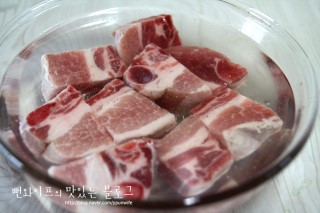
1. Prick the pork ribs here and there with a fork or knife. This helps the seasoning penetrate deep into the meat.
Soak them in cold water to draw out the blood, changing the water for about 2 hours until no more blood comes out.
Drawing out the blood well like this helps eliminate off-odors.
I used pork ribs, but you can also use baby back ribs, pork shoulder, pork belly, or whole chunks of pork front leg.
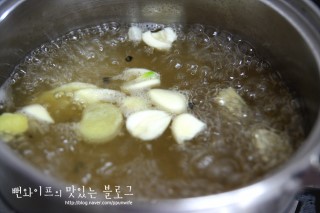
2. Add all the blanching ingredients to a pot and bring to a rolling boil.
Among the ingredients, coffee or bay leaves can replace the doenjang.
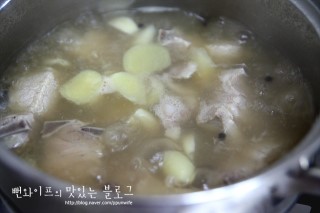
3. Add the pork ribs and blanch for 2 to 3 minutes.
This is just to remove excess grease and unwanted odors, so do not boil them for too long.
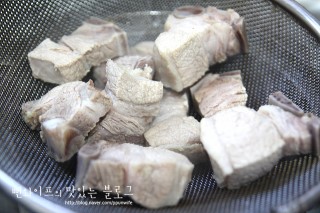
4. Rinse under running water and drain in a colander.
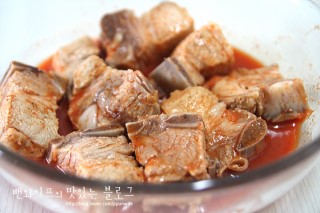
5. Add all the rib marinade ingredients and let the flavors absorb.
Straining the kimchi brine through a sieve to remove the sediment keeps the broth of the kimchi jjim clean and not murky.
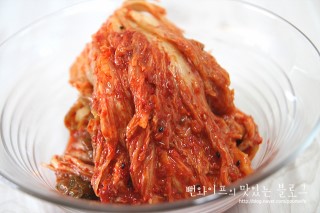
6. Prepare 1 quarter-wedge (1/4 head from kimchi-making) of well-fermented kimchi, shake off all the stuffing seasonings,
and sprinkle the sugar evenly over it.
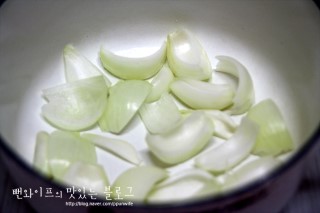
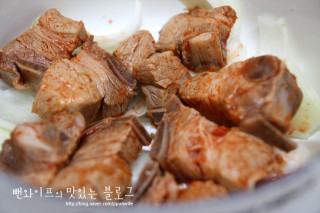
7. Place the thickly sliced onion at the bottom of the pot...
8. Add the pork ribs as well.
10
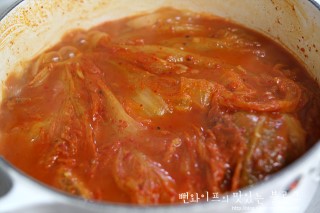
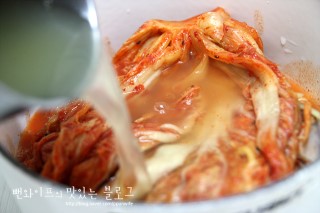
9. Top with the kimchi, pour in the anchovy broth, sprinkle gochugaru over the kimchi,
and bring to a boil over high heat.
Check here for how to make anchovy broth ⇒ http://blog.naver.com/ppunwife/140090439314
10. Once it starts boiling vigorously, simmer over gentle low heat for at least 30 minutes.
It tastes best when simmered for a long time until the kimchi is tender and soft and the liquid is reduced to a shallow simmer.
Kimchi jjigae also turns out wonderful when simmered long and slowly.
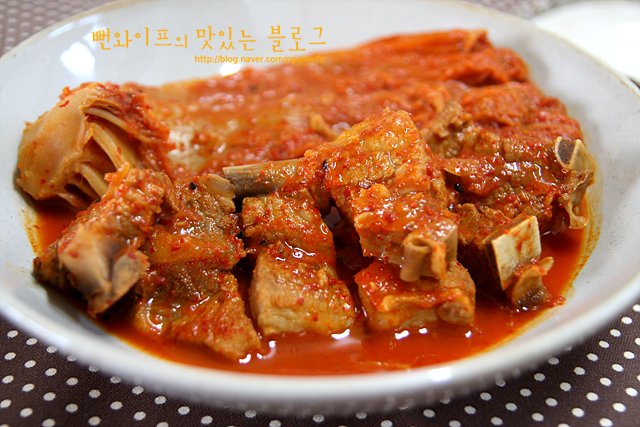
Tada, dwaeji galbi kimchi jjim is complete.
The ribs are thoroughly braised in the seasoning, making the meat tender and truly delicious.
 Ppunwife's tips
- Pricking the pork ribs here and there with a fork or knife helps the seasoning seep into the meat well.
- Straining the kimchi brine through a sieve to remove sediment gives the kimchi jjim a clean, unclouded broth.
- Simmering for a long time until the kimchi turns soft and tender and the liquid reduces produces the most delicious result.
FAQ
Can I use other cuts of meat instead of pork ribs?
Yes, you can easily cook this using baby back ribs, pork shoulder, pork belly, or chunks of pork front leg.
What can I substitute if I do not have doenjang for blanching the meat?
You can add instant coffee powder or bay leaves to the boiling water instead of doenjang to remove gamey odors.
How can I make the broth taste clean and not murky?
Strain the kimchi brine used for seasoning the ribs through a sieve to filter out the solids before adding it, which will keep the broth clean.