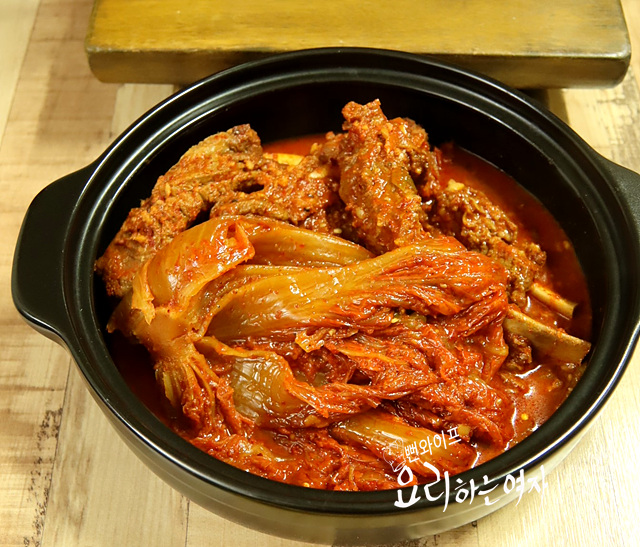
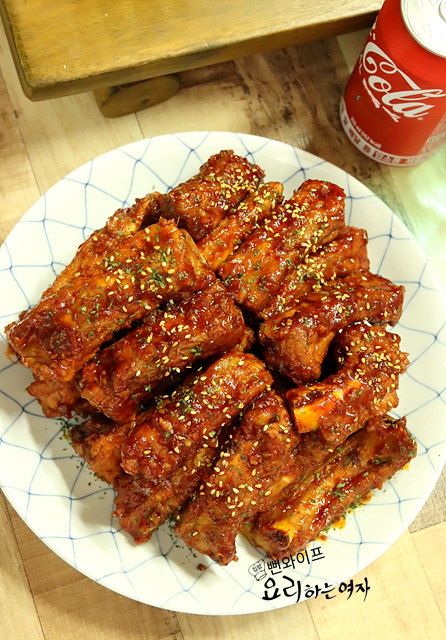
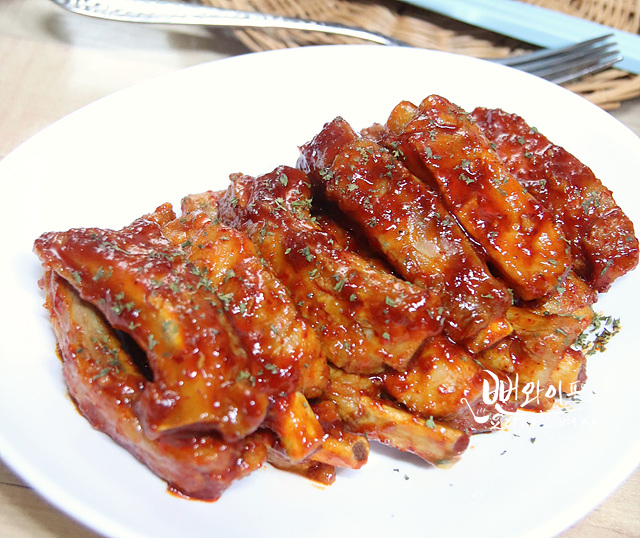
Deunggalbi Kimchi Jjim (Braised Back Ribs with Kimchi)
A hearty main dish of blanched and seasoned baby back ribs wrapped in aged sour kimchi and simmered down in broth.
Translated from Korean by AI and not yet checked by a native speaker. Amounts and numbers are taken directly from the original recipe. Read the Korean original →
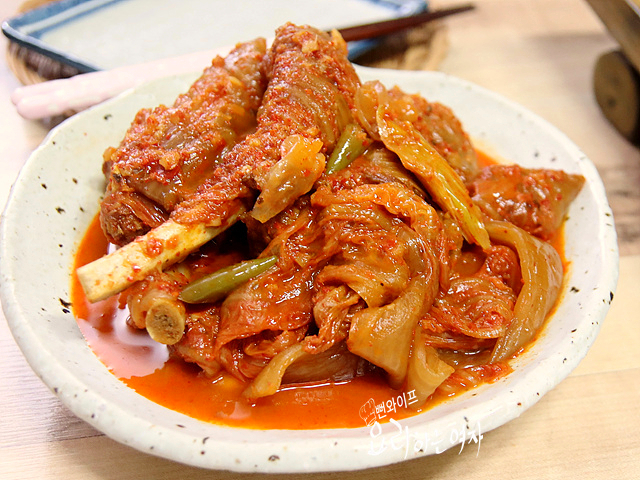
A hearty main dish made by simmering baby back ribs and aged sour kimchi until tender and spicy. Removing the tough membrane from the ribs, blanching them briefly with aromatics, and seasoning them beforehand keeps them tender and free of any gamey smell. Simmered gently with anchovy broth and kimchi brine, this makes a wonderful dinner for the whole family.
- Servings
- 3–4 servings
- Cook time
- 25 minprep not included
- Difficulty
- Medium
- Spiciness
- Spicy
Ingredients
Ingredients
- Baby back ribs2 stalks, 1 kg
- Aged sour kimchi1/4–1/2 head
- Onion1 (medium)
- Large green onion (daepa)1/2 stalk
- Cheongyang chili pepper (hot green chili)2
- Kimchi brine1/2 cup
- Anchovy broth4–5 cups
Rib marinade
- Minced garlic2 tbsp
- Minced ginger1 tsp
- Regular soy sauce (jin-ganjang)2 tbsp
- Mirin (cooking rice wine)2 tbsp
- Salta little
- Ground black peppera little
Broth seasoning
- Gochugaru (Korean chili flakes)2 tbsp
- Sugar (or green plum syrup (maesil-cheong))1–2 tbsp
- Ground black peppera little
- Toasted sesame oil (or perilla oil)2 tbsp
- Soak in cold water for about 30 minutes to draw out the excess blood.
- Rinse the ribs under running water, drain well, and let them marinate for about 30 minutes.
- If you bought an intact rack of ribs, the thin membrane is still attached and should be removed so the meat doesn't turn out tough and can absorb the seasoning well. Peel up a little edge with your fingers and pull it straight off for a clean removal.
- Using aromatics helps eliminate any pork odor from the baby back ribs: 5 bay leaves, 1 thumb-sized knob of ginger, 1 tbsp whole black peppercorns, and 1/2 cup soju. You can also use doenjang (Korean soybean paste), onion, large green onion roots, or sliced garlic.
- Depending on how sour the kimchi is, you can add more sugar or green plum syrup (maesil-cheong).
Steps
Chop the ingredients
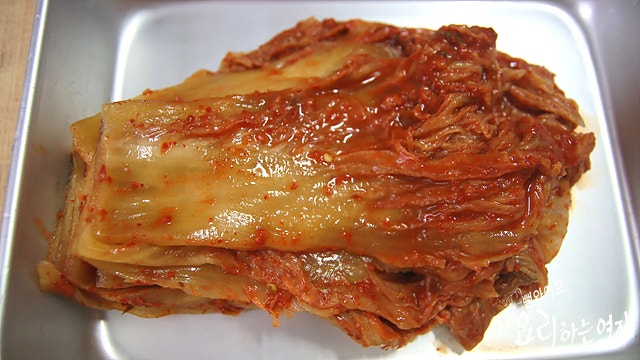
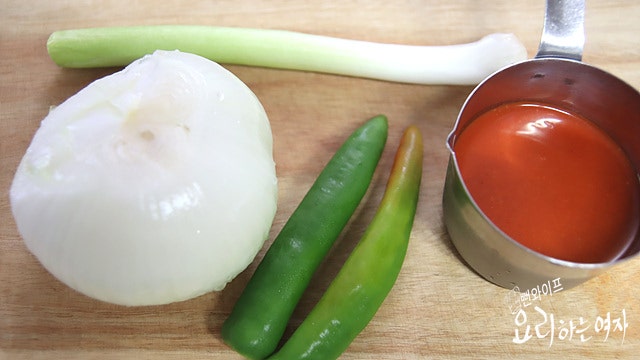
Since the ribs will be wrapped in kimchi, just trim the core off the aged sour kimchi (or mugeunji) and keep the broad leaves intact.
Prepare the onion, large green onion, Cheongyang chili pepper, and kimchi brine as well.
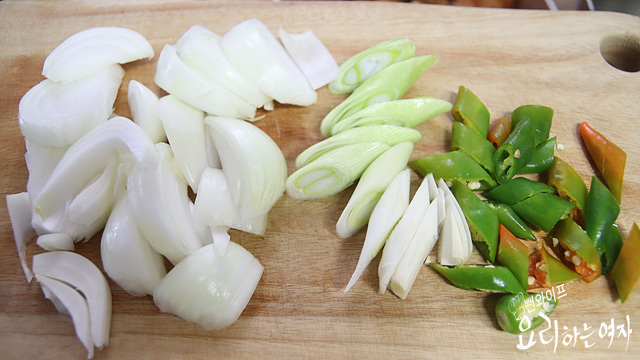
Chop the onion, large green onion, and Cheongyang chili peppers into large pieces.
Prepare the baby back ribs
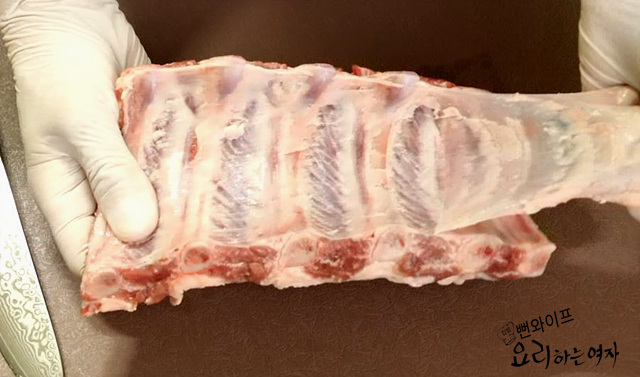
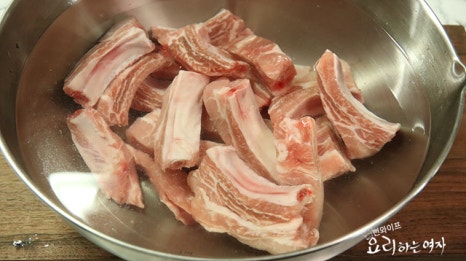
I will use previous photos to show how to prep the ribs.
If you bought an uncut rack of ribs, the thin membrane is still attached, so you need to remove it so the meat doesn't turn out tough and can absorb the seasoning well.
Peel up a little corner with your fingers and pull it straight off for a clean removal.
Soak the ribs in cold water for about 30 minutes to draw out the excess blood.
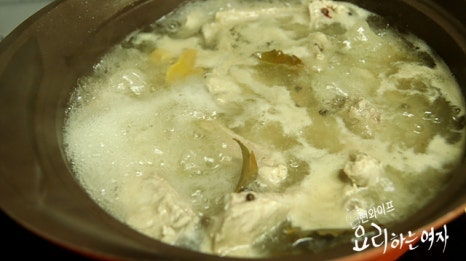
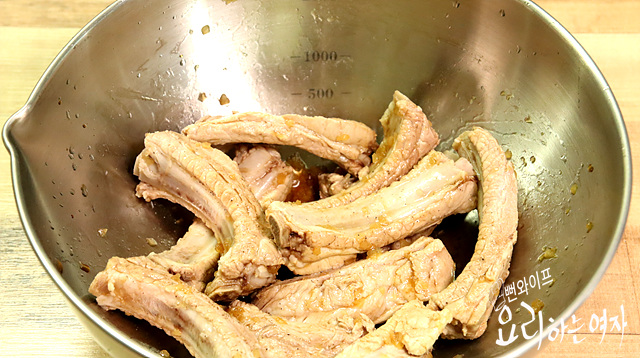
Place the ribs in a pot to blanch them.
Add bay leaves, ginger, whole peppercorns, soju, doenjang, onion, large green onion roots, sliced garlic, or whatever you have on hand. Once it comes to a rolling boil, add the ribs and boil for about 5 minutes, then...
Rinse the ribs under running water, drain well, and marinate them for about 30 minutes.
Even though kimchi is added, seasoning the meat beforehand ensures the flavors blend together nicely instead of tasting separate.
Wrap the ribs in kimchi
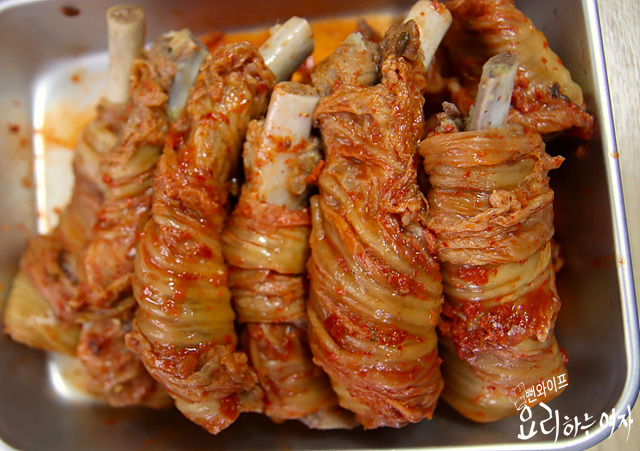
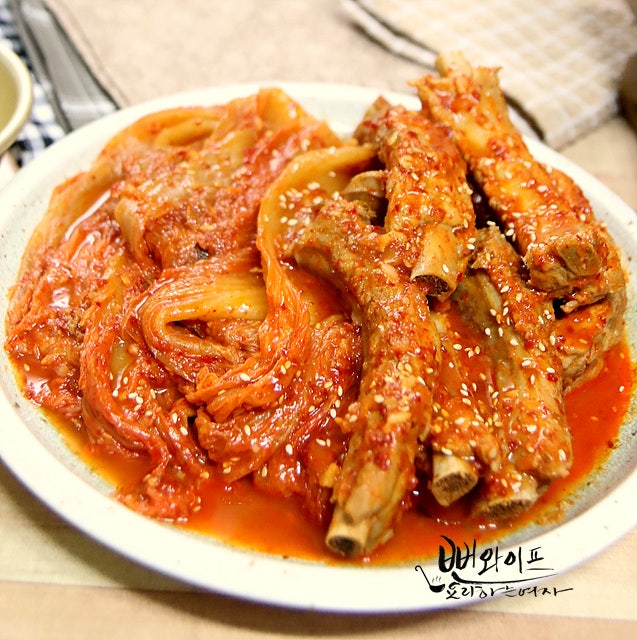
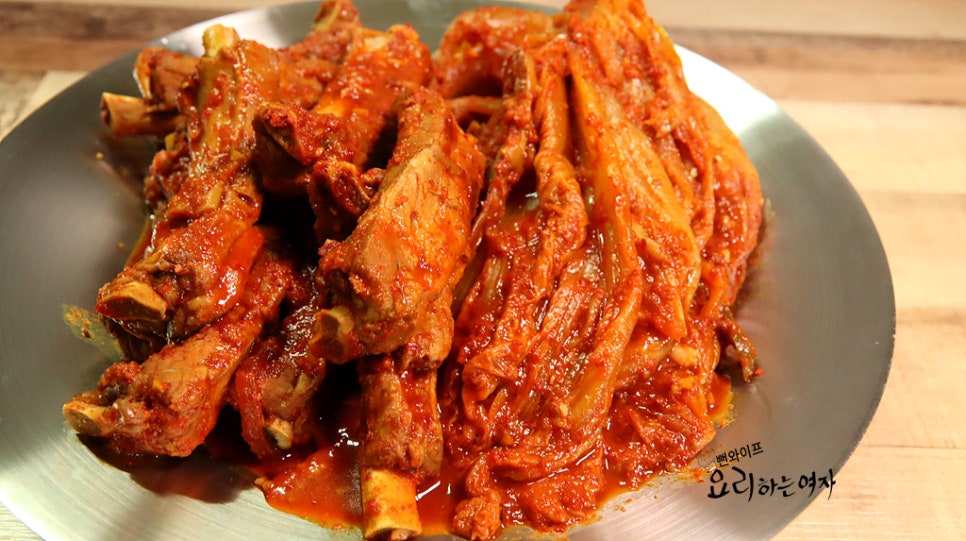
Roll each baby back rib tightly in a piece of kimchi.
I started with 1/4 head (1 quarter), but ran short, so I took out 1 more quarter to finish wrapping; any leftover leaves were added into the pot without meat to simmer together.
Arrange in the pot
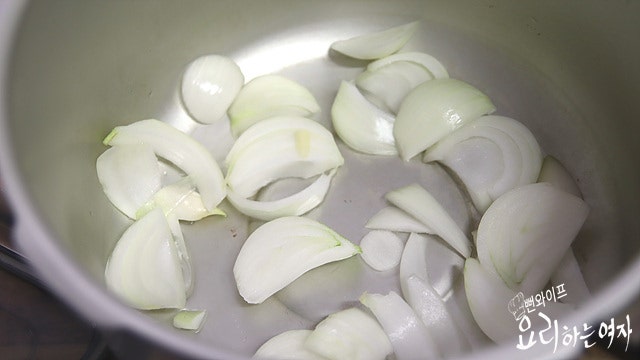
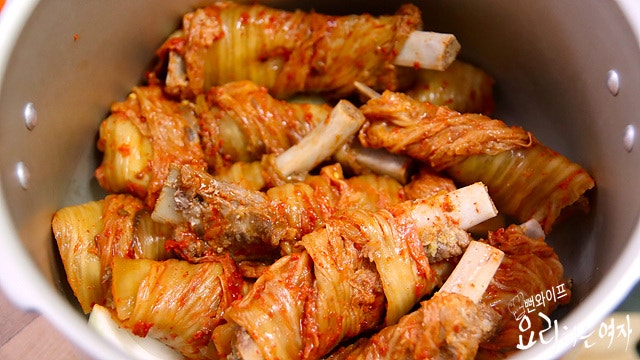
Spread the onion across the bottom of the pot, then arrange the kimchi-wrapped ribs neatly on top.
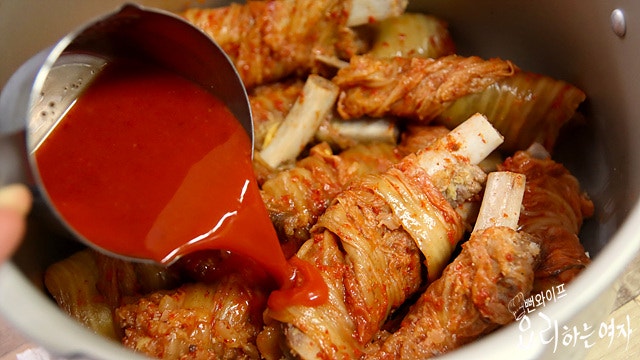
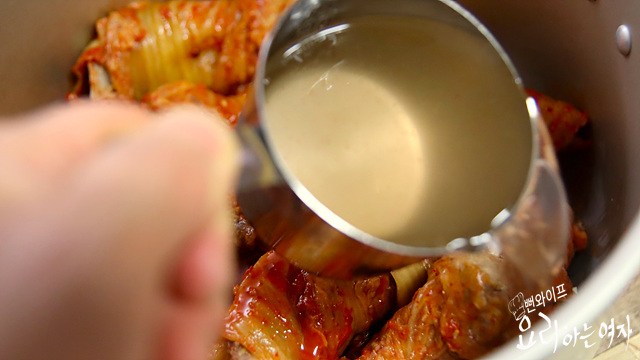
Pour in all the kimchi brine and anchovy broth... Kimchi jjim tastes best when you include the flavorful, well-fermented kimchi brine.
Add enough broth so it reaches the level of the kimchi, ensuring the pieces on top cook through properly as it boils.
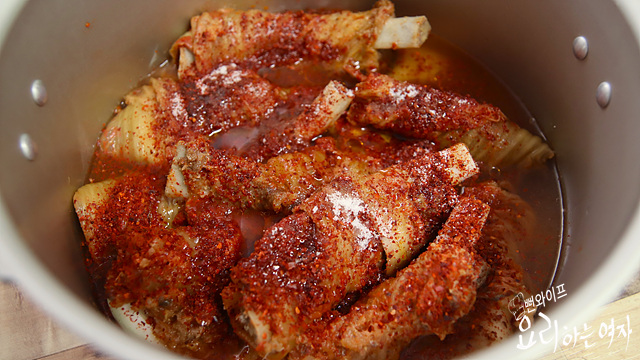
Sprinkle 2 tbsp gochugaru, 1 tbsp sugar, and a little ground black pepper evenly over the very top.
Depending on how sour the kimchi is, you can add more sugar or green plum syrup.
Simmer
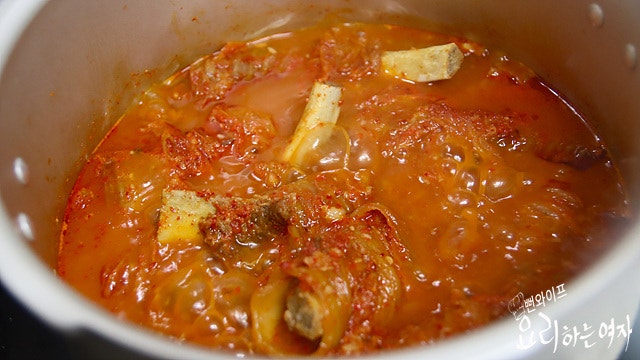
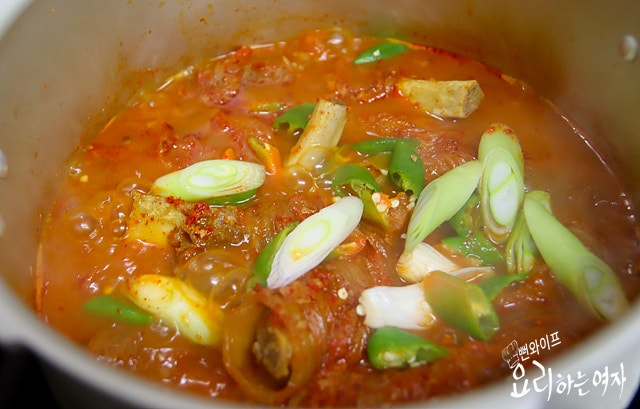
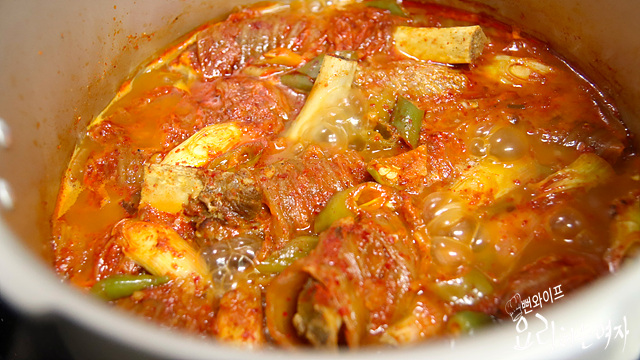
Once the broth comes to a rolling boil, reduce the heat to low, cover with a lid, and simmer gently for about 20 minutes.
When the broth has reduced to a shallow simmer and the kimchi is tender, add the large green onion and Cheongyang chili peppers to infuse their aroma, and...
Finish by drizzling perilla oil or toasted sesame oil over the top.
Serve
Whenever I make kimchi jjim with meat, my chopsticks always reach for the kimchi first.
When it comes to kimchi jjim, the meat simply cannot beat the kimchi.
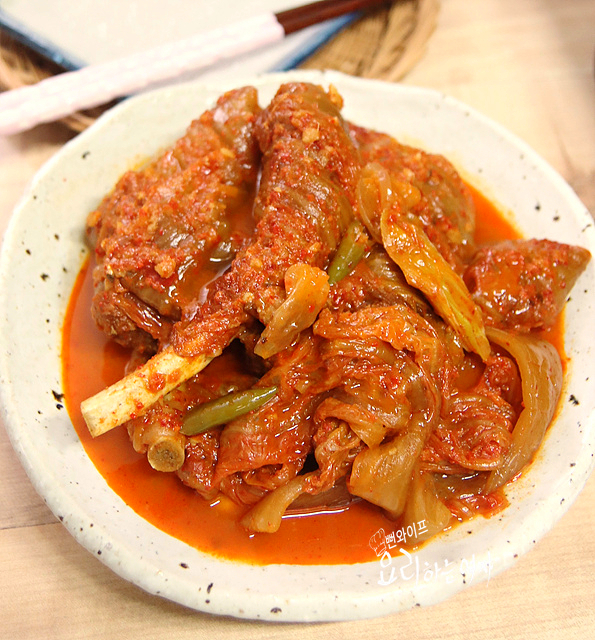
Make just this one dish, and you won't need any other side dishes or soup.
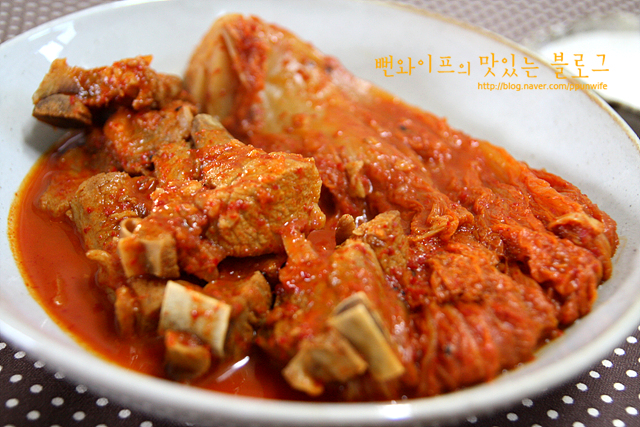
You get the meat, the kimchi, and the savory broth all in one bowl.
Make it for a weekend family dinner and everyone will be thrilled.
 Ppunwife's tips
- Even though kimchi is included, seasoning the meat beforehand ensures the flavors blend together nicely instead of tasting separate.
- Add enough broth to reach the level of the kimchi so that even the topmost pieces cook through gently as it simmers.
- Kimchi jjim tastes best when you include the flavorful, well-fermented kimchi brine.
FAQ
Do I have to peel off the membrane on the ribs?
If you leave the membrane on, the meat can be tough and won't absorb seasoning as well, so it is best to pull it off starting from the edge.
Since kimchi is already included, is it necessary to season the ribs separately?
Seasoning the meat beforehand ensures the flavors of the meat and kimchi blend together harmoniously instead of tasting separate.
How do I adjust the seasonings if my kimchi is very sour?
Depending on how sour the kimchi is, simply increase the amount of sugar or green plum syrup to taste.
What can I do if I don't have anchovy broth? AI-generated
You can substitute commercially available broth coin tablets, dried kelp steeped in water, rice-washing water, or plain water.