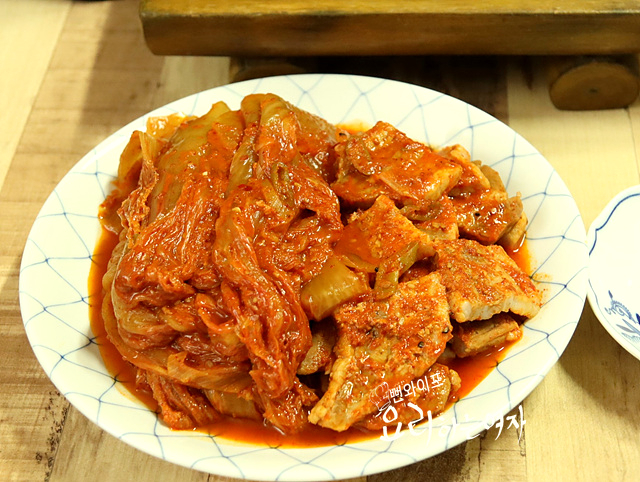
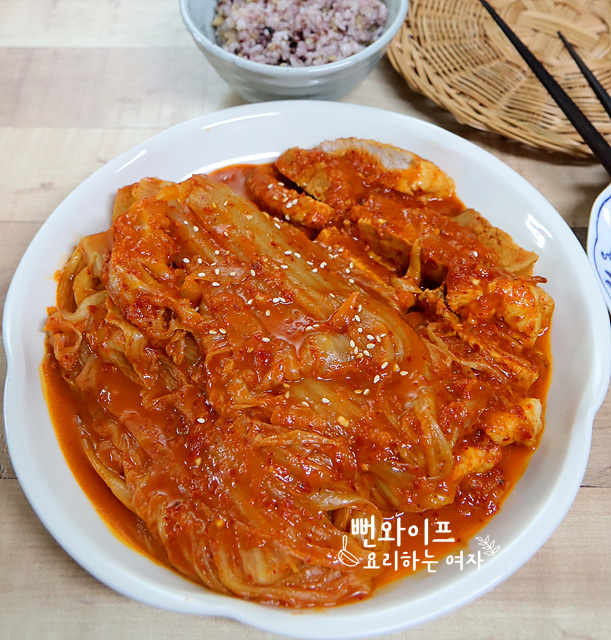
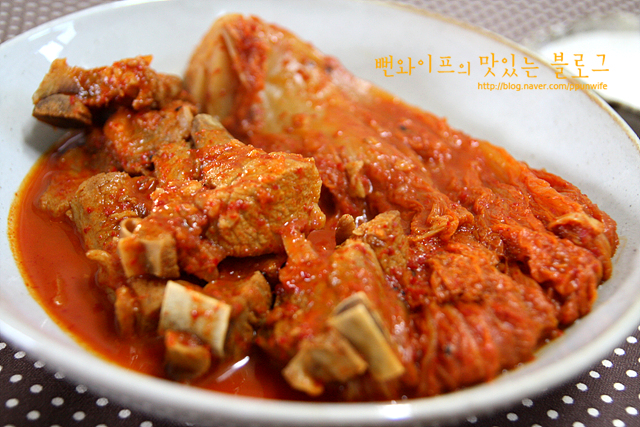
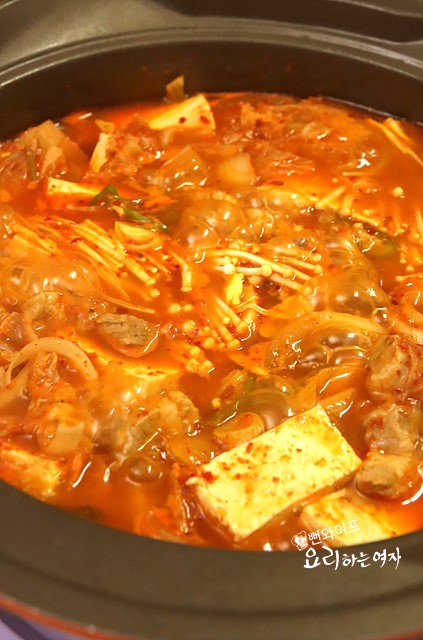
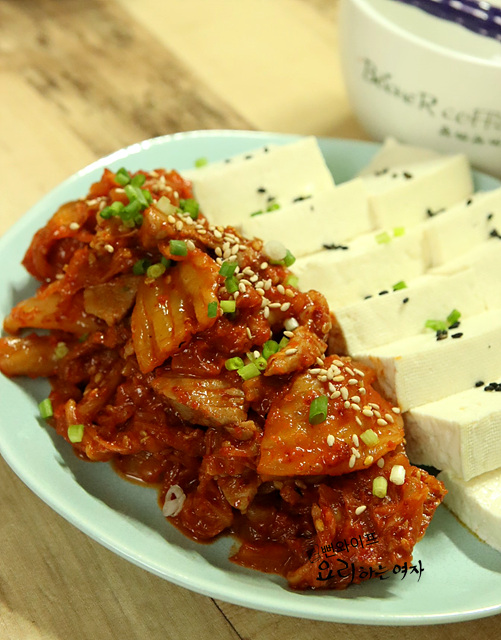
Pork Kimchi Jjim (Braised Pork and Kimchi)
A one-dish meal of aged sour kimchi and seasoned pork layered in a pot and braised thoroughly for 30 minutes.
Translated from Korean by AI and not yet checked by a native speaker. Amounts and numbers are taken directly from the original recipe. Read the Korean original →
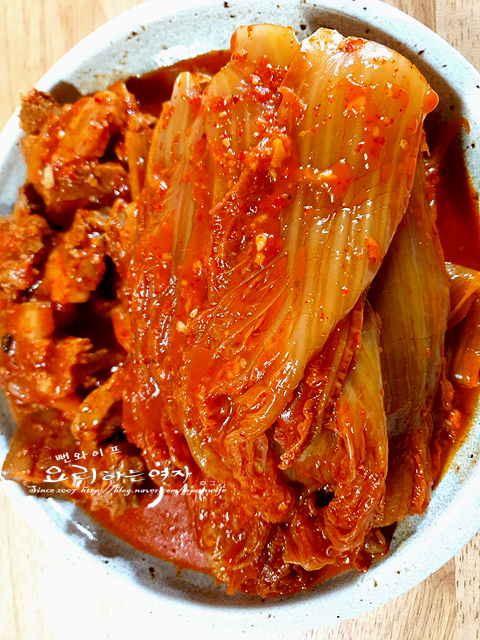
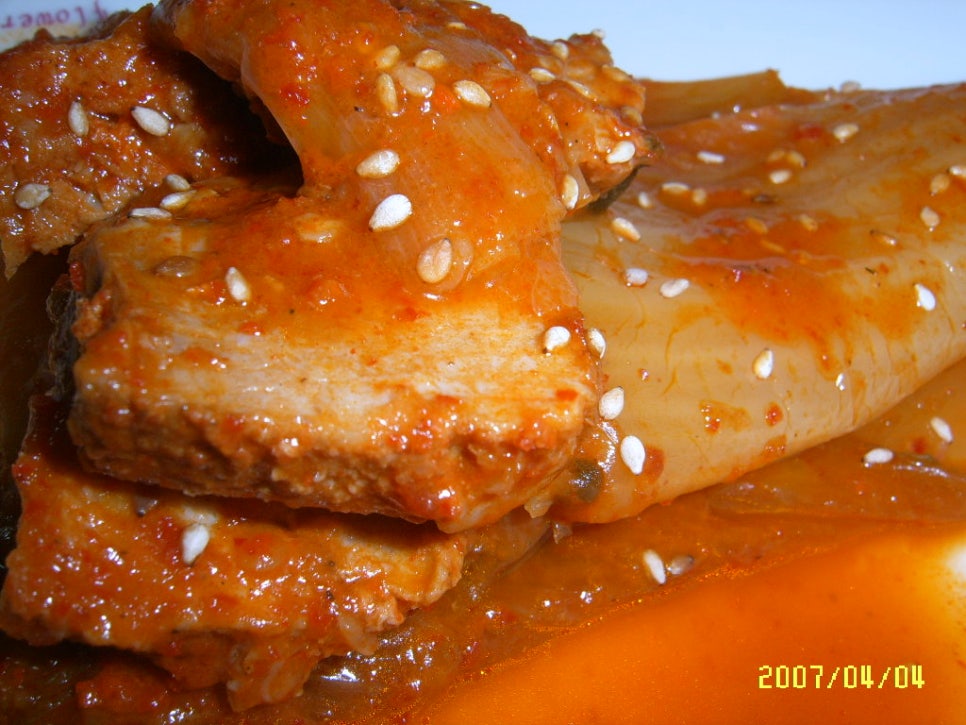
This is a savory, satisfying one-dish meal of aged sour kimchi and pork braised thoroughly for 30 minutes. Sugar balances the sharp acidity of the kimchi, while strained kimchi brine and water from washing rice keep the broth clean. It works wonderfully as a side dish for rice or as a spicy drinking snack.
- Servings
- 4–5 servings
- Cook time
- 30 minprep not included
- Difficulty
- Hard
- Spiciness
- Spicy
Ingredients
Ingredients
- Aged sour kimchi1/2 head
- Pork400 g (pork belly, shoulder, or front leg)
- Onion1 (large)
- Water from washing rice (or anchovy broth)5 cups
- Kimchi brine1 cup
- Minced garlic1 tbsp
- Gochugaru (Korean chili flakes)1 tbsp
Meat marinade
- Mirin (cooking rice wine)2 tbsp
- Ground black pepper1/2 tsp
Kimchi seasoning
- Sugar1 tbsp
- If it is too sour or has developed an off smell, you can rinse it in water before using.
- You can buy whichever pork cut you like and slice it thickly or use it in whole chunks.
Steps
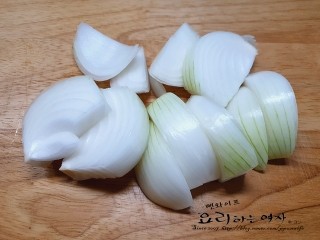

1. I prepared 1 large onion. Cut it into large chunks.
2. You can buy whichever pork cut you like and slice it thickly or use it in whole chunks.
Add ground black pepper and mirin, then gently mix by hand to season.
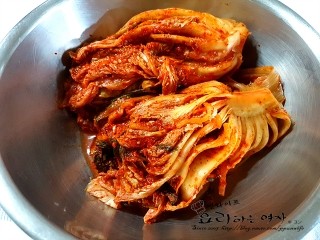
3. This is kimchi made last year. It has soured nicely, perfect for stews or braises.
If it is too sour or has developed an off smell, you can rinse it in water before using.
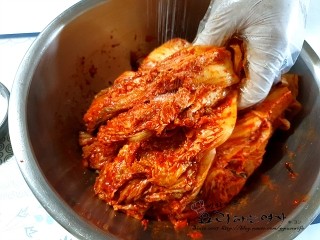
4. Brush the stuffing off the kimchi, then sprinkle sugar little by little and evenly so it neutralizes the sour taste.
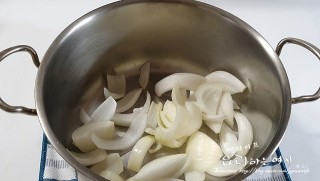
5. Place the onions evenly on the bottom of the pot first...
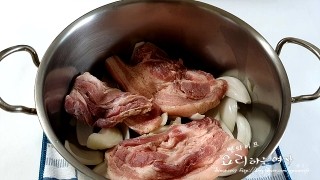
6. Place the pork on top.

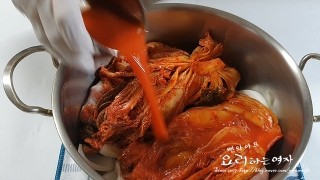
7. Place the kimchi on top...
8. Pour in 1 cup of kimchi brine.
Straining the kimchi brine through a sieve before adding gives you a clean broth.
10
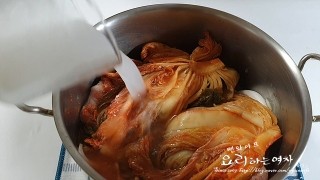
9. Pour in water from washing rice, adding enough to submerge about half of the kimchi.
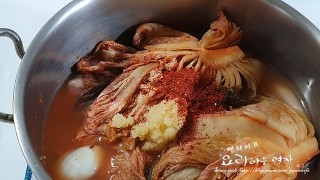
10. Season simply with minced garlic and gochugaru.
11

12
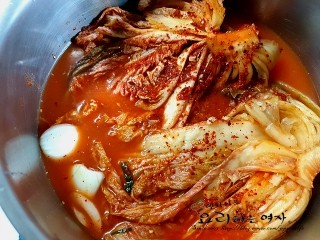
11. Mix so the garlic and gochugaru are evenly blended into the broth...
12. Once it boils over high heat, cover with the lid and braise for 30 minutes.
Because we poured in kimchi brine to simmer, you do not need any separate seasoning, but as it cooks, check the doneness of the kimchi and taste the broth; if it feels quite bland, you can add soup soy sauce or saeujeot.
If the kimchi is less sour and you miss that tanginess, you can add 1 to 2 tbsp of vinegar as it boils.
 Ppunwife's tips
- Straining the kimchi brine through a sieve before adding gives you a clean broth.
- If the kimchi is less sour and you miss that tanginess, you can add 1 to 2 tbsp of vinegar as it boils.
FAQ
What should I do if the kimchi is too sour or has an off smell?
Rinse it lightly in water, shake off the seasoning and stuffing, and then use it in your cooking.
What can I add if the kimchi is not sour enough and lacks tanginess?
When cooking, adding 1 to 2 tbsp of vinegar as it boils will enhance the tangy flavor.
Is there a broth I can substitute if I do not have water from washing rice?
You can use an equal amount of anchovy broth instead of water from washing rice to achieve great savory flavor.
Which cut of pork is best to use?
You can use pork belly, pork shoulder, or pork front leg according to your preference, cut into large pieces or kept whole.