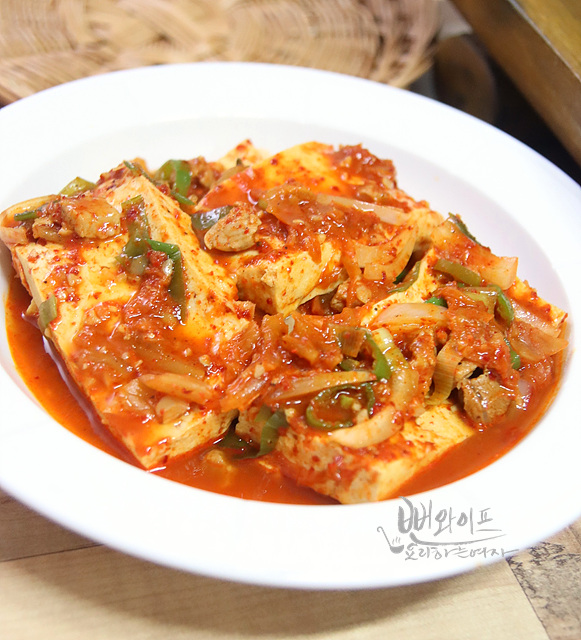
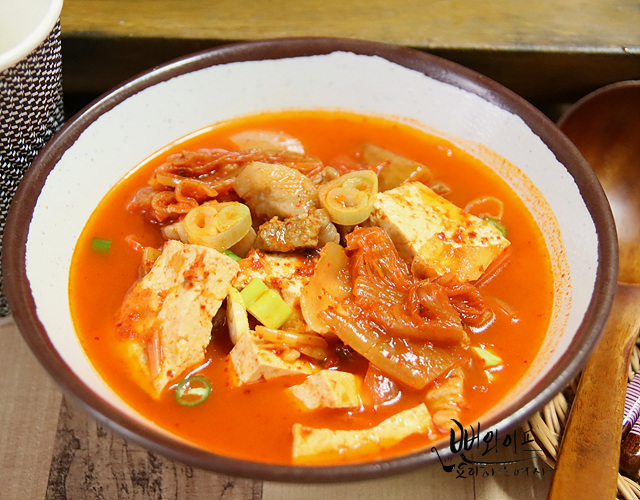
Moist and Tender Dubu Kimchi (Tofu with Stir-Fried Kimchi)
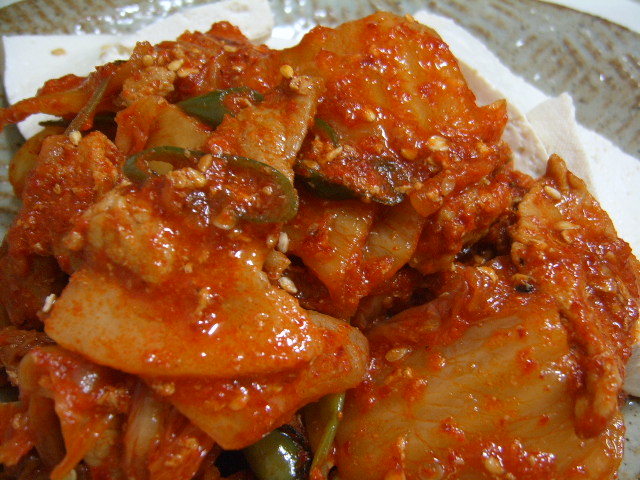
A one-plate dish pairing moist stir-fried aged sour kimchi and pork with warm tofu.
Translated from Korean by AI and not yet checked by a native speaker. Amounts and numbers are taken directly from the original recipe. Read the Korean original →
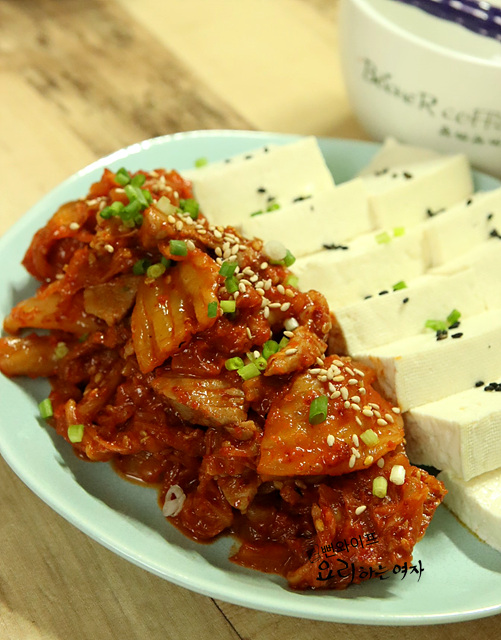
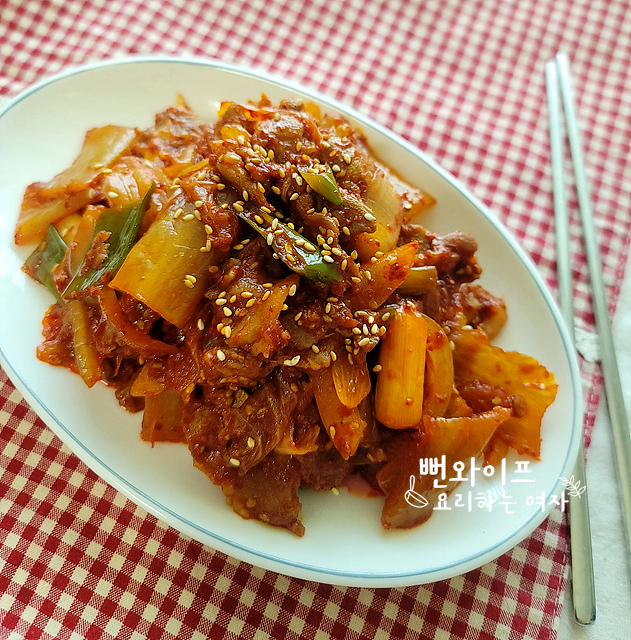
This dubu kimchi features seasoned pork stir-fried with aged sour kimchi and kimchi brine to keep it moist and juicy. Sugar and onion mellow out the kimchi's acidity, while a drizzle of perilla oil over blanched tofu adds a rich, savory aroma. It works wonderfully as a side dish for rice and makes a classic anju with makgeolli.
- Servings
- 2–3 servings
- Difficulty
- Medium
- Spiciness
- Mildly spicy
Ingredients
Ingredients
- Pork200 g
- Aged sour kimchi300 g
- Sugar1 tbsp
- Tofu1 block, 300 g
- Onion1/3
- Coarse sea salt1/2 tbsp
Meat marinade
- Salt1/2 tsp
- Mirin (cooking rice wine)1 tbsp
- Minced ginger1/2 tsp
- Ground black peppera little
Seasoning
- Kimchi brine3 tbsp
- Gochugaru (Korean chili flakes)2 tbsp
- Perilla oil (or toasted sesame oil)1 tbsp
- Toasted sesame seeds1/2 tbsp
- Pork belly, pork shoulder, picnic shoulder, or ham all work well.
- Adjust the amount of sugar depending on how sour your kimchi is.
Steps
Prepare the ingredients
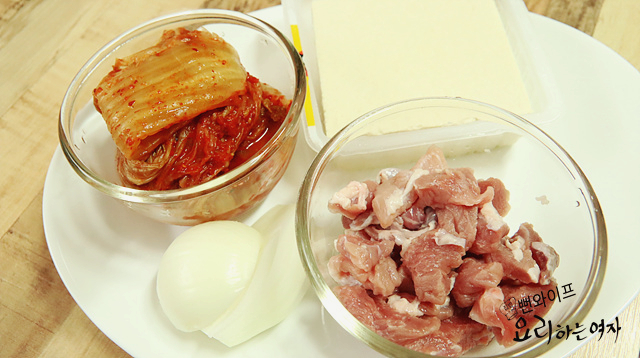
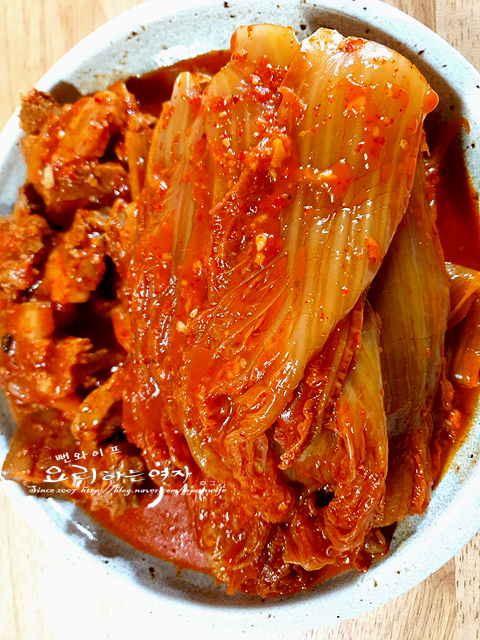
Aged sour kimchi works best for stir-fried kimchi with pork. I prepared more kimchi than pork.
Pork belly, pork shoulder, picnic shoulder, or ham all work well.
Whenever you cook with sour kimchi, adding onion creates a delicious combination of sour and sweet bites.
I prepared 1 small pack of tofu.
Slice the ingredients
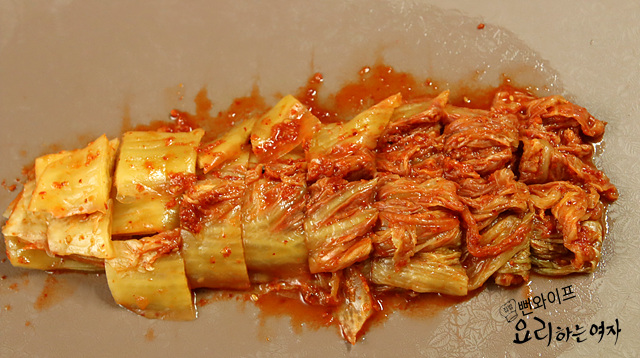
Shake off the seasonings inside the aged sour kimchi and slice it into bite-sized pieces.
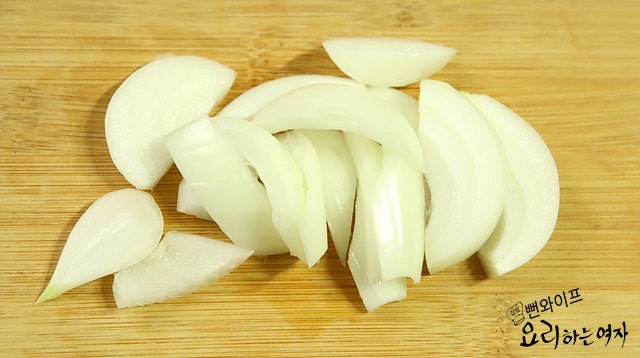
Slice the onion into thick strips so it keeps some bite.
Season the ingredients
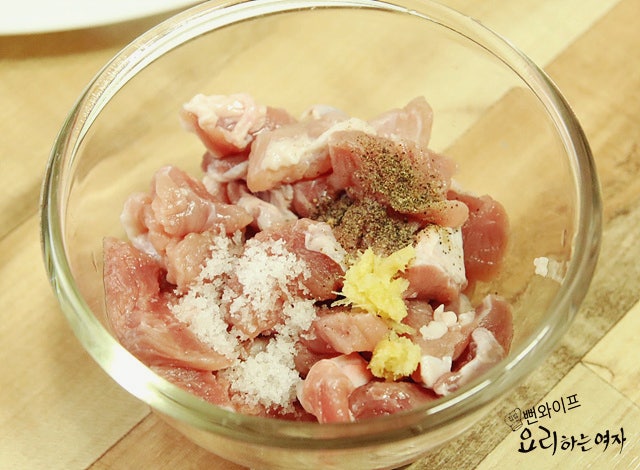
Cut the pork into bite-sized pieces and add 1/2 tsp salt, 1/2 tsp minced ginger, 1 tbsp mirin (cooking rice wine), and a little ground black pepper to season the meat and remove any gamey odors.
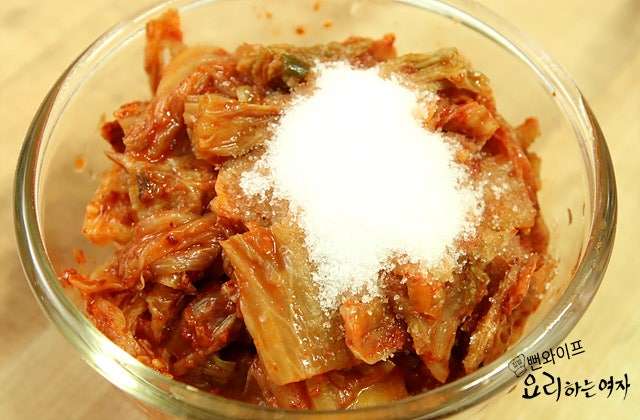
Mix 1 tbsp sugar into the kimchi in advance to neutralize its acidity.
Adjust the amount of sugar depending on how sour your kimchi is.
Stir-fry
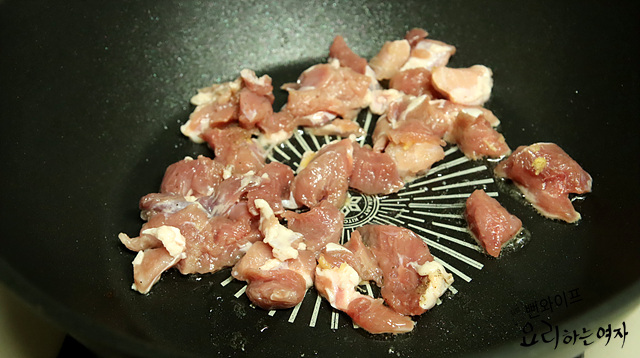
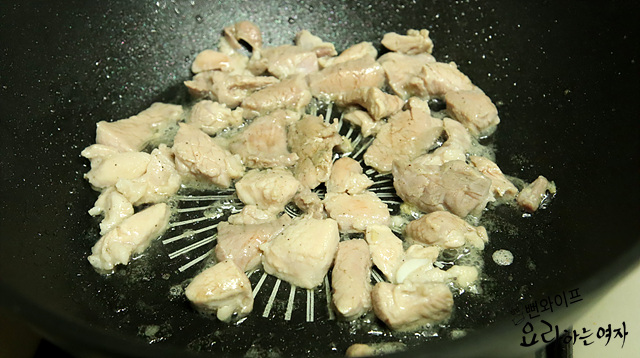
Coat a heated pan with cooking oil and stir-fry the pork briskly.
Stir-fry until the meat is fully cooked.
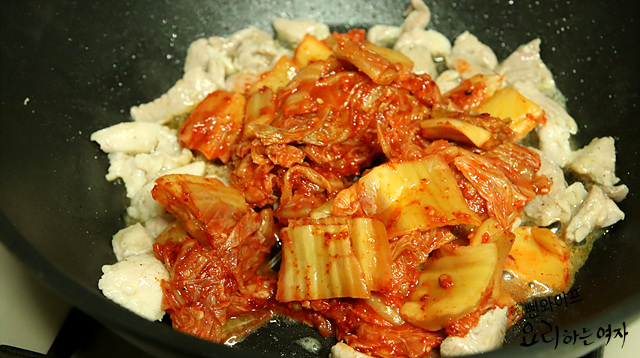
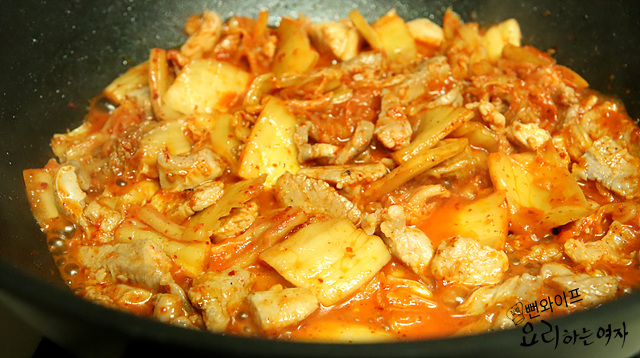
Add the sliced kimchi along with 3 tbsp kimchi brine, and let it simmer and bubble until the kimchi turns tender.
Adding well-seasoned kimchi brine means you do not need extra seasonings or salt, and it keeps the stir-fried kimchi moist.
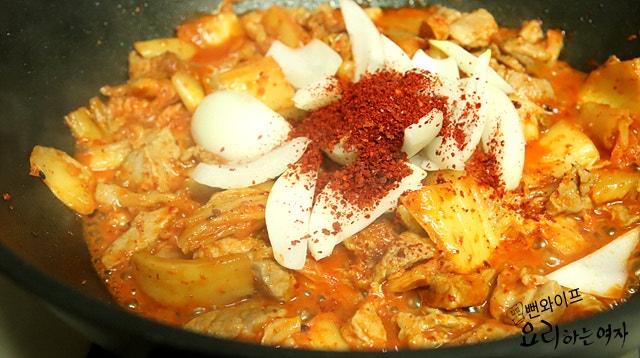
Add the onion and 2 tbsp gochugaru (Korean chili flakes), then stir-fry until the onion is tender and the gochugaru releases a vibrant color.
Do not cook it completely dry; leave about 2 tbsp of liquid so it stays moist.
Taste it, and if it needs more saltiness, season with salt.
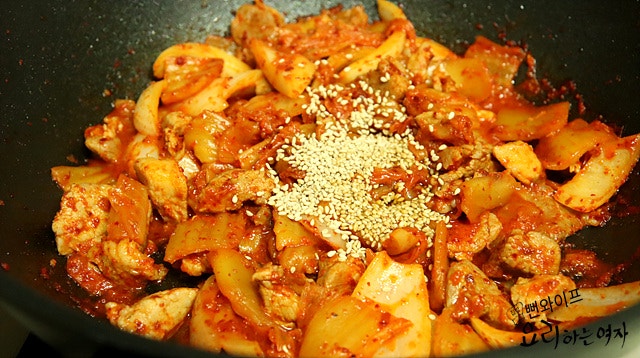
Finally, turn off the heat and finish with 1 tbsp perilla oil (or toasted sesame oil) and 1/2 tbsp toasted sesame seeds.
Blanch the tofu
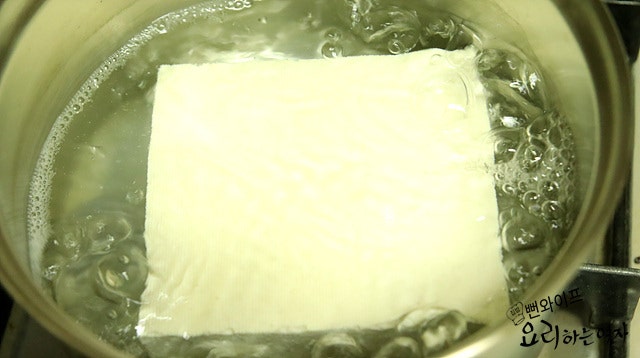
Pour in enough water to submerge the tofu and add 1/2 tbsp coarse sea salt.
Once it comes to a rolling boil, add the tofu and simmer for about 3 minutes so it heats all the way through to the center.
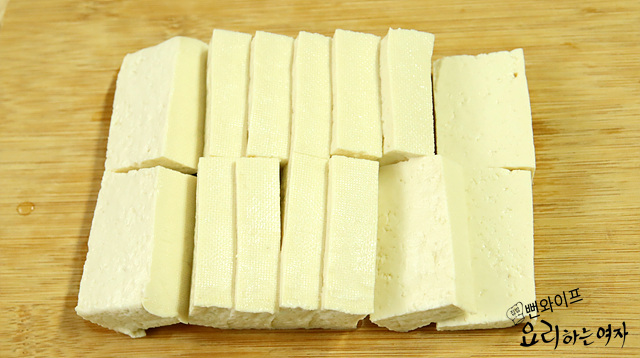
Lift it out gently with a spatula to prevent it from breaking, drain the water, and slice it thick.
Finish
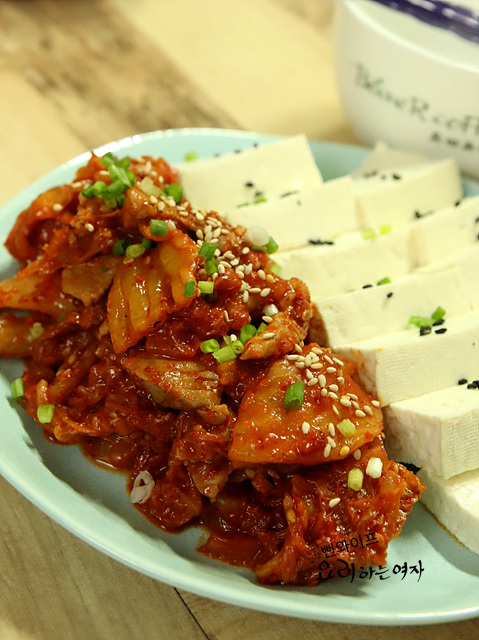
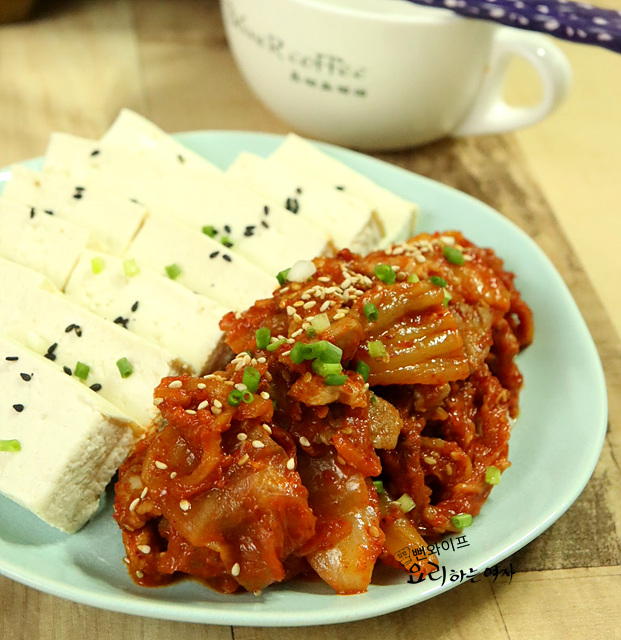
Drizzle perilla oil evenly over the tofu right before serving, and it pairs deliciously with the stir-fried kimchi.
I blanched the tofu today, but pan-frying it until golden brown is also great.
 Ppunwife's tips
- Adding well-seasoned kimchi brine means you do not need extra seasonings or salt, and it keeps the stir-fried kimchi moist.
- Do not cook it completely dry; leave about 2 tbsp of liquid so it stays moist.
- Drizzle perilla oil evenly over the tofu right before serving, and it pairs deliciously with the stir-fried kimchi.
- I blanched the tofu today, but pan-frying it until golden brown is also great.
FAQ
Which cut of pork should I use?
Pork belly, pork shoulder, picnic shoulder, or ham can all be used.
What should I do if the kimchi is too sour?
Toss it with 1 tbsp sugar to cut down on the sourness, and adjust the amount of sugar based on how sour your kimchi is.
Do I have to blanch the tofu?
You can blanch it in boiling salted water, or if you prefer, pan-fry it in oil until golden brown to serve.
Why do you add kimchi brine to the stir-fry?
Adding seasoned kimchi brine reduces the need for extra seasoning and keeps the stir-fry moist rather than dry.