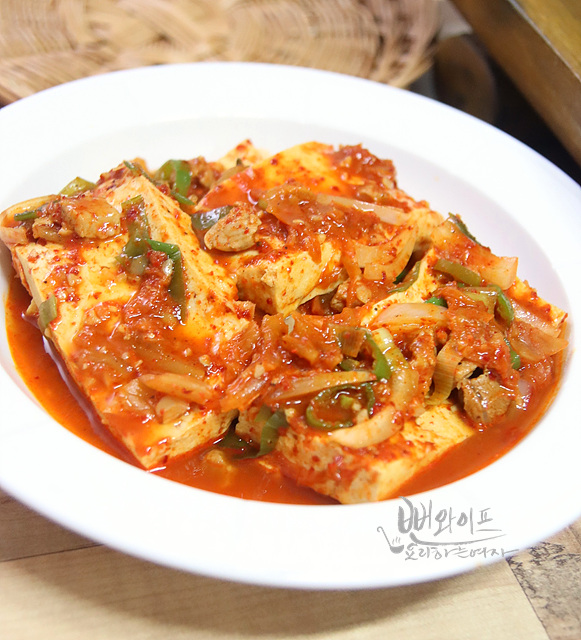
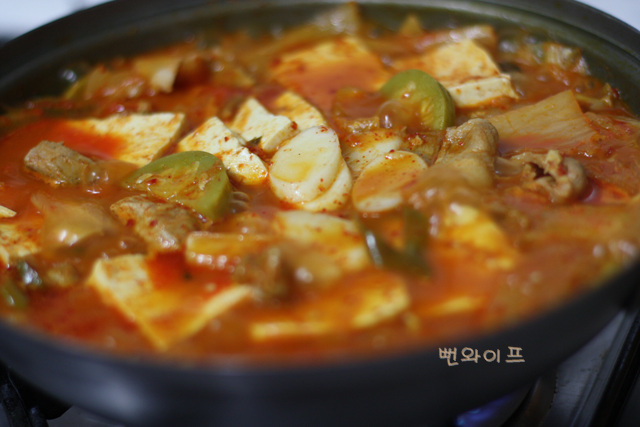
Tofu Kimchi Jjigae (Kimchi Stew with Tofu) in Rich Broth
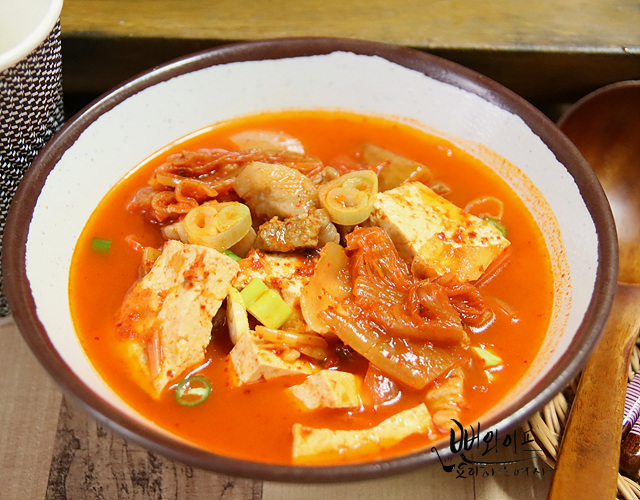
A deeply simmered tofu kimchi jjigae with added umami from kimchi brine and broth.
Translated from Korean by AI and not yet checked by a native speaker. Amounts and numbers are taken directly from the original recipe. Read the Korean original →
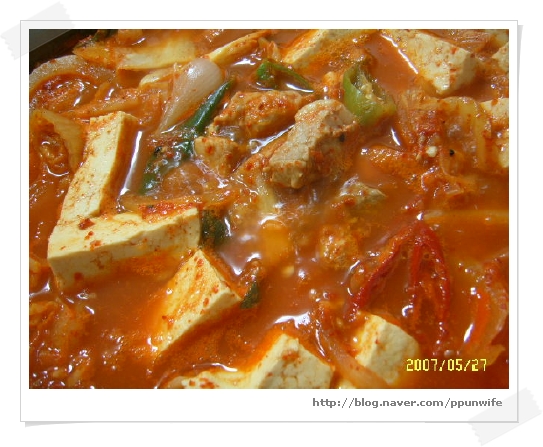
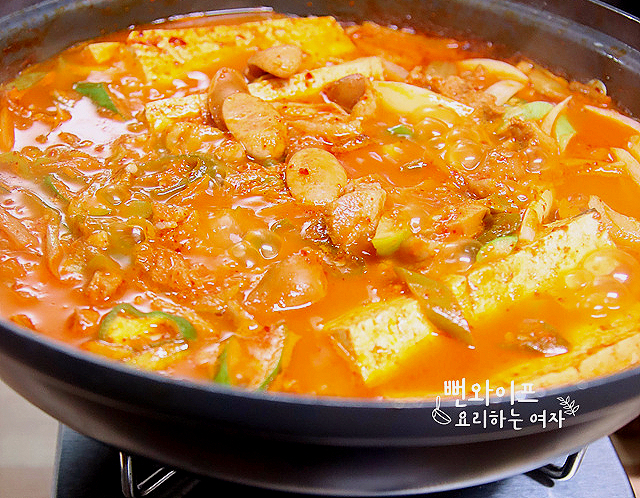
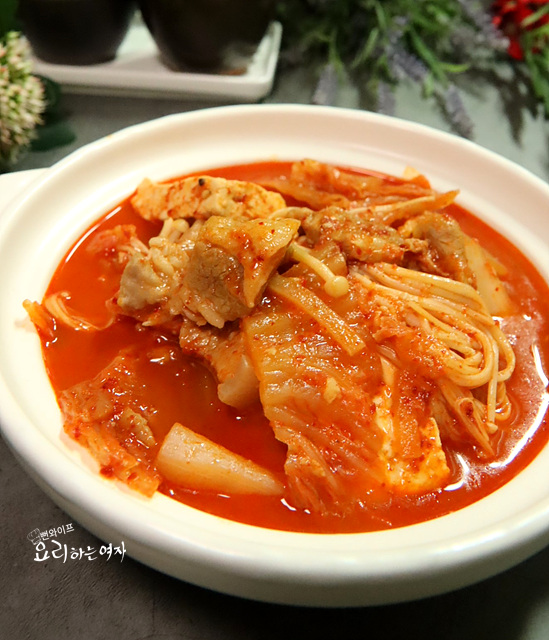
Kimchi brine is generously combined with broth to create a rich, spicy, and savory flavor. Arrange the ingredients neatly in a pot and simmer gently until the kimchi turns soft and tender, bringing out a deep flavor that also pairs wonderfully with drinks.
- Servings
- about 3–4 servings
- Difficulty
- Medium
- Spiciness
- Spicy
Ingredients
Ingredients
- Aged sour kimchi300 g
- Pork200 g (picnic shoulder, ham, or pork neck)
- Onion1
- Tofu1/4 block
- Large green onion (daepa)1/2 stalks
- Cheongyang chili pepper (hot green chili)2
- Red chili pepper2
- Enoki mushrooms1/2
- Kimchi brine2 cups
- Broth2 cups
Pork marinade
- Regular soy sauce (jin-ganjang)1 tbsp
- Cheongju (Korean rice wine)1 tsp
- Garlic1 tsp
Seasoning
- Gochugaru (Korean chili flakes)1 tbsp
- Mirin (cooking rice wine)1 tbsp
- Garlic1 tsp
- Ground black pepper1 tsp
- Broth2 tbsp
- Salta little
- You must use aged sour kimchi to make a delicious kimchi stew.
- If you do not like very spicy food, you can omit the Cheongyang chili pepper. Enoki mushrooms too.
- I used cuts with a little pork fat (pork belly is fine too).
Steps
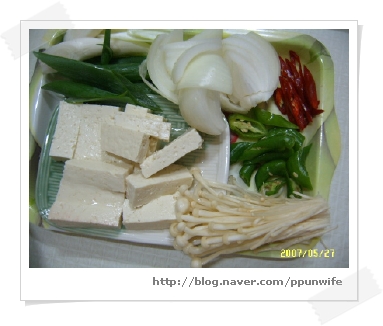
Thickly slice the onion, julienne the large green onion, and slice the red chili pepper and Cheongyang chili pepper.
Cut the tofu into long cubes, and I prepared some leftover enoki mushrooms.
If you do not like very spicy food, you can omit the Cheongyang chili pepper. Enoki mushrooms too.
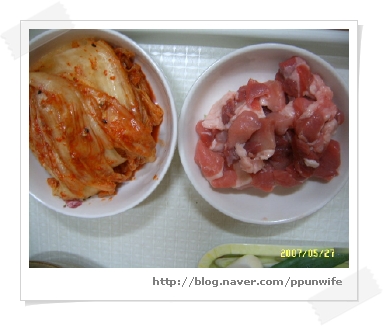
Cut the kimchi into bite-sized pieces and finely chop the pork, then marinate it.
I used cuts with a little pork fat (pork belly is fine too).
Soy sauce, garlic, and cheongju are all you need.
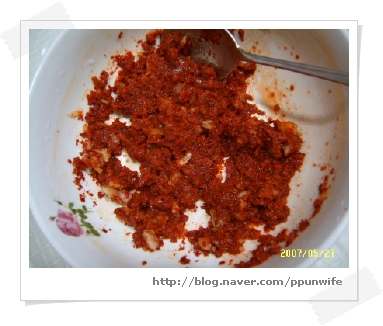
Make the seasoning sauce in advance as well (amounts are listed above).
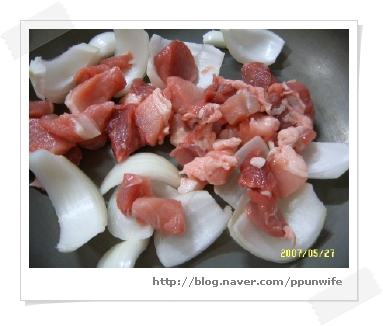
Line the bottom of a shallow stew pot with the onion and the marinated pork.
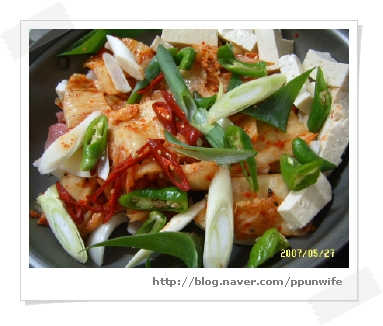
Layer the kimchi, tofu, chili peppers, and large green onion on top.
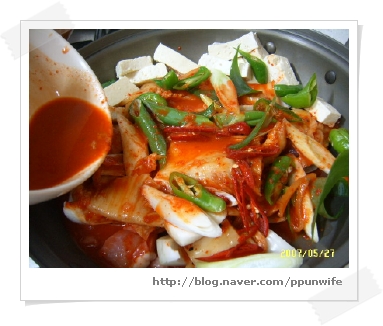
For the liquid, I used 2 cups of kimchi brine and 2 cups of broth. If you want a spicy and rich broth, do it like me. If you prefer a cleaner taste, use 1 cup of kimchi brine and add more broth. You can adjust according to your taste.
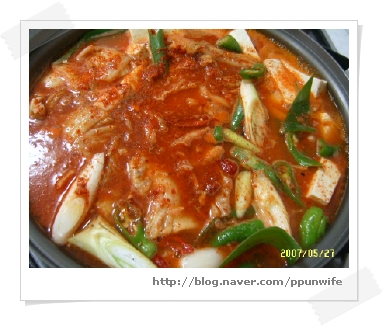
After pouring in the broth, dissolve the prepared seasoning sauce evenly into the liquid.
Now bring it to a boil. Start over high heat, then simmer gently until the kimchi is completely soft and cooked through. If the broth tastes bland, add salt, but if you used a lot of kimchi brine, you probably will not need any extra seasoning.
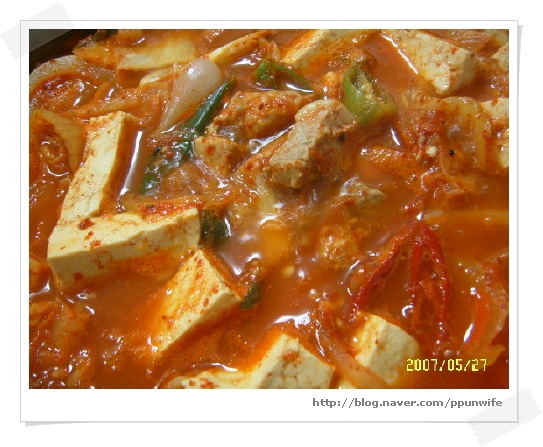
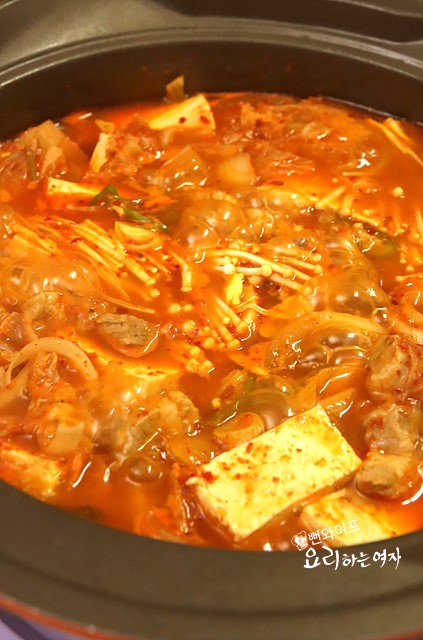
The kimchi stew is almost done.
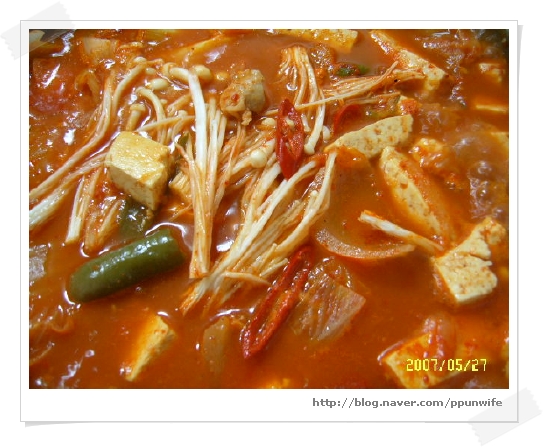
Drop the enoki mushrooms in at the very end. The broth is very rich and intensely savory.
 Ppunwife's tips
- What makes or breaks the flavor of kimchi stew is the kimchi brine. When combined properly with broth, it creates such a rich umami that it is hard to put down your spoon.
- If you want a spicy and rich broth, do it like me. If you prefer a cleaner taste, use 1 cup of kimchi brine and add more broth. You can adjust according to your taste.
- Bring to a boil over high heat, then simmer gently until the kimchi is completely soft and cooked through.
FAQ
How can I make the broth taste cleaner and less intense?
You can enjoy a much milder broth by reducing the kimchi brine to 1 cup and increasing the proportion of broth instead.
What cut of pork should I use?
Pork shoulder, ham, and neck are commonly used, but pork belly also works great depending on your preference.
How can I dial down the spiciness?
If you do not prefer spicy food, simply leave out the Cheongyang chili pepper from the ingredients.
How should I adjust the heat when simmering kimchi stew?
Start boiling over high heat, then lower the flame and simmer gently until the kimchi is tender and thoroughly cooked to develop deep flavor.