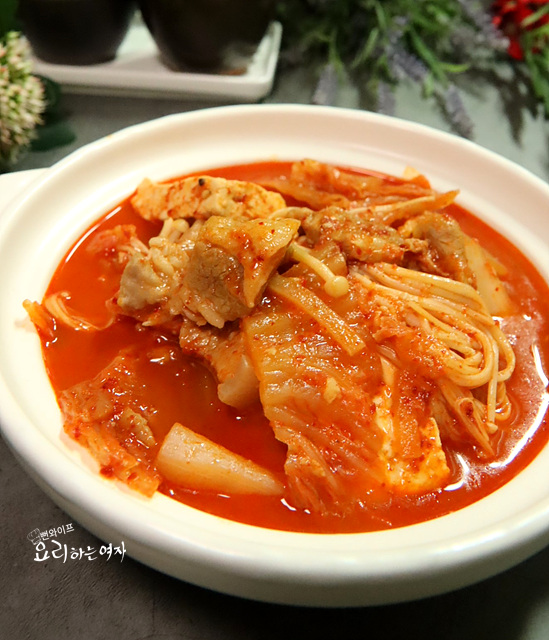
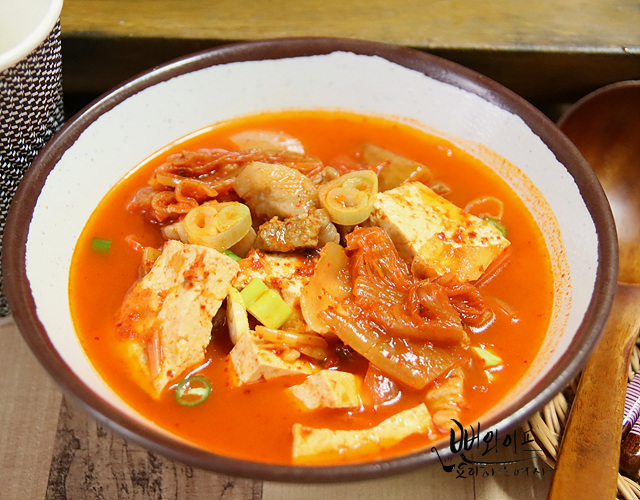
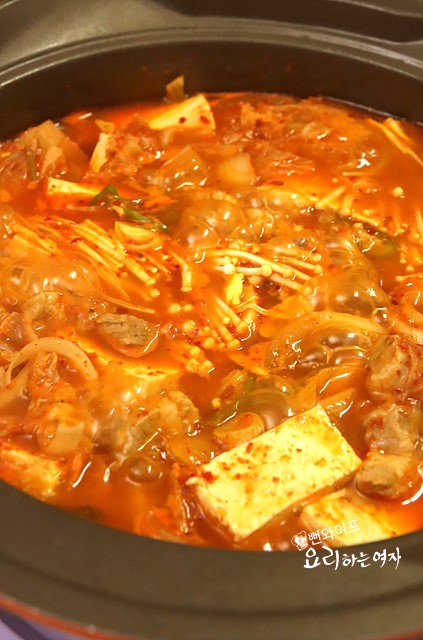
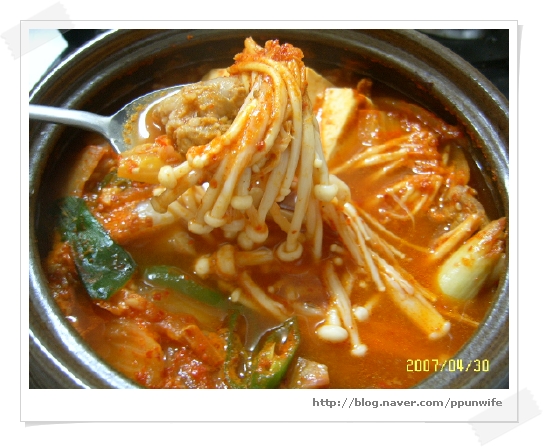
Spicy and Rich Kimchi Jjigae (Kimchi Stew)
A hearty stew cooked by layering seasoned pork and vegetables under kimchi and simmering thoroughly.
Translated from Korean by AI and not yet checked by a native speaker. Amounts and numbers are taken directly from the original recipe. Read the Korean original →
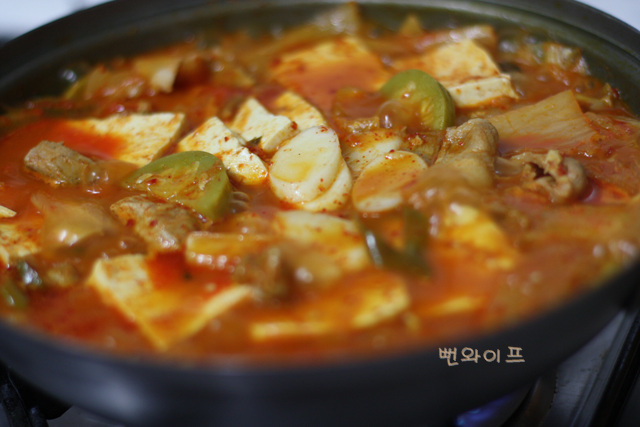
The key secret is layering seasoned pork and vegetables at the bottom of the pot first to draw out their savory richness and sweetness. Seasoned with anchovy broth and kimchi brine, it is gently simmered over low heat to bring out deep flavors. Adding rice cakes or glass noodles makes it even heartier to enjoy.
- Servings
- 3–4 servings
- Cook time
- 30 minprep not included
- Difficulty
- Medium
- Spiciness
- Spicy
Ingredients
Ingredients
- Kimchi1/4 quarter head, 300 g (winter kimchi (gimjang kimchi))
- Pork200 g (pork shoulder, picnic shoulder, or ham)
- Tofu1/2 block, 200 g
- Onion1
- Squash1/2
- Large green onion (daepa)1/2
- Cheongyang chili pepper (hot green chili)2
- Rice cakes1 handful (optional)
- Kimchi brine1 cup
- Anchovy broth3 cups
Meat marinade
- Regular soy sauce (jin-ganjang)1 tbsp
- Mirin (cooking rice wine) (or cheongju (Korean rice wine))1/2 tbsp
- Minced garlic1 tsp
- Ground black peppera little
Seasoning
- Gochugaru (Korean chili flakes)2 tbsp
- Mirin (cooking rice wine)1 tbsp
- Minced garlic1/2 tbsp
- Broth3 tbsp
- Salta little
- If you have mushrooms, prepare them together.
- If your kimchi brine is heavily seasoned, reduce it to 1/2 cup so the stew does not turn out salty.
Steps
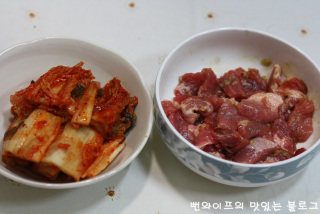
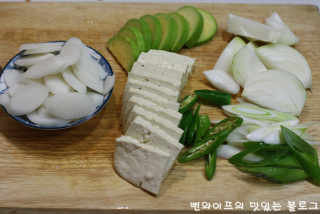
1. Prepare well-fermented kimchi, shake off any seasoning paste inside, and slice it into bite-size pieces.
Slice the pork slightly thick, add the marinade ingredients, and mix well with your hands.
2. Slice the tofu, squash, and onion slightly thick, and diagonally slice the chili peppers and large green onion. A handful of rice cakes...
It is delicious to prepare rice cakes or sweet potato glass noodles and boil them at the very end of a stew dish.
If you have mushrooms, prepare them together.
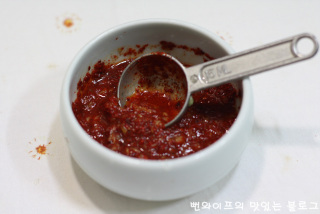
3. Add all seasoning sauce ingredients except the salt and mix together.
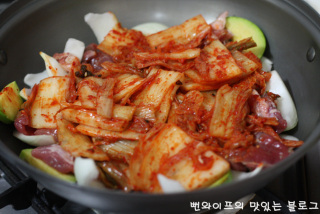
4. Layer the onion and squash at the very bottom of a shallow hot pot, then layer the pork and kimchi on top in that order.
I placed them at the very bottom so the sweetness of the onion and the savory broth from the pork could infuse well into the liquid.
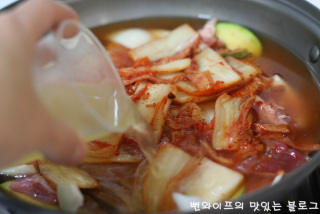
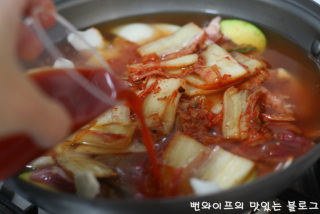
5. Pour in the anchovy broth...
How to make anchovy broth is here: http://blog.naver.com/ppunwife/140090439314
6. Pour in the kimchi brine too...
My kimchi at home is mild, so I poured in 1 cup of kimchi brine, but if your kimchi brine is heavily seasoned, reduce it to 1/2 cup
so the stew does not turn out salty.
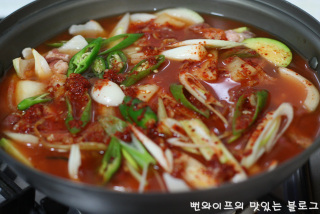
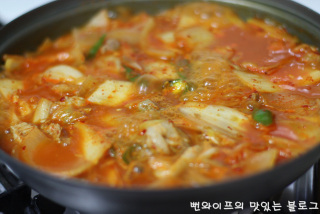
7. Mix in all the chili peppers, large green onion, and the seasoning sauce...
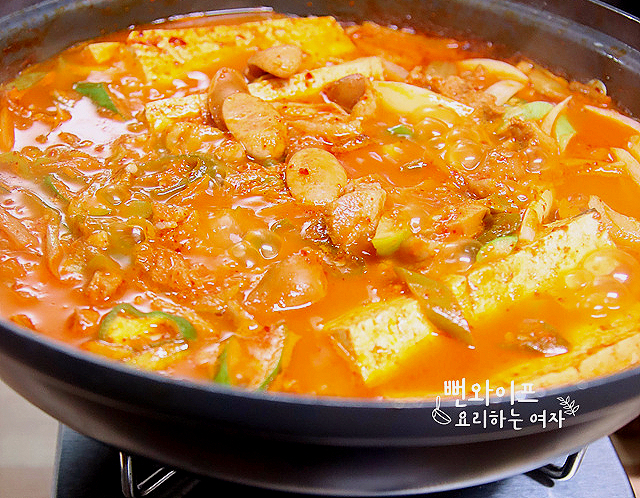
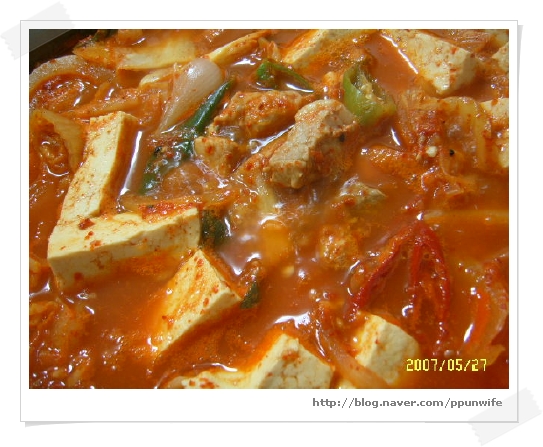
8. Bring it to a boil over high heat, then simmer over low heat for about 20 to 30 minutes.
For kimchi jjigae, it tastes best when simmered for a long time until the kimchi turns soft and the flavors of all the ingredients infuse into the broth.
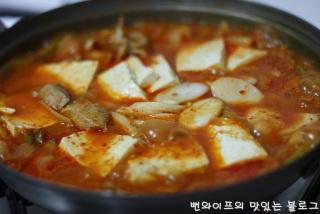
Taste the broth, adjust with salt if it is bland, then add the tofu and rice cakes and simmer
until the rice cakes become soft.
 Ppunwife's tips
- I placed them at the very bottom so the sweetness of the onion and the savory broth from the pork could infuse well into the liquid.
- For kimchi jjigae, it tastes best when simmered for a long time until the kimchi turns soft and the flavors of all the ingredients infuse into the broth.
FAQ
Is there a reason to layer the onion, squash, and pork on the bottom of the pot first?
It is done so the natural sweetness of the onion and the deep, savory broth from the pork can infuse well into the soup.
My kimchi brine is somewhat salty; can I still add the same amount?
If your kimchi brine is strongly seasoned, reduce it to half a cup instead of the suggested 1 cup so the stew does not become overly salty.
What is the secret to heat control for better flavor?
Start over high heat until it boils, then lower the heat to low and simmer thoroughly for 20 to 30 minutes until the flavors of the ingredients are fully extracted.
Which cut of pork is best to use?
You can use pork shoulder, picnic shoulder, or ham sliced thick, according to your preference.