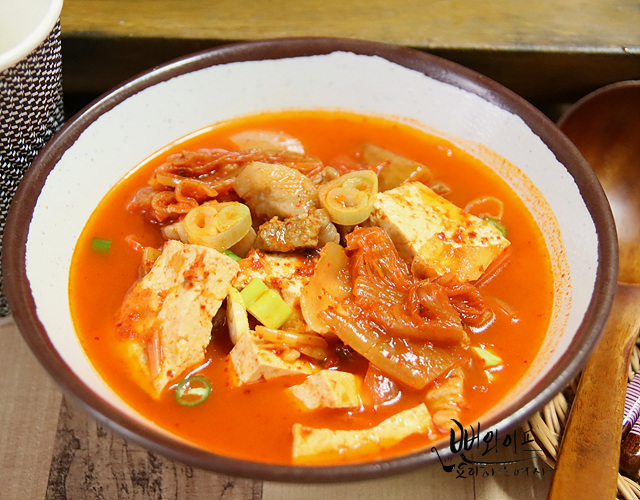
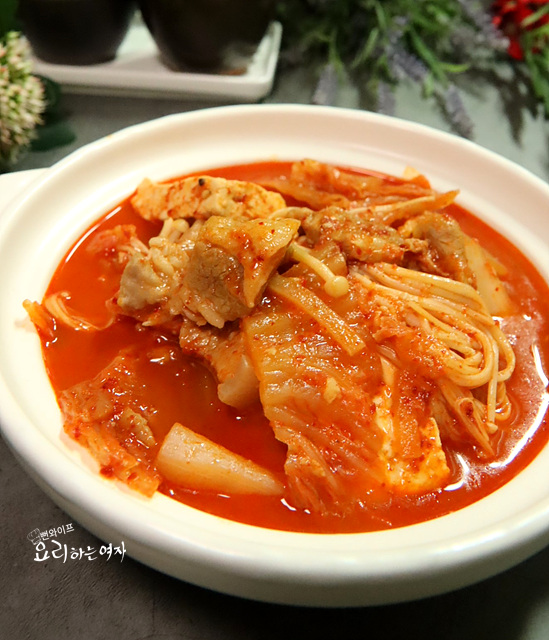
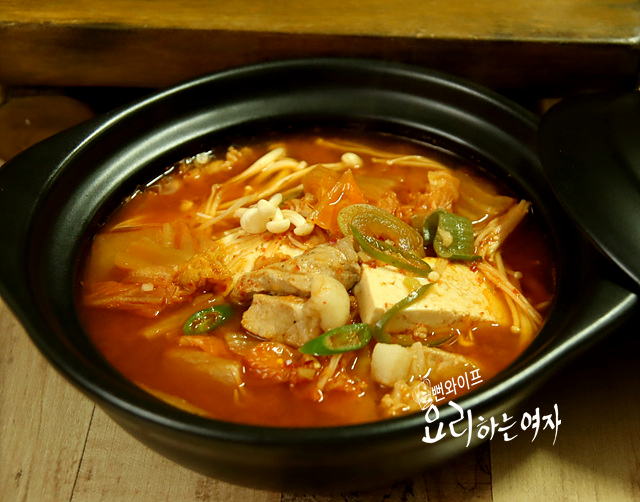
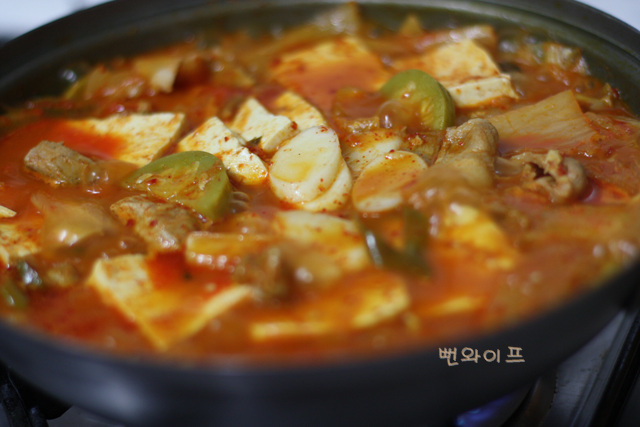
Slow-Simmered Pork Kimchi Jjigae (Kimchi Stew with Pork)
A 4-serving kimchi stew rich in savory flavor, made by gently simmering seasoned pork and aged sour kimchi together.
Translated from Korean by AI and not yet checked by a native speaker. Amounts and numbers are taken directly from the original recipe. Read the Korean original →
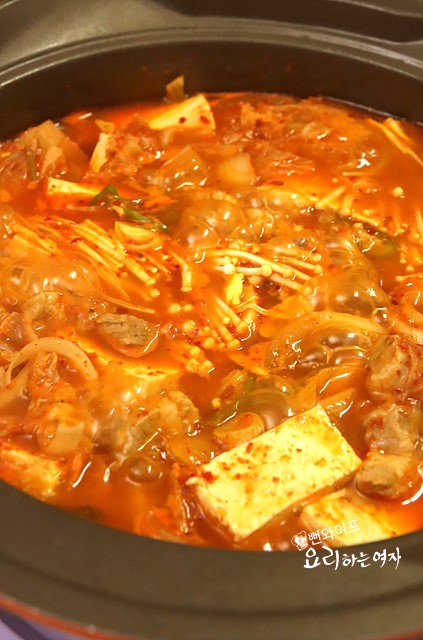
This stew brings together seasoned pork, aged sour kimchi, and onion in a pot to simmer gently all at once. Adding kimchi brine along with anchovy broth creates a deep, refreshing soup base, while tofu and mushrooms make it hearty enough for dinner or to pair with drinks.
- Servings
- 4 servings
- Cook time
- 10 minprep not included
- Difficulty
- Medium
- Spiciness
- Spicy
Ingredients
Ingredients
- Aged sour kimchi400 g
- Pork200 g
- Tofu1/2 block, 200 g
- Onion1/2
- Enoki mushrooms1/2 pack
- Large green onion (daepa)1/4 stalk
- Cheongyang chili pepper (hot green chili)2
- Anchovy broth5 cups
- Kimchi brine1/2 cup
Pork seasoning
- Soup soy sauce (guk-ganjang)1 tbsp
- Mirin (cooking rice wine)1 tbsp
- Minced garlic1 tsp
- Ground black peppera little
Seasoning
- Gochugaru (Korean chili flakes)1 1/2 tbsp
- Tuna extract sauce (chamchi-aek) (or fish sauce)1 tbsp
- I used pork belly and trimmed away the excess fat. You can also use pork shoulder, Boston butt, or picnic roast.
- Use well-fermented aged sour kimchi for kimchi jjigae, and pour in some kimchi brine to give the broth a refreshing, deep flavor.
Steps
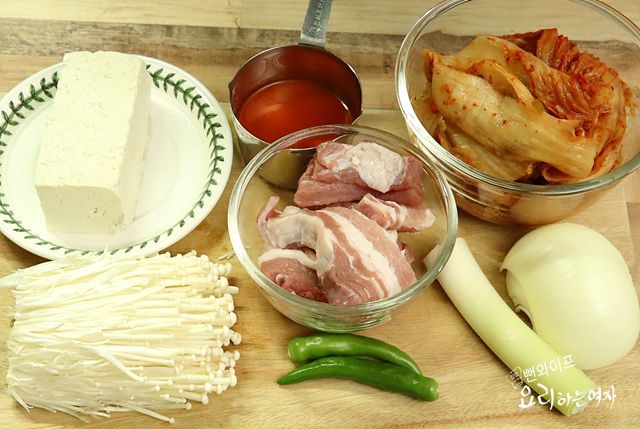
I used pork belly and trimmed away the excess fat. You can also use pork shoulder, Boston butt, or picnic roast.
Use well-fermented aged sour kimchi for kimchi jjigae, and pour in some kimchi brine to give the broth a refreshing, deep flavor.
Tofu is always fun to eat in kimchi jjigae, so I prepared 1/2 block. Then onion, large green onion, Cheongyang chili peppers, and enoki mushrooms.
Season the meat and slice the ingredients
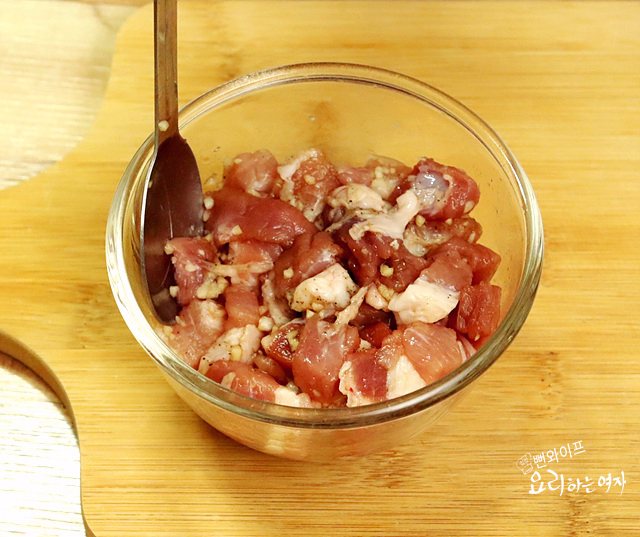
Cut the pork into bite-sized pieces, then toss thoroughly with 1 tbsp soup soy sauce, 1 tbsp mirin, 1 tsp minced garlic, and a little ground black pepper to season.
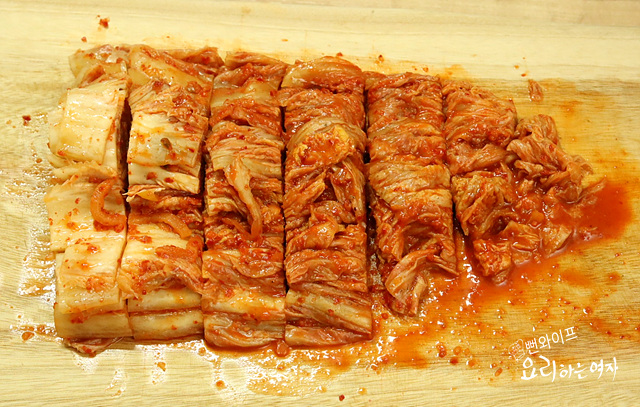
Cut the aged sour kimchi into bite-sized pieces as well.
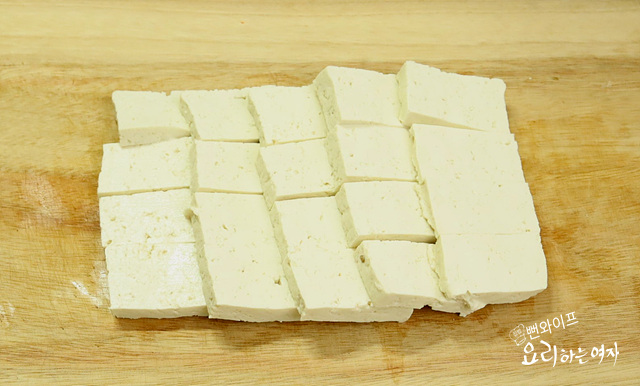
Slice 1/2 block of tofu into slightly thick bite-sized squares.
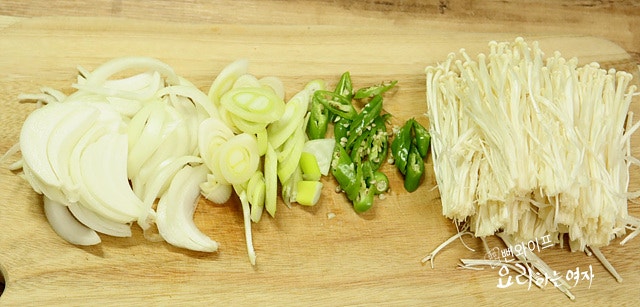
Slice the onion into medium-thick strips, diagonally slice the large green onion and Cheongyang chili peppers, and pull the enoki mushrooms apart into small clusters.
Simmer the stew
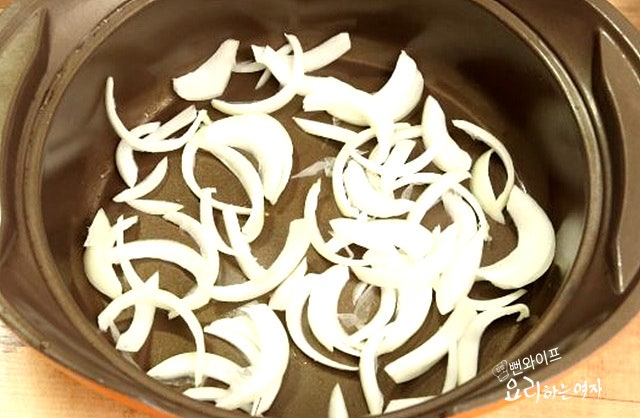
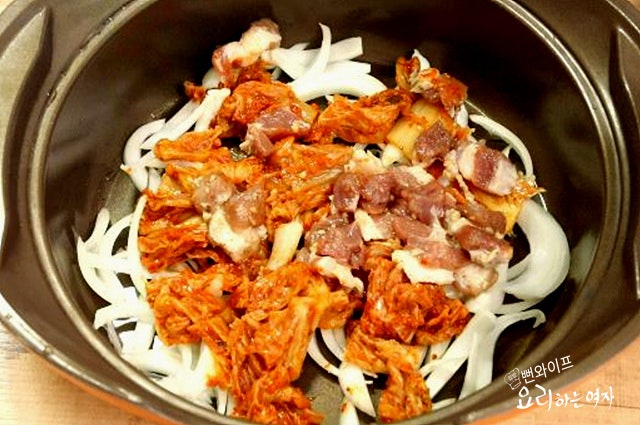

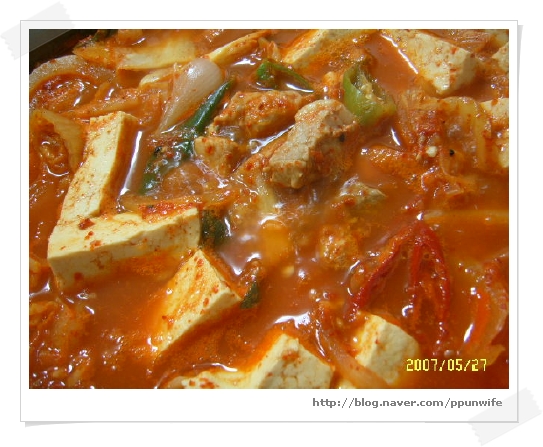
Spread all the sliced onion evenly across the bottom of a heavy-bottomed pot, then layer the kimchi and seasoned pork over it so they are evenly mixed.
Adding onion mellows the tartness of the aged kimchi, removes gaminess from the meat, and softens the flavor of the broth.
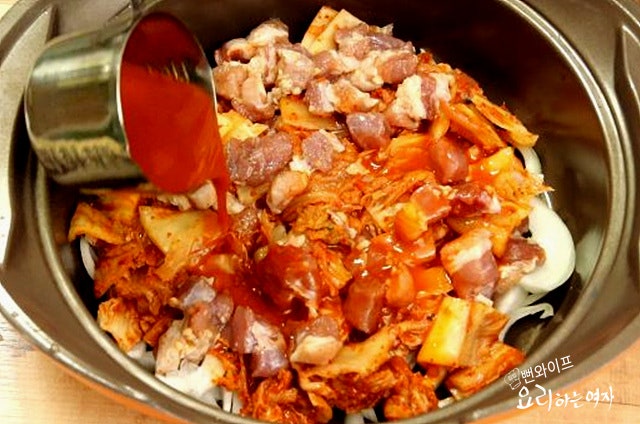
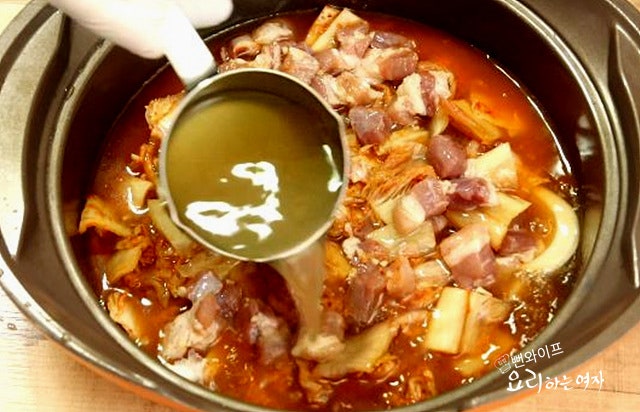
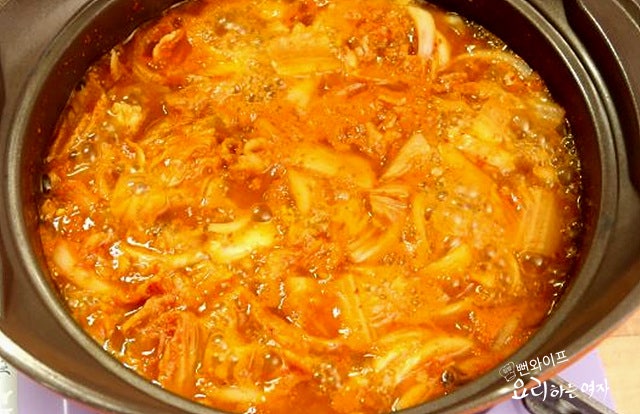
Pour in 1/2 cup kimchi brine and 5 cups anchovy broth.
Once it comes to a rolling boil, lower the heat to medium-low, cover with the lid, and simmer gently for at least 10 minutes.
Simmering all the ingredients together from the very start coaxes out the savory richness of the pork and builds a kimchi stew with deep flavor.
That is why using a heavy-bottomed pot works best.
Season and finish
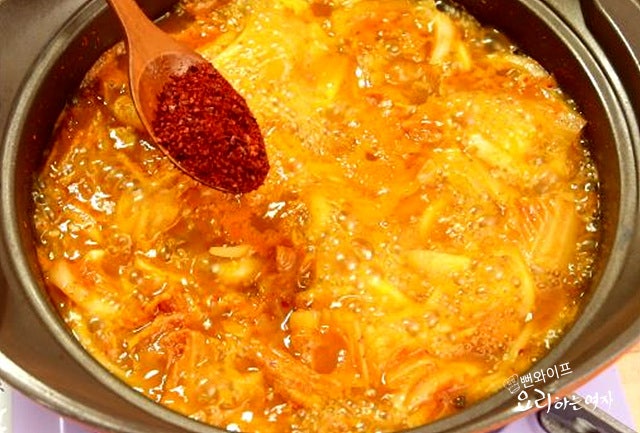
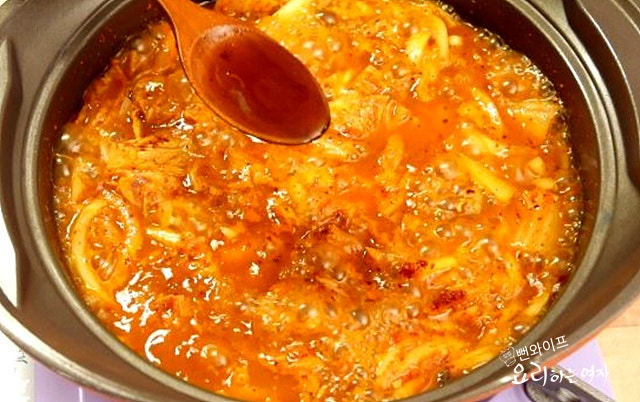
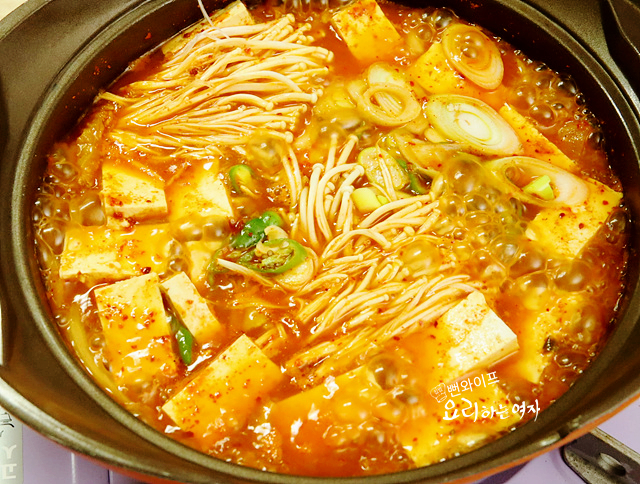
The broth looked a bit pale, so I stirred in 1+1/2 tbsp gochugaru partway through. Taste the broth and season with 1 tbsp tuna extract sauce or fish sauce.
Adding saeujeot (salted fermented shrimp) is also delicious.
Add the tofu, large green onion, Cheongyang chili peppers, and mushrooms, then boil for just a little longer, and the kimchi jjigae is finished.
 Ppunwife's tips
- When making kimchi jjigae with pork, simmering it gently for a long time makes the flavor much deeper and improves the broth.
- It gives the stew the quality of having been cooked slowly in a traditional cast-iron caldron, so using a heavy-bottomed pot works even better.
- Adding onion mellows the tartness of the aged kimchi, removes gaminess from the meat, and softens the flavor of the broth.
- Simmering all the ingredients together from the very start coaxes out the savory richness of the pork and builds a kimchi stew with deep flavor. That is why using a heavy-bottomed pot works best.
- Taste the broth and use saeujeot instead of tuna extract sauce or fish sauce for delicious results.
FAQ
Do I have to use pork belly?
Besides pork belly with the excess fat trimmed, you can choose pork shoulder, Boston butt, or picnic roast depending on your preference.
Why lay the onion on the bottom of the pot first?
The onion gently softens the tartness of the aged sour kimchi, eliminates any gaminess from the pork, and makes the broth taste smoother.
Can I use something else instead of tuna extract sauce to adjust the seasoning?
Instead of tuna extract sauce, you can season with regular fish sauce or saeujeot (salted fermented shrimp) to bring out plenty of umami.
Is there a trick to getting a deeper, richer broth?
Using a heavy-bottomed pot, adding all the ingredients at once, and simmering gently over medium-low heat for at least 10 minutes brings out the rich savoriness and deep flavors.