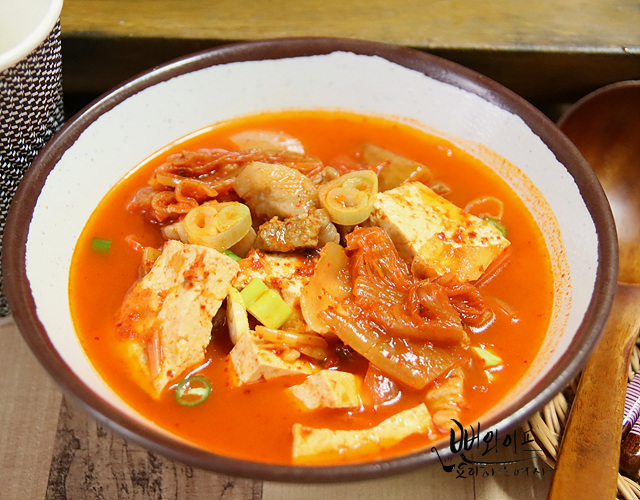
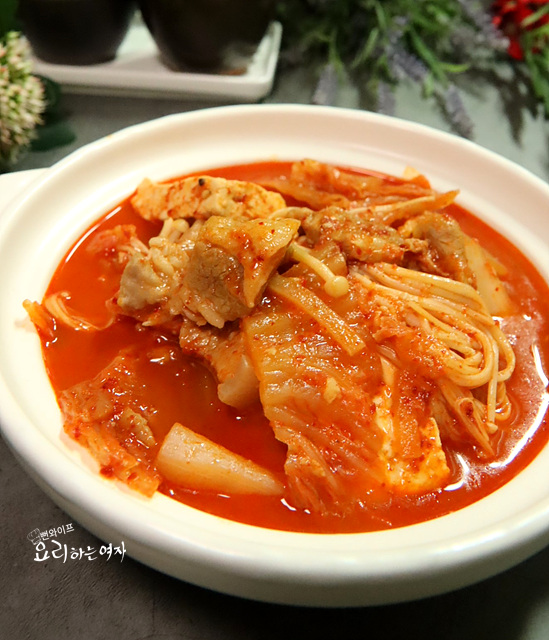
Clean and Refreshing Pork Kimchi Jjigae (Kimchi Stew)
A light and refreshing pork kimchi jjigae seasoned with salted fermented shrimp instead of kimchi brine.
Translated from Korean by AI and not yet checked by a native speaker. Amounts and numbers are taken directly from the original recipe. Read the Korean original →

By seasoning with salted fermented shrimp instead of adding kimchi brine, the broth stays light and refreshing without feeling heavy. Lean pork shoulder is lightly seasoned and simmered thoroughly with aged sour kimchi to bring out a clean, savory flavor. Sized for 3 to 4 servings, it makes a light, spicy, and satisfying stew.
- Servings
- 3–4 servings
- Difficulty
- Easy
- Spiciness
- Spicy
Ingredients
Ingredients
- Pork150 g
- Aged sour kimchi200 g
- Tofu1/4 block, 100 g
- Large green onion (daepa)1/3 stalk
- Cheongyang chili pepper (hot green chili)2
- Enoki mushrooms1/2 pack
- Anchovy broth4 cups
Meat marinade
- Salt1/2 tsp
- Minced garlic1/2 tbsp
- Mirin (cooking rice wine)1 tbsp
- Ground black peppera little
Seasoning
- Salted fermented shrimp (saeujeot)1 tbsp
- Gochugaru (Korean chili flakes)1 tbsp
- Use pork front shoulder with a little fat on it; if you want a clean-tasting broth, front shoulder, rear leg, or collar works best.
- Shake off any stuffing from the aged sour kimchi and cut it into bite-sized lengths.
- When using frozen pork, adding about 1/2 tsp of ginger helps remove any unwanted meaty smell.
Steps
Prepare the ingredients
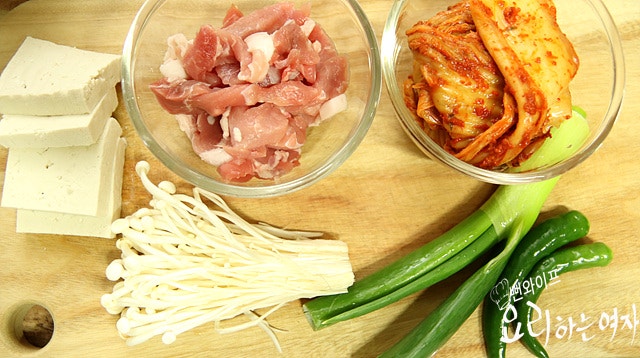
Here are 200 g of aged sour kimchi, 150 g of pork, 1/4 block of tofu, large green onion, Cheongyang chili pepper, and enoki mushrooms.
I used pork front shoulder with a little bit of fat attached.
If you prefer a clean-tasting broth, front shoulder, rear leg, or collar is suitable.
Slice the ingredients
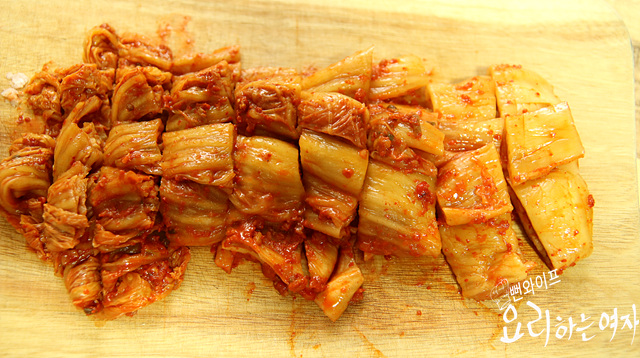
Shake the stuffing off the aged sour kimchi and cut it into bite-sized lengths.
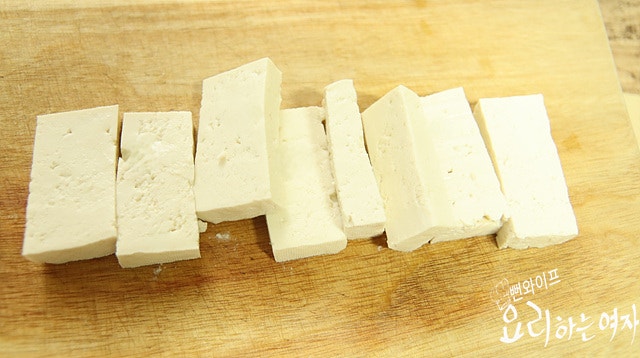
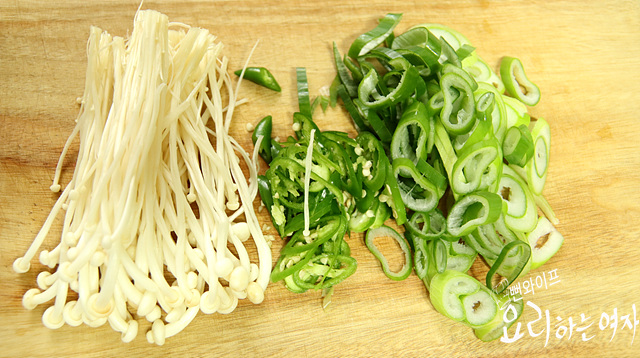
Slice the tofu thickly, and thinly slice the green onion and chili peppers.
Season the pork
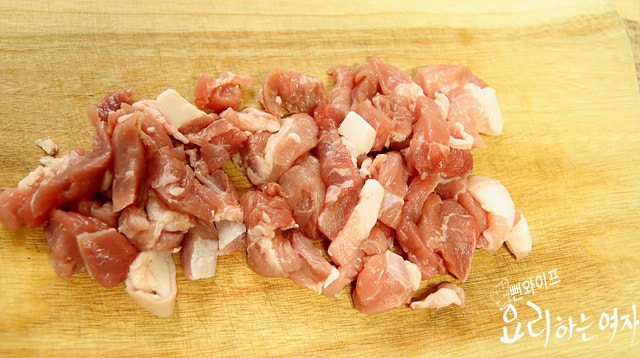
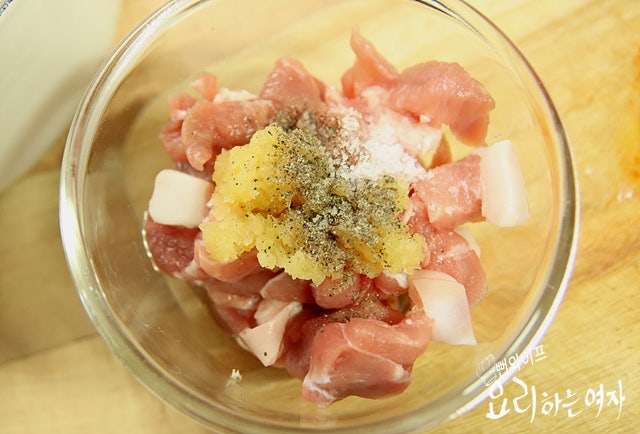
Cut the pork into bite-sized pieces as well, then add the pork seasoning ingredients and mix.
When using frozen pork, adding about 1/2 tsp of ginger helps eliminate any meaty smell.
Simmer the kimchi jjigae

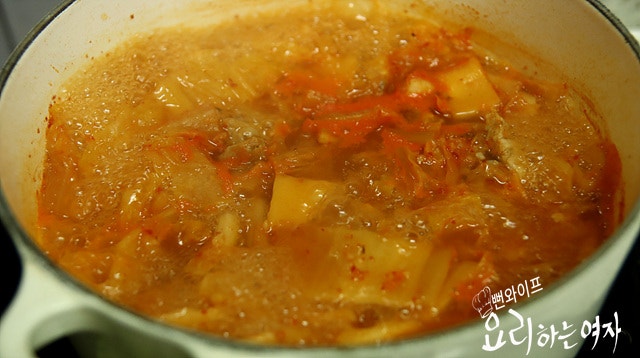
Pour in the pork, kimchi, and 4 cups of anchovy broth, then bring to a boil.
Simmer so the meat cooks through, releasing its savory juices, and the sour kimchi turns tender.
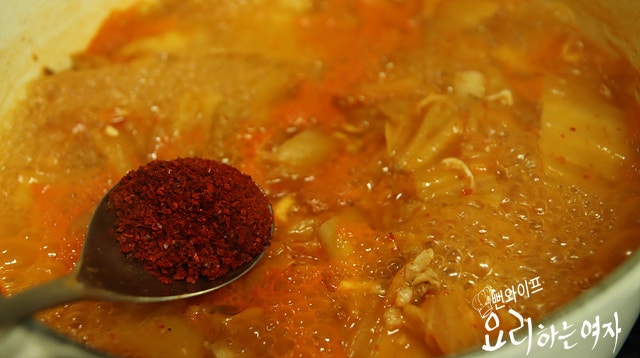
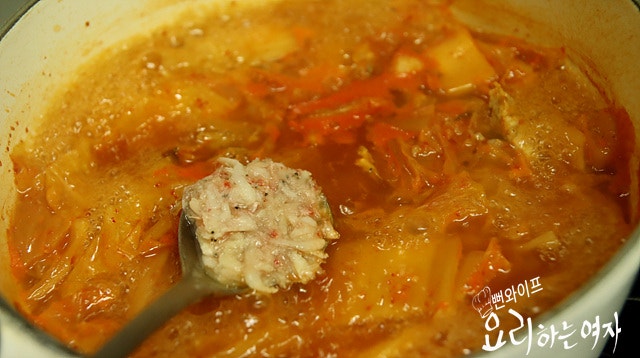
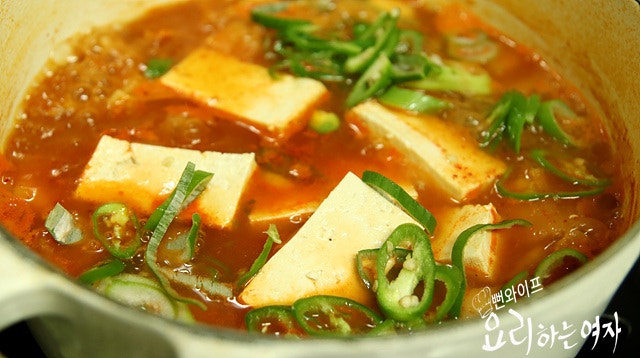
Add 1 tbsp of gochugaru (Korean chili flakes) and 1 tbsp of salted fermented shrimp (saeujeot) and let it boil, then taste and adjust with salt or soup soy sauce if it tastes bland.
Add the tofu, green onion, and chili peppers.
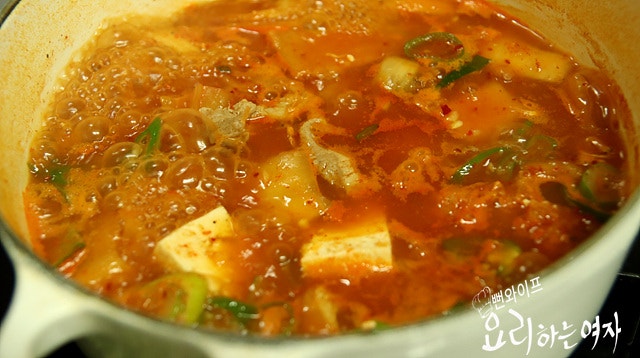
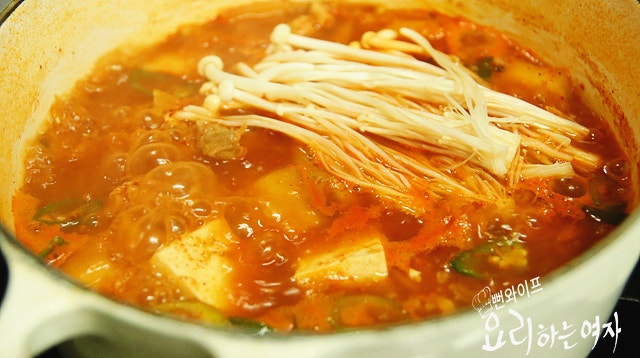
Once all the ingredients are cooked through and come together nicely, turn off the heat and let the enoki mushrooms cook in the residual heat to finish.
If the kimchi lacks acidity or umami, adding 1 to 2 tbsp of vinegar will instantly bring the flavor alive.
Finish

For today's kimchi jjigae, I simmered it by seasoning with salted fermented shrimp without adding any kimchi brine.
Using lean pork front shoulder with little fat gives it a refreshing and clean taste.

If you want a richer-tasting kimchi jjigae, you can simmer it by adding about 1 cup of kimchi brine along with the anchovy broth.
Just remember to cut back on the salted fermented shrimp or other seasonings when doing so.
 Ppunwife's tips
- Add 1 tbsp of gochugaru and 1 tbsp of salted fermented shrimp, bring to a boil, then taste and adjust with salt or soup soy sauce if it is bland.
- If the kimchi lacks acidity or umami, adding 1 to 2 tbsp of vinegar will instantly revive the flavor.
- For a richer kimchi jjigae, simmer by adding about 1 cup of kimchi brine along with the anchovy broth. Just reduce the salted fermented shrimp or salty seasoning accordingly.
FAQ
Which pork cut is best for a clean-tasting broth?
Using lean cuts with less fat such as front shoulder, rear leg, or collar gives the broth a noticeably cleaner taste.
How can I remove unwanted odors when using pork from the freezer?
Adding about 1/2 tsp of ginger when seasoning the meat helps reduce any meaty odors.
What should I do if the kimchi lacks umami or tangy sourness?
Drizzling in 1 to 2 tbsp of vinegar while simmering will instantly boost the acidity and flavor of the kimchi.
How can I adjust the recipe if I want a deeper, richer broth?
You can pour in 1 cup of kimchi brine along with the anchovy broth and simmer, reducing the amount of salted fermented shrimp or base seasoning accordingly.