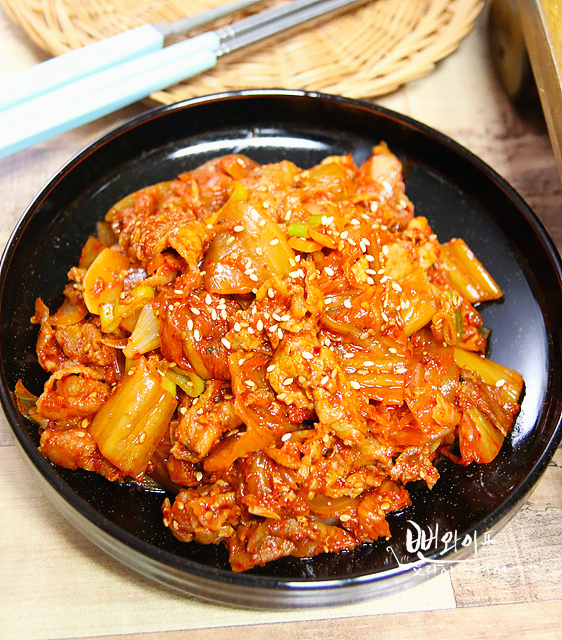
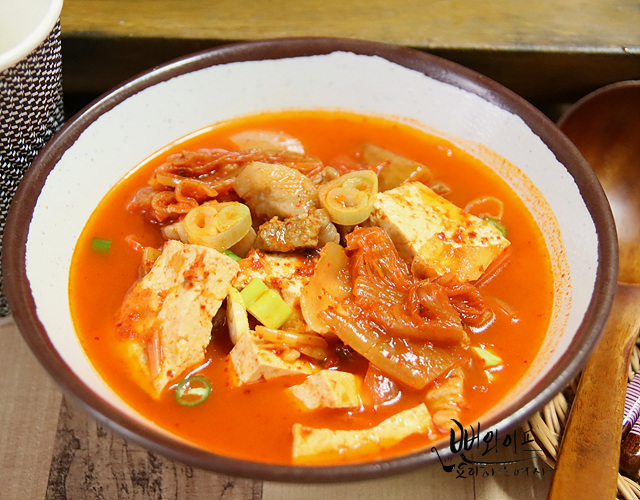
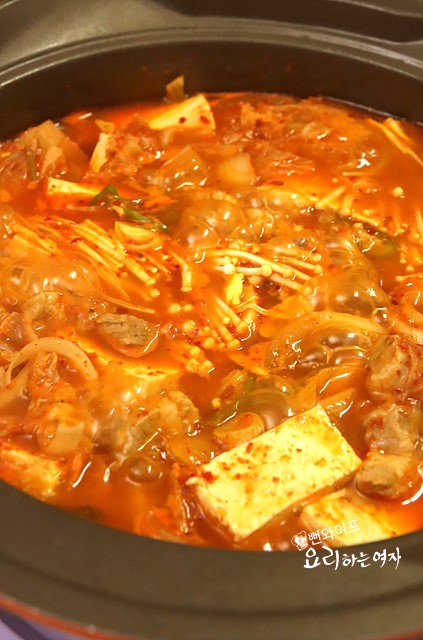
Kimchi Jeyuk Bokkeum (Spicy Stir Fried Pork with Kimchi)
A stir-fry dish featuring tangy aged sour kimchi that cuts through the richness of the pork and brings out rich umami flavor.
Translated from Korean by AI and not yet checked by a native speaker. Amounts and numbers are taken directly from the original recipe. Read the Korean original →
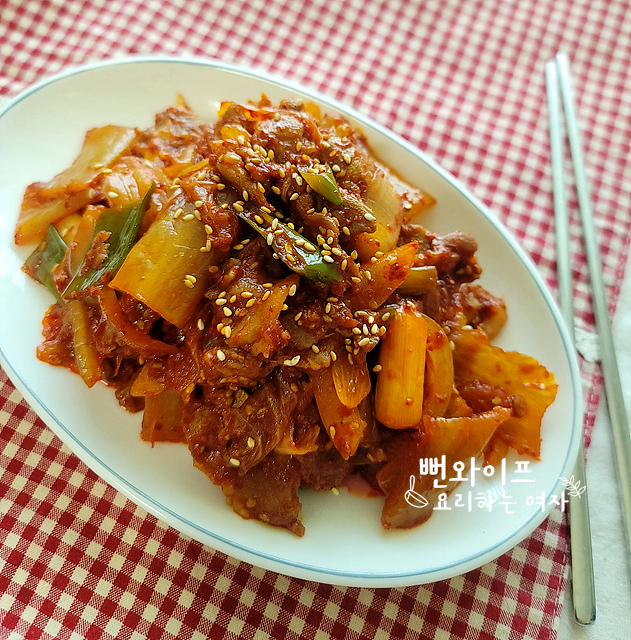
Pork with just the right amount of fat is stir-fried with well-ripened aged sour kimchi for a refreshing yet deep, savory flavor. Pre-seasoning the meat eliminates unwanted odors, and the key is braising it down until the kimchi turns tender. Spicy and sweet, it makes a satisfying everyday side dish with rice or a wonderful bar snack served with tofu.
- Servings
- 4 servings
- Difficulty
- Medium
- Spiciness
- Spicy
Ingredients
Ingredients
- Pork400 g
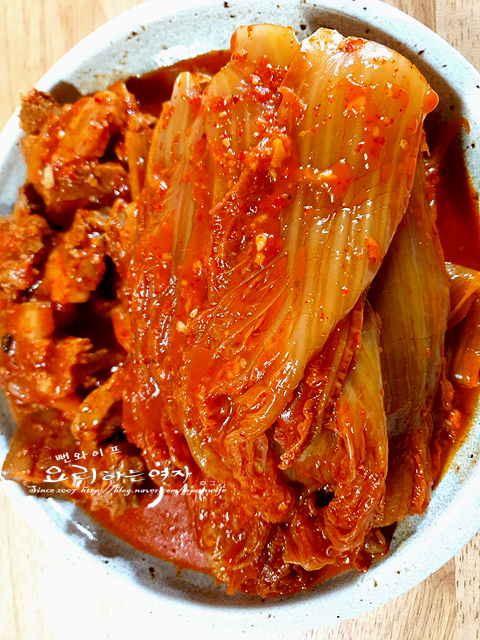
- Aged sour kimchi2 cups
- Sugar1 tbsp
- Onion1/4
- Large green onion (daepa)1/2 stalk
- Cheongyang chili pepper (hot green chili)2
Meat marinade
- Regular soy sauce (jin-ganjang) (or brewed soy sauce (yangjo-ganjang))2 tbsp
- Mirin (cooking rice wine)2 tbsp
- Minced garlic1 tbsp
- Ground black peppera little
Seasoning
- Gochugaru (Korean chili flakes)2 tbsp
- Corn syrup (mulyeot) (or green plum syrup (maesil-cheong), oligosaccharide syrup (oligodang), sugar)1–2 tbsp
- Perilla oil (or toasted sesame oil)1 tbsp
- Toasted sesame seeds1 tbsp
- For the pork, cuts with a little fat like shoulder, picnic shoulder, or ham are delicious; prepare it thinly sliced as for bulgogi.
- The sliced aged sour kimchi weighs 400g, about 2 cups.
- For aged sour kimchi or mugeonji, balance the tartness by adding 1 to 2 tbsp of sugar depending on how sour it is. If the kimchi has a slight stale aroma, add mirin.
Steps
Prepare the ingredients
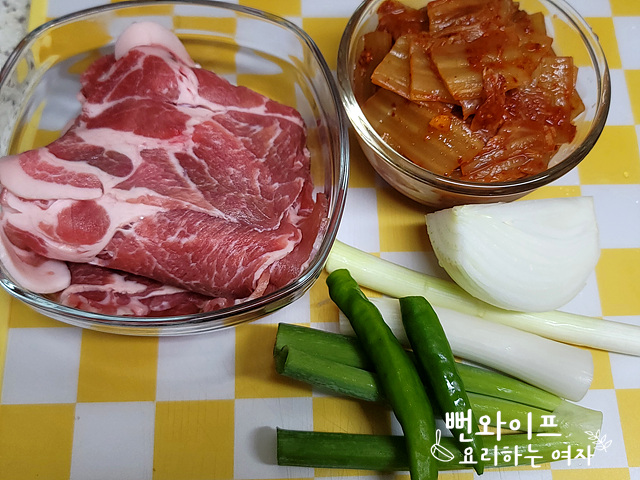
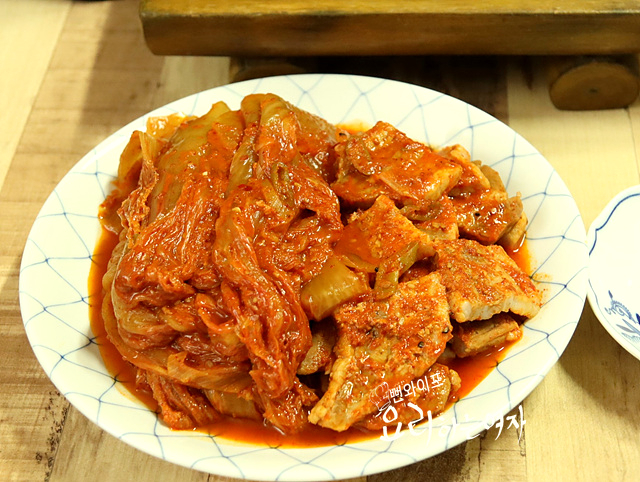
For the pork, cuts with a little fat like shoulder, picnic shoulder, or ham are delicious.
Use thinly sliced meat as for bulgogi, and prepare onion, large green onion (daepa), and Cheongyang chili pepper (hot green chili). The sliced aged sour kimchi is 400g, about 2 cups.
Slice the ingredients
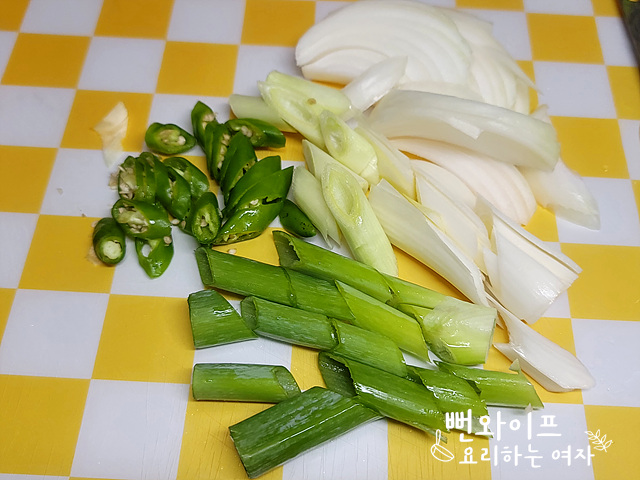
Slice the onion not too thinly, and slice the large green onion (daepa) and Cheongyang chili pepper (hot green chili) diagonally.
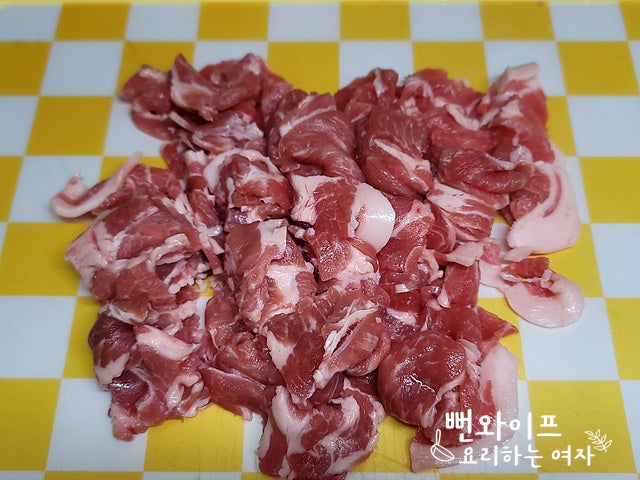
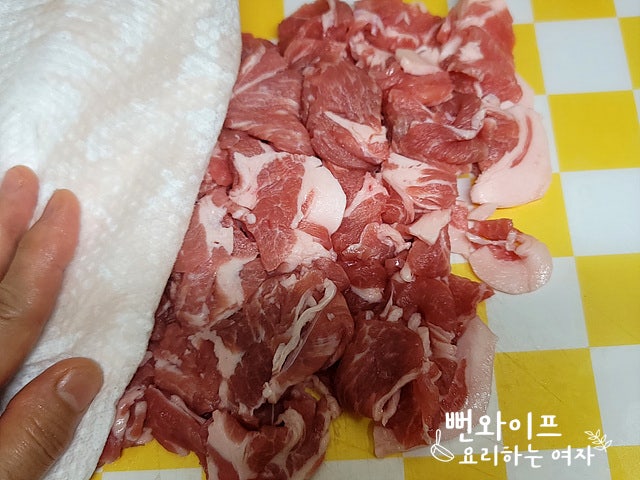
Cut the pork into bite-sized pieces or pieces similar in size to the kimchi, and press firmly with paper towels to remove any residual blood.
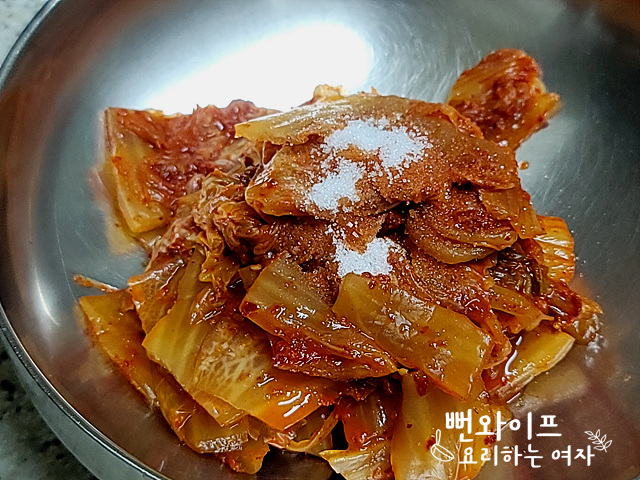
For aged sour kimchi or mugeonji, balance the tartness by adding 1 to 2 tbsp of sugar depending on how sour it is.
If the kimchi has a slight stale aroma, add mirin.
Season the meat
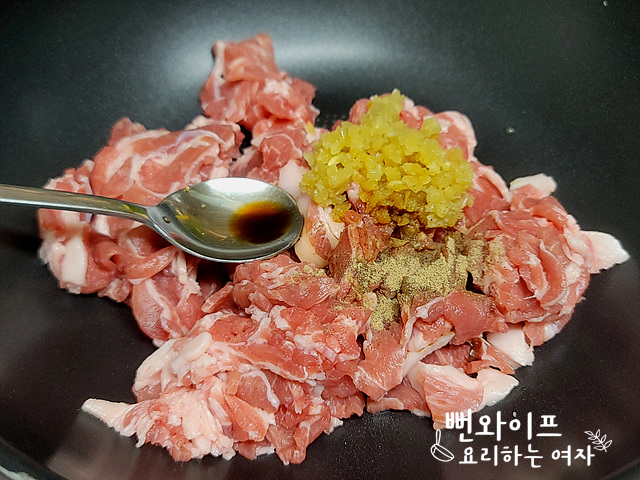
Place the meat in the pan you will stir-fry in and season it.
Add 2 tbsp regular soy sauce (jin-ganjang), 2 tbsp mirin (cooking rice wine), 1 tbsp minced garlic, and a little ground black pepper, then mix well.
If using frozen pork, adding about 1 tsp of minced ginger will help eliminate unwanted odors.
Stir-fry
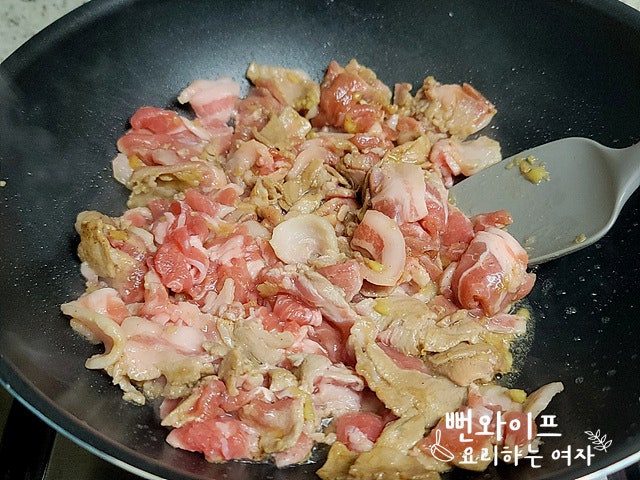
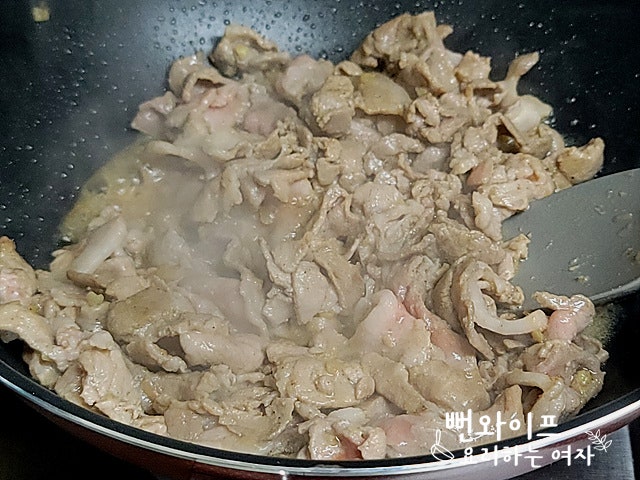
Because the meat is thinly sliced, you can drizzle cooking oil and stir-fry it right away.
Stir-fry while tossing so it cooks evenly.
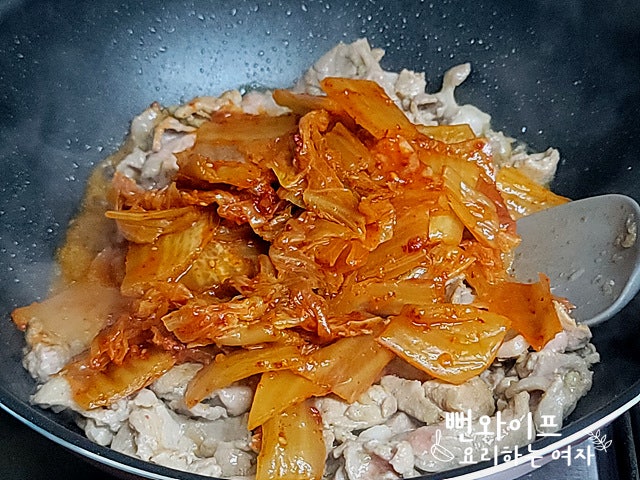
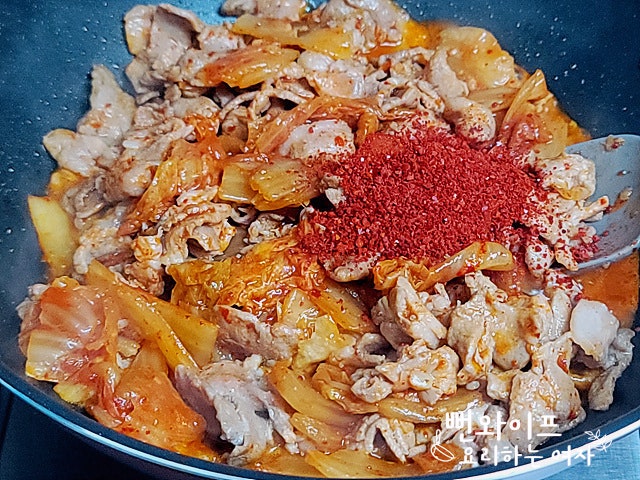
Add the kimchi, 2 tbsp gochugaru (Korean chili flakes), and 1 tbsp corn syrup (mulyeot)...
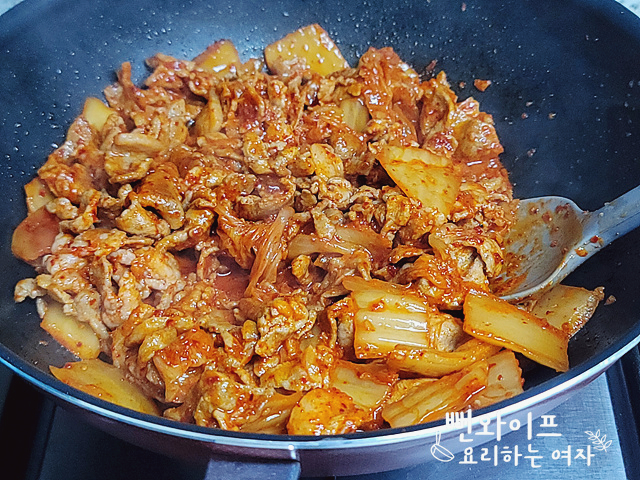
Stir-fry until the kimchi softens and the liquid reduces.
As they stir-fry together, the distinct flavors of the pork and sour kimchi harmonize into a great balance.
Taste it, season with salt if it tastes flat, and add more sweetness to suit your preference.
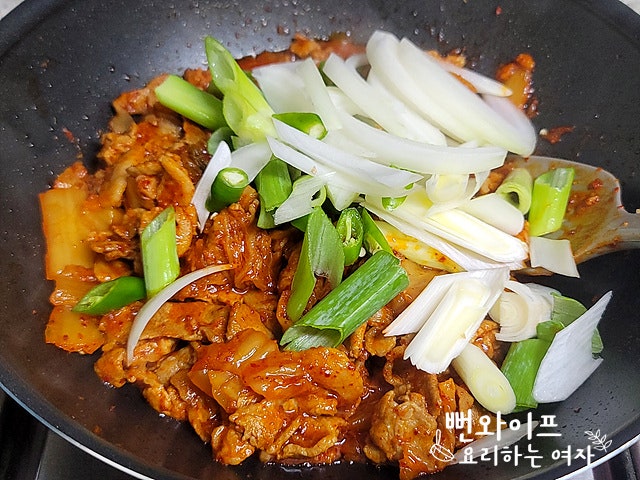
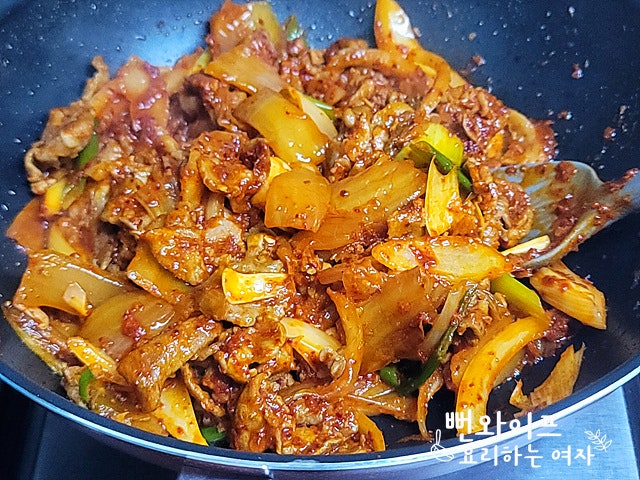
Add the onion, large green onion, and chili peppers, and stir-fry until softened.
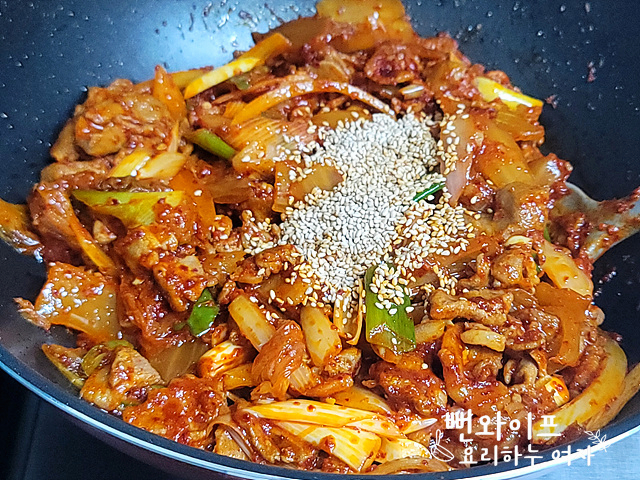
Finally, turn off the heat, mix in perilla oil or toasted sesame oil and toasted sesame seeds, and finish.
Finished
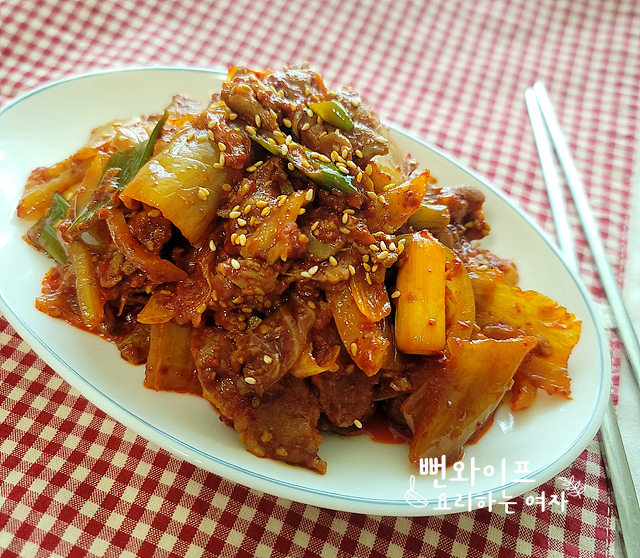
Kimchi jeyuk bokkeum is finished.
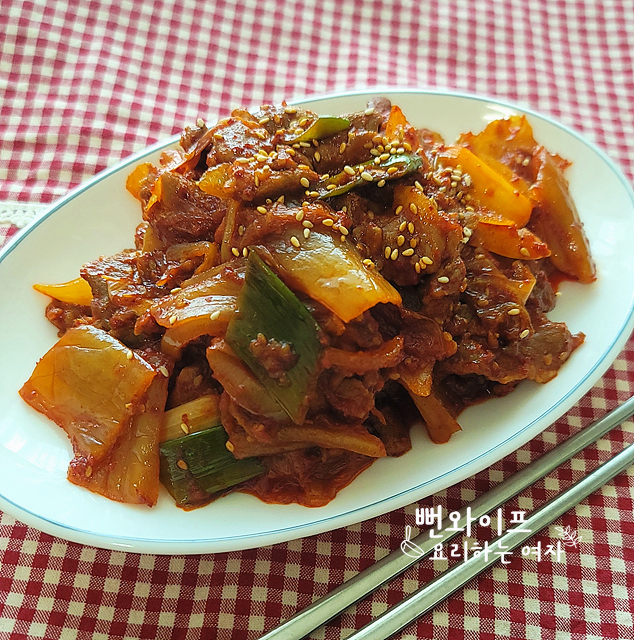
The subtle tanginess of the sour kimchi whets your appetite when eaten together with the pork.
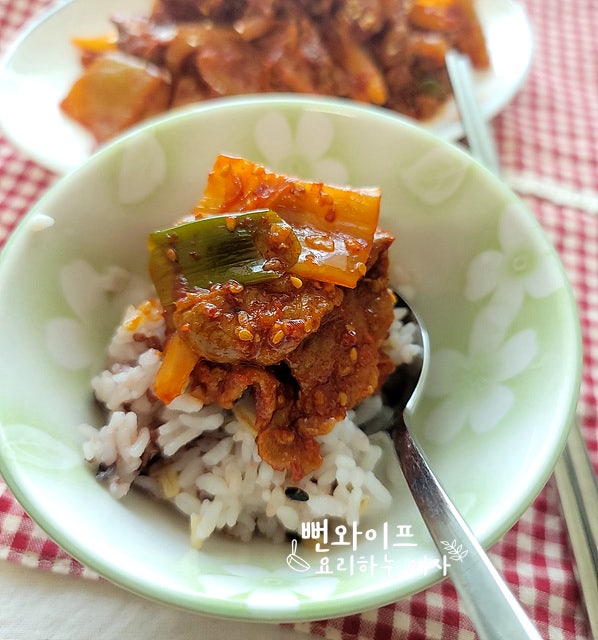
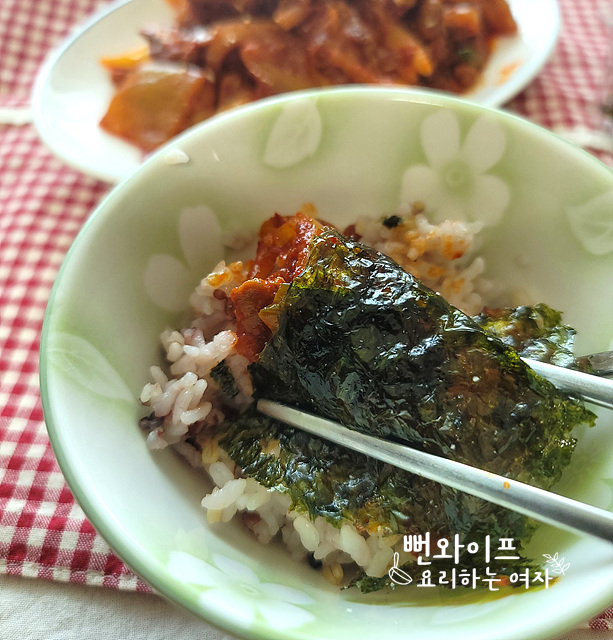
It is delicious spooned over warm rice or wrapped in seasoned dried seaweed sheets (gim) or gopchang gim.
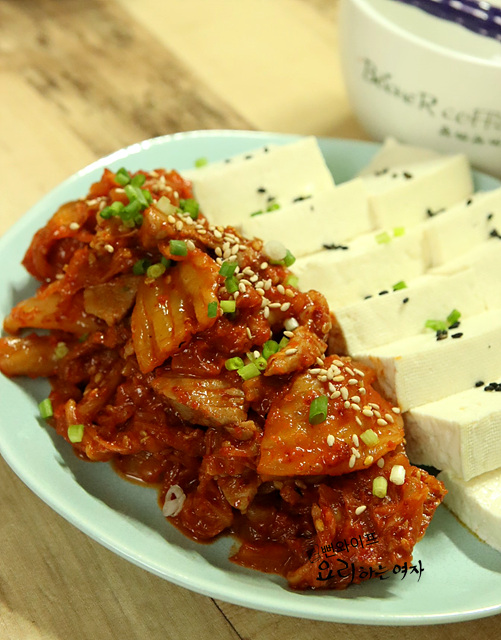
If you want an accompaniment for drinks, lightly pan-fry or blanch some tofu and enjoy it like tofu kimchi.
Finely chop any leftovers and stir-fry them with rice to make kimchi fried rice with ease.
 Ppunwife's tips
- Press the pork firmly with paper towels to remove residual blood.
- If using frozen pork, adding about 1 tsp of minced ginger will help eliminate unwanted odors.
- Taste it, season with salt if it tastes flat, and add more sweetness to suit your preference.
FAQ
How do I balance the sourness or stale odor of the kimchi?
When the sourness is strong, mix in 1 to 2 tbsp of sugar to balance it out, and if it has a stale smell, a drizzle of mirin will help tone it down.
Is there a way to reduce unwanted odors when using frozen pork?
Adding about 1 tsp of minced ginger when seasoning the meat helps reduce gamey odors.
Which cut of pork is best to use?
Thinly sliced bulgogi cuts with a moderate amount of fat, such as shoulder, picnic shoulder, or ham, will yield a savory and flavorful stir-fry.
How can I use any leftovers?
You can serve it with blanched tofu like tofu kimchi as a drinking snack, or finely chop the leftover pork and kimchi to make quick kimchi fried rice.