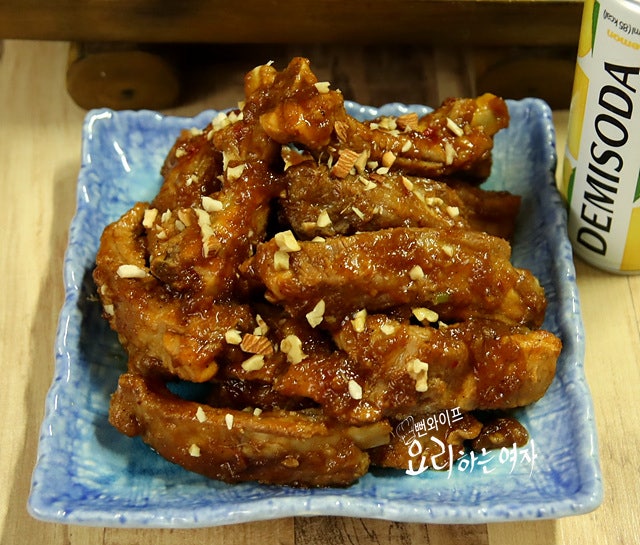
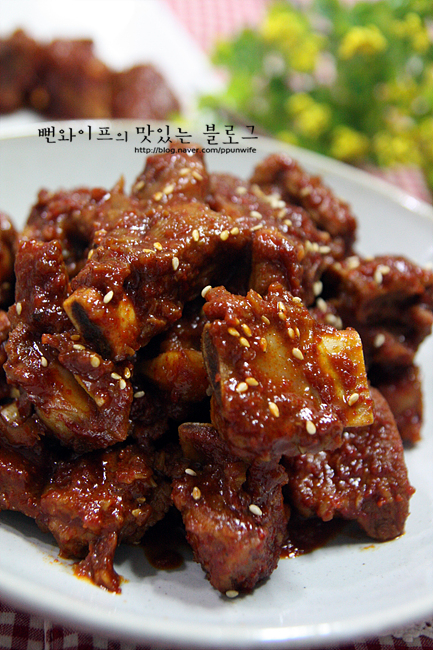
Dwaeji Galbijjim (Braised Pork Ribs) in Sweet and Savory Sauce
A main dish of Dwaeji galbijjim (braised pork ribs) cooked tender in a pressure cooker and braised down in a sweet and savory sauce.
Translated from Korean by AI and not yet checked by a native speaker. Amounts and numbers are taken directly from the original recipe. Read the Korean original →
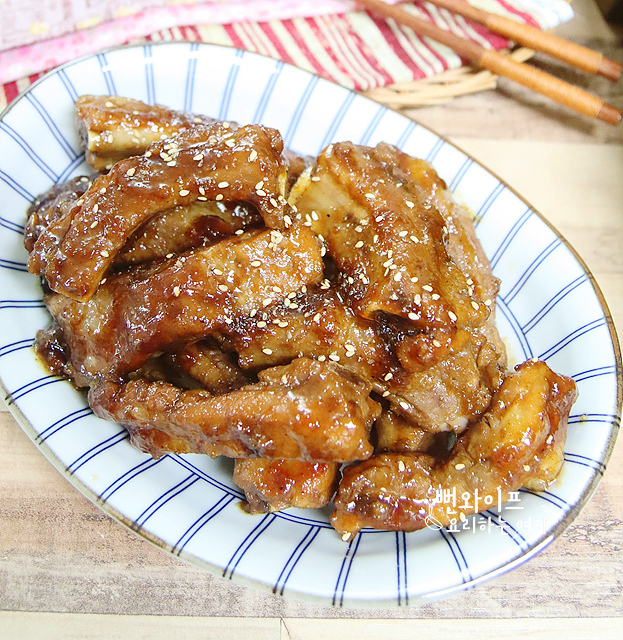
With a well-balanced sweet and savory soy sauce seasoning, this main dish serves 5 to 6 people and is great for everyone from kids to adults. Using a pressure cooker cooks the meat tender all the way through so it easily falls off the bone. It is perfect to prepare generously and without stress for holidays or gatherings.
- Servings
- 5–6 servings
- Difficulty
- Medium
- Spiciness
- Not spicy
Ingredients
Ingredients
- Pork ribs (or pork baby back ribs)1.5 kg
- Soju1/2 cup
- Ginger2 cloves
- Whole black peppercorns1 tbsp
- Bay leaves5 leaves
Seasoning
- Pear juice (or crushed pear drink)2 cups
- Onion juice1/2 cup
- Regular soy sauce (jin-ganjang) (or brewed soy sauce (yangjo-ganjang))1/2 cup
- Mirin (cooking rice wine)4 tbsp
- Corn syrup (mulyeot)3 tbsp
- Minced garlic2 tbsp
- Minced ginger1 tsp
- Ground black peppera little
- Water2 cups
- Soak the ribs in water for about 30 minutes to 1 hour to draw out the blood, changing the water occasionally.
- Instead of 2 cups of canned crushed pear drink, you can also grate and use 2 pears (or apples).
- When blanching back ribs, doenjang also helps remove any off-odors, and you can also use aromatics such as large green onions and onions.
Steps
Prepare the ingredients
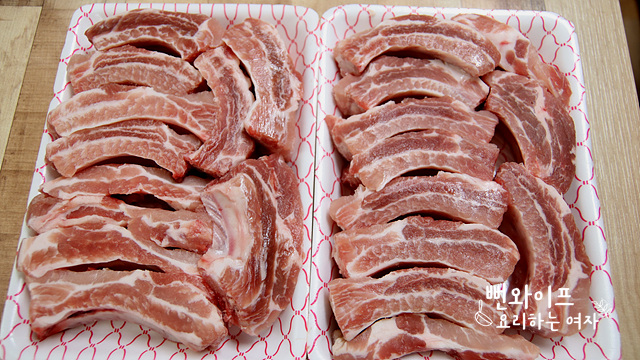
Here are 2 racks of pork back ribs, 1.5kg.
They are quite thick and meaty, so they have quite a bit of weight.
Draw out the blood from the ribs
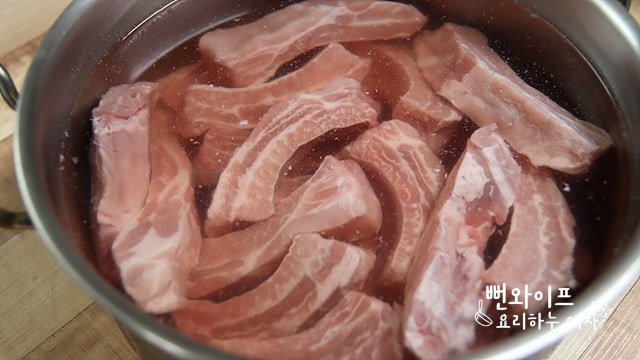
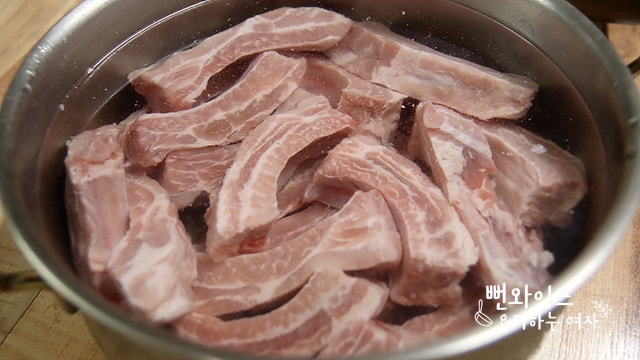
Soak the ribs in water for about 30 minutes to 1 hour to draw out the blood, changing the water occasionally.
Blanch
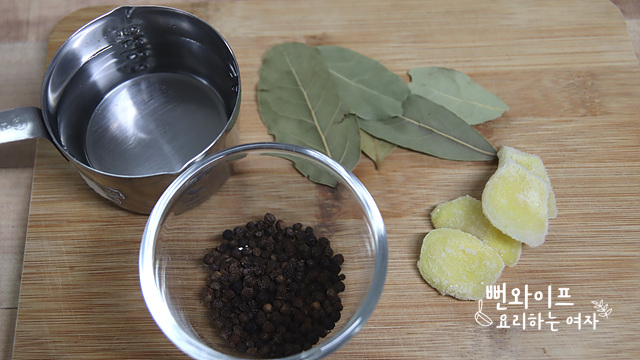
Here are the ingredients for blanching the back ribs.
1/2 cup soju, 2 pieces ginger, 1 tbsp whole black peppercorns, and 5 bay leaves.
Doenjang (Korean soybean paste) also helps remove pork off-odors, and you can also use aromatics like large green onion and onion.
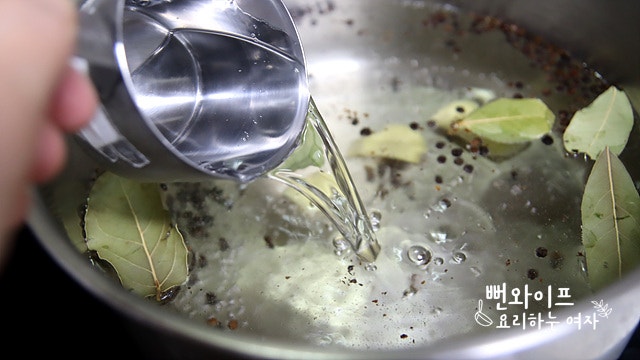
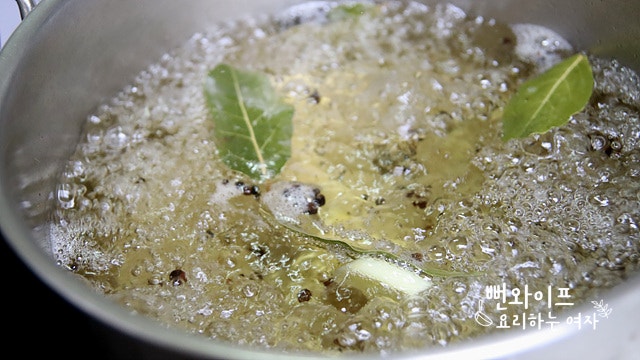
Pour at least 10 cups of water into a pot—enough to submerge the ribs—add all the ingredients, and bring it to a rolling boil.
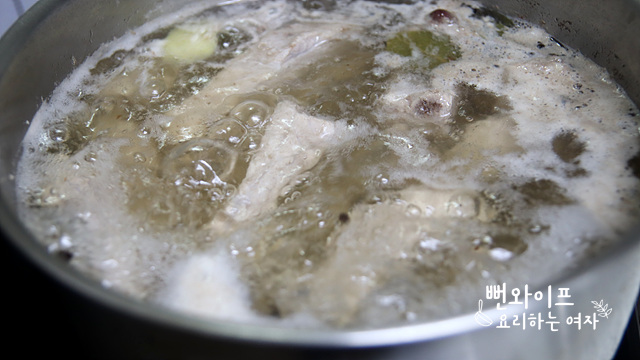
Add the ribs and boil for about 5 minutes.
As plenty of impurities from between the bones emerge along with foam, any pork off-odors will be eliminated.
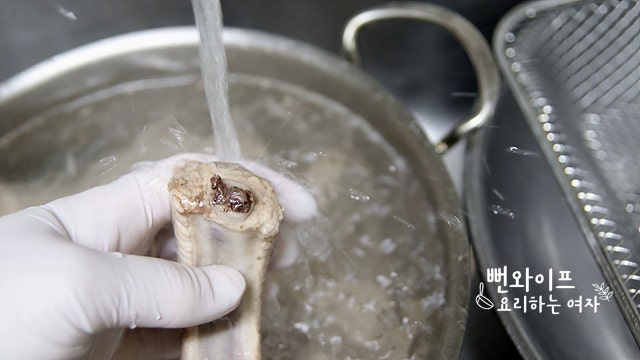
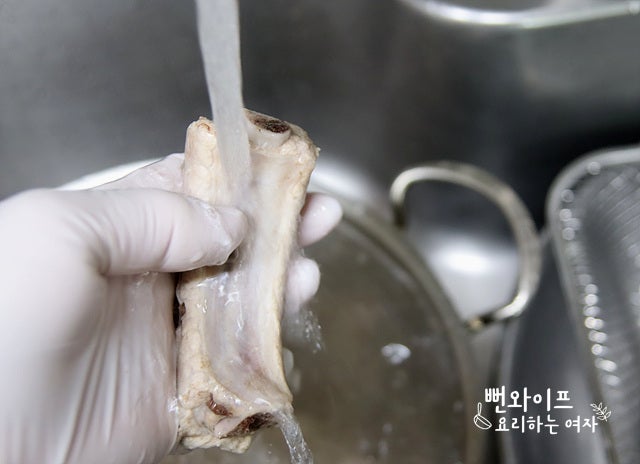
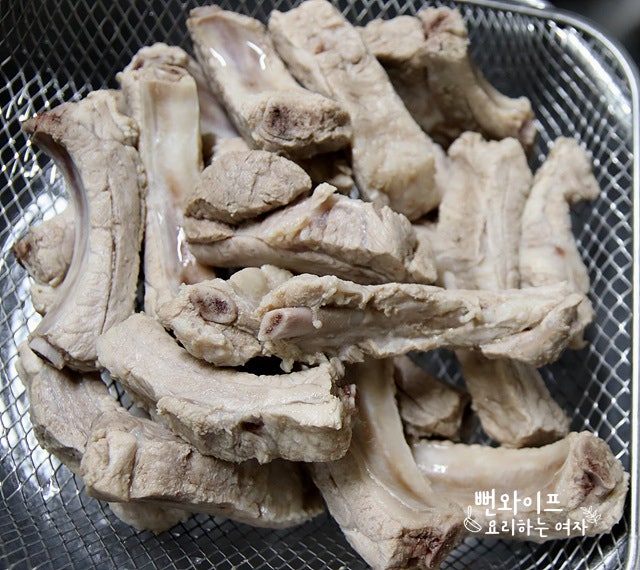
Rinse under running water while rubbing away impurities stuck to the bones, then drain.
Marinate in seasoning
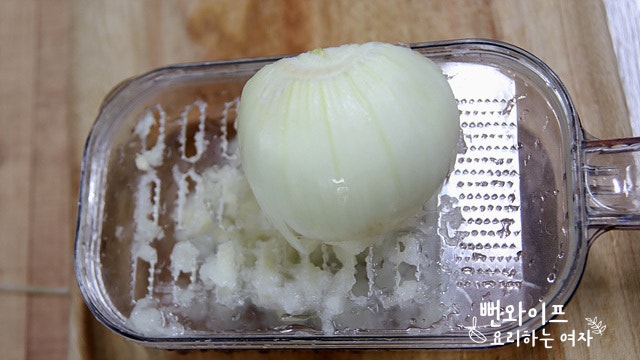
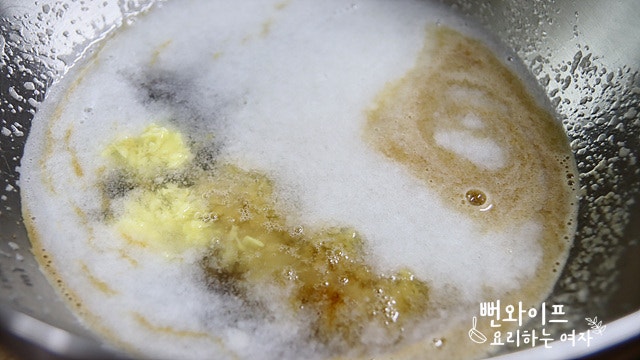
For pear juice, I prepared 2 cups of canned crushed pear drink. If you have fresh pears (or apples), you can grate 2 of them and add them.
I grated 1 onion (1/2 cup) and added it to the seasoning (1/2 cup regular soy sauce (jin-ganjang), 4 tbsp mirin (cooking rice wine), 3 tbsp corn syrup (mulyeot), 2 tbsp minced garlic, 1 tsp minced ginger, a little ground black pepper, and 2 cups water).
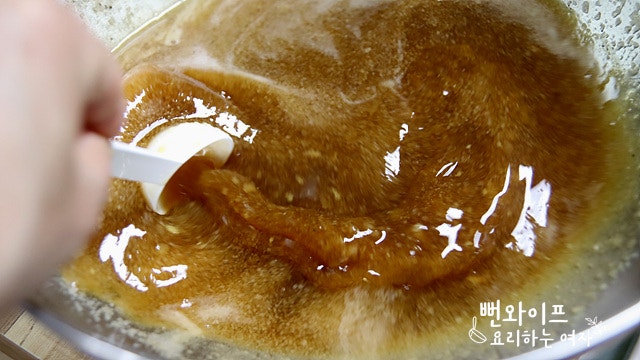
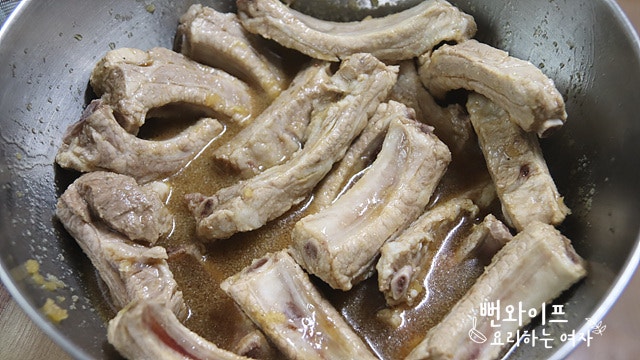
This seasoning is the same one used for beef galbijjim or LA galbi.
Pour it over the ribs and marinate overnight.
Cook in a pressure cooker
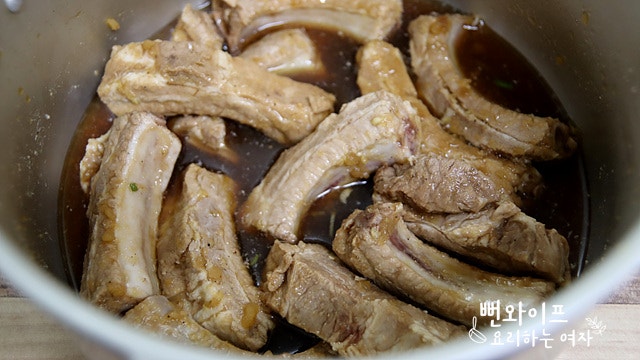
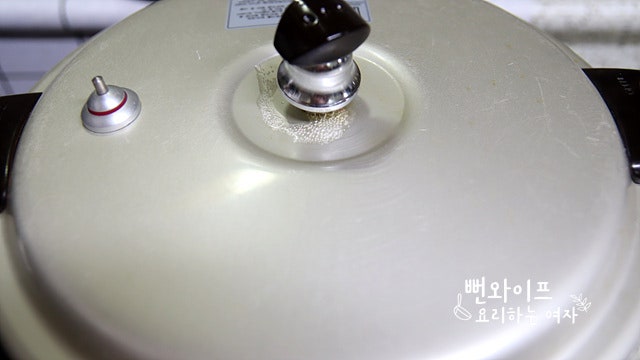
Place the marinated back ribs into the pressure cooker.
Cover with the lid, set to high heat, and once the weight starts shaking vigorously, reduce the heat to medium-low and pressure-cook for 5 minutes.
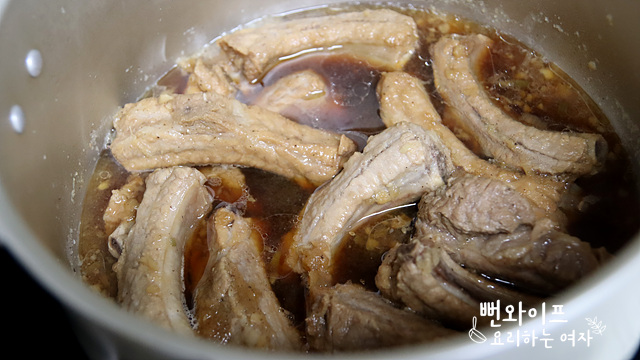
After 5 minutes, turn off the heat and leave it alone until the pressure releases completely.
When you open the lid, the meat will be cooked tender and the liquid will still be there.
If you are not using a pressure cooker, pour in enough water to submerge the ribs well and simmer gently for a long time.
Braise down
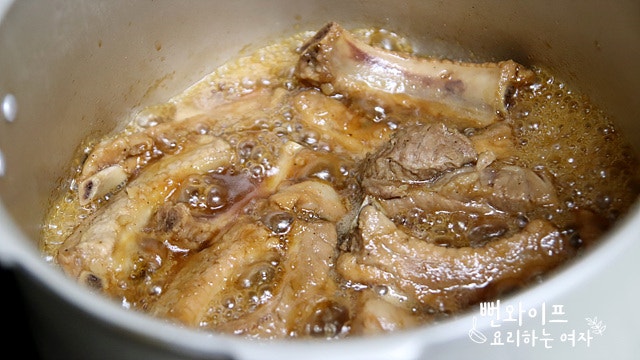
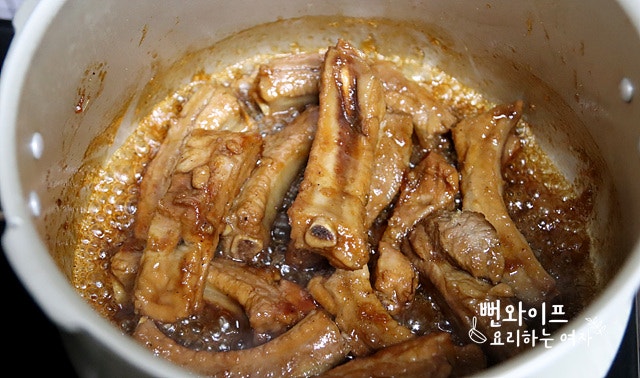
Open the lid and braise down over medium-high heat until the liquid is shallow; it will develop a glossy sheen and thicken.
If it tastes too mild or lacks sweetness, add more soy sauce or corn syrup, pour in a little water, and braise further.
If you like it spicy, you can slice and add Cheongyang chili peppers or Vietnamese chilies and braise them together.
Finish
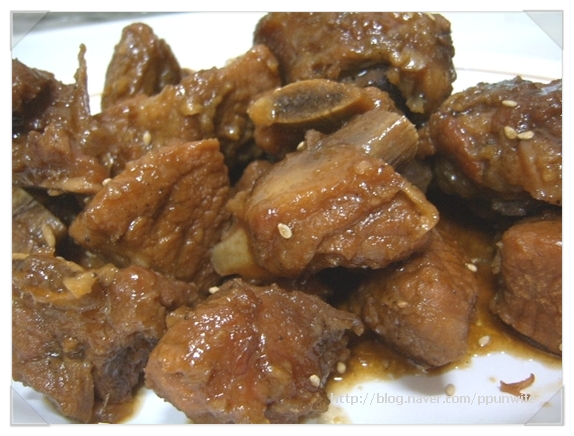
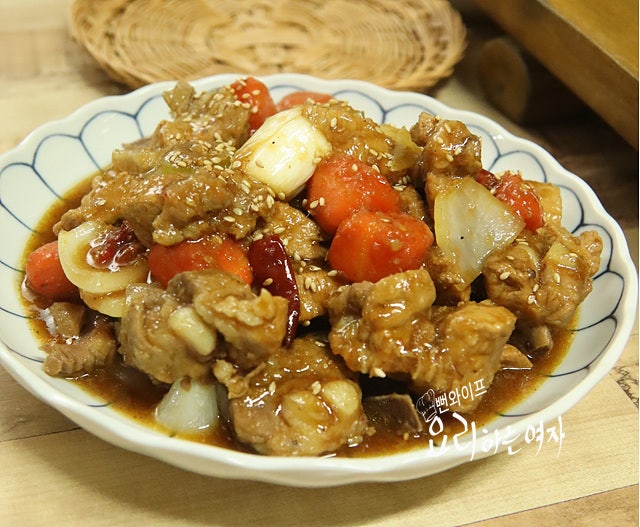
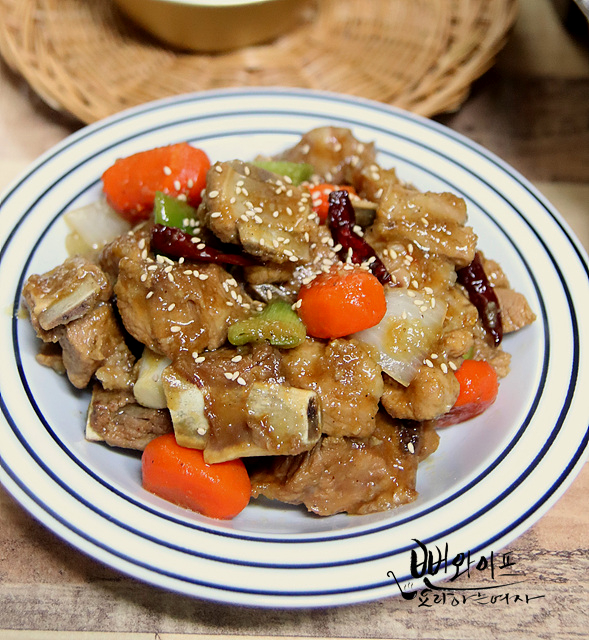
Glistening with shine and generously meaty, the braised pork back ribs are complete.
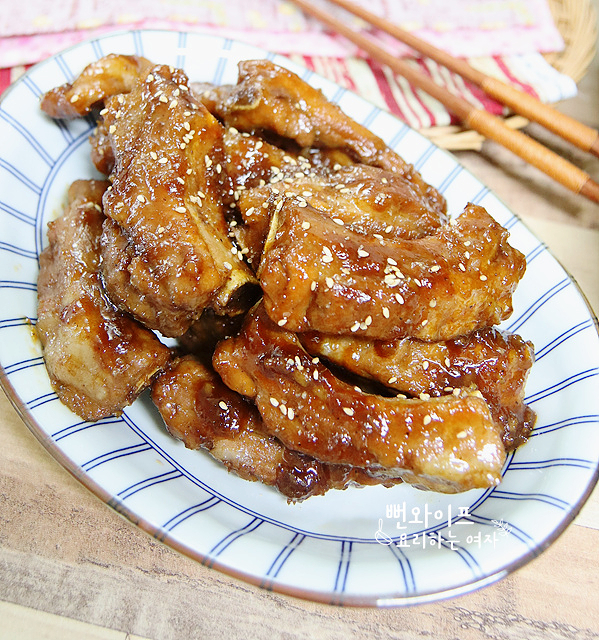
I braised them without any secondary ingredients like vegetables that often get left behind.
Because it is seasoned with soy sauce without any heat, the whole family, including children, can enjoy it.
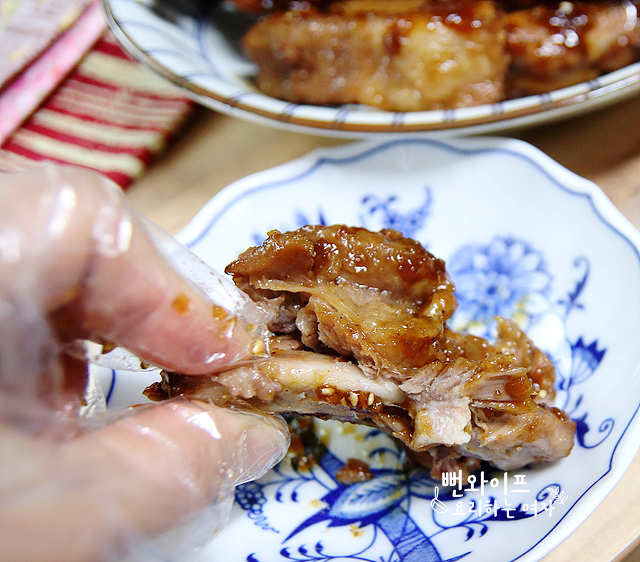
Because they were lightly steamed in a pressure cooker and then braised down, the meat separates easily from the bone.
The seasoning permeates well and the distinct chewiness of back ribs remains, so you can enjoy eating the ribs without any struggle.
How about making braised pork ribs or back ribs in a soy sauce seasoning as a holiday dish for the whole family to enjoy?
 Ppunwife's tips
- If you are not using a pressure cooker, pour in enough water to submerge the ribs well and simmer gently for a long time.
- If it tastes too mild or lacks sweetness, add more soy sauce or corn syrup, pour in a little water, and braise further.
- If you like it spicy, you can slice and add Cheongyang chili peppers or Vietnamese chilies and braise them together.
FAQ
How do I cook this without a pressure cooker?
If using a regular pot, pour in enough water to submerge the meat well, then simmer gently over low heat for a long time.
Can I use fresh fruit instead of a canned pear drink?
Instead of canned crushed pear drink, you can finely grate 2 fresh pears or apples and use them in the seasoning.
What should I do if I want to add a spicy kick?
At the final step of braising down the broth, slice Cheongyang chili peppers or Vietnamese chilies and simmer them together.
How long should I soak the pork to draw out the blood?
Soaking it for 30 minutes to 1 hour while changing the water occasionally will cleanly remove the blood.