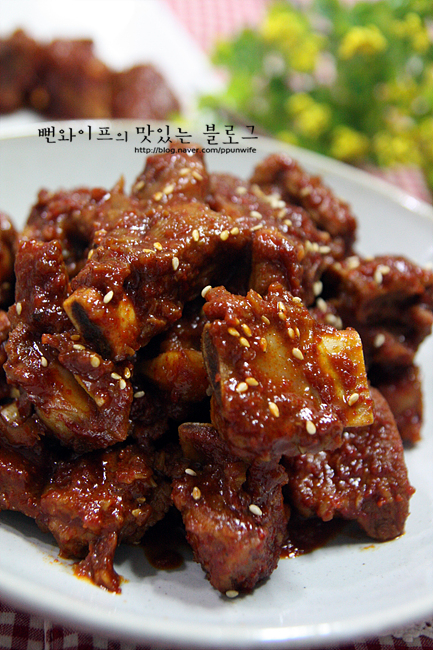
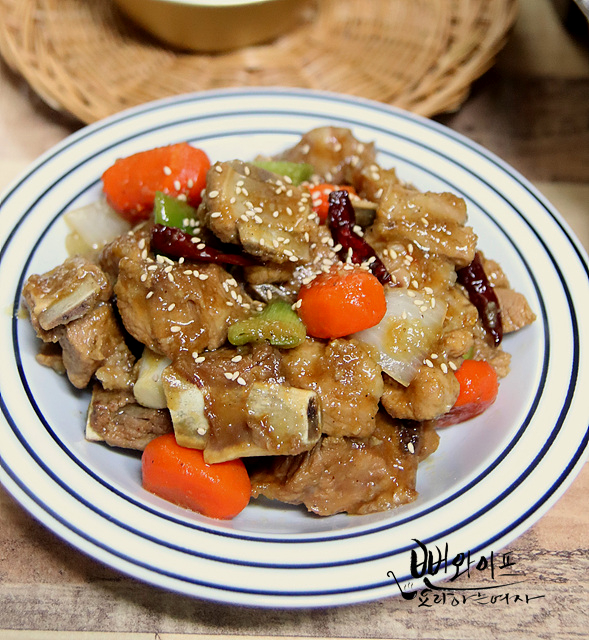
Tender Dwaeji Galbijjim (Braised Pork Ribs) with Apple Juice
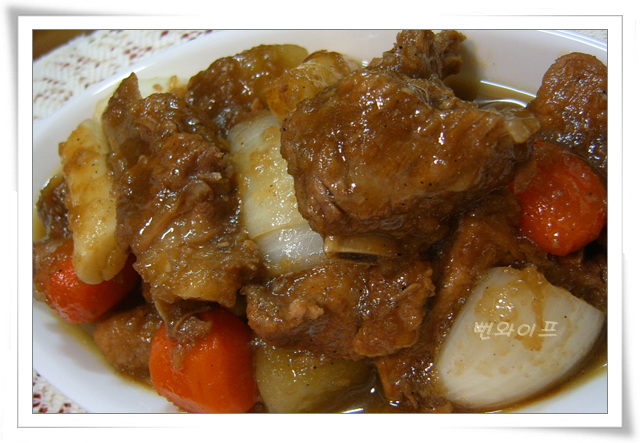
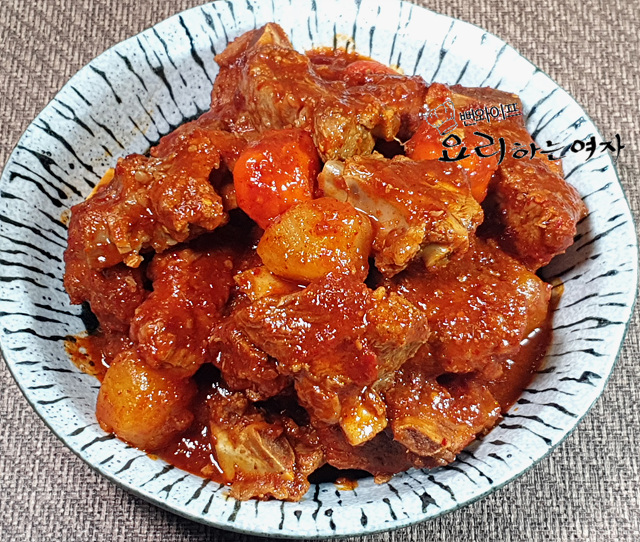
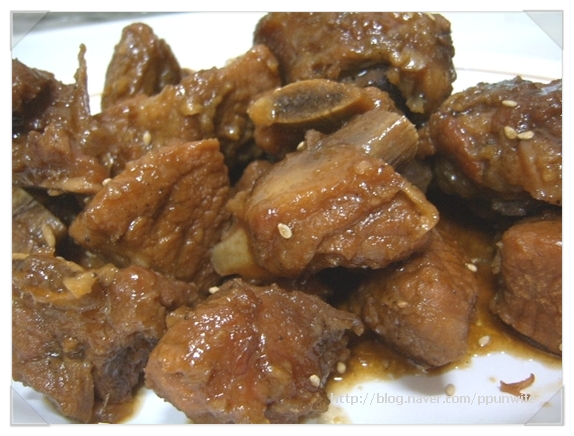
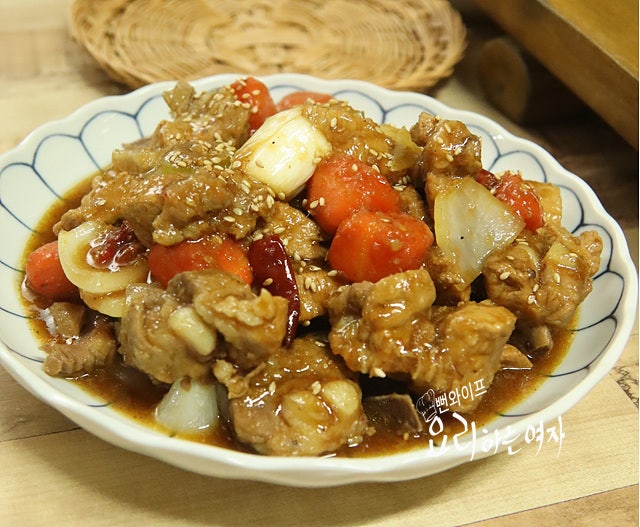
Dwaeji galbijjim simmered moist and tender without any gaminess after marinating in an apple juice soy sauce seasoning.
Translated from Korean by AI and not yet checked by a native speaker. Amounts and numbers are taken directly from the original recipe. Read the Korean original →
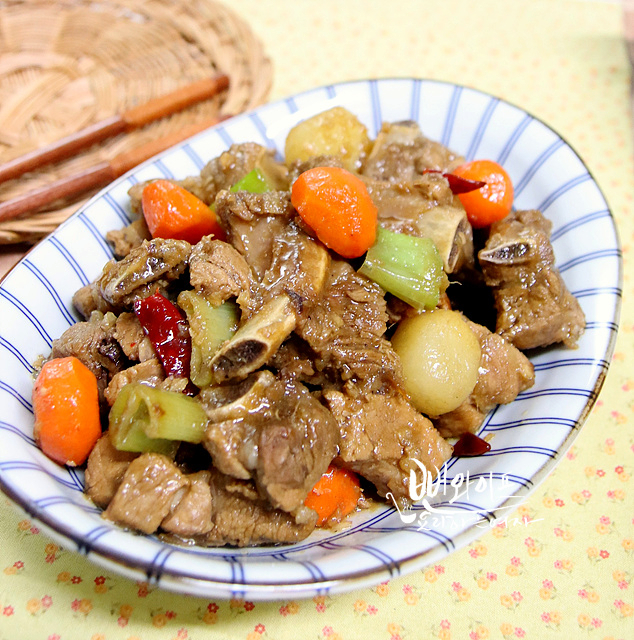
Marinated in an apple juice soy sauce seasoning, the meat turns out tender without needing a pressure cooker. Soaking thoroughly to draw out blood and parboiling with aromatics completely eliminates off-odors. Adding spicy chilies gives it a clean, non-greasy flavor.
- Servings
- 3–4 servings
- Difficulty
- Medium
- Spiciness
- Mildly spicy
Ingredients
Ingredients
- Pork ribs1 kg (after cleaning)
- Korean radish (mu)200 g
- Carrot1 (small)
- Large green onion (daepa)1/2 stalk
- Bird's eye chili (or 2 Cheongyang chili peppers (hot green chili))6
- Dried kelp (dasima) broth (or water)3 cups
For parboiling the ribs
- Soju1/2 cup
- Bay leaves5 leaves
- Ginger1 clove
- Whole black peppercorns1 tbsp
Seasoning
- Apple juice (or pear juice)2 cups
- Regular soy sauce (jin-ganjang) (or brewed soy sauce (yangjo-ganjang))3 tbsp
- Oyster sauce2 tbsp
- Minced garlic2 tbsp
- Minced ginger1/2 tbsp
- Mirin (cooking rice wine)3 tbsp
- Corn syrup (mulyeot)2 tbsp
- Sugar1/2 tbsp
- Ground black peppera little
- To remove gaminess, soak the pork ribs in cold water for about 1 hour to draw out the blood, changing the water occasionally.
- For the chilies, you can use 2 Cheongyang chili peppers, and you can also prepare about 1/2 large onion to add.
- You can add the trimmings from the radish and carrot when blending the apple juice.
Steps
Prepare the ingredients
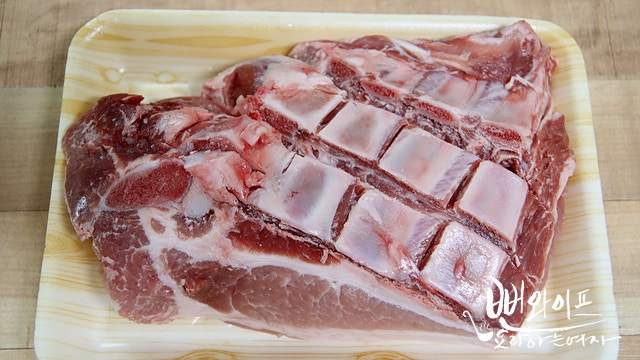
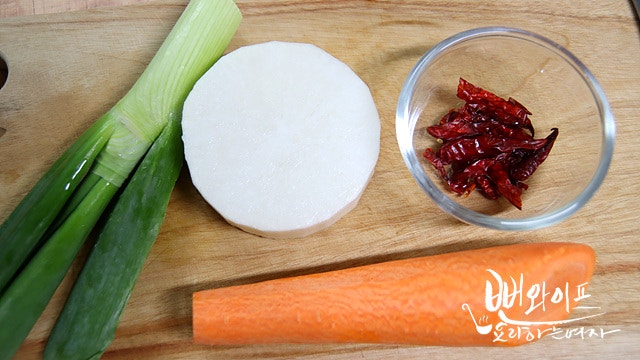
Here is 1.2 kg of pork ribs.
The pork rib marinade recipe is based on 1 kg after cleaning.
Carrot, Korean radish, large green onion, and bird's eye chilies. For the chilies, you can use 2 Cheongyang chili peppers, and you can also prepare about 1/2 large onion to add.
Cut the ingredients
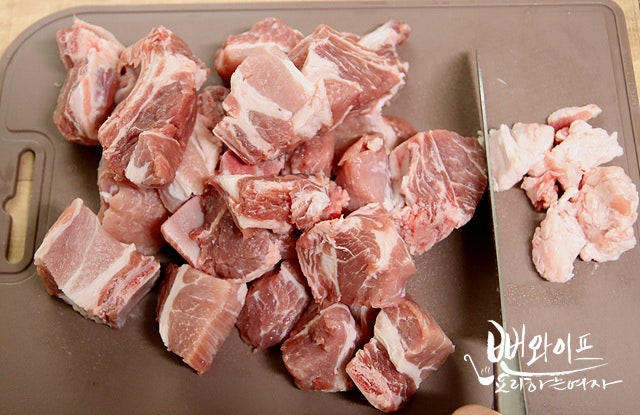
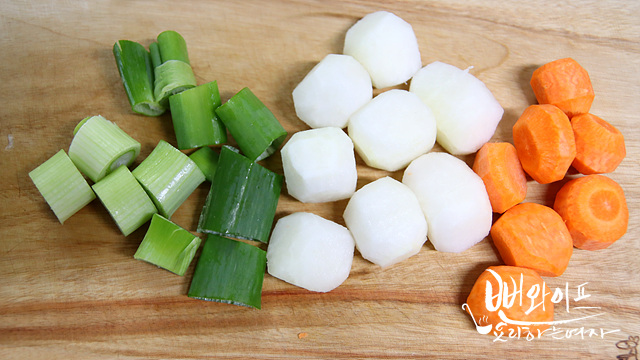
Cut the pork ribs into bite-sized pieces and trim off the excess fat.
Cube the carrot and Korean radish, then round off the sharp corners. You can add the trimmings from the radish and carrot when blending the apple juice.
Cut the large green onion into similar sizes.
Draw out blood and parboil the pork ribs
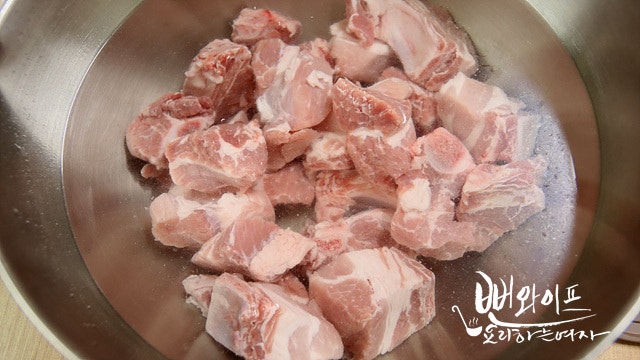
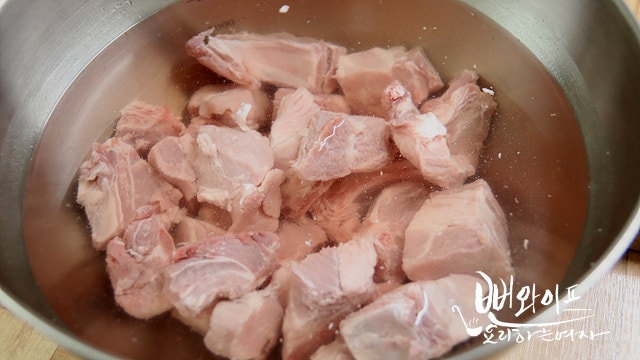
To remove gaminess, soak the pork ribs in cold water for about 1 hour to draw out the blood, changing the water occasionally.
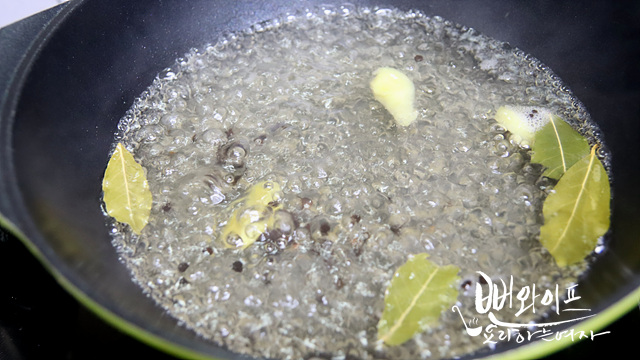
Pour in enough water to submerge the pork ribs, add 1/2 cup of soju, 5 bay leaves, 1 piece of ginger, and 1 tbsp of whole black peppercorns, and bring to a rolling boil.
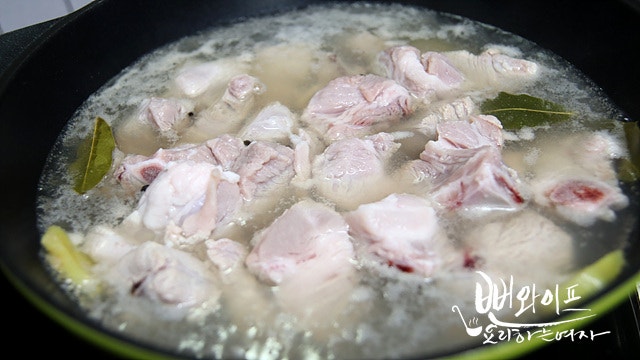
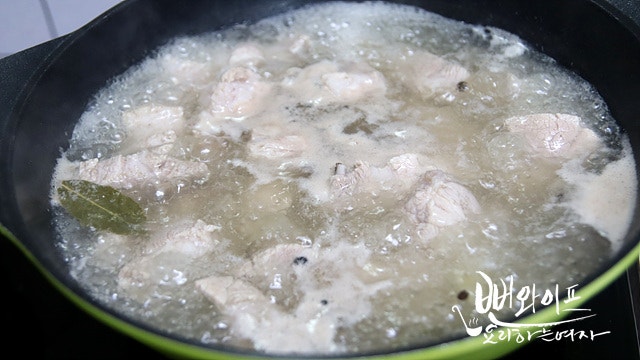
Add the ribs; as the water boils vigorously, the outside of the meat will start to cook and impurities will float up.
Parboil until foam no longer rises, rinse in cold water, and drain off the excess moisture roughly. (They do not need to be cooked all the way through.)
Marinate the pork ribs
Now make the pork rib marinade.
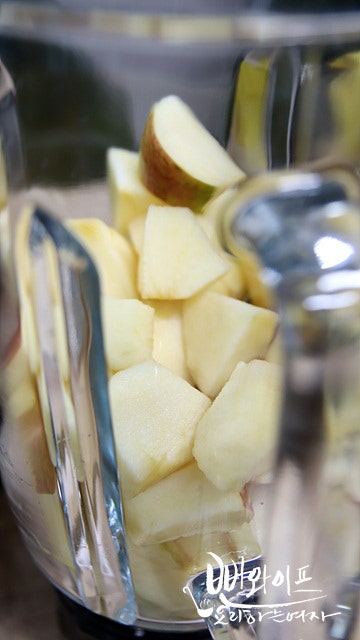
Today I used apple juice instead of pear.
Blend the apple finely along with the rounded trimmings of radish and carrot to use.
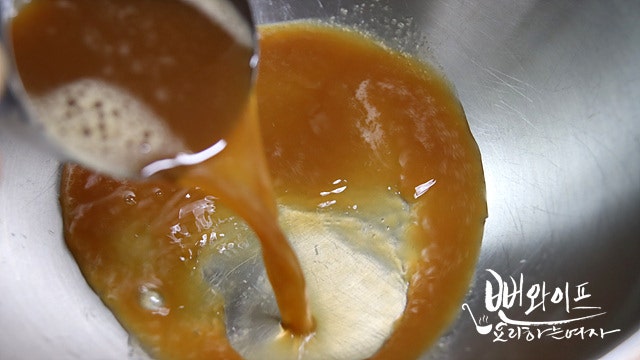
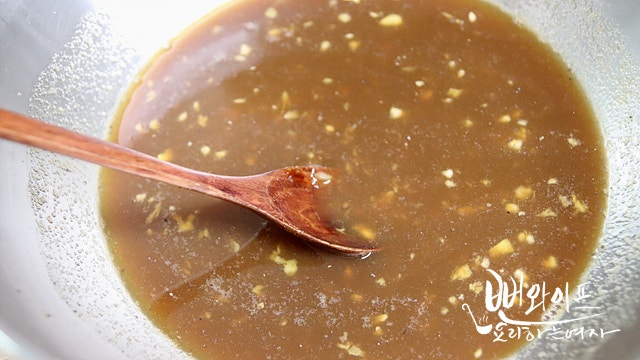
Combine 2 cups of blended apple juice (or pear juice) with all the remaining seasoning ingredients and mix.
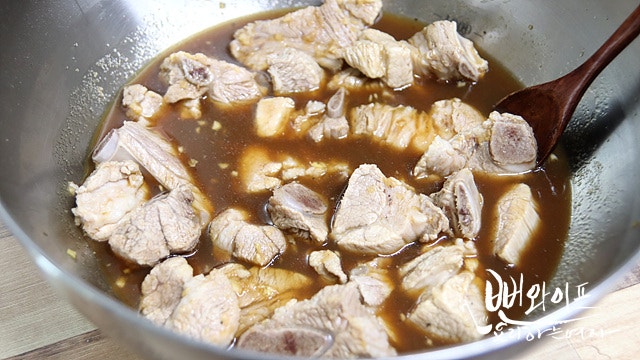
Add the meat and marinate for at least 2 hours so the flavors soak in well.
Marinating thoroughly overnight makes the meat much more tender and flavorful.
Simmer
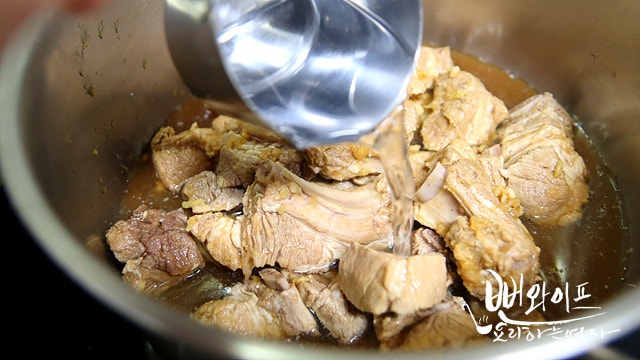
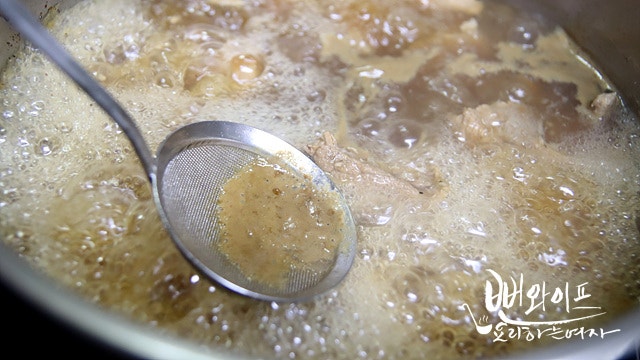
Pour in 3 cups of dried kelp broth or water, bring to a rolling boil over high heat, and skim off any foam that rises...
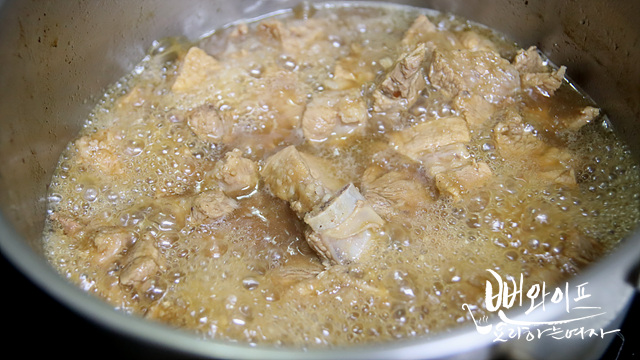
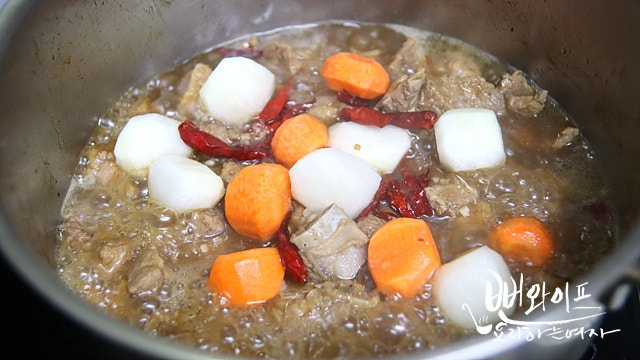
Cover with a lid, reduce to medium-low heat, and simmer for about 20 minutes so the meat cooks tender and absorbs the seasoning.
Add the carrot and Korean radish, stir together, and cook.
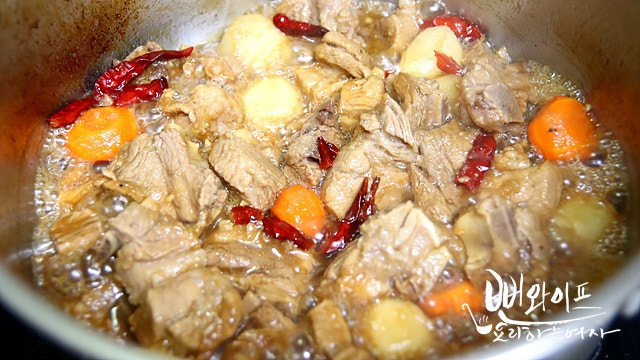
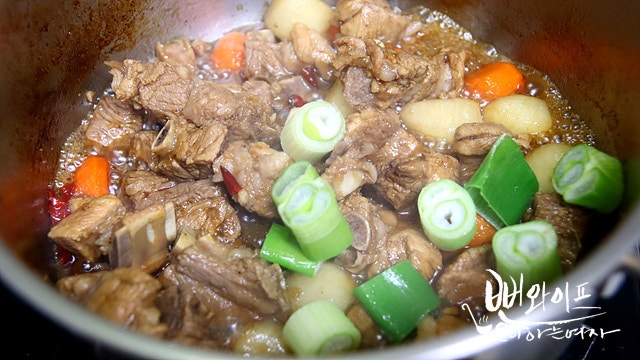
When the meat, radish, and carrot are well cooked, open the lid and simmer down until the sauce is reduced.
At the end, add the large green onion...
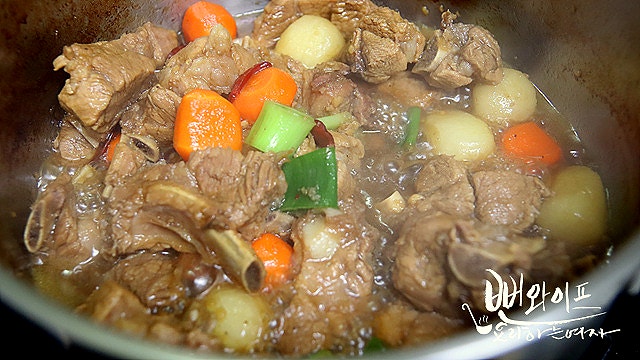
Simmer briefly so the aroma infuses, then finish up. You can add large green onion and onion together.
Complete
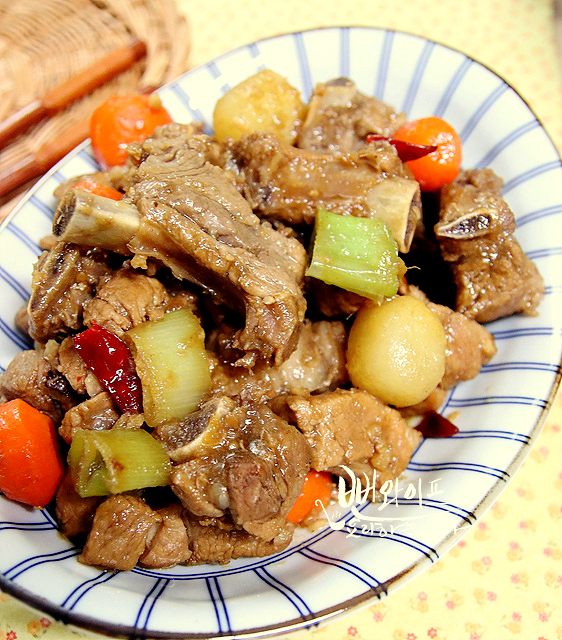
Simmering with a few hot chilies keeps it from feeling greasy; it tastes cleaner than adding red gochugaru and is great for kids to eat, too.
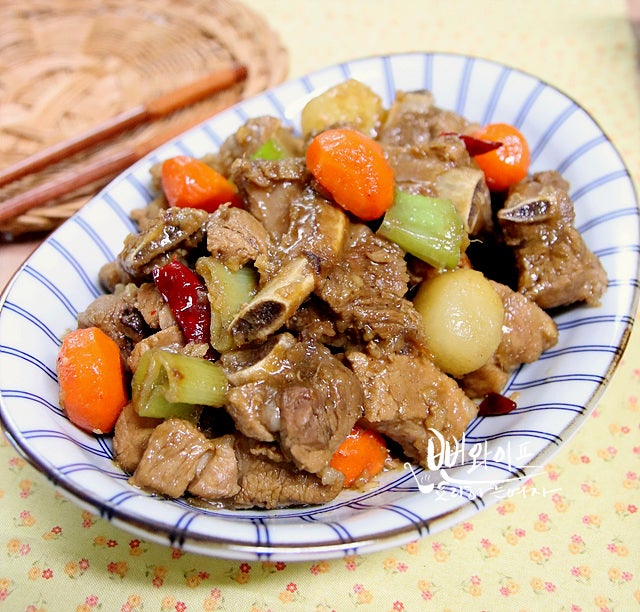
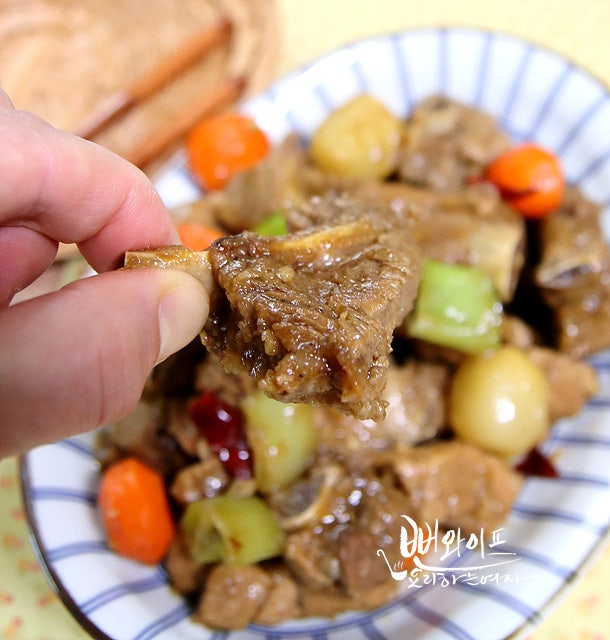
Firm and naturally sweet Korean radish is an absolute must in braised ribs.
It absorbs the sauce deeply, does not crumble even after braising, and has a great bite.
Enjoy a happy and joyful New Year's Day with your family.
 Ppunwife's tips
- Marinating thoroughly overnight makes the meat much more tender and flavorful.
- Simmering with a few hot chilies keeps it from feeling greasy; it tastes cleaner than adding red gochugaru and is great for kids to eat, too.
- Firm and naturally sweet Korean radish is an absolute must in braised ribs. It absorbs the sauce deeply, does not crumble even after braising, and has a great bite.
FAQ
How long is it best to marinate the meat?
Marinate for at least 2 hours to let the seasoning soak in, and letting it rest overnight will make the meat texture even more tender.
Can I use a different fruit instead of apple juice in the marinade?
You can use an equal amount of blended pear juice instead of apple juice to make the marinade.
How can I substitute bird's eye chilies if I do not have them?
Instead of bird's eye chilies, you can slice and add 2 Cheongyang chili peppers to cut through the greasiness cleanly.
Why do you round off the edges of the carrot and radish? AI-generated
It prevents the vegetable corners from breaking off during the long simmering process and clouding the sauce.