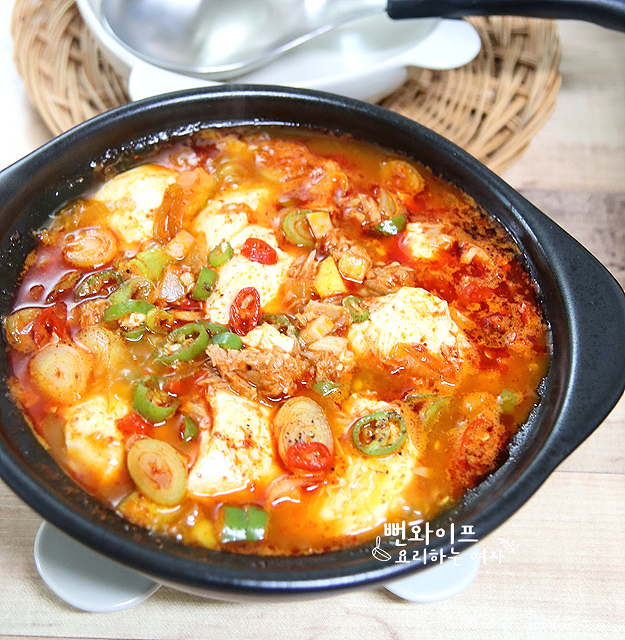
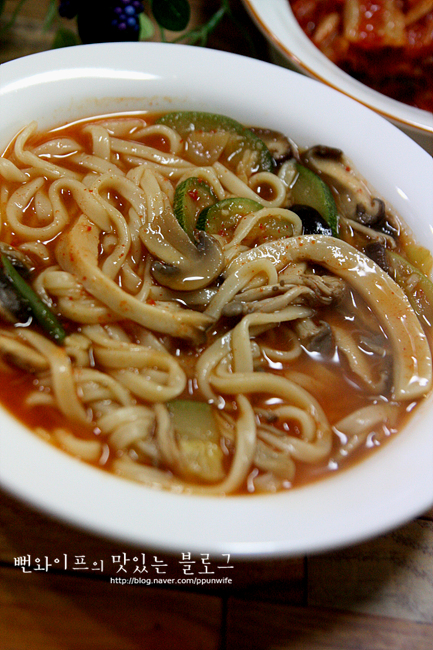
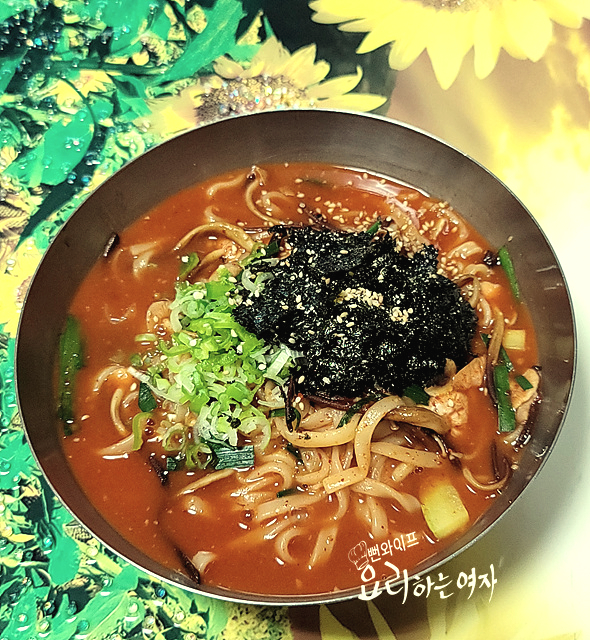
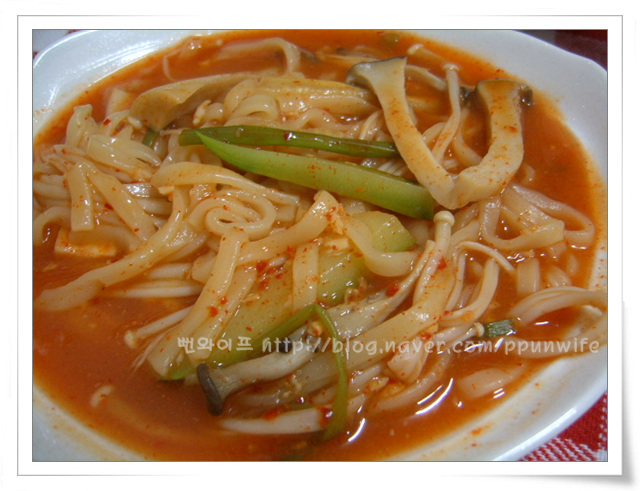
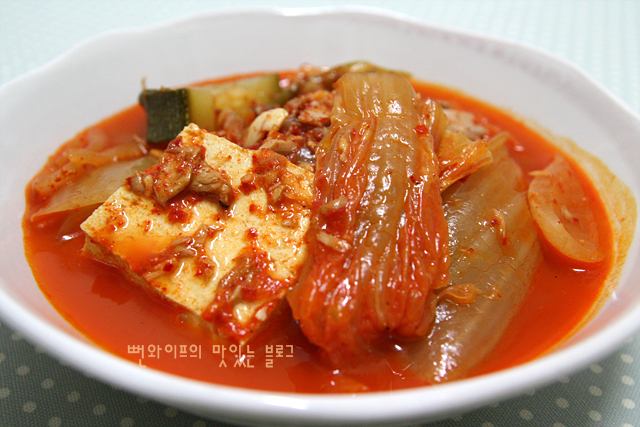
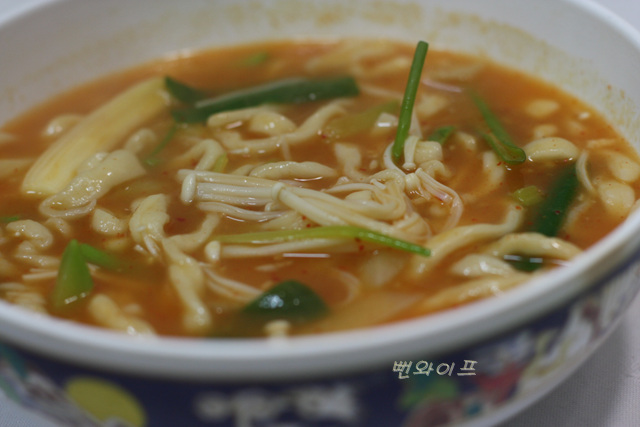
Spicy Tuna Maeuntang Kalguksu (Spicy Noodle Soup with Tuna)
A special noodle dish of canned tuna and vegetables simmered in a spicy, refreshing broth.
Translated from Korean by AI and not yet checked by a native speaker. Amounts and numbers are taken directly from the original recipe. Read the Korean original →
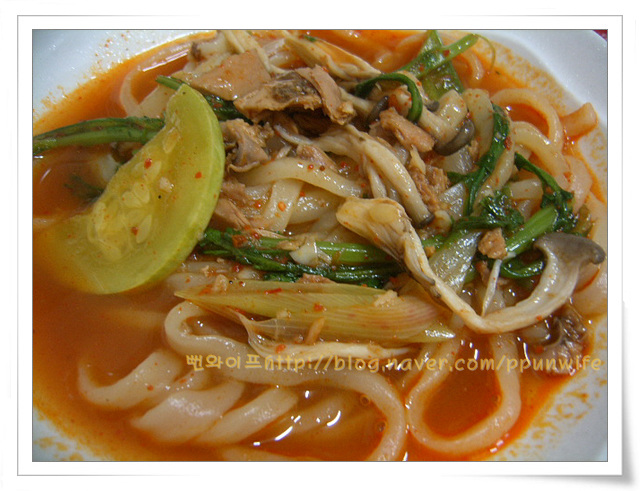
This noodle dish uses canned tuna instead of fresh fish to easily recreate the clean, spicy, and refreshing broth characteristic of maeuntang. Parboiling the noodles halfway in boiling water keeps the broth clear and light rather than thick or powdery. It works wonderfully as a satisfying meal or as a hearty dish alongside drinks.
- Servings
- 2 servings
- Difficulty
- Medium
- Spiciness
- Spicy
Ingredients
Ingredients
- Canned tuna1 can, 150 g
- Korean zucchini (aehobak)1/3
- Baby oyster mushrooms1/2 pack
- Ssukgat (crown daisy)1 handful
- Large green onion (daepa)1/2 stalks
- Anchovy broth4-5 cups
- Knife-cut wheat noodles (kalguksu)
Seasoning sauce
- Gochujang (Korean red chili paste)1.5 tbsp
- Gochugaru (Korean chili flakes)2 tbsp
- Soup soy sauce (guk-ganjang)1 tbsp
- Minced garlic1 tbsp
- Mirin (cooking rice wine)1 tbsp
- Ginger powdera little of each
- Ground black peppera little of each
- Salt
- If you prefer less oil from the tuna, drain it in a sieve and add only the solid chunks, or adjust the amount of oil to your taste.
Steps
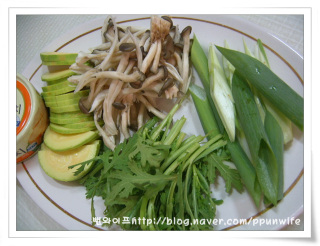
1. Prepare 1 small can of tuna.
Slice the zucchini into half-moons, prepare a handful each of mushrooms and crown daisy, and thickly slice half a large green onion diagonally.
(If making maeuntang with whole fish, add Korean radish for a refreshing flavor and sliced Cheongyang chili peppers for extra heat.)
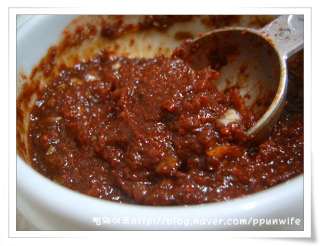
2. Mix all the seasoning ingredients together, except for the salt.
(When making fish maeuntang, dissolving 1 tbsp of doenjang into the seasoning paste removes much of the fishiness.)
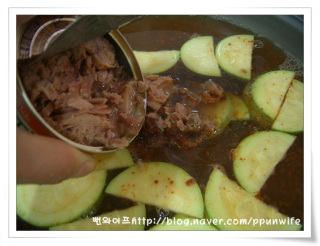
3. In a shallow pot, add the anchovy broth, zucchini, and tuna, then stir in the seasoning paste and bring to a boil.
(If you dislike tuna oil, drain it in a sieve and add just the solid meat, or adjust the amount of oil to your preference.)
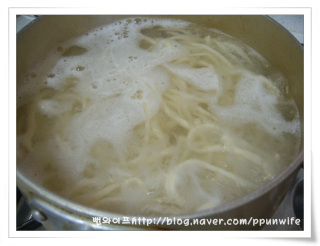
4. Add the knife-cut wheat noodles to boiling water, cook until halfway done, and drain in a colander.
(This shakes off the flour coating on the noodles to keep the broth clean, and matches the cooking time between the noodles and quick-cooking vegetables.)
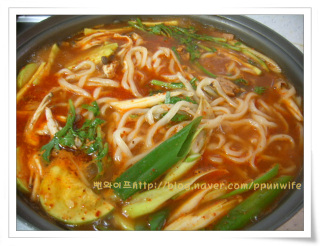
Add the mushrooms, crown daisy, large green onion, and parboiled noodles, then boil until the vegetables are cooked through.
Adjust the final seasoning with salt to taste.
 Ppunwife's tips
- Parboiling the knife-cut wheat noodles halfway in boiling water washes away the excess flour coating to keep the broth light and clear, while helping the noodles finish cooking at the same time as the quick-cooking vegetables.
- When making maeuntang with fresh fish, adding Korean radish brings a refreshing depth and Cheongyang chili peppers add heat. Dissolving 1 tbsp of doenjang into the seasoning paste also helps remove fishy odors.
FAQ
Why parboil the knife-cut wheat noodles separately instead of adding them directly to the soup pot?
It removes excess flour from the noodle surface to keep the broth clear and light, while ensuring the noodles finish cooking at the same rate as the vegetables.
Do I need to include all the oil from the canned tuna?
If you prefer a lighter flavor, drain the tuna through a sieve to remove the oil and use mostly the tuna meat.
Can I enjoy this with rice as a stew instead of using noodles?
Yes. Simply reduce the broth slightly and simmer gently into a rich tuna stew that pairs great with a bowl of warm rice.